# https://www.bushwickmetals.com/ llms-full.txt
# Contact Us
### Intsel Steel
[Request a Quote](https://www.bushwickmetals.com/request-a-quote) [Credit Application](https://www.bushwickmetals.com/wp-content/uploads/2021/01/credit-application.pdf)
### General Inquiries
- First Name\*
- Last Name\*
- Email\*
- Phone Number\*
- Company Name
- Website URL
- Message
- Upload a Drawing
Drop files here or Select files
Max. file size: 64 MB, Max. files: 5.
- Agreement\*
- [ ] Agree to Terms
- CAPTCHA
25982
[iframe](about:blank)
[Download Credit Application](https://www.bushwickmetals.com/wp-content/uploads/2021/01/credit-application.pdf)

* * *
### Offering Next Day Delivery to the following States
NEW YORK • NEW JERSEY • CONNECTICUT • DELAWARE • PENNSYLVANIA • MASSACHUSETTS • RHODE ISLAND • MARYLAND • VERMONT • NEW HAMPSHIRE • MAINE
### Approvals
[](https://www.fmapprovals.com/)[](https://marks.ul.com/about/ul-listing-and-classification-marks/)[](https://www.sdi.org/)[](https://icc-es.org/)[](https://www.ul.com/services/environmental-product-declaration-epds-certification)# Company News
### Intsel Steel
- Intsel Steel now stocks Heavy Wall Structural Tube.
- Up to 16” x 16” x 5/8” Square and 20” x 12” x5/8” Rectangular
- Tubing Stocked in lengths up to 60’
- Largest inventory of Jumbo Beams in the U.S. , up to 925# /foot
- Beams stocked in lengths up to 90’
- All in stock today for the steel you need tomorrow.
[Beams **I Beam Strength, Dimensions, and Uses**\\
\\
You can't construct a building without its structural components. These are the parts that all the other decor and furnishings attach themselves to.... \\
\\
January 13, 2025\\
\\
Read More](https://www.bushwickmetals.com/i-beam-strength-2/) [Expanded Metal & Grating **What Is Diamond Plate & What Are Its Uses?**\\
\\
If you've ever noticed a shiny, textured metal sheet underfoot or as part of a vehicle, you've likely encountered a diamond plate. Known for its... \\
\\
January 6, 2025\\
\\
Read More](https://www.bushwickmetals.com/what-is-diamond-plate/) [Steel TubingStructural Steel **Heavy Wall Structural Tubes: Unmatched Durability for Demanding Applications**\\
\\
An Introduction to Structural Tubes Structural projects in demanding industries require materials that offer reliability, strength, and longevity.... \\
\\
December 9, 2024\\
\\
Read More](https://www.bushwickmetals.com/heavy-wall-structural-tubes/) [Galvanized SteelSteel Tubing **Galvanized Steel Pipes: Advantages and Applications**\\
\\
Have you ever wondered what makes the structures around us so resilient? The answer often lies in unassuming yet powerful galvanized steel pipes.... \\
\\
December 2, 2024\\
\\
Read More](https://www.bushwickmetals.com/galvanized-steel-pipes-advantages-applications/) [BeamsStructural Steel **Innovative Uses of Wide Flange Beams in Modern Architecture**\\
\\
In modern architecture, wide flange beams have become essential components, shaping the skylines and interiors of contemporary buildings. These... \\
\\
November 11, 2024\\
\\
Read More](https://www.bushwickmetals.com/wide-flange-beams-in-modern-architecture/) [Steel TubingStructural Steel **How Rectangular Steel Tubing Enhances Structural Integrity**\\
\\
Selecting the appropriate materials for manufacturing and building projects is crucial to obtaining cost-effectiveness, structural integrity, and... \\
\\
November 4, 2024\\
\\
Read More](https://www.bushwickmetals.com/rectangular-steel-tubing-structural-integrity/)
View Earlier Posts
### Approvals
[](https://www.fmapprovals.com/)[](https://marks.ul.com/about/ul-listing-and-classification-marks/)[](https://www.sdi.org/)[](https://icc-es.org/)[](https://www.ul.com/services/environmental-product-declaration-epds-certification)# Careers
### Intsel Steel
Intsel Steel is committed to employing and retaining motivated, quality-minded team members focused on customer service. We recognize that our employees ensure the success of our business. To meet the needs of its team members, the company offers a comprehensive benefits package.
Such benefits include (but not limited to)
Such benefits include:
- Health and Dental Coverage
- VisionGroup Life Insurance
- Short Term Disability Coverage at no cost
- Long Term Disability Coverage at a reasonable cost to the employee
- Flexible Spending Accounts
- Profit Sharing
- 401k with matching
- Paid Holiday’s, Personal, Sick and Vacation Allowance
[**View Current Openings**](https://careers-sss-steel.icims.com/jobs/search)
Your cooperation is requested in submitting resumes for current job postings only. We will not maintain or respond to unsolicited resumes or responses.
Thank you very much for your interest in Intsel Steel.
Intsel Steel is an Equal Opportunity Employer.
Intsel Steel is best known for their vast wholesale structural-steel products service center with an extraordinary history and an exceptional commitment to customer service. Today, Intsel Steel is known for having the widest, deepest range of steel products available—and for its commitment to rapid—often next-day—delivery for all of its clients up and down the East Coast from its warehouses in Bridgeport CT, South Plainfield NJ and New Castle Delaware facilities.
### Approvals
[](https://www.fmapprovals.com/)[](https://marks.ul.com/about/ul-listing-and-classification-marks/)[](https://www.sdi.org/)[](https://icc-es.org/)[](https://www.ul.com/services/environmental-product-declaration-epds-certification)## More Than Metal
## Premium Steel Distribution and Processing Solutions for Over a Century
[Learn More](https://www.bushwickmetals.com/about-us/)
# About Intsel Steel East – Steel Suppliers
As the Northeast’s leading steel service center, Intsel Steel East offers an unsurpassed inventory range, an extensive collection of value added services, and customer service that is second to none. Even with over a century in business, Intsel Steel East isn’t content to rest on its laurels. With an eye toward constant innovation and a focus on customer satisfaction, we consistently roll out new value-added services, improve upon our premier next-day delivery service, and expand our extensive product lines.
All of these efforts support one goal, to help customers grow, control expenses and succeed.
### Intsel Steel Products
[](https://www.bushwickmetals.com/product-category/expanded-metal-grating/)
#### [Expanded Metal & Grating](https://www.bushwickmetals.com/product-category/expanded-metal-grating/)
[](https://www.bushwickmetals.com/product-category/heavy-structural-products/)
#### [Heavy Structural Products](https://www.bushwickmetals.com/product-category/heavy-structural-products/)
[](https://www.bushwickmetals.com/product-category/rebar/)
#### [Rebar](https://www.bushwickmetals.com/product-category/rebar/)
[](https://www.bushwickmetals.com/product-category/angles/)
#### [Steel Angles](https://www.bushwickmetals.com/product-category/angles/)
[](https://www.bushwickmetals.com/product-category/bars/)
#### [Steel Bars](https://www.bushwickmetals.com/product-category/bars/)
[](https://www.bushwickmetals.com/product-category/beams/)
#### [Steel Beams](https://www.bushwickmetals.com/product-category/beams/)
[](https://www.bushwickmetals.com/product-category/channels/)
#### [Steel Channels](https://www.bushwickmetals.com/product-category/channels/)
[](https://www.bushwickmetals.com/product-category/decking/)
#### [Steel Decking](https://www.bushwickmetals.com/product-category/decking/)
[](https://www.bushwickmetals.com/product-category/plates/)
#### [Steel Plates](https://www.bushwickmetals.com/product-category/plates/)
[](https://www.bushwickmetals.com/product-category/sheets/)
#### [Steel Sheets](https://www.bushwickmetals.com/product-category/sheets/)
[](https://www.bushwickmetals.com/product-category/tubing-piping/)
#### [Steel Tubing & Piping](https://www.bushwickmetals.com/product-category/tubing-piping/)
[View All Our Products](https://www.bushwickmetals.com/products)
### Who We Serve

Steel Fabricators

Manufacturing

Metal Construction

Scaffolding

Ornamental Metal

OEM
### Value Added Services
[](https://www.bushwickmetals.com/value-added-services/saw-cutting/)
#### [Saw Cutting](https://www.bushwickmetals.com/value-added-services/saw-cutting/)
[](https://www.bushwickmetals.com/value-added-services/plate-processing/)
#### [Plate Processing](https://www.bushwickmetals.com/value-added-services/plate-processing/)
[](https://www.bushwickmetals.com/value-added-services/shearing-and-bending/)
#### [Shearing and Bending](https://www.bushwickmetals.com/value-added-services/shearing-and-bending/)
[](https://www.bushwickmetals.com/value-added-services/section-bending-and-cambering/)
#### [Section Bending and Cambering](https://www.bushwickmetals.com/value-added-services/section-bending-and-cambering/)
[](https://www.bushwickmetals.com/value-added-services/tee-splitting-straightening/)
#### [Tee Splitting & Straightening](https://www.bushwickmetals.com/value-added-services/tee-splitting-straightening/)
[](https://www.bushwickmetals.com/value-added-services/custom-roll-formed-floor-and-roof-deck/)
#### [Custom Roll Formed Floor and Roof Deck](https://www.bushwickmetals.com/value-added-services/custom-roll-formed-floor-and-roof-deck/)

* * *
### Offering Next Day Delivery to the following States
NEW YORK • NEW JERSEY • CONNECTICUT • DELAWARE • PENNSYLVANIA • MASSACHUSETTS • RHODE ISLAND • MARYLAND • VERMONT • NEW HAMPSHIRE • MAINE
### Approvals
[](https://www.fmapprovals.com/)[](https://marks.ul.com/about/ul-listing-and-classification-marks/)[](https://www.sdi.org/)[](https://icc-es.org/)[](https://www.ul.com/services/environmental-product-declaration-epds-certification)
# Locations
### Intsel Steel
For your convenience, please call [855-446-8735](tel:855-446-8735 "Contact Us by Phone 855-446-8735") to be directed to your local sales office or e-mail to Email: [northeastsales@intselsteel.com](mailto:northeastsales@intselsteel.com "Contact Us by email northeastsales@intselsteel.com")
**Corporate Headquarters**
**New England Sales**
**Main Warehouse**
Intsel Steel East
560 North Washington Ave
Bridgeport, CT 06604
[1-855-4INTSEL](tel:1-855-4INTSEL) ( [855-446-8735](tel:855-446-8735))
**New Jersey / Pennsylvania Sales Office**
Intsel Steel East
25 Rockwood Place Suite 430
Englewood NJ 07631
[201-567-2400](tel:201-567-2400)
**New Jersey Warehouse**
Intsel Steel East / Bushwick Metals
1641 New Market Ave.
South Plainfield, NJ 07080
[908-754-8700](tel:908-754-8700)
**Pennsylvania / Delaware Warehouse**
100 Steel Drive
New Castle, DE 19720
[302-328-0590](tel:302-328-0590)
FAX: 302-328-0595
### Approvals
[](https://www.fmapprovals.com/)[](https://marks.ul.com/about/ul-listing-and-classification-marks/)[](https://www.sdi.org/)[](https://icc-es.org/)[](https://www.ul.com/services/environmental-product-declaration-epds-certification)# Products
### Intsel Steel
### Intsel Steel Products
[](https://www.bushwickmetals.com/product-category/expanded-metal-grating/)
#### [Expanded Metal & Grating](https://www.bushwickmetals.com/product-category/expanded-metal-grating/)
[](https://www.bushwickmetals.com/product-category/heavy-structural-products/)
#### [Heavy Structural Products](https://www.bushwickmetals.com/product-category/heavy-structural-products/)
[](https://www.bushwickmetals.com/product-category/rebar/)
#### [Rebar](https://www.bushwickmetals.com/product-category/rebar/)
[](https://www.bushwickmetals.com/product-category/angles/)
#### [Steel Angles](https://www.bushwickmetals.com/product-category/angles/)
[](https://www.bushwickmetals.com/product-category/bars/)
#### [Steel Bars](https://www.bushwickmetals.com/product-category/bars/)
[](https://www.bushwickmetals.com/product-category/beams/)
#### [Steel Beams](https://www.bushwickmetals.com/product-category/beams/)
[](https://www.bushwickmetals.com/product-category/channels/)
#### [Steel Channels](https://www.bushwickmetals.com/product-category/channels/)
[](https://www.bushwickmetals.com/product-category/decking/)
#### [Steel Decking](https://www.bushwickmetals.com/product-category/decking/)
[](https://www.bushwickmetals.com/product-category/plates/)
#### [Steel Plates](https://www.bushwickmetals.com/product-category/plates/)
[](https://www.bushwickmetals.com/product-category/sheets/)
#### [Steel Sheets](https://www.bushwickmetals.com/product-category/sheets/)
[](https://www.bushwickmetals.com/product-category/tubing-piping/)
#### [Steel Tubing & Piping](https://www.bushwickmetals.com/product-category/tubing-piping/)
### Outstanding Products and Support for over a century
With over a century of experience and expertise in the steel industry, Intsel Steel has developed one of the most complete and diversified range of carbon-steel products in the industry. We stock an extensive array of sizes, shapes, types, and grades for each of our product lines, with many more special-order products available. We’re committed to meeting all your structural-steel needs, whether that means supplying high-quality steel products from our vast inventory or sourcing them from all over the world.
### More Than Just Steel
Rather than simply offering our extensive steel stock to choose from, we also work tirelessly to deliver additional value by enhancing product offerings with best-in-class supply-chain support, materials-management advice, inventory planning, and more. Thanks to over 100 years in the business, we have deep industry expertise, and, because our primary goal is to support our customers’ success, we’re eager to share our knowledge with you.
At your request, we’ll work to understand the needs and challenges of your business, then use our industry knowledge to gather intelligence, assess market conditions, and provide you with strategic insights and guidance that will help you make smarter buying decisions. Our ability to understand lead times, navigate international purchasing and shipping processes, and analyze the state of the market to predict future pricing trends gives us—and our customers—a serious competitive edge.
### Materials Management
With our best-in-class materials-management services, you’ll receive outstanding support and expertise as we assist you in all aspects of the planning, purchasing, storing and distribution of steel products in order best meet your needs and support your business objectives.
Our standard next-day delivery service enables you to reduce your overhead by only buying what you need, streamlining your supply chain, reducing the need to store material, minimizing your aged inventory costs, and lessening the financial risk that comes with large inventory investments. To help you manage project budgets, we also offer contract pricing plans and automatic deliveries.
Ultimately, we help you boost your efficiency and achieve great profitability.
With outstanding responsivity and tremendous flexibility, we move mountains to get you what you need, when and how you need it. By combining our global-procurement capabilities with our value-added processing services and our intuitive supply chain and logistics support, we’ve positioned Intsel Steel as the Northeast’s leading steel supplier. We’ll continue to work hard every day to earn that title and your business!
### Contact us today to discuss all your carbon steel structural and plate needs!
[Contact Us](https://www.bushwickmetals.com/contact/)
### Approvals
[](https://www.fmapprovals.com/)[](https://marks.ul.com/about/ul-listing-and-classification-marks/)[](https://www.sdi.org/)[](https://icc-es.org/)[](https://www.ul.com/services/environmental-product-declaration-epds-certification)# Formulas
### Intsel Steel
## SHAPE WEIGHT FORMULAS
The following shape formulas can be used to calculate the nominal weights for various carbon steel shapes. These weight calculations are based upon the theoretical weight of steel at 40.80 pounds per square foot per one inch of thickness. These weight formulas are for nominal weights, (and are approximations), and should not be considered an exact weight. All dimensions are to be in inches.
| | |
| --- | --- |
| **Rounds =** | Diameter squared x 2.67 = Weight in pounds per Linear Foot. |
| **Squares =** | Diameter squared x 3.4 = Weight in pounds per Linear Foot. |
| **Hexagons\* =** | Diameter squared x 2.945 = Weight in pounds per Linear Foot. |
| **Octagons\* =** | Diameter squared x 2.817 = Weight in pounds per Linear Foot. |
| **Plates, Sheets & Flats =** | Thickness x Width x 3.45 = Weight in pounds per Linear Foot. |
| **Plate Circles =** | Diameter squared x thickness x .2225 = Weight per Circle. |
| **Round Tubing =** | 10.68 x (O.D. – W.T.) x W.T. |
| **Square Tubing =** | 13.6 x (O.D. – W.T.) x W.T. |
| **Rectangular Tubing =** | 13.6 x \[(SL + SS) – W.T.\] x W.T. |
| \\* Diameter is measured across the flats.
O.D. = Outside Diameter
W.T. = Wall Thickness
SL = Long Side
SS = Short Side |
## GENERAL FORMULAS
| | |
| --- | --- |
| **Cost per Hundred Feet =** | Cost per Hundred Weight x Weight per Foot. |
| **Cost per Hundred Weight =** | Cost per Hundred Feet / Weight per Foot. |
| **Area of a Circle =** | Diameter x Diameter x 0.7854 |
| **Circumference of a Circle =** | Diameter x 3.1416 |
| **Diameter of a Circle =** | Circumference x 0.31831 |
| **Area of a Triangle =** | Base x Perpendicular Height x 0.5 |
| **Area of a Rectangle =** | Width x Length |
| **Area of a Square =** | Side x Side |
| **Area of Parallelogram =** | Base x Altitude |
| **Side of an Inscribed Equal Square for a Circle =** | Diameter x 0.8862 |
| **Side of a Square x 1.4142 =** | Diameter of Circumscribed Circle |
| **Doubling the Diameter of a Circle increases the area of the Circle four times.** |
| **Doubling the diameter of a Pipe increases its capacity four times.** |
## METRIC CONVERSION FORMULAS
| | |
| --- | --- |
| **Millimeters** x .03937 = **Inches** | **Inches** x 25.40 = **Millimeters** |
| **Meters** x 3.2809 = **Feet** | **Feet** x .3048 = **Meters** |
| **Kilometers** x .621377 = **Miles** | **Miles** x 1.6093 = **Kilometers** |
| **Liters** x 61.023 = **Cubic Inches** | **Cubic Inches** x .01639 = **Liters** |
| **Liters** x .26418 = **U.S. Gallons** | **U.S. Gallons** x 3.7854 = **Liters** |
| **Grams** x .03527 = **Ounces** | **Ounces** x 28.350 = **Grams** |
| **Metric Ton** x .9072 = **U.S. Ton** | **U.S. Ton** x 1.1023 = **Metric Ton** |
| **Metric Ton** = 2205# |
### Approvals
[](https://www.fmapprovals.com/)[](https://marks.ul.com/about/ul-listing-and-classification-marks/)[](https://www.sdi.org/)[](https://icc-es.org/)[](https://www.ul.com/services/environmental-product-declaration-epds-certification)# Terms & Conditions
### Intsel Steel
_**Intsel Steel – East**_
**GENERAL TERMS AND CONDITIONS FOR SUPPLY OF GOODS**
**1\. DEFINITIONS**. As used in these General Terms and Conditions for Supply of Goods, the following words and phrases shall have the meanings stated below.
“Agreement” means these General Terms and Conditions for Supply of Goods entered into between the Parties.
“Affiliate” of any specified person or entity means any other person or entity directly or indirectly controlling or controlled by or under direct or indirect common control with such specified person or entity. For the purposes of this definition, control when used with respect to any specified entity means the power to direct the management and policies of such entity directly or indirectly, through the ownership of voting securities or the right to elect the majority of the members of the board of directors of such entity; and the terms controlling and controlled have meanings correlative to the foregoing.
“Buyer” means the buyer of the Goods referenced in the Invoice.
“Credit Agreement” means any credit agreement that Seller and Buyer may have previously entered into.
“Confidential Information” means any pricing, terms, information, data, trade secrets, know-how, drawings, manuals, specifications, standards, designs, plans, maps, manufacturing and production procedures and techniques, models, sketches, samples, formulations, project specific calculations, instruments, software and computer records, and other business and technical documentation, information and materials belonging to Seller, regardless of whether it is marked as confidential or not or the form in which it is communicated or maintained (whether in writing, electronically, digitally or otherwise).
“Delivery Date” means the date that the Goods are delivered to Buyer.
“Goods” means the goods that Seller has agreed to supply to Buyer.
“Invoice” means the invoice issued by Seller in connection with the sale of the Goods.
“NORM” means naturally occurring radioactive material.
“Parties” means Buyer and Seller, collectively.
“Seller” means Triple-S Steel Holdings, Inc., a Texas corporation, or the applicable Affiliate of Triple-S Steel Holdings, Inc. referenced in the Invoice.
“Specifications” means the description and specifications of the Goods set forth in the Invoice.
**2\. ENTIRE AGREEMENT**.
(a) The Agreement, the Invoice and any Credit Agreement represent the entire agreement of the Parties in relation to the sale of the Goods and supersedes any and all prior agreements with respect to the subject matter of the Agreement. Seller’s acceptance of Buyer’s order, the Invoice, including shipments to Buyer in response to any telephone orders, or Buyer’s acceptance of Seller’s offer or quotation containing these General Terms and Conditions for Supply of Goods shall constitute acceptance by Buyer of the Agreement.
(b) No representations other than those set forth in the Agreement shall be deemed made. Any conflicting terms contained in any written document (including any correspondence between Buyer and Seller), unless incorporated herein by a typed or handwritten addition hereto expressly accepted by Seller or a document signed by Seller making reference to this clause, shall be of no force or effect and these General Terms and Conditions for Supply of Goods shall apply.
**3\. DELIVERY OF GOODS**. Seller shall deliver the Goods to Buyer per the terms of, and within the delivery schedule set forth in, the Invoice. If Seller for any reason anticipates difficulty in complying with the delivery schedule, Seller shall notify Buyer in writing.
**4\. PAYMENT**.
(a) Buyer agrees to pay the full Sales Price as specified in the Invoice. The Sales Price is subject to and contingent upon Buyer purchasing the entire quantity of Goods identified in Buyer’s order. If Buyer purchases less than the entire quantity of Goods identified in Buyer’s order, Seller reserves the right to increase the Sales Price. The Sales Price is valid only if the Goods are shipped within fifteen (15) days of sales acknowledgement. Unless Buyer has been notified by Seller otherwise in writing, after this fifteen (15) day period, Seller reserves the right to raise the Sales Price in accordance with any published mill increases.
(b) The Sales Price may not include, and Buyer is responsible for paying, all sales, use, excise or other taxes upon the sale or use of the Goods covered by the Invoice. The Invoice may not be altered, amended, supplemented, or cancelled without Seller’s express written consent. Any amounts owed hereunder by Buyer shall be paid by check or wire transfer, in immediately available funds, to the bank account designated by Seller in the Invoice. The Sales Price provided to Buyer shall be kept confidential except to the extent Buyer is required by law to disclose the same.
(c) Interest shall accrue on the unpaid portion of the Invoice at a rate of one and one-half percent (1.5%) per month (18% per annum), or, if lower, the highest rate permitted by law on past due accounts.
(d) In the event of nonpayment, Buyer agrees to pay to Seller: (1) all costs of collection and incidental damages incurred by Seller, including, but not limited to, reasonable attorneys’ fees and expenses; (2) any commercially reasonable charges, expenses or commissions incurred in stopping delivery; (3) additional transportation charges; and, (4) Seller’s net additional expense incurred for the care and custody of the Goods in connection with their return or resale. In the event of any claim or legal action brought by Buyer for any cause whatsoever, Buyer shall have no rights of retention or set-off. If Buyer defaults in any payment due hereunder or fails to comply with any of the terms hereof, Seller or any officer of the law may take immediate possession of the Goods without demand, and for this purpose, may enter the premises of Buyer where the Goods may be located and remove them.
(e) Prices on Seller’s website, catalogs or in Seller’s quotes are subject to change without notice, and all such prices expire and become invalid if not accepted within ten (10) days from the date of issue, unless otherwise noted by Seller in writing. Price extensions, if made, are for Buyer’s convenience only, and they, as well as any mathematical, stenographic or clerical errors, are not binding on Seller.
**5\. RETURNS**. No Goods may be returned, and no order may be canceled, in whole or in part, without the prior written consent of Seller. If Seller consents to a return, Seller may assess a restocking fee.
**6\. PURCHASE MONEY SECURITY INTEREST**. Buyer grants to Seller a security interest in the Goods, as well as a security interest in any goods made or fabricated therefrom and the proceeds thereof, and agrees that said security interest secures any and all obligations of Buyer at any time owing to the Seller, whether now existing or hereinafter incurred. Buyer hereby authorizes Seller to file a copy of the Agreement and any Invoice as a financing statement at any time.
**7\. TITLE AND RISK OF LOSS**. Title, and risk of loss for destruction or damage, to the Goods will pass from Seller to Buyer upon delivery of the Goods to Buyer in accordance with Section 3.
**8\. INSPECTION**.
(a) Buyer shall (1) inspect Goods for transportation-related damage or shortage immediately upon delivery; (2) describe any such damage or shortage on the bill of lading; and (3) immediately report the damage or shortage to Seller. Buyer may not reject or revoke the acceptance of any Goods or fail to make payment for any Goods without filing a claim with proof of such damage or non-conformance. The claim must include photographs and a copy of the original bill of lading signed by Buyer noting in detail the claimed damage or non-conformance.
(b) Buyer shall provide written notice to Seller of any damaged or non-conforming Goods within five (5) days after the Delivery Date. Failure to give written notice within the aforesaid period shall release Seller from any liability thereof.
(c) Buyer agrees to set aside, protect and hold such damaged or nonconforming Goods, at Buyer’s sole cost, until Seller can make arrangements for the return of Goods to Seller’s facilities. In no event shall damaged or non-conforming Goods be returned, reworked or scrapped by Buyer without Seller’s prior written authorization.
(d) Upon notification that Buyer wishes to make a return for damaged or non-conforming Goods, Buyer shall submit its proofs of claim to Seller, as well as any additional information that Seller may reasonably require to establish the validity of the claim. Seller reserves the right to require the submission of a sample of the damaged or non-conforming Goods.
**9\. TAXES**. Any taxes, including, but not limited to sales, use, excise, Goods and Services Tax (GST) and Value Added Tax (VAT), that Seller is required to collect or pay with respect to the sale, shipment or delivery of the Goods pursuant to the Agreement are the responsibility of Buyer, and Buyer agrees to either provide Seller with written proof of exemption from such taxes, pay such taxes directly or reimburse Seller should Seller be required by law to collect and remit such charges.
**10\. LIMITATION OF LIABILITY**.
(a) Buyer acknowledges that Seller is only a reseller of the Goods and is not the manufacturer of the Goods and, therefore, Seller will not be liable for any defects in the Goods or any damages caused by any defects in the Goods. Buyer agrees that any claims that Buyer may have for any defects in the Goods shall be solely against the manufacturer of the Goods. Seller shall reasonably cooperate with Buyer in making any such claims against the manufacturer of the Goods so long as the same is at no cost or liability to Seller.
(b) SELLER’S LIABILITY, IN EXCESS OF THE COST TO REPLACE OR REPAIR NON-CONFORMING GOODS, FOR DAMAGES, COSTS, EXPENSES AND LOSSES HOWEVER ARISING FROM OR RELATED TO THE FULFILLMENT OR THE NONFULFILLMENT OF THE AGREEMENT, WHETHER BASED IN LAW, STATUTE, COMMON LAW, CONTRACT, TORT, WARRANTY, STRICT LIABILITY, PRODUCTS LIABILITY, EQUITY OR OTHERWISE, SHALL BE LIMITED TO THE COMPENSATION OF DIRECT DAMAGES, COSTS, EXPENSES AND LOSSES AND SUCH COMPENSATION SHALL BE LIMITED TO THE AMOUNT THAT BUYER PAID SELLER FOR THE GOODS.
(c) NEITHER PARTY SHALL BE LIABLE TO THE OTHER FOR DAMAGES FOR LOSS OF PROFITS, INCOME, REVENUE OR PRODUCTION, NOR ANY OTHER INDIRECT, SPECIAL, PUNITIVE, EXEMPLARY OR CONSEQUENTIAL DAMAGES (INCLUDING, BUT NOT LIMITED TO, LOSS OF GOODS OR OTHER PRODUCTS, FINANCIAL LOSS, COST OF CAPITAL, COST INCURRED IN CONNECTION WITH LABOR, OVERHEAD, GENERAL ADMINISTRATION, TRANSPORTATION, SUBSTITUTE FACILITIES, SUPPLY SOURCES) OR OTHER SIMILAR DAMAGES, WARRANTY, STRICT LIABILITY, PRODUCTS LIABILITY, WHETHER ANY SUCH LIABILITY WOULD BE BASED IN LAW, STATUTE, COMMON LAW, CONTRACT, TORT, EQUITY OR OTHERWISE.
(d) IN NO EVENT SHALL SELLER BE LIABLE FOR (1) POLLUTION, CONTAMINATION OR RADIATION DAMAGE (INCLUDING THE COST OF CONTAINMENT, CLEANUP AND DISPOSAL), AND (2) SUBSURFACE LOSS OR DAMAGE, INCLUDING LOSS OF OR DAMAGE TO ANY RESERVOIR, FORMATION, STRATA, WELL, OR BOREHOLE OR IN-HOLE EQUIPMENT, OR IMPAIRMENT OF ANY PROPERTY RIGHT TO WATER, OIL, GAS OR OTHER MINERAL SUBSTANCES, AND (3) DAMAGE, LOSS OR DESTRUCTION, OR PERSONAL INJURY OR DEATH ARISING ON THE SURFACE AS A RESULT OF SUBSURFACE OCCURRENCE (INCLUDING DAMAGE TO OR LOSS OR DESTRUCTION OF ANY EQUIPMENT, DRILLING RIG, PLATFORM OR OTHER FIXED OR FLOATING STRUCTURE AT OR AROUND THE WELL SITE), AND (4) KILLING OR REGAINING CONTROL OF A WILD WELL, OR REDRILLING, REWORKING OR FISHING (INCLUDING THE COST THEREOF).
(e) This limitation of liability is a material basis for the Parties’ bargain and reflects the bargained-for allocation of risks between Seller and Buyer, without which Seller would not have agreed to provide the Goods at the Sales Price charged.
**11\. INDEMNITY**. Buyer shall indemnify, defend, release and hold harmless Seller and its Affiliates, and their respective directors, officers, employees and agents from and against all demands, claims, suits, damages, losses, judgments and liabilities of whatever kind or nature, including, without limitation, reasonable attorneys’ fees, expenses and other costs of litigation, fines, penalties or assessments asserted against or suffered by the indemnitees by reason of, arising out of, or in any way related to, Buyer’s use (or any subsequent end-user’s use) of the Goods or Buyer’s negligence or willful misconduct. Without limitation, Buyer’s obligation to indemnify, defend, release and hold the indemnitees harmless shall exist with respect to accidents, occurrences, disease, injuries to persons (including death), environmental or other property damage, property or economic losses, and violation of applicable law or regulation.
**12\. WARRANTY**. Seller warrants that, for a period of thirty (30) days after the Delivery Date (the “Warranty Period”), the Goods will meet the Specifications (the “Warranty”). The Warranty does not extend to any surplus or secondary material. If, within the Warranty Period, Buyer discovers any breach of the Warranty, Buyer shall give Seller written notice within the Warranty Period and an opportunity to inspect any Goods furnished hereunder which Buyer claims do not confirm to Warranty and, if Seller determines that there has been a breach of the Warranty, Seller will, at Seller’s option, promptly repair or replace without cost the Goods in question or refund the purchase price paid for such Goods. Seller’s liability under the Warranty shall be limited to repair or replacement of the non-confirming Goods or refund of the purchase price paid for such Goods. In no event shall Seller be responsible for retrieving nonconforming Goods or be liable to Buyer for any delay or curtailment of operations, pollution or cost of dismantling and removal of Goods to be repaired or replaced, resulting from non-conforming Goods. EXCEPT FOR THE WARRANTY, SELLER MAKES NO OTHER WARRANTIES, EXPRESS OR IMPLIED, INCLUDING, BUT NOT LIMITED TO, ANY WARRANTY OF FITNESS FOR A PARTICULAR PURPOSE, MERCHANTABILITY, RESULT, NON-INFRINGEMENT OF INTELLECTUAL PROPERTY RIGHTS, OR ANY IMPLIED WARRANTIES ARISING FROM COURSE OF PERFORMANCE, COURSE OF DEALING OR USAGE OF TRADE. THE WARRANTY IS IN LIEU OF ALL OTHER WARRANTIES, TERMS, REPRESENTATIONS, GUARANTEES OR LIABILITIES, WHETHER ORAL, WRITTEN, EXPRESS, IMPLIED OR STATUTORY, AND SUCH OTHER WARRANTIES, TERMS, REPRESENTATIONS, GUARANTEES OR LIABILITIES, BASED IN LAW, STATUTE, COMMON LAW, CONTRACT, TORT, EQUITY OR OTHERWISE (INCLUDING, WITHOUT LIMITATION, STRICT LIABILITY AND NEGLIGENCE) ARE DISCLAIMED. SELLER’S WARRANTY OBLIGATIONS HEREUNDER, AND BUYER’S REMEDIES ARE SOLELY AND EXCLUSIVELY AS STATED IN THIS SECTION. NO EMPLOYEE OR REPRESENTATIVE OF SELLER IS AUTHORIZED TO CHANGE THE WARRANTY IN ANY WAY OR GRANT ANY OTHER WARRANTY. Seller shall not have any warranty obligations with respect to any Good, or part thereof, which: (i) is normally consumed in operation, (ii) has a normal life inherently shorter than the Warranty Period, (iii) is not properly stored, installed, maintained or repaired, or is modified other than pursuant to Seller’s instructions or approval, or (iv) has been subjected to any other kind of detrimental exposure, or has been involved in an accident.
**13\. PREVENTION AND CONTROL OF RADIOACTIVE CONTAMINATION; NORM**. Seller places prime importance on detecting products potentially contaminated with NORM. Buyer shall take all reasonable measures to detect and prevent from delivering to Seller any products, equipment, ancillaries, materials, personnel’s clothing (including, without limitation, the return or delivery to Seller of Goods provided by Seller to Buyer under the Agreement) potentially contaminated with NORM. Upon delivery of such products or Goods, Buyer shall provide a certificate attesting that all such products or Goods have been scanned with a detector with adequate scale to measure the values set forth herein and found to contain not more than 50 micro Rontgen (µR) per hour or 0.5 micro Sievert (µSv), including background radiation, or less of gamma radiation activity. In addition, such certificate shall include, without limitation, the following detailed information: (i) description of the analyzed material (including quantity of material); (ii) description of the performed scans; (iii) maximum values of gamma radiation activity detected, (iv) name of the company that performed the scan and name and signature of the person responsible for such scan that shall be duly qualified according to applicable local regulations; and (v) identification of the equipment used to perform the scan and the date of its latest calibration. Failure to request any such certificate shall not relieve Buyer from the strict compliance of the obligations set forth herein. Upon receipt of the certificate and before accepting the products or Goods, Seller’s representative may take all the necessary counter measures to comply with local regulations and its internal policies. If Buyer fails to provide the certificate or such certificate does not include the above mentioned information or does not certify that all products or Goods have been scanned with an adequate radioactivity detector and found to contain 50 micro Rontgen (µR ) or less per hour or 0.5 micro Sievert or less per hour (µSv ) including background radiation or less of gamma radiation activity, such products or Goods shall be considered by Seller as potentially contaminated with NORM and Seller shall, in addition to any other rights or remedies under law, be entitled to refuse delivery of products or Goods or to return to Buyer the same. All costs and expenses incurred by Seller in respect of the returned or rejected products or Goods shall be charged to Buyer. Notwithstanding the foregoing, Buyer agrees to protect, defend, indemnify and hold Seller, its Affiliates and subcontractors harmless from and against all liabilities, claims, demands, actions, damages, losses and expenses, including court costs and reasonable attorneys’ fees, of every type and character, without limit and without regard to the cause or causes thereof, which (i) arise out of or are related in any way to the subject matter of this Section and which are asserted against, or incurred by, Seller, its Affiliates or their subcontractors (including without limitation due to personal injury or death) and/or (i) Seller, its Affiliates or their subcontractors may incur as a consequence of or in connection with the breach of any of the above mentioned obligations, WHETHER OR NOT CAUSED BY THE JOINT AND/OR CONCURRENT NEGLIGENCE OF THE SELLER, ITS AFFILIATES AND SUBCONTRACTORS. If local regulations set stricter requirements than those established herein, local regulations shall be followed by Buyer.
**14\. MSDS CAUTION**. **WHEN CERTAIN MATERIALS ARE SUBJECTED TO WELDING, CUTTING, GRINDING OR OTHER FABRICATION OPERATIONS, HAZARDOUS SUBSTANCES AND/OR FUMES MAY BE RELEASED, CONTACT SELLER FOR MATERIAL SAFETY DATA SHEETS ON THE GOODS.**
**15\. EXPORT CONTROL**. Any sale hereunder shall at all times be in strict conformity with all relevant export control laws and regulations. Buyer shall at all times in connection with the performance of the Agreement be in compliance with all economic sanctions and export control regimes applicable to any party to the Agreement, including but not limited to the United Nations, United States, and European Union regimes. Buyer shall not make any disposition by way of trans-shipment, re-export, diversion or otherwise, of the Goods, except as said laws and regulations may expressly permit, and no such disposition or transfer will be made other than to the ultimate country of destination specified in the Invoice or as declared as the country of ultimate destination on the Invoice. Any act or omission or failure of Buyer to act in compliance with the foregoing that results in Seller, including its Affiliates, or any of the parties involved in the transaction (“Indemnified Parties”) being subject to any governmental or authority investigation or violation of applicable laws, including, without limitation, the imposition of fines and penalties, Buyer shall reimburse all Indemnified Parties for and release, defend, indemnify and hold harmless the Indemnified Parties (including banks involved) against any claim, demand, liability, loss or damage imposed by the applicable governmental authority arising out from such an action, omission or failure to act or as a result of Buyer’s breach of its obligations under this Section. Neither Seller nor any of the Indemnified Parties assume any liability to Buyer or to any other person for Buyer’s acts of non-compliance with export control laws, sanctions, restrictive measures and embargoes.
**16\. FORCE MAJEURE**. Seller is not liable for a failure to perform any of its obligations in so far as Seller proves (i) that the failure was due to an impediment beyond its control; (ii) that it could not reasonably be expected to have taken the impediment and its effects upon its ability to perform into account at the time of the execution of the Agreement, and (iii) that it could not reasonably have avoided or overcome it or at least its effects; including, but not limited to, pandemics, epidemics, war, whether declared or not, civil war, riots and revolutions, acts of piracy, acts of sabotage, natural disasters such as violent storms, cyclones, earthquakes, tidal waves, floods, destruction by lightning, explosions, fires, breakdown or destruction of machines, of factories, and of any kind of installations boycotts, strikes and lock-outs of all kinds, work slowdowns, occupation of factories and premises, and work stoppages which occur in Seller’s enterprise, lack of or inability to obtain raw materials, fuels or supplies, acts of Buyer or civil or military authority, whether lawful or unlawful, apart from acts for which Seller has assumed the risk by virtue of other provisions of the Agreement. A ground of relief under this clause relieves Seller from damages, penalties and other contractual sanctions to the extent that the ground persists. Further it postpones the time for performance, for such period as may be reasonable, thereby excluding Buyer’s right, if any, to terminate or rescind the Agreement. If the grounds of relief persist for more than sixty (60) days, either Party shall be entitled to terminate the Agreement with prior written notice. Each Party may retain what it has received from the performance of the Agreement carried out prior to the termination. Each Party must account to the other for any unjust enrichment resulting from such performance. The payment of the final balance shall be made without delay.
**17\. CONFIDENTIALITY**.
(a) Buyer acknowledges that in connection with the sale of the Goods, Buyer has received or will receive from Seller certain proprietary and Confidential Information, which is of substantial proprietary value to Seller, including, but not limited to, the price being charged to Buyer for the Goods.
(b) Buyer agrees to hold in strict confidence, and not to disclose to third parties or use for any purpose other than the purpose of the Agreement, any Confidential Information.
(c) Buyer shall be liable for any loss or damage to any Confidential Information, and shall not be released from its obligations of confidentiality, non-use and non-disclosure until and unless: (i) Confidential Information becomes non-confidential information without any breach of this Agreement or (ii) Seller releases Buyer from its confidentiality obligations hereunder by written notice.
(d) All technical documents developed by Seller and to be provided to Buyer as part of the obligations assumed hereunder, including any copyright therein, shall be the sole property of Seller and shall always he treated as confidential.
**18\. ASSIGNMENT**. Buyer shall not assign any of its rights or delegate any of its obligations under the Agreement without the prior written consent of Seller. Any purported assignment or delegation is null and void. No assignment or delegation shall relieve Buyer of any of its obligations under the Agreement.
**19\. GOVERNING LAW**. THE AGREEMENT SHALL BE GOVERNED BY, AND CONFIRMED IN ACCORDANCE WITH, THE LAWS OF THE STATE OF TEXAS, WITHOUT REGARD FOR ITS CONFLICTS OF LAWS PROVISIONS.
**20\. DISPUTES.** THE PARTIES AGREE THAT IN THE EVENT OF A DISPUTE OR ANY ALLEGATION OF BREACH CONCERNING THE PARTIES’ PERFORMANCE UNDER THE TERMS OF THE AGREEMENT, THAT THE PARTIES SHALL, FOR A PERIOD NOT TO EXCEED THIRTY (30) DAYS FOLLOWING NOTICE BY ONE PARTY TO THE OTHER PARTY THAT A DISPUTE EXISTS, ENDEAVOR TO RESOLVE SUCH DISPUTE THROUGH GOOD FAITH NEGOTIATIONS. IN THE EVENT THAT THE PARTIES FAIL TO RESOLVE THEIR DISPUTE IN THE FOREGOING MANNER, THE ALLEGED BREACH OR DISPUTE SHALL BE SUBMITTED TO NON-BINDING MEDIATION AS A CONDITION PRECEDENT TO THE INSTITUTION OF LEGAL PROCEEDINGS BY EITHER PARTY. THE PARTIES SHALL THE MEDIATOR’S FEE AND ANY FILING FEES EQUALLY. THE MEDIATION SHALL BE HELD IN HARRIS COUNTY, TEXAS, UNLESS ANOTHER LOCATION IS MUTUALLY AGREED UPON BY THE PARTIES. ANY SETTLEMENT AGREEMENTS REACHED THROUGH MEDIATION SHALL BE ENFORCEABLE AS SETTLEMENT AGREEMENTS IN ANY COURT HAVING JURISDICTION THEREOF. IF THE BREACH OR DISPUTE IS NOT RESOLVED BY MEDIATION, THE PARTIES WILL SUBMIT THE BREACH OR DISPUTE TO THE DISTRICT COURTS IN HARRIS COUNTY, TEXAS OR THE UNITED STATES DISTRICT COURT FOR THE SOUTHERN DISTRICT OF TEXAS (HOUSTON DIVISION).
**21\. DEFAULT**.
(a) If Buyer defaults in any of its obligations under the Agreement, Seller shall be entitled to (i) terminate totally or partially its obligations under the Agreement and any other agreements with Buyer or (ii) suspend totally or partially deliveries of Goods under the Agreement and any other agreements with Buyer. For such purposes, Seller will give Buyer written notice of termination or suspension, which shall become effective if Buyer does not remedy its default within thirty (30) days from receipt of Seller’s notice.
(b) If Seller fails to commence actions to remedy any default of its obligations under the Agreement within thirty (30) days from written notice given by Buyer, then Buyer may terminate the Agreement without penalty or liability except for amounts payable in respect of Goods previously supplied to Buyer.
(c) In the event that Buyer becomes voluntarily or involuntarily the subject of proceedings under any bankruptcy or insolvency law, or other legal procedure for the relief of financially distressed debtors, or is unable, or, admits in writing its inability, to pay its debts as they mature, or takes or suffers any action for its liquidation or dissolution, or has a receiver or liquidator appointed for all or any part of its assets and, in the event any act of the aforesaid character is involuntary, then Seller will be entitled to immediately terminate the Agreement by giving it written notice of termination.
**22\. SEVERABILITY**. The invalidity or unenforceability of any provision of the Agreement shall not affect the validity or enforceability of any other provision of the Agreement. If any part of the Agreement cannot be legally enforced, the Parties agree that the provision will be deemed modified as necessary to make it enforceable while remaining as consistent as possible with the intent as expressed in the Agreement.
### Approvals
[](https://www.fmapprovals.com/)[](https://marks.ul.com/about/ul-listing-and-classification-marks/)[](https://www.sdi.org/)[](https://icc-es.org/)[](https://www.ul.com/services/environmental-product-declaration-epds-certification)# I Beam Strength, Dimensions, and Uses
### Intsel Steel
# I Beam Strength, Dimensions, and Uses
You can’t construct a building without its structural components. These are the parts that all the other decor and furnishings attach themselves to. Without them, the whole project would collapse and cost someone their job. I-beams are one of the fundamental pieces that hold everything together. In fact, they are some of the strongest beams and are capable of bending under high stress instead of buckling. However, I-beam strength depends on a variety of factors such as dimensions and the type of steel used.
Here’s everything you need to know about I-beams and their use in steel construction projects.
## Common I-Beam Strength Limits and Uses
As their name implies, I-beams are fabricated in the shape of the capital letter I. They’re made of a single piece of metal or aluminum, with a thin web and tapered flanges. The main difference between an I-beam and something like [an H-beam](https://theconstructor.org/building/difference-steel-i-beam-h-beam/563822/) is the shape, which affects how the beam can be used in a construction project.
I-beams are used for spans of 33 to 100 feet. Their unique shape gives them resistance to local buckling, reduces weight, and allows them to withstand direct and tensile loads. However, they aren’t that resistant to bending and cannot handle twisting loads. Some of the ways I-beams are used include making support frames and columns for steel buildings and bridges. As a universal beam, they’re the building blocks in steel frameworks.
[Standard steel I-beam sizes](https://amesweb.info/Profiles/Standard-Steel-I-Beam-Sizes-Chart.aspx) range from S24 x 121 all the way down to S3 x 5.7. The former can handle a nominal weight of 121 lb/ft, while the latter can handle up to 5.7 lb/ft. Although I-beams share a similar structure to others like H-piles and wide flange beams, they’re considered the standard. H-pile beams are heavier and have an equal thickness across all sections which provides greater vertical loads. Wide flange beams have wider legs than standard beams, though the web and flange thicknesses may differ.
## Factors Affecting I-Beam Strength
Due to their shape, I-beam strength is directly related to their dimensions. These include depth of section, flange size, and web thickness. They also may prove stronger or weaker depending on the type of metal used.
### Material
I-beams and other construction steel products are made out of [low-carbon steel](https://www.bushwickmetals.com/high-carbon-steel-vs-low-carbon-steel/). They differ from higher-carbon steels in that they have high ductility and are usually alloyed with other metals like chromium and silicon. The beams are then broken down further into different grades with varying metal content.
There are three main grades of structural-steel beams to consider for your next project: A992/A572-50, A588, and A36.
Steel dual certified as A992 and A572-50 is a high-strength and low alloy option. It’s hot-rolled and is the most common steel material used in construction. It boasts a minimum yield of 50 ksi and a minimum tensile strength of 65 ksi.
A588 steel is also high-strength and low-alloy. It’s copper-bearing steel with a minimum yield of 50ksi and minimum tensile strength of 70 ksi. You may use them if you hope to save money and reduce weight.
A36 steel is used more generally in construction. It has a minimum yield of 36 ksi and a minimum tensile strength of 58 ksi. Expect high ductility and affordability.
### Depth of Section
The first of the I-beam dimensions to know is depth of section. This refers to the distance between the top and bottom flange. In other words, it’s the entire length or height of the I-beam. On its own, a large depth of section doesn’t increase or lower I-beam strength. However, a larger number may result in a weaker structure if the flange and web don’t also increase.
### Flange Width and Thickness
Flange width and thickness refer to the ends of the I-beam. These are the parts of the beam that press up against one another and stabilize the weight. They also provide an area for the weight to distribute across.
### Web Thickness
The web is the middle part of the I-beam that connects the two flanges. It’s the most important part of the entire structure that takes on the brunt of the weight. If there’s a defect in the web, that could jeopardize the entire beam.
As such, web thickness has a big influence on I-beam strength. However, a thinner flange and a larger depth of section would put more pressure on the web.
## How to Increase I-Beam Strength
Steel I-beams can be [cambered](https://www.bushwickmetals.com/value-added-services/section-bending-and-cambering/). Cambering is the process of creating a slight upward curve in a beam to counteract the effects of loading and improve its structural performance. The process increases the beam’s strength with minimal reduction in ductility and toughness.
## Cambering Methods
There are several methods to camber steel I-beams:
- **Cold Cambering**: This is the most common method, using a cambering machine with hydraulic rams to apply pressure and bend the beam.
- **Heat Cambering**: This technique involves applying heat to specific areas of the beam to induce curvature.
- **Roll Bending**: The beam is passed through a bending machine to create the desired curve.
## Steel I-Beams Pros and Cons
Even though I-beams are used in various structures such as skyscrapers and apartment buildings, they have their own share of pros and cons. After all, there’s a reason that different types of steel beams exist in addition to the I-beam.
The [benefits of I-beams](https://www.bushwickmetals.com/benefits-of-i-beams-construction/) include their strength, cost-effectiveness, and durability.
- I-beams are specifically designed to distribute weight evenly. In the rare case that it’s overburdened, it bends rather than buckles or breaks. You can find them in various materials such as wood and concrete which have their own benefits and drawbacks.
- Cost-wise, I-beams can be scaled to match your budget. Lighter or smaller beams may be used without sacrificing strength or durability. They also allow you to use fewer building materials.
- Contractors can also rely on steel I-beams to endure all kinds of stressors and weather conditions. There are certain I-beam standards that ensure your materials follow the rules and regulations set out.
One of the problems to keep in mind when utilizing I-beams is the high maintenance cost. Corrosion can be a problem, so you may have to use special paints to protect them. They’re also bulky and difficult to move around a construction site without the proper equipment.
## Get Steel for Your Next Construction Project
Purchasing the right I-beams for your project will depend on their dimensions and the type of steel. Even if you know how to get the best I-beam strength available, it won’t matter if the materials are defective.
Bushwick Metals offers services in warehousing, processing, and distributing metals. We’re the Northeast’s leading wholesale steel distributor, and we can help supply you with what you need to succeed. [Contact us](https://www.bushwickmetals.com/contact/) if you have any questions or to request a quote.
# What Is Diamond Plate & What Are Its Uses?
If you’ve ever noticed a shiny, textured metal sheet underfoot or as part of a vehicle, you’ve likely encountered a diamond plate. Known for its strength, durability, and distinct pattern, diamond plate has become a staple material across industries. But what is diamond plate, and what makes it so versatile? Let’s explore its characteristics, applications, and benefits.
## What Is Diamond Plate?
Diamond plate, also referred to as a tread plate or checker plate, is a type ofmetal [grating](https://www.bushwickmetals.com/product-category/expanded-metal-grating/) featuring a raised diamond or checkerboard pattern on one side. The pattern is not only visually striking but also provides functional benefits, such as enhanced grip and slip resistance. Diamond plates are commonly made from aluminum, steel, or [stainless steel](https://www.britannica.com/technology/stainless-steel), chosen for their durability and corrosion resistance.
### Key Characteristics:
- **Textured Surface**: A raised diamond or checker pattern enhances traction.
- **Smooth Reverse Side**: The underside is flat, making it easy to install on various surfaces.
- **Material Options**: Typically available in aluminum for lightweight applications and steel or stainless steel for heavy-duty use.
- **Versatile Finishes**: Comes in polished, brushed, or raw finishes to suit industrial or decorative needs.
## Primary Uses of Diamond Plate
Diamond plate’s combination of functionality and style makes it suitable for a wide range of applications.
### 1\. Safety and Industrial Applications
Its non-slip surface and durability make diamond plate a trusted material in high-traffic and heavy-duty environments:
- Stairs, walkways, and ramps
- Loading docks and elevator floors
- Machine shop and factory flooring
- Emergency vehicles like firetrucks and ambulances
- Work platforms and catwalks
### 2\. Transportation
Diamond plate is often used in the transportation industry for its ability to withstand wear and tear while providing safety:
- Truck beds and trailer floors
- Vehicle running boards
- Stone guards and mud flaps for trailers
- Automotive bodywork and interior protection
### 3\. Decorative and Architectural Uses
Beyond its functional uses, diamond plate adds a rugged, industrial aesthetic to design projects:
- Wall paneling and wainscoting
- Garage floors
- Mirror frames, signage, and custom decor
- Retail displays and interior accents
## Benefits of Using Diamond Plate
Why is diamond plate a go-to material in so many industries? Here are its standout advantages:
- **Slip Resistance**: The raised pattern reduces the risk of slips and falls, even in wet or oily environments.
- **Durability**: Engineered to withstand heavy loads, impacts, and abrasive conditions.
- **Corrosion Resistance**: Aluminum diamond plate resists rust, making it ideal for outdoor or humid settings.
- **Easy Maintenance**: Its smooth yet rugged surface is simple to clean and maintain.
- **Lightweight**: Aluminum versions offer strength without adding significant weight.
- **Aesthetic Appeal**: The polished finish adds a professional and industrial look to various settings.
- **Hygienic Surface**: Its non-porous nature prevents the buildup of dirt or bacteria, making it a great choice for clean environments.
## What is Diamond Plate Made of?
When selecting a diamond plate, consider the application and the material properties:
- **Aluminum**: Lightweight and rust-resistant, perfect for decorative and light-duty applications.
- **Steel**: Heavy-duty and durable, ideal for industrial flooring and transport applications.
- **Stainless Steel**: Combines the strength of steel with superior corrosion resistance, suited for hygienic or outdoor use.
From ensuring safety in industrial settings to adding a sleek, rugged aesthetic to decor, diamond plate is a versatile material with wide-ranging uses. Its textured surface provides slip resistance, while its robust construction guarantees longevity. Whether you’re designing a truck bed, a factory floor, or a unique interior space, diamond plate delivers both function and style.
## The Best Place to Buy Diamond Plates
Suppliers of specialty metals, such as Bushwick Metals, sell diamond plate steel. With a vast inventory of high-quality carbon steel structural, decorative, and plate products, Bushwick Metals is the Northeast’s leading wholesale steel distributor. [Contact Bushwick](https://www.bushwickmetals.com/contact/) today or [Request a Quote.](https://www.bushwickmetals.com/request-a-quote/)
# Heavy Wall Structural Tubes: Unmatched Durability for Demanding Applications
## An Introduction to Structural Tubes
Structural projects in demanding industries require materials that offer reliability, strength, and longevity. Heavy wall structural tubes emerge as a cornerstone in such applications, offering unmatched durability and performance. Whether in towering skyscrapers or deep-sea oil rigs, these tubes are indispensable for their ability to endure extreme conditions and bear immense loads.
## Understanding Heavy Wall Structural Tubes
### Definition and Characteristics
Heavy wall structural tubes are robust, cylindrical steel products with a thicker wall compared to standard tubes. This added thickness translates into superior strength and resistance to wear and tear.
### Comparison to Standard Structural Tubes
Unlike standard tubes, heavy wall tubes can handle higher stress levels, making them ideal for applications where safety and durability are paramount. They are preferred in scenarios requiring high pressure or exposure to corrosive environments.
### Manufacturing Process
The production of these tubes involves precision hot or cold rolling, followed by controlled heat treatments to ensure uniformity and enhanced mechanical properties. Advanced testing methods further guarantee their compliance with strict industry standards.
## Key Advantages of Heavy Wall Structural Tubes
### Superior Strength and Load-Bearing Capacity
The thickness of these tubes allows them to carry heavier loads without deforming, making them suitable for both static and dynamic applications.
### Enhanced Durability and Longevity
Heavy wall structural tubes are designed to withstand prolonged exposure to environmental stressors, offering a longer service life than their standard counterparts.
### Resistance to High Pressure and Extreme Temperatures
These tubes excel in extreme conditions, such as high-pressure industrial systems or environments with fluctuating temperatures.
### Excellent Torsional Resistance
Their structural integrity ensures stability against twisting forces, making them ideal for applications involving torque.
## Applications in Demanding Industries
### Oil and Gas Sector
- **Offshore Platforms and Rigs:** Heavy wall structural tubes are foundational in the oil and gas industry, particularly for offshore platforms where structural integrity is non-negotiable.
- **High-Pressure Pipelines:** Their ability to handle high pressures makes them ideal for transporting oil and gas over long distances, ensuring safety and efficiency.
### Construction and Infrastructure
- **High-Rise Buildings:** In skyscraper construction, these tubes serve as essential load-bearing elements, contributing to overall stability.
- **Bridges and Heavy-Load Structures:** For bridges and other heavy infrastructure, heavy wall structural tubes provide the necessary strength to endure dynamic loads and environmental factors.
### Industrial Machinery
- **Heavy Equipment Frames:** Industrial machinery relies on these tubes for frameworks that can sustain repeated heavy usage.
- **Hydraulic Systems:** Their resistance to pressure makes them integral to hydraulic machinery, where reliability is crucial.
### Transportation
- **Railway Infrastructure:** In railway systems, these tubes support tracks and other components, ensuring smooth and safe operations.
- **Heavy-Duty Vehicle Chassis:** Trucks and other heavy vehicles use these tubes in their chassis for durability and performance.
## Selecting the Right Structural Tubes
The [choice](https://www.bushwickmetals.com/product-category/tubing-piping/) of structural tube depends on wall thickness, material grade, and the specific application requirements. It’s important to note that the specific grade (A, B, C, or D) within these standards may be chosen based on the required strength and application.
### ASTM Standards and Specifications
Adhering to [ASTM standards](https://www.astm.org/products-services/standards-and-publications/standards/steel-standards.html) ensures the material’s quality and suitability for industrial applications. Heavy Wall Structural Tubes typically conform to ASTM A500 standards, which cover cold-formed welded and seamless carbon steel structural tubing.
### The key ASTM standards for Heavy Wall Structural Tubes include:
- **ASTM A500**: This is the most common specification for square, rectangular, and round HSS (Hollow Structural Sections). It covers tubes used for welded, riveted, or bolted construction of bridges and buildings, as well as general structural purposes.
- **ASTM A1085**: This standard provides improved properties compared to A500, including tighter tolerances and a minimum thickness requirement.
- **ASTM A847**: This specification is for HSS with improved atmospheric corrosion resistance.
### Key aspects of these standards include:
- **Wall thickness**: For A500, the minimum wall thickness at any point must not be less than 90% of the specified nominal wall thickness, while the maximum should not exceed 110%.
- **Strength requirements**: A500 Grade B, the most common grade, specifies a minimum yield strength of 42,000 psi (290 MPa) and a minimum tensile strength of 58,000 psi (400 MPa) for shaped structural tubing.
- **Size limitations**: A500 encompasses tubes up to a maximum total perimeter of 88 inches.
## Installation and Maintenance Best Practices
- **Welding Considerations:** Heavy wall structural tubes require specialized welding techniques to maintain their integrity during assembly.
- **Corrosion Protection Methods:** Applying coatings or using corrosion-resistant materials can extend the lifespan of these tubes.
- **Regular Inspection and Maintenance Tips:** Scheduled inspections help identify wear and tear early, allowing for timely repairs and preventing failures.
## Cost-Effectiveness and Long-Term Value
- **Initial Investment vs. Long-Term Benefits:** While the upfront cost of heavy wall structural tubes might be higher, their durability reduces replacement and maintenance expenses over time.
- **Reduced Maintenance and Replacement Costs:** The robust nature of these tubes minimizes the frequency of repairs or replacements.
- **Enhanced Safety and Reliability:** Investing in heavy wall tubes enhances safety for both workers and end-users, making them a wise choice for critical applications.
## Are Heavy Wall Structural Tubes Right For You?
Heavy wall structural tubes represent the pinnacle of durability and reliability in challenging environments. Their role in industries such as construction, oil and gas, and transportation underscores their value. As technology and materials science evolve, these tubes will likely continue to play a critical role in infrastructure and industrial development.
## How Intsel Steel East / Bushwick Metals Can Help
At **Intsel Steel East / Bushwick Metals**, we bring over a century of expertise in structural steel products. Our comprehensive inventory includes high-quality heavy wall structural tubes tailored to meet the most demanding specifications. Coupled with value-added services like cutting and bending, we provide solutions that align with your project needs.
[Contact us today](https://www.bushwickmetals.com/contact/), and let us help you build with strength and confidence.
# Galvanized Steel Pipes: Advantages and Applications
Have you ever wondered what makes the structures around us so resilient? The answer often lies in unassuming yet powerful galvanized steel pipes. These pipes are not just ordinary steel!
They undergo a unique process called galvanization. This involves coating them with a protective layer of zinc. It’s this layer that gives them incredible durability and resistance against elements.
Imagine a material that can withstand corrosion, endure harsh weather, and last for decades. That’s the power of galvanized steel pipes.
They are cost-effective, reliable, and versatile. Their applications range from sturdy construction frameworks to efficient plumbing systems. In this brief guide, we will dive into the many advantages of galvanized steel pipes and explore their diverse applications in various industries.
## The Galvanization Process
The [galvanization](https://galvanizeit.org/hot-dip-galvanizing/what-is-galvanizing) process is a crucial method for protecting steel pipes from corrosion, significantly extending their lifespan and durability. This process involves coating iron or steel with a protective layer of zinc, creating a barrier against environmental factors that cause rust and deterioration.
**Surface Preparation:** Before galvanization, the steel pipes undergo thorough cleaning to ensure proper zinc adhesion:
- **Degreasing**: Removes oils, dirt, and other contaminants from the surface.
- **Pickling**: The pipes are immersed in an acid solution, typically hydrochloric acid, to remove rust and scale.
- **Rinsing**: After each step, the pipes are rinsed with water to remove any residues.
**Fluxing:** The cleaned pipes are dipped in a flux solution, which removes any oxidation that may have formed during the cleaning process and prepares the surface for zinc coating.
**Hot-Dip Galvanization:** The core of the process involves immersing the prepared pipes in a bath of molten zinc:
- The zinc bath is maintained at approximately 450°C.
- Pipes are slowly lowered into the molten zinc and remain submerged for 5 to 15 minutes.
- During immersion, a metallurgical reaction occurs between the iron in the steel and the molten zinc, forming zinc-iron alloy layers [1](https://galvanizeit.org/inspection-course/galvanizing-process).
- As the pipes are lifted out, a layer of pure zinc forms on the surface.
**Cooling and Post-Treatment:** After galvanization, the pipes are:
- Cooled in a quench tank containing water and other chemicals, creating an additional passivation layer.
- Inspected for quality control to ensure uniform coating and absence of defects.
This process results in a durable, corrosion-resistant coating that can protect steel pipes for decades, making galvanized steel pipes an excellent choice for various applications in construction, plumbing, and industrial settings.
## Advantages of Using Galvanized Steel Pipes
Galvanized steel pipes stand as a testament to efficiency in today’s world. Below are some advantages that make these pipes a superior choice.
### **Durability and Longevity**
These are the hallmarks of GI pipes, making them a top choice in many fields. The key to their endurance lies in their resistance to corrosion and rust. Unlike ordinary iron or steel, GI pipes are coated with zinc.
This protective layer shields them from moisture and chemical reactions. As a result, they remain robust and functional for years, outperforming many alternatives. The life expectancy of steel pipe is [80 to 100 years](https://en.lesso.com/blogs/pipe-types-lifespans/).
When we compare them to other metals, the difference is clear. While materials like PVC or copper are common, they don’t match the longevity and resilience of galvanized iron. GI fittings in plumbing systems can withstand constant water exposure without weakening.
In irrigation systems, these pipes endure the elements. This ensures efficient water delivery year after year, making them very reliable.
### **Cost-Effectiveness of Galvanized Steel Pipes**
The cost of galvanized steel pipes strikes the perfect balance between initial investment and long-term savings. These pipes may seem pricier compared to others. But their longevity and durability translate to fewer replacements and repairs.
Moreover, maintenance is another area where GI pipes excel. They need minimal upkeep, thanks to their robust zinc coating. This resistance to corrosion and rust reduces the frequency and cost of maintenance.
### **Safety and Reliability**
These are paramount when it comes to materials used in critical applications. One of their standout features is their fire and heat resistance.
Unlike many other materials, these pipes don’t succumb to the damaging effects of high temperatures. This makes them ideal for use in environments where fire safety is a concern.
Additionally, they are suited for high-pressure applications. Their robustness enables them to withstand the stress of transporting fluids under pressure.
### **Versatility in Applications**
Galvanized steel pipes are incredibly versatile, fitting a wide range of applications. They are not only used in plumbing and irrigation but also in construction for structural support.
Their adaptability to different environments and conditions makes them a go-to option for various industries. They can be used underground, in water, or exposed to the elements.
## Applications of Galvanized Steel Pipes
Due to their versatility, GI pipes are applicable in a wide range of operations. This showcases their adaptability and efficiency in diverse settings. Some of the applications include:
### **Construction Industry**
These pipes are used to reinforce buildings and systems with unmatched strength. They are used in structural components and framing, providing the backbone for sturdy and [long-lasting construction projects](https://www.bushwickmetals.com/the-essential-guide-to-using-steel-piles-in-construction/).
The zinc coating on these pipes shields them from environmental factors. This ensures that the structural integrity of buildings remains intact over time.
Moreover, GI pipes are integral to plumbing and HVAC systems in buildings. Their resistance to corrosion makes them ideal for transporting water and other fluids. You are guaranteed a leak-free and efficient plumbing system.
In HVAC systems, these pipes help ensure the smooth and safe flow of air and heating materials. This contributes to the comfort and safety of the building.
### **Galvanized Steel Pipes in Agriculture and Irrigation**
For water transportation and storage, these pipes are a game-changer. Their corrosion-resistant nature ensures that the water remains uncontaminated. This is vital for irrigation systems. This durability is crucial when pipes are exposed to various weather conditions.
Similarly, GI pipes are fundamental to constructing fencing and greenhouse structures. Their strength provides reliable support for fencing. In greenhouses, these pipes form sturdy frameworks, crucial for sustaining the controlled environment.
### **Home and Industrial Use**
In domestic plumbing systems, GI pipes ensure a long-lasting network for water distribution. Their resistance to corrosion and rust makes them ideal for this role. They are capable of preventing leaks and maintaining water quality.
Additionally, their low maintenance needs make them a preferred choice for homeowners. They are also used in manufacturing settings for transporting liquids and gasses. Their strength is essential in these environments, where pipes must withstand high pressures.
The versatility of GI fittings further enhances their utility in various applications, including [Type B decking](https://www.bushwickmetals.com/the-advantages-of-using-type-b-decking-in-construction-projects/).
### **Transportation and Automotive Industry**
In vehicle manufacturing, these pipes are crucial in crafting robust frames and components. Their ability to withstand high stress makes them ideal for vehicles. This durability ensures the longevity of vehicles, making them more reliable.
Furthermore, they have significant applications in transportation infrastructure. They are used in constructing guardrails and signposts along roads and highways. The strength of these pipes is vital to ensuring these structures can withstand impacts.
### **Environmental Impact and Sustainability**
Galvanized steel stands out for its [environmental sustainability](https://www.construction21.org/articles/h/what-is-sustainable-construction.html#:~:text=Sustainable%20construction%20means%20using%20recyclable,energy%20consumption%20and%20waste%20production.). A key aspect is its recyclability. These materials can be completely recycled without loss of quality. This reduces waste and conserves resources.
Compared to other materials, galvanized iron has a lower environmental impact over its lifecycle. While some materials may be cheaper, they often fall short in recyclability and durability. This makes galvanized steel a more sustainable choice.
## The Enduring Legacy of Galvanized Steel Pipes
Galvanized steel pipes are a cornerstone of infrastructure, offering unmatched durability, and versatility. From construction frameworks to plumbing, their benefits are evident across various industries.
As a leading steel distributor, **Intsel Steel East / Bushwick Metals** is committed to providing top-quality steel products. If you’re looking for reliable and sustainable steel solutions.
[Contact us today](https://www.bushwickmetals.com/contact/) to request a quote or learn more about our services. Let us help you harness the power of galvanized steel pipes for your next project.
# Innovative Uses of Wide Flange Beams in Modern Architecture
In modern architecture, wide flange beams have become essential components, shaping the skylines and interiors of contemporary buildings. These beams, known for their strength and versatility, are at the forefront of innovative architectural design. Today, these versatile beams are pivotal in creating and redefining a building’s functionality and aesthetics.
Let’s explore how W-beams are revolutionizing modern construction and why they are a go-to choice for architects and builders aiming to push the boundaries of design.
## What are Wide Flange Beams?
Wide flange beams, often referred to as W-beams, are structural steel components characterized by their broad, flat flanges and a thinner web. Unlike other beam types such as I-beams or H-beams, W-beams are designed to bear heavy loads over extended spans. Their unique design allows for greater load distribution while providing enhanced strength and stability, especially in challenging architectural layouts.
## Historical Context: Traditional Uses of Wide Flange Beams
Historically, wide flange beams have been used primarily for their structural capabilities, supporting large loads in industrial and commercial buildings. Their robustness made them a favorite for constructing warehouses, factories, and high-rise buildings, where long, uninterrupted spans were necessary to accommodate large equipment and heavy machinery. Over time, their use expanded into the construction of bridges and highways, where their ability to support significant weight and resist bending made them invaluable.
## Innovative Architectural Applications
Open-Concept Spaces: In modern architecture, there is a growing demand for open-concept spaces that offer expansive, column-free interiors. This application is particularly popular in contemporary residential and commercial projects, where open, airy spaces are highly valued.
Aesthetic Structural Elements: Wide flange beams are no longer hidden behind walls and ceilings. Architects are increasingly exposing these beams as visible frameworks of a building in their designs, adding an industrial chic or modern minimalist touch. This concept adds character to a space, blending form and function seamlessly.
Cantilevered Structures: W-beams are also used to create dramatic cantilevered structures, where parts of a building project outwards without support from below. These cantilevers create bold, visually striking features that appear to defy gravity. They allow for innovations that challenge traditional building methods, thus adding dynamic elements to modern architecture.
Sustainable Design: In the era of green building practices, W-beams play a crucial role in sustainable architecture. Their strength allows for large spans with less material, thus reducing the overall carbon footprint of a building. In addition, their durability and recyclability contribute to [LEED certification](https://www.usgbc.org/leed#:~:text=LEED%20(Leadership%20in%20Energy%20and,environmental%2C%20social%20and%20governance%20benefits.), making them an excellent choice for environmentally conscious designs.
## Case Studies: Iconic Buildings Featuring Wide Flange Beams
Some of the widest-flange beams are used in some of the most iconic modern architecture buildings. For example, the use of such beams to design [New York City’s High Line](https://edc.nyc/project/high-line) enabled the creation of an innovative elevated park that merges urban renewal with out-of-the-box design. Similarly, the boldness of architectural statements that W-beams can create is displayed through the dramatic cantilevered structures at the [Perot Museum of Nature and Science in Dallas](https://www.perotmuseum.org/exhibits/halls/the-building/#:~:text=Designed%20by%20Pritzker%20Architecture%20Prize,by%20the%20Dallas%20Morning%20News.).
## The Benefits of Using Wide Flange Beams in Modern Architecture
Strength and Flexibility: Wide flange beams offer superior structural properties that allow architects to experiment with bold, creative designs. Their ability to bear heavy loads over extended spans provides flexibility in creating functional and aesthetic structures.
Versatility in Application: Whether in residential skyscrapers or modern homes, wide flange beams are adaptable to a wide range of architectural styles. Their use is not confined to commercial projects; they are increasingly being incorporated into residential designs, where open spaces and exposed elements are in high demand.
Save on Time and Money: Such prefabricated structures utilizing W-beams not only have good designs but also have promising time and cost savings. They can be easily fixed with a few extra support elements, which generally reduce the cost of the builder.
## Future Trends: The Evolving Role of Wide Flange Beams
This will be much the same in the future as architecture continues to evolve in the role that wide flange beams will play. Advances in material science and fabrication techniques promise to enhance their strength and reduce their weight, making them even more integral to modern designs. These beams will be expected to help provide the basic framework for the development of smart building technologies, which should underlie innovative, energy-efficient designs in sustainable architecture.
## Why Choose Intsel Steel East for Wide Flange Beams?
[Intsel Steel East](https://www.bushwickmetals.com/) is a leading wide flange beam supplier whose quality assurance and ability to fulfill custom beam requirements are unrivaled. Our commitment to on-time delivery and excellence in customer service has made us the go-to choice for architects and builders who want to bring their most ambitious architectural ideas to life. No matter if your project is a small residential development or a large commercial undertaking, Intsel Steel East has the expertise and resources to see it through.
## Conclusion
Wide flange beams offer more than just structural support; they are the backbone of modern architecture, enabling innovative designs and sustainable building practices that shape the future of construction. As you plan your next project, consider the vast possibilities that wide flange beams present. [Contact us](https://www.bushwickmetals.com/) for expert guidance and supply solutions to bring your vision to life.
# How Rectangular Steel Tubing Enhances Structural Integrity
Selecting the appropriate materials for manufacturing and building projects is crucial to obtaining cost-effectiveness, structural integrity, and visual appeal. Rectangular steel tubing is a flexible alternative that has become increasingly popular recently. This article will examine the advantages of using rectangular steel tubes, including their cost-effectiveness, adaptability, and superior structural qualities.
## Understanding Rectangular Steel Tubing
Rectangular steel tubing is a flexible metal shape utilized in various industries. Methods like extrusion or [cold forming](https://imageindustries.com/resources/blog/an-introduction-to-cold-forming-and-its-benefits/) usually create it, providing a balance of stability and strength at a comparatively low weight. Available in multiple diameters and thicknesses, it is perfect for welding and structural components.
While both round and square tubes have advantages, rectangular steel tubing frequently compromises mechanical strength and mobility. Although round tubes have excellent [structural integrity](https://www.bushwickmetals.com/understanding-the-different-types-of-structural-steel-tubes/), their circular form may limit some applications. On the other hand, square tubing might be uniform but may lack the same amount of bending resistance.
## Key Benefits of Rectangular Steel Tubing
The flexibility and toughness of rectangular steel tubes make them indispensable in many sectors. Here are some essential benefits of the rectangular steel tubes:
### The Strength and Durability of Rectangular Steel Tubing
Rectangular tubes are renowned for their remarkable strength and ability to support heavy loads. Because of the effective weight distribution provided by their rectangular form, they are perfect for bearing large loads and withstanding structural stress.
### Versatility in Design
Rectangular tubes provide engineers and architects the creative freedom to develop complex, aesthetically pleasing structures. They are perfect for producing geometric forms, angles, and frames that improve a project’s aesthetics because of their straight sides and sharp edges.
### Cost-Effectiveness
The rectangular form of steel tubes increases material efficiency by providing strength and stability using less material. Rectangular steel tubes are a financially sensible choice for manufacturing and building projects because of their optimal resource utilization, which lowers waste and material costs. Furthermore, rectangular tubes are comparatively lightweight, making installation and transit easier.
## Applications in Construction
Rectangular steel tubes are a popular building component on construction sites. Some of their applications include:
### Support Beams and Columns
Sturdy support systems are necessary at construction sites because steel beams and concrete slabs frequently need support. Rectangular steel tubes have directional strength, which can withstand heavier stresses in a single direction. It can be helpful when the weight comes from one direction, such as in bridges or support beams.
### Load-Bearing Walls and Floors
Rectangular steel tubes have a square cross-section. Their rectangular planar design allows them to tolerate larger external loads and provides superior torsional and bending stiffness compared to circular tubes. In addition, rectangular tube materials are more stable buildings because of their higher yield strength, superior compression resistance, and capacity to tolerate higher pressure and impact forces.
### Architectural Features
Rectangular steel tubes are necessary for building external walls and roof structures, which may provide a straightforward, layered, and smooth architectural aspect. Additionally, they are essential in the structural support structures of prominent buildings like rail stations and subways. Rectangular steel tubes can offer reliable structural support to ensure building safety by bearing heavy external loads and pressures. They are also used extensively in the guardrails of bridges and as structural support for billboards.
## Advantages of Rectangular Steel Tubing in Manufacturing
Rectangle steel pipes are growing more popular among manufacturers due to their numerous advantages. Here’s how they benefit the manufacturing sector:
### Fabrication Efficiency
Producing and tailoring rectangular tubes to fit unique project needs is easy. You can seamlessly integrate them into intricate structures by drilling, bending, welding, and molding them into various forms.
### Product durability
Robust and long-lasting materials are necessary for industrial machinery and equipment to ensure optimal functionality and durability. Rectangular steel pipes are excellent in manufacturing because of their reputation for robustness and longevity. These pipes are perfect for severe industrial situations since they endure powerful impact pressures and carry heavy weights.
## Case Studies: Successful Projects Using Rectangular Steel Tubing
Rectangular steel tubes are essential components of many industrial and construction projects. Here are successful projects that showcase their creative and practical application.
### · Barqueta Bridge in Seville, Spain.
The Barqueta Bridge in Seville uses rectangular steel tubes, which serve as the primary beams and supports. Because of the steel tubes’ strength and resilience, the bridge can bear the weight of passing cyclists and pedestrians and the effects of the wind and bad weather.
### · Montjuïc Olympic Stadium in Barcelona, Spain
The Montjuïc Olympic Stadium is a prominent example of an iconic edifice made of rectangular steel tubes. Architects designed the roof structure, which stretches over the stands and offers protection for spectators, using rectangular steel tubes.
### · Europe’s Nord Stream Pipeline
[The Nord Stream pipeline](https://www.nord-stream.com/the-project/pipeline/) is the natural gas transportation infrastructure connecting Russia and Germany across the Baltic Sea. This 1,200-kilometer underwater pipeline uses specially made rectangular steel tubes to endure harsh environments, such as corrosion and high pressure.
## Choosing the Right Supplier for Rectangular Steel Tubing
If you want rectangular steel tubing, you need the right supplier. Consider their quality assurance, customization options, and reliable delivery services. At Bushwick Metals / Instel Steel East, we are well-positioned to meet these needs thanks to our extensive inventory and customer-focused service.
## Rectangular Steel Tubing at Bushwick Metals / Instel Steel East
Rectangular tubes are an excellent option for various industrial and construction tasks because of their many advantages. They blend affordability, eco-friendliness, usefulness, and adaptability because of their remarkable strength, load-bearing capability, and design flexibility. [Contact](https://www.bushwickmetals.com/contact/) Bushwick Metals / Instel Steel East for more information
# Steel Angle Suppliers: How to Find the Right One
Steel angles are among the most versatile structural components in construction and manufacturing, offering a wide range of applications from building frameworks to equipment supports. However, the quality, availability, and service provided by your steel angle supplier can significantly impact your project’s success.
You need steel angle suppliers [who can create](https://www.steel.org/steel-technology/steel-production/) steel angles that meet the specs of your job. Here’s what to consider when choosing the right supplier.
## Understanding Steel Angles
Steel angles are L-shaped sections typically made from [carbon steel](https://www.bushwickmetals.com/difference-carbon-steel-vs-alloy-steel/). They are available in various sizes, thicknesses, and lengths, making them suitable for an array of structural and decorative applications. The two legs of the angle can be equal or unequal in length, with the size and thickness tailored to meet the load requirements of specific projects. Steel angles are known for their high strength, durability, and resistance to bending, which makes them ideal for construction, fabrication, and industrial uses.
## Key Considerations When Choosing a Steel Angle Supplier
- **Product Range and Availability:** One of the most important factors in selecting a steel angle supplier is the range of products they offer. A reliable supplier should provide a variety of sizes, thicknesses, and grades of steel angles to suit different project requirements. Whether you need standard stock sizes or custom lengths, your supplier should have the inventory and flexibility to meet your needs promptly. Intsel Steel, for example, offers a comprehensive range of steel angles, ensuring that you can find the exact specifications needed for your project without delays.
- **Quality Assurance:** The quality of the steel angles you receive is crucial for the safety and longevity of your structures. High-quality steel angles should meet or exceed industry standards for strength, durability, and resistance to environmental factors. Look for suppliers that source their steel from reputable mills and offer certifications that guarantee the material’s compliance with relevant standards. Intsel Steel ensures that all their steel angles are manufactured to the highest quality standards, providing peace of mind that your materials will perform as expected.
- **Customization Options:** Some projects require steel angles that deviate from standard sizes or finishes. In such cases, a supplier who offers customization options can be invaluable. Customization may include cutting to specific lengths, applying protective coatings, or even fabricating angles to unique shapes. Intsel Steel provides a range of customization services to meet the unique demands of your project, ensuring that you get exactly what you need without compromising on quality or efficiency.
- **Pricing and Value:** While price is always a consideration, it’s important to balance cost with value. The cheapest supplier might not always provide the best product or service, leading to potential issues such as delays, inferior materials, or lack of support. Instead, look for a supplier that offers competitive pricing without sacrificing quality or service. Intsel Steel strives to provide high-quality steel angles at competitive prices, ensuring that you get the best value for your investment.
- **Delivery and Logistics:** Timely delivery is critical in any construction or manufacturing project. Delays in receiving materials can cause significant setbacks, increasing costs and extending timelines. A reliable supplier should have a robust logistics network capable of delivering products on time, regardless of the order size or destination. Intsel Steel has a well-established delivery system that ensures your steel angles arrive when and where you need them, keeping your project on track.
- **Customer Support and Expertise:** A knowledgeable and responsive customer support team can make a significant difference in your overall experience with a supplier. From helping you choose the right products to troubleshooting any issues that arise, strong customer support is a hallmark of a reliable supplier. Intsel Steel prides itself on offering exceptional customer service, with experienced professionals ready to assist you at every stage of your project.
## Why Choose Intsel Steel as Your Steel Angle Supplier?
Intsel Steel has been a trusted name in the steel industry for decades, offering a wide range of steel products, including steel angles, to meet the diverse needs of its customers. Their commitment to quality, reliability, and customer satisfaction makes them an ideal partner for your next project. Whether you’re working on a small fabrication project or a large-scale construction job, Intsel Steel has the products, expertise, and service to help you succeed.
- **Extensive Product Inventory**: With a vast inventory of steel angles in various sizes, grades, and finishes, Intsel Steel ensures that you can find the right materials for your project quickly and efficiently.
- **Quality and Certification**: All steel angles provided by Intsel Steel meet stringent industry standards, ensuring that you receive only the best materials for your construction or manufacturing needs.
- **Customization Capabilities**: Intsel Steel offers a range of customization options, allowing you to tailor your steel angles to the specific requirements of your project.
- **Timely Delivery**: With a strong logistics network, Intsel Steel ensures that your materials are delivered on time, keeping your project on schedule.
- **Expert Support**: The experienced team at Intsel Steel is always available to provide advice, answer questions, and ensure that you have everything you need for a successful project.
## Intsel Steel’s Value-Added Services
Intsel Steel is committed to providing more than just high-quality steel products. Their range of value-added services is designed to enhance the efficiency, precision, and customization of steel materials, helping customers achieve their project goals with greater ease. Here’s a closer look at some of the key services they offer:
### Saw Cutting
[Saw cutting](https://www.bushwickmetals.com/value-added-services/saw-cutting/) is an essential service provided by Intsel Steel, allowing customers to receive steel materials cut to precise lengths. This service is crucial for projects requiring specific dimensions, as it ensures that the steel components are ready for immediate use upon delivery. Precision saw cutting helps reduce material waste, minimizes labor costs, and accelerates the assembly process, making it a valuable service for construction and manufacturing projects of all sizes.
### Plate Processing
[Plate processing](https://www.bushwickmetals.com/value-added-services/plate-processing/) at Intsel Steel involves a range of services that prepare steel plates for specific applications. This includes cutting, drilling, and shaping plates to meet the exact specifications of a project. Whether you need plates for structural components, machinery parts, or custom fabrication, Intsel Steel’s plate processing capabilities ensure that the final product meets your precise needs. Their advanced equipment and skilled technicians ensure accuracy and quality in every processed plate.
### Shearing and Bending
[Shearing and bending](https://www.bushwickmetals.com/value-added-services/shearing-and-bending/) are critical services for customers needing custom steel components shaped to exact specifications. Shearing involves cutting sheet metal and plate to precise sizes, delivering clean, straight edges without material deformation. Bending allows steel to be formed into specific angles or curves, making it ideal for constructing frames, supports, and other structural elements. Intsel Steel’s shearing and bending services provide the flexibility and precision necessary to meet the complex demands of modern construction and manufacturing projects.
### Section Bending and Cambering
Intsel Steel offers [section bending and cambering services](https://www.bushwickmetals.com/value-added-services/section-bending-and-cambering/) to accommodate projects requiring curved or cambered steel components. Section bending is the process of shaping steel sections, such as angles, channels, or beams, into smooth, curved profiles. This service is often used in architectural applications, bridge construction, and any project where a specific radius or curved design is required. Cambering involves the deliberate arching of steel beams to counteract deflection under load, ensuring that the beam remains level when installed. These services are crucial for projects where precision and structural integrity are paramount.
### Tee Splitting and Straightening
[Tee splitting](https://www.bushwickmetals.com/value-added-services/tee-splitting-straightening/) is the process of cutting wide flange beams or other sections down the web to create two tee sections. This service is particularly useful in projects where custom steel shapes are required. After splitting, straightening ensures that the tees are perfectly aligned and free of any distortions caused by the cutting process. Intsel Steel’s expertise in tee splitting and straightening allows them to deliver custom steel sections that meet the exacting standards of structural and architectural projects.
## Is Intsel Steel the Right Steel Angle Supplier for You?
Selecting the right steel angle supplier is crucial to the success of your project. By choosing Intsel Steel, you can be confident that you are working with a supplier who prioritizes quality, reliability, and customer service. Whether you need standard steel angles or custom solutions, Intsel Steel has the products and expertise to meet your needs. [Contact Intsel Steel](https://www.bushwickmetals.com/contact/) today to learn more about how they can support your next project.
# How Much Does Commercial Metal Decking Cost?
If you’re trying to calculate the metal decking cost for a commercial project, the final price will be determined by a range of variables. For this reason, determining an exact price can be difficult. However, understanding the considerations that go into the price can help give an accurate project cost. Continue reading below to learn what those variables are and other relevant information.
## Metal Decking Cost Starts With the Market Price of Steel
Steel prices often fluctuate, with heavy price changes happening in as little as a month. Since the [market price of steel](https://tradingeconomics.com/commodity/steel) varies so quickly, you’ll want to act on any received quotes as soon as possible. If you have to postpone a metal deck project, you should get a new quote closer to your construction date. Otherwise, you risk being caught by surprise by higher costs than what was initially discussed.
Most commercial decks are created using [Hot Dipped Galvanized Steel](https://www.bushwickmetals.com/hot-dipped-galvanized-pipe/). The prices of this specific type of steel have been steadily rising over the last few years, thus causing metal decking costs to increase.
## Steel Gauge and Thickness
The gauge, or thickness, of the metal decking, is another critical factor in determining cost. Thicker gauges provide greater load-bearing capacity and durability, which is essential for certain applications, such as in high-traffic areas or where heavy equipment will be used.
Lighter Gauge Decking (20-22 gauge): This is typically used in applications where the decking is not expected to bear heavy loads. It is less expensive but may require additional structural support to meet load requirements. Lighter gauge decking is often used in residential or light commercial buildings where cost savings are a priority.
Heavier Gauge Decking (16-18 gauge): Thicker and stronger, heavier gauge decking is used in applications where significant weight or structural integrity is required. Although it is more expensive, it offers long-term durability and can reduce the need for additional supports, potentially lowering overall construction costs.
The prices per square foot of each of these gauges can vary based on the general market price of steel, but their averages at current price levels are as follows:
| | | |
| --- | --- | --- |
| Gauge | Weight (lbs per square foot) | Price (per square foot) |
| 22 | 1.9 | $6-$7 |
| 20 | 2.3 | $8-$9 |
| 18 | 2.9 | $9.50-$11 |
| 16 | 3.5 | $11-$13 |
As you can see, using a thicker steel gauge for a larger deck can cost significantly more than using a thinner gauge. For example, building a 100-square-foot deck with 22 gauge steel would cost between $600 and $700 using the above averages. But, the same-sized deck with 16 gauge steel would cost between $1,100 and $1,300. That’s a significant cost difference.
## Project Scale and Customization
The most obvious consideration in your metal deck price is the size of your project. Once you’ve determined the previous factors, such as steel gauge and type, you can use the size to determine an accurate cost. Generally, there will be other materials necessary in these projects, so don’t forget to incorporate those costs into your overall price estimate, too.
- Large-Scale Projects: Bulk purchasing for large-scale projects can often lead to cost savings. Suppliers may offer discounts for large orders, reducing the per-unit cost of the decking. Additionally, large projects often have the advantage of economies of scale, where the cost per square foot decreases as the quantity increases.
- Customization: Custom orders, such as decking with specific finishes, coatings, or cut-to-length pieces, can increase costs. While customization allows for greater flexibility and precision in meeting project specifications, it often requires additional manufacturing processes, leading to higher prices.
## Installation Costs
Installation is another factor that contributes to the overall cost of metal decking. The complexity of the installation, including labor, equipment, and time, will affect the total expense.
- Labor Costs: Skilled labor is required to install metal decking correctly. The cost of labor can vary depending on the region, the complexity of the installation, and the contractor’s experience. In general, simpler installations with standard decking profiles will be less expensive, while complex projects with custom profiles or challenging site conditions will incur higher labor costs.
- Equipment and Safety: Installing metal decking requires specialized equipment, such as cranes and scaffolding, as well as safety measures like harnesses and guardrails. These equipment needs can add to the overall cost, especially in large or high-rise projects where safety is a significant concern.
If you’re a project manager or purchasing coordinator who plans to hire someone to apply the metal decking, it’s a good idea to shop around for the best companies and local prices.
Remember, it’s not always good to pick the cheapest company. You’ll also want to verify the company you hire is licensed, insured, experienced, and reliable. Read online reviews and don’t be afraid to ask for verification of licensing and insurance. Once you’ve vetted two or more companies, you can choose the best quote between them.
## Metal Decking Cost Depends On The Type
There are two common forms of [metal decking](https://www.bushwickmetals.com/product-category/decking/) used in roof projects, called B Deck and N Deck. Less common forms of metal decking are A Deck and F Deck. For floor decking, common types include B-36 Formlock, W2-36 Formlock, and W3-36 Formlock. The type of metal decking used can affect the price of your materials.
## Roof Decking Types
### B Deck
B Deck is the most widely used roof decking type due to its versatility and cost-effectiveness. It is primarily utilized in supporting built-up roofing systems, including single-ply, built-up, or modified bitumen roofs. The B Deck’s wide rib pattern, typically 1.5 inches deep, offers excellent load-bearing capabilities while allowing for efficient material use. Available in gauges ranging from 22 to 16, B Deck is suitable for a variety of applications, from commercial buildings to light industrial structures. Its compatibility with various roofing materials makes it a go-to choice for many contractors.
### N Deck
N Deck is specifically designed for long-span conditions, making it ideal for projects where the distance between supports exceeds ten feet. The deeper rib profile, usually 3 inches, provides superior strength and rigidity, allowing it to span greater distances without requiring additional support structures. This makes N Deck a preferred choice for large commercial buildings, warehouses, and industrial facilities where open floor plans are necessary. The gauges for N Deck range from 22 to 16, with thicker gauges providing even greater load capacity and durability.
### A Deck/F Deck
A Deck, also known as “narrow rib decking,” is characterized by its closely spaced ribs, which were common in older construction practices. Due to its narrower rib profile, A Deck is less strong compared to modern decking options, making it less suitable for new construction. However, it remains in use for repair and restoration projects where matching the existing structure’s decking is crucial. F Deck is slightly stronger than A Deck and also finds its primary use in renovation projects, particularly when preserving the architectural integrity of older buildings. Both A Deck and F Deck are typically found in gauges ranging from 22 to 16.
## Floor Decking Types
### B-36 Formlock
B-36 Formlock floor decking is a versatile and widely used type of metal decking designed to support concrete slabs in floor systems. Its ribbed profile allows it to accommodate slab thicknesses ranging from 3.5 to 7 inches, making it ideal for short-span conditions. The Formlock design not only provides a secure bond between the decking and the concrete but also enhances the composite action of the floor system, resulting in improved load distribution and structural integrity. Available in gauges from 22 to 16, B-36 Formlock is commonly used in commercial and residential buildings where reliable, cost-effective floor systems are required.
### W2-36 Formlock
W2-36 Formlock is a robust floor decking option designed to handle heavier loads and thicker slabs. With the capacity to support slab thicknesses from 4 to 8 inches, W2-36 Formlock is suitable for applications where moderate to heavy loads are expected. The deeper rib profile provides additional strength, making it ideal for floors in industrial buildings, parking structures, and multi-story construction. The Formlock design ensures a strong bond with the concrete, which helps in distributing loads evenly and enhancing the overall structural performance. Like other Formlock types, it is available in gauges from 22 to 16.
### W3-36 Formlock
W3-36 Formlock is the strongest type of metal floor decking available, designed for applications requiring maximum strength and durability. It can accommodate slab thicknesses between 5 and 9 inches, making it suitable for heavy-duty applications such as industrial floors, mezzanines, and high-traffic areas. The deeper rib and thicker gauges, ranging from 22 to 16, provide superior load-bearing capacity, ensuring long-term performance even under the most demanding conditions. The Formlock design enhances the composite action between the deck and the concrete slab, resulting in a floor system that is both strong and stable, capable of supporting substantial loads with minimal deflection.
## What Impacts the Total Metal Decking Cost?
Determining a specific metal decking cost is difficult because the overall price depends on various factors. Some of the components influencing your metal deck price are the following:
- The market price of steel, which fluctuates frequently
- The steel gauge used for decking, such as 22, 20, 18, and 16 GA
- The size of your metal decking project
- The labor costs for your decking project
- Roof decking types like B deck, N deck, and A deck/F deck
- Floor decking types like B-36, W2-36, and W3-36 form lock
### Location and Delivery
The location of the project site and the cost of delivery can influence the overall cost of metal decking.
- Proximity to Suppliers: Projects located near metal decking suppliers or manufacturing facilities may benefit from reduced delivery costs. Conversely, remote locations may incur higher shipping expenses, particularly for large or heavy decking materials.
- Delivery Logistics: The size and weight of metal decking panels require careful planning for delivery. Oversized loads may require special permits or transportation methods, adding to the overall cost. Additionally, site access issues, such as narrow roads or limited space, can complicate delivery and increase costs.
## Intsel’s Wide Array of Products
Your total metal deck price will partially depend on the [products](https://www.bushwickmetals.com/products/) you use to bring your metal deck to life. Intsel has a wide range of inventory options that make us the best option for all your metal decking requirements, including steel and composite decks to meet all your needs.
## Intsel’s Value Added Services
Beyond the massive range of metal decking products we provide, our team also offers the best value-added services to meet all of your decking and metal needs. Our extensive services include:
- Section bending and cambering
- Plate processing
- Saw cutting
- Shearing and bending
- Custom roll-formed floor and roof deck
- Tee splitting and straightening
With the extent of our services and our exceptional products, you’ll get a solution that’s truly worth the cost with Intsel.
## Intsel’s Customer Support
No matter your metal decking needs, you need to choose a provider who is there for you when you need them. Intsel provides high-quality customer support to meet all your requirements during and after your metal decking project.
Our professional team values communication and can help you solve any problems during the decking process. Whenever you need a helping hand, Intsel has you covered from start to finish.
## Intsel’s Delivery Options
Another reason why people choose Intsel Steel East is because of our next-day delivery service. With Intsel, you can easily meet all of your metal decking project requirements and have your project completed in no time with the materials you need and the services necessary to help you. It’s a fast and convenient solution to complete your metal deck efficiently.
## We Can Help You Calculate Your Metal Decking Cost
Intsel Steel East is the leading steel distributor for all your metal decking needs, providing the best decking materials and vital services to help you complete the job. Intsel Steel East has a dedicated team of professionals committed to providing solutions to complete your metal decking project.
[Request a quote](https://www.bushwickmetals.com/request-a-quote/) from Intsel Steel East today to determine your overall metal deck price!
# Advantages Of Using Steel Roof Decking for Construction Projects
Steel roof decking offers significant advantages in the construction of large or tall structures. Choosing the appropriate materials from a reliable supplier is pivotal for the success of any construction project. When selected and utilized correctly, the right steel roof deck product can significantly impact your project’s financial outcome.
## What is a Roof Deck?
Steel or metal decking is a foundational element for structural roof or composite floor decks. Typically supported by steel beams or joists, these decks are meticulously engineered to uphold the membrane of a roof. Beyond this, they play a crucial role in bonding with and supporting concrete to form a robust composite steel floor deck. Thanks to steel’s superior strength-to-weight ratio, steel roof decks are particularly advantageous for high-rise buildings. Whether your project requires platforms for roofing or concrete flooring, steel decking offers a reliable and efficient solution.
## What is Steel Roof Decking Used For?
Architects, steel fabricators, general contractors, roofing specialists, and builders across the U.S. commonly utilize steel roof decks. The primary advantage of steel decks lies in their exceptional strength-to-weight ratio, which not only renders them cost-effective but also simplifies installation for large-scale projects.
Steel roof decking, as the term implies, is particularly effective for roofing applications, especially when used in conjunction with steel joists or beams. These decks offer a solid platform that supports the installation of roofing materials, such as insulation, lightweight concrete, and waterproof membranes.
Installation of steel roofs typically involves mechanical fastening, welding, or screwing the sheets into place. A critical aspect to remember is that steel roof decks are characterized by their smooth, unembossed surfaces. Consequently, they are not suitable for supporting structural concrete. For projects requiring structural concrete and a composite floor deck system, a steel floor deck is a necessary alternative.
## Types of Roof Decking
Which steel roof deck you purchase is going to depend on your specific needs and wants. Let’s take a look at the different steel roof decks so you can [find the best type](https://www.bushwickmetals.com/product-category/decking/) to suit your needs.
- **Type B Roof Deck** is most commonly used in commercial and industrial buildings. This deck type features a 1.5-inch deep rib pattern, providing an optimal balance between strength and weight. Its design allows for efficient installation, making it a popular choice for both roofing and flooring applications. The Type B deck is also compatible with a wide range of roofing materials, from built-up roofing systems to single-ply membranes, providing versatility for various construction needs. Additionally, its rib design improves the structural integrity of the building, ensuring stability even under heavy loads. The rib pattern also contributes to excellent span capacity, reducing the need for additional structural support.
- **Type A Roof Deck** is used primarily in roofing applications where a shallow profile is sufficient. It features a 1.5-inch depth, making it ideal for lighter loads and shorter spans. Rather than being commonly selected for new construction, these decks are predominantly utilized for repairs and reroofing projects. The key attribute of Type A decks is their low strength-to-weight ratio, which makes them ideally suited for these applications.
- [**Type N Roof Deck**](https://www.bushwickmetals.com/type-n-roof-deck/) is ideal for projects requiring long spans without intermediate supports, making it a preferred option for large commercial spaces, warehouses, and industrial facilities. This deck has a deeper rib profile, typically around 3 inches, which provides enhanced load-bearing capacity and structural rigidity. The Type N deck is particularly effective in buildings that need to support heavy equipment or machinery on the roof, as its design minimizes deflection and maintains the roof’s structural integrity. The deeper ribs also facilitate better water drainage, which is crucial for maintaining the roof’s longevity and reducing maintenance needs. This type of deck is often used in conjunction with insulation and waterproofing systems to create a durable, weather-resistant roof.
- **Form Deck** is primarily used as a stay-in-place formwork for concrete slabs, typically in floor and roof applications. Unlike composite decks, Form Deck does not bond with concrete but serves as a temporary support during the concrete pour and curing process. It is available in various profiles, including Type A, Type B, and Type F, each offering different depths and spans to accommodate specific project needs.
Form Decks are valued for their versatility and ease of installation. They can be customized in various widths and gauges to meet specific project requirements, ensuring optimal performance and cost-efficiency. The ability to select different profiles and materials allows for tailored solutions that fit the unique demands of each construction project. Additionally, Form Decks can be easily integrated with other roofing and flooring systems, offering a flexible option for architects and engineers.
In multi-story buildings, Form Decks are often used in combination with structural steel framing to create strong, durable floors and roofs. They are particularly useful in projects where speed of construction is a priority, as the decks can be installed quickly, allowing for the immediate pouring of concrete. This method not only accelerates the construction timeline but also provides a stable working surface for subsequent trades.
## Advantages of Using Steel Roof Decking
Steel roof decks offer numerous benefits, making them a preferred choice for modern construction. Here, we explore the advantages in more detail:
- **Longevity:** Steel roof decks are celebrated for their exceptional lifespan, often lasting between 40 to 70 years, depending on environmental factors and maintenance practices. This longevity is primarily due to steel’s resistance to common issues such as rot, insect damage, and warping, which plague other materials like wood. For businesses, this means reduced frequency of roof replacements, translating to significant cost savings over time. Moreover, the inherent durability of steel ensures that structures remain robust, providing long-term protection against the elements.
- **Safety**: Steel roof decking is a highly safe option for buildings, especially in areas prone to extreme weather conditions. Unlike traditional roofing materials, steel does not combust, reducing the risk of fire hazards. This fire-resistant quality is particularly important in commercial or industrial settings, where safety is paramount. In the event of a lightning strike, steel roofs are designed to dissipate the electrical charge, preventing potential damage. Additionally, steel’s non-combustibility can help in lowering insurance premiums, providing an added financial benefit.
- **Energy Efficiency:** Energy efficiency is a growing concern for building owners, and steel roof decking offers a substantial advantage in this area. Steel reflects a significant portion of the sun’s rays, which helps in keeping buildings cooler during the summer months. This reflective property reduces the need for air conditioning, leading to lower energy consumption and utility bills. When paired with proper insulation, steel roofs can enhance the building’s overall energy efficiency, creating a more comfortable indoor environment year-round. This is particularly beneficial in large commercial buildings where [energy costs](https://www.decra.com/is-metal-roofing-energy-efficient) can be a significant portion of operating expenses.
- **Environmentally Friendly:** Sustainability is increasingly becoming a priority in construction, and steel roof decks stand out as an environmentally friendly option. Steel is 100% recyclable, which means that at the end of its life, the material can be repurposed without losing its inherent properties. This reduces the need for new raw materials, conserving natural resources and minimizing environmental impact. Furthermore, the production process for steel has become more energy-efficient and less polluting over the years, making it a responsible choice for eco-conscious builders. Incorporating steel into your roofing solutions contributes to the broader goals of sustainability and environmental stewardship.
- **Durability:** The strength and durability of steel roof decking are unparalleled, making it an ideal choice for both commercial and industrial applications. Steel’s high strength-to-weight ratio means that it can support heavy loads without requiring extensive structural support, making it suitable for large spans and open spaces. This property is particularly beneficial in construction scenarios where long-term performance and structural integrity are critical. Steel roof decks also withstand extreme weather conditions, including heavy snow, high winds, and intense rain, without deteriorating or losing their structural integrity. This reliability reduces maintenance needs and ensures that the building remains safe and functional for decades.
## Consult with a Roof Deck Expert
Steel roof decking is not just a roofing solution; it’s an investment in your building’s future. Whether you’re constructing a new facility or renovating an existing structure, choosing steel roof decking offers a durable, safe, and environmentally friendly option that will serve your needs for many years to come. For more insights and detailed guidance on selecting the right type of steel roof decking, feel free to [reach out](https://www.bushwickmetals.com/contact/) to our team at Bushwick Metals.
# How Strong Is Square Tubing And When Should You Use It?
Do you need steel tubing for your next project? Are you unsure how strong each type of steel tube is? Need to get a better idea of which type of tube to use? If you answered yes to these questions, you’re in luck because we’ve put together a guide intended to answer the question, “How strong is square tubing?”
As you read through this guide, you’ll learn about which kind of steel tubing is strongest. You’ll also find out about how strong square steel tubing is. You need to know that you have the right steel tube for what you need to do. You also want to be sure it can hold up to the stresses of the construction project or application.
We believe that is important, too, so read on to learn everything you need to know.
## Strongest Steel Tubing
Steel square tubing isn’t the strongest type of tubing you can use. It is, however, more applicable than round or other shaped tubing in certain uses.
Round steel tubing can withstand far higher weight-per-feet than square or rectangular tubing. This increased weight-bearing capacity is because a circle is a stronger shape than a square. Because there are no corners, there are fewer pressure points to give way when excess load is applied.
Round steel tubing is also preferred in many use cases. This is particularly the case when the steel tubing is intended to move water or liquids. Round steel tubing works better for moving liquids as there are fewer points of resistance in its interior shape. Square steel tubing performs better in terms of strength when the tube needed is long. Over longer distances of tubing, a square shape will bend less than a round one.
Square steel tubing is also preferred if the tube must fit snugly into its surroundings. In such cases, square steel tubing can be stronger than round because it can be linked to another tube or framing piece. For rough purposes, we can compare square and round steel tubing to find out which is strongest. With an approximation in mind, round steel tubing is about ten times stronger.
## What Is Square Tubing?
Square steel tubing is tubing that is manufactured using welding. This kind of tubing is of [structural grade](https://www.bushwickmetals.com/mechanical-vs-structural-tubing/). It comes in either type A513 or A500 Grade B. The different kinds of steel tubes are determined by the size and how thick the tube’s wall is. Regardless of the grade, steel tubing is used for a variety of purposes.
Typical uses of square steel tubing include construction and structural uses. It is also used for a wide variety of manufacturing and fabrication applications. You can find [square steel tubes in vehicles](https://www.fourwheeler.com/how-to/body-chassis/buying-steel/), trailers, agricultural and transport equipment, and much more. The square shape of this steel tubing is ideal for many different reasons. It offers strength that channeled or angled tubing does not. It is also more rigid than channeled or angled tubing.
Square steel tubing is also versatile. Manufacturers like to use it because it is easy to cut and weld into new applications.
## How Strong Is Square Tubing?
Square tubing is highly regarded for its strength-to-weight ratio, which makes it an excellent choice for both structural and aesthetic applications. The strength of square tubing is primarily determined by its material composition, wall thickness, and cross-sectional area. Common materials used for square tubing include carbon steel, stainless steel, and aluminum, each offering different levels of strength and durability.
- **Material Composition**: [Carbon steel](https://en.wikipedia.org/wiki/Carbon_steel) square tubing is the most commonly used type due to its high strength and durability. It can withstand significant loads without deforming, making it ideal for structural applications. Stainless steel square tubing, while slightly less strong than carbon steel, offers superior corrosion resistance, making it suitable for environments where exposure to moisture or chemicals is a concern. Aluminum square tubing, on the other hand, is lightweight and resistant to corrosion but has a lower strength compared to steel, making it suitable for applications where weight savings are critical but extreme strength is not required.
- **Wall Thickness**: The wall thickness of square tubing plays a crucial role in its load-bearing capacity. Thicker walls provide greater strength and resistance to bending or buckling under heavy loads. For example, a square tube with a 0.25-inch wall thickness will be significantly stronger than one with a 0.125-inch wall thickness. This makes thicker-walled tubing ideal for heavy-duty structural applications where high loads are expected, such as in construction beams or load-bearing columns.
- **Cross-Sectional Area**: The cross-sectional area of square tubing is another important factor in determining its strength. Larger cross-sectional areas distribute the load over a greater surface, reducing the stress on any single point. This makes larger square tubing particularly useful in applications where even load distribution is critical, such as in scaffolding, bridges, or large-scale frameworks.
## When Should You Use Square Tubing?
Square tubing is highly versatile and can be used in a wide range of applications. Here are some scenarios where square tubing is the preferred choice:
- **Structural Applications**: Due to its strength and rigidity, square tubing is often used in construction for frameworks, columns, and support beams. Its uniform shape and equal strength in all directions make it ideal for use in structures that need to withstand high loads and stresses, such as bridges, buildings, and large-scale industrial projects.
- **Fabrication and Manufacturing**: Square tubing is commonly used in the fabrication of machinery, equipment, and vehicles. Its ability to be easily cut, welded, and shaped makes it a go-to material for creating custom frames, supports, and components. In the automotive industry, for example, square tubing is used to construct roll cages, chassis, and other structural elements that require both strength and precision.
- **Aesthetic and Architectural Uses**: Beyond its structural capabilities, square tubing is also favored for its clean, modern appearance. It is often used in architectural projects for railings, fences, gates, and decorative elements. The smooth, straight lines of square tubing add a contemporary look to buildings and outdoor spaces, while still providing the necessary strength and durability.
- **Agricultural and Industrial Equipment**: Square tubing is widely used in the construction of agricultural and industrial equipment, such as trailers, racks, and storage systems. Its ability to withstand heavy use and resist corrosion makes it ideal for outdoor and industrial environments where durability is paramount.
- **DIY and Home Improvement Projects**: For hobbyists and DIY enthusiasts, square tubing offers a robust yet manageable material for a variety of projects. Whether building a custom workbench, creating outdoor furniture, or constructing a garden trellis, square tubing provides the necessary strength and versatility to bring these projects to life.
## Choosing the Right Square Tubing for Your Project
When selecting square tubing for your project, consider the following factors:
- **Load Requirements**: Determine the amount of weight or stress the tubing will need to support. For heavy loads, choose tubing with a thicker wall and a larger cross-sectional area.
- **Environmental Conditions**: If the tubing will be exposed to moisture, chemicals, or extreme temperatures, consider using stainless steel or aluminum for better corrosion resistance.
- **Fabrication Needs**: Consider how the tubing will be cut, welded, or joined with other materials. Thicker walls may require more advanced fabrication techniques but will offer greater strength.
- **Aesthetic Considerations**: If the tubing will be visible in the final application, choose a material and finish that complements the overall design. Powder-coated or polished finishes can enhance the appearance of square tubing in architectural projects.
By understanding the properties and applications of square tubing, you can select the right material and design to ensure the success and durability of your project. Whether you’re working on a large construction site or a small DIY project, square tubing offers a versatile and reliable solution.
## Use Square Tubes When Needed
While square steel tubing isn’t as strong as round steel tubing, it is still solid. It also has properties, such as its shape, that make it preferable to round steel tubing in many situations.
It’s worth asking the question, “How strong is square tubing?” because you must know if it will hold the weight your project needs. Work with professional architects or engineers to determine whether square steel tubing is the right material. They will also be able to help you with working out what size of square steel tubing you need. You’ll need to pay attention to how much weight you need your square steel tubing to carry across each foot of length. The more weight you need, the larger the size of the tube you will require.
## Talk to a Square Tubing Expert Today
Fortunately, we’re in the business of supplying square steel tubing, as well as lots more, and we’ve been doing it for a long time. We know our tubes! We’ll work with you to ensure you have the right square steel tube where and when you need it.
[Get in touch with us](https://www.bushwickmetals.com/contact/) today to talk to an expert about your requirements.
### Approvals
[](https://www.fmapprovals.com/)[](https://marks.ul.com/about/ul-listing-and-classification-marks/)[](https://www.sdi.org/)[](https://icc-es.org/)[](https://www.ul.com/services/environmental-product-declaration-epds-certification)# Rebar
### Intsel Steel
Search:
| Type | Bar Size | Bar Size No | Weight in Lbs - 1ft | Diameter In Inches | Area In Square Inches | Perimeter Inches |
| --- | --- | --- | --- | --- | --- | --- |
| Reinforcing Bars | 1/4 Rd. | 2 | 0.167 | 0.25 | 0.05 | 0.786 |
| Reinforcing Bars | 3/8 Rd. | 3 | 0.376 | 0.375 | 0.11 | 1.178 |
| Reinforcing Bars | 1/2 Rd. | 4 | 0.668 | 0.5 | 0.2 | 1.571 |
| Reinforcing Bars | 5/8 Rd. | 5 | 1.043 | 0.625 | 0.31 | 1.963 |
| Reinforcing Bars | 3/4 Rd | 6 | 1.502 | 0.75 | 0.44 | 2.356 |
| Reinforcing Bars | 7/8 Rd. | 7 | 2.044 | 0.785 | 0.6 | 2.749 |
| Reinforcing Bars | 1 Rd. | 8 | 2.67 | 1 | 0.79 | 3.142 |
| Reinforcing Bars | 1 Rd. | 9 | 3.4 | 1.128 | 1 | 3.544 |
| Reinforcing Bars | 1 7/8 Rd. | 10 | 4.303 | 1.27 | 1.27 | 3.99 |
| Reinforcing Bars | 1 1/4 Rd. | 11 | 5.313 | 1.41 | 1.56 | 4.43 |
Showing 1 to 10 of 10 entries
Previous1Next
## Rebar Stock
At Intsel Steel, we stock a complete inventory of slab and beam bolsters, chairs, and threaded rebar in an exceptionally wide range of sizes and tolerances. Ideal for use in concrete construction of buildings, foundations, roadways, and bridges, rebar is economical and offers excellent tensile strength. High-strength low-alloy (HSLA) structural-steel rebar also offers excellent corrosion resistance.
We sell stock rebar in several grades and offer machining services to ensure your rebar is configured to your exact specifications. Not only are we able to bend #3 Grade 60 up to #11 Grade 60 rebar, but our two Fabmatic Rebar Bending Machines enables us to bend #3 through #5 rebar into over 80 different preprogrammed shapes. No need to worry about bending rebar on the job site — Intsel Steel will bend rebar to your precise requirements so it’s ready to use the minute it arrives at your door. To complement our comprehensive rebar stock, Intsel Steel now stocks a complete inventory of slab and beam bolsters, chairs, threaded-rebar couplers, tie-wire rolls, and wire mesh.
We stock rebar in the following grades (information based on 3/4” to 1 ¼” round bars):
### A-36
Offering a tensile strength of 58 KSI and a yield strength of 36 KSI
### M1020
Offering a tensile strength of 63 KSI and a yield strength of 35 KSI, this grade has a brinnel hardness of 126.
### A588
Up to 4” thick, A588 is an HSLA steel rebar offered with 70 KSI tensile strength and 50 KSI yield strength. At 4” to 5” thick, our rebar has a 67 KSI tensile strength and a 46 KSI yield strength. At 5” to 8” thick, our rebar has a 63 KSI tensile strength and a 42 KSI yield strength.
If you have questions about our rebar or other steel offerings, please contact us at Intsel Steel today. Need to take rebar delivery right away? Place your order today and we’ll move mountains to get it to you by tomorrow!
### Approvals
[](https://www.fmapprovals.com/)[](https://marks.ul.com/about/ul-listing-and-classification-marks/)[](https://www.sdi.org/)[](https://icc-es.org/)[](https://www.ul.com/services/environmental-product-declaration-epds-certification)# Different Types and Uses of Metal Floor Decking
July 17, 2023 in
Decking
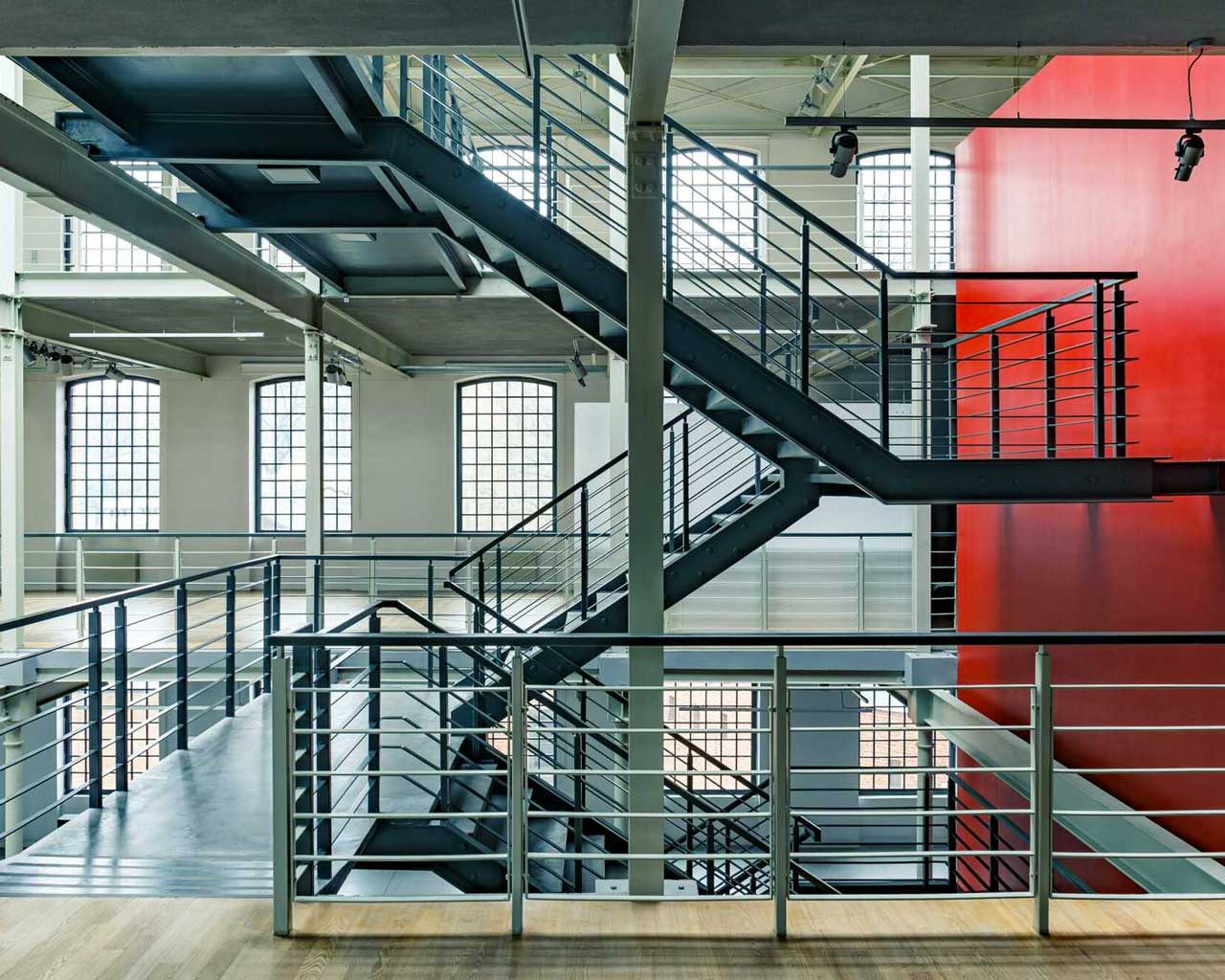
Think about the last time you had a key piece of your business fail. Maybe it was a latch on a door to protect your valuables. Maybe it was a roof issue that caused an expensive leak. The last thing you want is for the materials you depend on to fail.
That’s why metal floor decking is so desirable. Metal floor decking is a crucial element in modern construction projects. It provides strength, durability, and versatility for various applications.
Metal decking is instrumental in commercial and industrial construction projects. In the article below, you’ll find information on the different types of metal floor decking and their advantages. Continue reading to learn more about the benefits of this durable material.
## **Types of Metal Decking**
Metal decking is a type of steel deck material that creates a flat surface on a building’s floors. It’s made from galvanized steel. The most common type of metal decking is “steel decking.” It is available in different thicknesses and widths to meet the needs of your construction projects.
Corrugated metal decking is usually used [for roofs](https://www.nationwide.com/lc/resources/home/articles/types-of-roofing). Smooth metal decking is suitable for flooring. The choice of metal decking depends on the specific needs of the construction project.
## **Advantages of Metal Decking**
One of the benefits of metal decking is its strength. Different [steel rebar](https://www.bushwickmetals.com/product-category/rebar/) sizes, which reinforce the decking, provide exceptional stiffness. This makes steel rebar ideal for multi-story buildings and structures that need a strong foundation.
Metal floor deck structures are also durable and [resistant to corrosion](https://csef.usc.edu/History/2009/Projects/J1521.pdf) and weathering. That makes metal decks a suitable choice for exterior applications.
## **Using Metal Decking for Concrete Floors**
One of the most common uses of metal decking is in the construction of concrete floors. The metal floor deck makes the formwork to support wet concrete during the construction process.
Once you pour and cure the concrete, the metal decking becomes a permanent part of the structure. The metal floor decking can also work as a structural component. It can provide support and stability for a building’s floors.
## **Using Metal Decking for Mezzanine Floors**
Metal decking is also used in the construction of mezzanine floors. Mezzanine floors are intermediate floors between the main floors of a building. They are often used in warehouses and other commercial and industrial buildings. Mezzanine floors create more storage space or accommodate extra office space. Metal decking is an ideal choice for mezzanine floors.
## **Using Metal Decking for Pedestrian Bridges**
Another use of metal decking is in the construction of pedestrian bridges. Pedestrian bridges are structures that allow people to cross roads, rivers, or railways. Metal decking works well for pedestrian bridges because it’s durable and resistant to corrosion.
## **Reviewing the Benefits of Metal Floor Decking**
Metal floor decking is a durable material with a range of applications in the construction industry. Now that you’re familiar with the benefits, you’re ready to find a metal company to suit your needs. When you’re ready to move forward, [get in touch](https://www.bushwickmetals.com/contact/) with the professional team at Bushwick Metals.
[Back to News / Blog](https://www.bushwickmetals.com/news)
## Contact Us
- First Name\*
- Last Name\*
- Email\*
- Phone Number\*
- Company Name
- Website URL
- Message
- Upload a Drawing
Drop files here or Select files
Max. file size: 64 MB, Max. files: 5.
- Agreement\*
- [ ] Agree to Terms
- CAPTCHA
31865
[iframe](about:blank)
### Approvals
[](https://www.fmapprovals.com/)[](https://marks.ul.com/about/ul-listing-and-classification-marks/)[](https://www.sdi.org/)[](https://icc-es.org/)[](https://www.ul.com/services/environmental-product-declaration-epds-certification)
Notifications# The Most Common Galvanized Steel Uses
February 11, 2022 in
Blog / Galvanized Steel
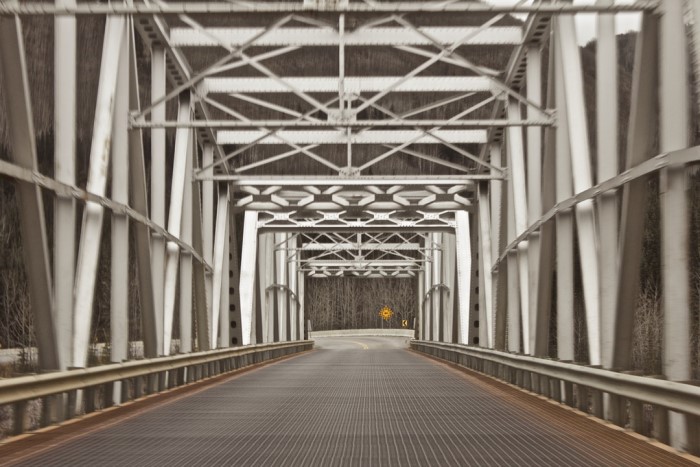
Did you know that [projections for the market](https://www.prnewswire.com/news-releases/galvanized-steel-market-to-grow-by-57-74-mn-tons-during-2021-2025--17-000-technavio-research-reports-301374799.html) for galvanized steel could grow to almost 58 million tons by 2025? There has been an increasing demand by industries and companies for this popular type of steel. Many industries have found a variety of galvanized steel uses such as high-rise buildings, cars, support beams, and more. It is less prone to rust and corrosion than iron or regular steel.
If you have an interest in learning more about the benefits and uses of galvanized steel, then keep reading on.
## What Is Galvanized Steel?
Steel that becomes galvanized typically goes through a process of hot-dipping with molten zinc. First, steel becomes dipped in zinc-iron alloy and zinc metal. Next, a coating forms overtop of the steel. Typically, you clean the steel first through a series of steps that includes degreasing. After cleaning the steel, it is put into the [liquid zinc](https://galvanizeit.org/inspection-course/galvanizing-process/galvanizing) for up to ten minutes.
Lastly, the galvanized steel goes through post-treatment which involves cleaning and shaving off excessive zinc. The process of coating steel in zinc is not necessarily for improved strength, but rather, to reduce rust and corrosion.
Galvanized steel is beneficial because of its durability, strength, and multiple uses. The added zinc component to steel makes it more versatile in a variety of industries as it will not rust or corrode. Essentially, this type of steel can last for decades to come.
## Galvanized Steel Uses
What are the most common uses of galvanized steel? This type of steel is widely used in a variety of different industries such as:
- Automotive
- Solar
- Agriculture
- Construction
- Telecommunication
It can be used for piping, wiring, framing, and even for household appliances. Galvanized steel is also widely used for commercial buildings and paint adherence.
### Types of Galvanized Steel
Hot dipping steel is the most common way of galvanizing it. As mentioned earlier, it involves dipping the steel into melted zinc. Once it re-emerges, the oxygen reacts with the zinc and forms an anti-corrosive layer on top of the steel.
Electrogalvanization is another way of creating galvanized steel. It does not use the dipping process. Instead, it uses electrical currents on your steel. First, an electrolyte solution is placed on the steel. Afterward, the electric current runs through the electrolyte solution and helps deposit zinc onto the surface. In some cases, this can be stronger than hot dipping. Experts suspect that the zinc adheres or bonds more closely to the steel through electrogalvanization. This creates longer-lasting and stronger steel components.
The [benefit of electrogalvanization](https://www.wise-geek.com/what-is-electrogalvanization.htm) is that you can add other chemicals to the electrolyte solution. In the automotive industry, manufacturers use phosphate salts in conjunction with zinc. The phosphate helps with the paint adherence on car parts. In return, it can make paint and other surface materials last longer than when used with zinc only.
Other common items that use the electric current process are screws, wires, and pipes.
Galvannealing is also used for the creation of galvanized steel. This process uses a zinc-iron alloy mixture. Like electrogalvanization, it helps with paint and gives a matte finish to the product. For creating this look, the steel goes through the typical hot-dipping process with an iron and zinc mixture. Then, it is heated again so that the zinc fully adheres to the steel. It still provides anti-corrosive benefits but can give a more aesthetic appeal.
## Molding Galvanized Steel
What are different types of galvanized steel forms? You can mold steel sheets after it has been galvanized.
Sheet metal [is widely used](https://www.ehow.com/how_7889943_bend-galvanized-sheet-metal.html), but it usually requires unique forms and shapes for industry and home use. If the metal sheet is thin enough, you may be able to use a sharp, sturdy edge for gently bending it. If it is too thick, then use an electric grinder for creating a thin groove along with the metal sheet. Once you have created a groove, you can bend or shape your metal as you would like.
Keep in mind this process is extremely delicate and if you go too far, then you might snap the metal sheet. One indicator that you have gone too far is that the groove line appears black.
## Metal Fatigue
Like all types of metal galvanized steel can eventually wear out with repeated use. It is important that you recognize common signs of metal fatigue in your steel.
The first [signs of metal fatigue](https://www.bushwickmetals.com/what-is-metal-fatigue/) and failure are cracks around the edges of the surface. If there is a particular point that receives more stress, then the cracks can form in specific regions instead. Once the stress increases, the cracks spread, much like on a car windshield, until the entire piece will fail.
Luckily, galvanized steel eliminates the risk of corrosion failure. This typically happens when steel rusts and breaks down. Any steel that has exposure to water should be galvanized. Vibration and mechanical failure are the other two types of metal fatigue. One of the best ways for combating metal fatigue is purchasing your steel from reliable and trustworthy manufacturers.
## Buy Galvanized Steel
During the pandemic, [steel prices](https://www.cnbc.com/2021/10/07/how-a-us-steel-shortage-created-a-market-bubble.html) rose almost 300% above normal. The high demand for this product coupled with shortages created soaring prices across the nation. In fact, to buy galvanized steel before the pandemic, you could expect to pay around $500 to $800 per ton. At one point, steel increased to almost $2,000 per ton.
Although this price has dropped slightly, it points to the high demand steel has on America’s industry. You can continue to expect a growing demand for steel in upcoming years. Some projections put it at an almost 4% growth between 2020 to 2021. Reliable manufacturers and producers can help give you quality materials at a fair price during this competitive market.
## Find Your Next Supplier
There are many galvanized steel uses in the construction, automotive, solar, and agricultural businesses. Buildings, cars, and bridges all use versions of galvanized steel because of its non-corrosive nature and durability.
[Contact us today](https://www.bushwickmetals.com/contact/) at Bushwick metals and let one of our skilled representatives help you choose the type of galvanized steel needed for your industry or business.
[Back to News / Blog](https://www.bushwickmetals.com/news)
## Contact Us
- First Name\*
- Last Name\*
- Email\*
- Phone Number\*
- Company Name
- Website URL
- Message
- Upload a Drawing
Drop files here or Select files
Max. file size: 64 MB, Max. files: 5.
- Agreement\*
- [ ] Agree to Terms
- CAPTCHA
16775
[iframe](about:blank)
### Approvals
[](https://www.fmapprovals.com/)[](https://marks.ul.com/about/ul-listing-and-classification-marks/)[](https://www.sdi.org/)[](https://icc-es.org/)[](https://www.ul.com/services/environmental-product-declaration-epds-certification)
Notifications# Steel Supply In Maryland Offering Next Day Delivery
August 8, 2022 in
Blog / Steel Supply

Steel is currently the [most widely used material](https://www.thoughtco.com/steel-applications-2340171) on the planet. It has several properties that make it an ideal material for a wide range of applications. It’s strong, durable, machinable, and available in a range of types and grades. Steel can also be recycled indefinitely without any degradation.
For your steel supply in Maryland, you want to be sure you’re getting the highest quality parts and the best service. Bushwick Metals can provide both of these. Keep reading to find out how.
## Why Bushwick Metals?
At Bushwick Metals we go the extra mile to make sure we provide the best quality goods possible to our customers. We carry out a range of processes in-house using the latest technology to ensure our goods meet the highest standards.
We keep a huge range of products in stock, but sometimes our customers have very specific requests and need parts that aren’t standard. This is no problem at all, as we can fabricate any parts that you need. Our fully-trained workers are highly skilled, so any parts we supply will meet your specifications to very accurate tolerances.
We’ve been operating as a steel distributor for almost 200 years, meaning we’re one of the most experienced steel supply companies in the industry. Beyond our capabilities to machine and supply steel parts, we can also help with several other areas of your project.
Our team has plenty of experience in material and inventory management, so we can help you with this to make it easier to organize your project from start to finish. Not only will this minimize your downtime, but it will also prevent you from overordering.
We also provide next-day steel delivery. This means you won’t need to order everything at the start of your project, and therefore won’t have to worry about storage space nearly as much. With our help, you can be sure that your project will run smoothly.
## Bushwick Metal Products
Bushwick Metals keep a huge range of products stocked in our warehouses, making us possibly the most comprehensive Maryland steel supplier. Our steel products are all ready to use and are fit for a range of applications.
### Rebar
We sell rebar that can be used for roadways, concrete buildings, bridges, and more. The HSLA (high-strength low alloy) structural steel we use is corrosion resistant and available in different tolerances. We can even bend it before sending it out to you so you won’t have to do any on-site bending.
### Plates
Our steel plates are [available in various grades](https://www.bushwickmetals.com/steel-plate-grades-explained/) which have differing properties. The yield strength, tensile strength, and thicknesses vary, so we can discuss your project with you to find the right type. We can also provide plates that are corrosion/abrasion-resistant.
### Angles
We have a range of sizes and configurations of angles available in several grades including A36, A572, and A588. We keep various standard lengths in stock, but can easily cut them down if need be.
### Other Products
Our warehouses keep a variety of other standard products in stock including:
- Beams
- Channels
- Bars
- Expanded metal
- Grating
- Sheets
- Tubing & Piping
If there are any other speciality parts that you need let us know and we can probably source them for you!
## Value-Added Services
Bushwick Metals isn’t the only steel supplier in Maryland, but we believe that we go the furthest to provide for our customers. On top of all the steel supplies we sell, we also offer a range of value-added services.
Steel parts can vary greatly in terms of quality, and we take pride in making ours the best. One thing we like to ensure is that you don’t have to do any extra work before you start using our products. All of our parts are ready to use as soon as you get them. You can order something today, we’ll deliver it tomorrow, then you can use it straight away. This helps keep your project flowing smoothly.
### Saw Cutting
Things like beams and rebar come in several sizes, but it’s unlikely that you’ll need these exact lengths. We can cut these down to whatever size you need, keeping to industry-standard tolerances.
### Shearing and Bending
We can shear plates up to 12 feet long and anywhere between 16 gauge and 5/8″ thick. We also have multiple press brakes to bend sheets, again up to 12 feet long and up to 1/2″ thick.
### Place Processing
We have various [plate processing capabilities](https://www.bushwickmetals.com/value-added-services/plate-processing/) for whatever you need. This includes drilling, tapping, milling, countersinking, and more. This is all done using one machine for maximum efficiency which keeps costs down and maintains a shorter turnaround time for our customers.
### Tee Splitting and Straightening
Beams are traditionally cut using thermal methods, but this can make them twist and bow. Our rotary-mechanical shearing technique prevents this, keeping all tees completely straight after splitting.
### Section Bending and Cambering
Whatever sections you need bent, we can handle it. This includes any of the following:
- Beams
- Channels
- Bars
- Angles
- Tubes
- Pipes
- Tees
We can also camber beams efficiently and accurately. Our minimum cambering length is 25′ and maximum width is 40″.
### Custom Roll Formed Floor and Roof Deck
We have a state-of-the-art roll former to roll both roof and floor deck. We can roll deck between 16 and 22 gauge and from 3 to 40 feet long. This can have either a painted or [galvanized finish](https://www.corrosionpedia.com/definition/566/galvanizing). Whatever specifications you have for your decking, we’ll get it sorted and then deliver it out to you as soon as possible.
## Steel Supply in Maryland
Bushwick steel has been supplying steel parts in the US since 1829, and over the years our expertise in the industry and the quality of our products have only increased. With next-day delivery, we can get parts out to you whenever you need them so that your project doesn’t come to a halt.
If you need steel supply in Maryland or have any questions for us [click here](https://www.bushwickmetals.com/contact/) to contact us today.
[Back to News / Blog](https://www.bushwickmetals.com/news)
## Contact Us
- First Name\*
- Last Name\*
- Email\*
- Phone Number\*
- Company Name
- Website URL
- Message
- Upload a Drawing
Drop files here or Select files
Max. file size: 64 MB, Max. files: 5.
- Agreement\*
- [ ] Agree to Terms
- CAPTCHA
8428
[iframe](about:blank)
### Approvals
[](https://www.fmapprovals.com/)[](https://marks.ul.com/about/ul-listing-and-classification-marks/)[](https://www.sdi.org/)[](https://icc-es.org/)[](https://www.ul.com/services/environmental-product-declaration-epds-certification)
Notifications# Steel Plate – Exploring Different Grades and Their Applications
April 8, 2024 in
Blog / Steel Plates
Together with iron, steel makes up [about 95%](https://www.usgs.gov/centers/national-minerals-information-center/iron-and-steel-statistics-and-information) of the world’s total metal tonnage in any given year. These materials are ever-present in our lives, with steel being crucial to everything from cars and construction to medical purposes.
If you’re working to hone your steel operation, knowing more about the metal is always vital. One of the more complex facets of the industry is the many different steel plate grades. By some estimations, there are thousands, making memorizing each one a tall task.
If you’re curious about the world’s iron and carbon alloy, we’re here to help. Read on for a quick guide to some of steel’s most popular uses and grades.
High-quality steel comes in a class of its own, and it’s not just judged by how much it costs. When it comes to steel plate grades, they can be an essential component that can determine how you decide which steel plate is fit for your requirements.
### Steel plate grades are determined by various factors, which include:
- The composition of steel (ratios of various substances like steel, iron, aluminum, and more)
- Strength
- Formability
- Yield
- Size (width and thickness)
- Corrosion Resistance
- Cost
Many standards that steel plates are judged up can also be dependent on the technology and process used to make them. ASTM International is a global standards organization that analyses and publishes various technical standards for a wide range of materials. It currently publishes around 12,000 technical standards and is followed by governments globally.
## **What Are The Different Steel Plates Grades?**
Steel is split into [four main categories](https://www.linkedin.com/pulse/what-different-types-steel-grades-atmastco-limited/): Carbon steel, Alloy, Stainless, and Tool. Some of these are graded for structural steel, while others use the durable metal for less heavy-duty purposes.
A steel’s grade isn’t indicative of its quality, as the term would imply. Rather, steel grades are a way to categorize steel and what it’s used for. Here are some more of the most common grades of steel.
Like many other materials used for various construction purposes, steel plates are also utilized similarly. However, rigorous testing and evaluation of each steel plate must be done to ascertain its durability and quality for the long term.
Steel plate grades are an optimal way to determine which steel plate is ideal for your requirements. Depending on what you’re going to be using the steel plates for, the grade that it’s classified can be very important. There are various standards that different organizations release, but the one that is most followed is released by [ASTM International](https://www.astm.org/).
## Why They Are Crucial
Many people don’t understand the importance of steel plate grades and why they are essential before starting any type of construction. If you are involved with the construction business, you should know that these grades are crucial to comply with while not mandatory for all projects.
Adhering to these grades can ensure health, safety, durability, quality, and optimal adherence to other structures when the construction is ongoing. Depending on who you are working with, these standards might also become compulsory to follow.
## ASTM Standards
ASTM standards can vary depending on which material and structure you’re working with. Here are some common standards that are used for steel plates.
- **A36**: This is a carbon steel variant utilized in general plate applications where the plate might be riveted, bolted, or welded. The minimum yield strength of 36 KSI. The plates need to have a minimum thickness of 8 inches.
- **A572-50**: This type of steel is used in general plate applications, similar to A36. It is composed mainly of Columbian-Vanadium steel. It should have a minimum yield of 50 KSI and is optimal where weight-saving is crucial to saving costs. You can find these steel plates up to 4 inches thick.
- **A588**: High-strength, low-alloy steel that is used in general plate applications. It is copper-bearing steel and has two to four times the corrosion resistance of carbon steel without copper. It offers a minimum yield strength of 42 KSI to 50 KSI. Cost savings can be achieved by reducing weight in this grade, optimal for many construction purposes.
- **ASTM A516-GR70**: This standard is crucial to fulfill when you require a steel plate that can withstand extreme conditions. It is ideal for containers like vessels, tanks, and boilers where high-pressure conditions are present. It is silicon-killed carbon steel with a fine-grain structure.
- **T-1 Type B Construction Alloy Steel to A514**: With a minimum yield strength of 100 KSI, it offers excellent strength, fabrication, and toughness properties. It is highly used in structural applications where strength is required to reduce overall weight and size. This standard is ideal if you plan to use steel plates for bridges, construction equipment, mining equipment, liners, bucket, and cranes.
- **AR235, AR400 Abrasion-Resistant Plate**: When looking for longevity, you need to find steel plates that can withstand abrasion, impact, and regular wear and tear. You can find two types of hardness for steel plates AR235 is ideal for moderate-resistance applications. AR400 is ideal for high-resistance applications. They are not suitable for structural and load-bearing applications. These standards suit mining and earth-moving equipment, mixing drums, material handling, chutes, and hoppers.
- **A709**: A709 steel is categorized as a low-alloy steel. It’s also known for its high strength and is dominantly used in structural applications.
You’ll find A709 steel in vital infrastructure like bridges and buildings. It’s among the easiest steels to fabricate and is also known as an easy-to-weld steel. Consumers who favor this steel likely desire its adaptability and its resistance to outdoor conditions, such as severe weather.
- **A913**: A913 is similar to A709 in many ways. Both are “high-strength low-alloy” steels, and both are dominantly used for infrastructure. They have similar resistance to the outdoors, making both ideal for construction.
A913 sets itself apart from A709 with its durability and resistance to fatigue. As such, it’s mostly favored in applications that put the steel under high stress.
- **A992**: A992 is also known as ASTM A992 and is the standard among structural steel. A992 has a higher tensile strength than the common A36 steel, making it desirable for high-stress construction. It’s easy to fabricate due to good weldability and is mostly found in commercial buildings and bridges.
- **A514**: A514 is one of the many grades of steel that isn’t desirable for construction projects. Instead, A514 is most used in the construction industry as equipment. The steel is perfect for the creation of heavy machinery and equipment.
Outside of the construction industry, you’ll also find A514 in mining operations. Its most notable quality is its resistance to extreme temperatures, making it suitable for freezing weather. As such, it’s common for equipment intended for use in extreme cold.
## Finding Out The Right Steel Plate Grade for Your Needs
When you’re wondering what type of steel plate grade is optimal for your requirements, you need to know what each grade can be used for and where it is ideal.
- **A36**: Structural steel channels, steel plates, wide flange beams, I-beams, structural angles. It is ideal for many applications, including fixtures, rings, bearing plates, cams, and many others.
- **A500** is a cold-formed welded and seamless carbon steel structural tubing in rounds and shapes. Ideal for bridges and buildings, as well as general structures.
- **A572**: Available in five grades, 42, 50, 55, 60, and 65. The most common one used for applications is A572-50. It is used in various structural applications like buildings, bridges, transmission towers, construction equipment, and truck wireframes.
- **A588**: Has a wide range of applications, including transmission and phone towers, bridges, gusset plates, and housing enclosures. It has optimal strength to weight ratio.
Depending on what industry you are working in and what you’re looking for, steel plates can be the ideal solution. For some grades, there are additional standards like steelmaking and heat treatment.
You will also find sub-categories within some grades, as is the case for A572, A516, and many others. The sub-categories can be divided based on varying levels of strength, toughness, durability, weight-saving, etc.
## Contact Bushwick Metal Experts When **Deciding On Your Steel Grade**
With thousands of steel plate grades, there’s a perfect choice for any operation. Think of what sort of steel your project requires before purchasing your steel so that you can find the perfect grade.
Intsel Steel East is the leading distributor of steel in the northeast. We have more than a century of service with half a dozen locations across the East Coast from our partnership with Bushwick Metals. We have been catering to all metal requirements of our US customers for over a century and can provide you with any metal specification. [Contact us](https://www.bushwickmetals.com/contact/) for a quote on your next delivery of high-quality steel.
[Back to News / Blog](https://www.bushwickmetals.com/news)
## Contact Us
- First Name\*
- Last Name\*
- Email\*
- Phone Number\*
- Company Name
- Website URL
- Message
- Upload a Drawing
Drop files here or Select files
Max. file size: 64 MB, Max. files: 5.
- Agreement\*
- [ ] Agree to Terms
- CAPTCHA
87966
[iframe](about:blank)
### Approvals
[](https://www.fmapprovals.com/)[](https://marks.ul.com/about/ul-listing-and-classification-marks/)[](https://www.sdi.org/)[](https://icc-es.org/)[](https://www.ul.com/services/environmental-product-declaration-epds-certification)
Notifications# Composite Deck
| Type | Item Name | Thickness | Weight Per Sq. Ft. |
| --- | --- | --- | --- |
| Composite Deck | 1-1/2" Composite Deck | 0.0299 | 1.8 lb |
### Approvals
[](https://www.fmapprovals.com/)[](https://marks.ul.com/about/ul-listing-and-classification-marks/)[](https://www.sdi.org/)[](https://icc-es.org/)[](https://www.ul.com/services/environmental-product-declaration-epds-certification)# A Guide to A36 Steel Properties
May 15, 2023 in
Steel Supply / Structural Steel
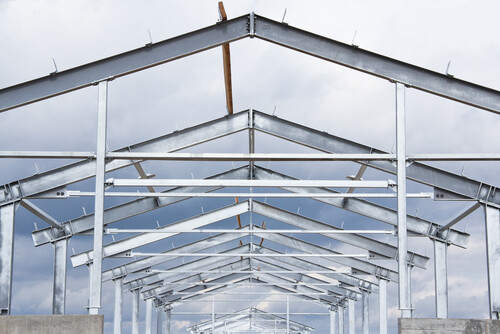
Did you know that more than [1.6 billion tons of steel](https://www.sciencedirect.com/topics/engineering/steel-production) are produced each year?
Steel is popular for structural applications. It is strong, durable, and flexible, making it ideal for constructing buildings and infrastructure. What’s more, it is resistant to fire, moisture, and pests.
There are many [different types of steel](https://www.bushwickmetals.com/a572-vs-a36-grade-comparison-and-uses/) available, including A36 steel. To learn more about the properties of this type of steel, keep reading this helpful guide.
## **What is A36 Steel?**
A36 steel is a type of low-carbon steel with a carbon content of less than 0.3%. This makes it easy to machine, weld, and form, making it a versatile and popular general-purpose steel. The low carbon content also means that heat treatment has limited effects on the steel.
Additionally, A36 steel contains small amounts of other alloying elements such as sulfur, silicon, manganese, and phosphorus. These elements help improve the steel’s mechanical and chemical properties.
However, since A36 steel does not contain high amounts of nickel or chromium, it may not exhibit excellent resistance to corrosion.
## **A36 Steel Properties**
A36 steel is often labeled by mechanical properties and not a chemical composition. Here are some notable A36 steel characteristics:
### **Ultimate Tensile Strength**
The ultimate tensile strength (UTS) of A36 steel ranges from 58,000 to 79,800 psi (400 to 550 MPa). UTS refers to the maximum stress a material can withstand in tension.
Usually, the A36 tensile strength is used to evaluate the material’s strength. The precise ultimate tensile strength is often determined by factors such as forming method and chemical composition.
### **Yield Tensile Strength**
Yield strength is the stress at which the steel starts to bend or deform and will no longer return to its original shape once you remove the stress. A36 steel’s yield tensile strength is 36,300 psi or 250 MPa.
### **Density**
Density is a measure of a material’s mass per unit volume. It helps calculate the weight of a structure or component made of the material.
The A36 steel density is approximately 7.85 g/cm³ (0.284 lb/in³). Since it is relatively low, it makes it easy to work with. What’s more, it is suitable for applications where weight is a concern.
### **Elongation at Break**
Elongation at break is a measure of a material’s ductility—the ability of it to deform without breaking. The elongation at break of A36 steel is 20.0% when tested in a 200mm gauge length. This means that when you stretch or pull A36 steel, it can extend up to 20.0% of its original length before breaking.
Additionally, the A36 steel has an elongation at a break of 23.0% when tested in a 50mm gauge length.
### **Modulus of Elasticity**
The modulus of elasticity is a measure of a material’s ability to return to its original shape after subjection to stress. For A36 steel, the modulus of elasticity is 29,000 ksi or 200 GPa.
### **Bulk Modulus**
Bulk modulus refers to the measurement of a material’s resistance to uniform compression. It is vital for evaluating the performance of materials like steel in applications where it is subjected to compressive loads. The bulk modulus of A36 steel is typically 20,300 ksi or 140 GPa.
### **Poissons Ratio**
The [Poisson’s ratio](https://byjus.com/physics/poissons-ratio/) of A36 steel is 0.260. This means that for every 0.260 units of transverse strain, there will be 1 unit of longitudinal strain.
### **Shear Modulus**
The shear modulus refers to the measure of a material’s resistance to shear stress. A36 steel sheer modulus stress is 11,500 ksi or 79.3 GPa.
### **Hardness**
A36 steel hardness depends on the heat treatment. But it’s usually around 119-162 Brinell hardness (HB).
## **A36 Steel Equivalent**
A36 steel has equivalent materials with different standards. These include:
- EN 10025
- JIS G3101
- DIN 17100
While the materials may have similar chemical and mechanical properties, they may differ in some specifications, such as the thickness or width range.
## **Get High-Quality Steel Today**
Need A36 steel? Look no further, Intsel Steel East. We are your go-to steel supplier and deliver to your location.
[Contact us today](https://www.bushwickmetals.com/contact/) to learn more.
[Back to News / Blog](https://www.bushwickmetals.com/news)
## Contact Us
- First Name\*
- Last Name\*
- Email\*
- Phone Number\*
- Company Name
- Website URL
- Message
- Upload a Drawing
Drop files here or Select files
Max. file size: 64 MB, Max. files: 5.
- Agreement\*
- [ ] Agree to Terms
- CAPTCHA
32902
[iframe](about:blank)
### Approvals
[](https://www.fmapprovals.com/)[](https://marks.ul.com/about/ul-listing-and-classification-marks/)[](https://www.sdi.org/)[](https://icc-es.org/)[](https://www.ul.com/services/environmental-product-declaration-epds-certification)
Notifications# The Benefits Of Serrated Steel Grating At Bushwick Metals
December 5, 2022 in
Blog / Expanded Metal & Grating

Imagine walking along an ocean boardwalk, watching the waves crash along the shore. You see a bird dive into the ocean as the water swells towards you. The large wave crashes against the boardwalk, and you look down. The serrated steel grating of the walk kept your feet nice and dry. How?
So, you want to know how these metal grates work, their benefits, and when you should use them for your at-home projects? Keep reading to deep dive into the process.
## What Are Serrated Type-Bearing Bars?
The metal serrated type-bearing bars make up the load area of the welded grating. Most bars are either welded or riveted together, depending on the client’s needs, wants, and specifications.
Serrated type-bearing bars are made from [low carbon steel](https://www.wisegeek.com/what-are-the-different-uses-of-low-carbon-steel.htm), aluminum, or stainless steel. The types of grating include serrated welded steel with either a semi-circular surface, a trapezoidal surface, or an intermittent surface. Pattern-wise, the materials come in a normal, interrupted, carrier bar, or carrier bar with crossbar shapes. Some grates come with tread strips.
## Uses of Steel Grating
Among the types of grating, serrated steel grating is used for a variety of walkways and platforms. Some apartment complexes choose to use serrated welded grating to create walkways along their units; engineers also create balconies using the same material.
For public construction projects, steel grating is used to create pedestrian cross-overs over highways and overpasses. Factories utilize the metal to create a safer working environment for their employees.
To create more grip and traction in environments filled with water, oil, and other natural elements, the best grating is used on stairs. Public beaches, parks, and other natural areas commonly have serrated steel grating stairs and walkways. In keeping the ground dry, workers install grating as drainage trench cover. The material gives overflowing water a convenient place to go.
## Kinds of Serrated Steel Grating
Before diving into serrated steel grating, let’s dive into the different types available. These platforms are made of aluminum, stainless steel, or low carbon steel.
You can choose the welded serrated steel grates. First, the pieces of metal are [welded together](https://waterwelders.com/types-of-welding-processes/). You can choose between flux-cored arc, stick-shielded-metal arc, gas metal arc, laser beam, electron-beam, plasma arc, gas tungsten arc, atomic hydrogen, and electroslag welding. If you don’t want welded-together grates, you can choose between three other options: swage-locked, press-locked, and riveted grates.
Let’s go over a few of the differences between the various types of materials used in serrated steel grating, as well as the benefits and drawbacks of each.
### Aluminum Bar Grating
Aluminum is not only lightweight, but it is also incredibly durable. This makes it a very versatile material with a wide variety of applications. Aluminum bar gratings can be used for both industrial and architectural purposes.
### Carbon Steel Grating
Carbon steel is an incredibly strong material, meaning that it can hold up in various applications and is highly durable. That said, carbon is highly susceptible to corrosion, meaning it is not a good choice for any materials that are highly corrosive or are kept in corrosive environments.
## Benefits of Serrated Welded Grating
Builders choose serrated welded grated due to the special features that come with the material. With the raised surface of the metal grates, the slip resistance performance is excellent. In wet and slippery places, the grooves and edges of the material give people footholds. With most types of grating, a galvanized surface treatment is included. The treatment allows for amazing corrosion resistance performance. Because of this, serrated steel grating products come with a long product service life.
If you need a walkway or ramp in an environment that’s either salty or corrosive due to to other chemicals, consider steel grating. The metal has high-quality chemical stability, meaning that corrosion won’t affect your projects as much. For public works projects, using steel grating gives both you and the public peace of mind. The serrated surface gives pedestrians traction and helps prevent them from slipping. Plus, weather debris does not collect on the platforms due to the gaps in each grate.
## Partnering With a Professional
If you’re interested in using the serrated steel grating but don’t know how to get started, consider partnering with a professional team. Along with helping you determine the best metal grate for your project, a company like Bushwick Metals can also [assist in steel saw cutting](https://www.bushwickmetals.com/precision-steel-saw-cutting-services-at-bushwick-metals/), shearing, stamping, and slitting metal.
### Expanded Metal Options
Do you need a solid metal surface for your construction project? Expanded metal options include standard/regular, flattened, architectural/decorative meshes, and grating. You can choose between carbon, galvanized, or stainless steel, or aluminum. If you need [expanded metal](https://www.bushwickmetals.com/product-category/expanded-metal-grating/) in other shapes and sizes, Bushwick Metals has what you need. Those looking specifically for grating should keep reading, to figure out which kind works best for them.
### Grating Options
The engineers utilize an automatic weld-forge methodology to craft the types of grating. The machine joins the bearing bars directly to the cross bars in a form of one-piece constructed machine. For color options, you can choose between black-painted, galvanized, mill, or bare finish.
#### Closed-Mesh
This is a grating product that locks through pressure. The spacing is closed bars to allow for ease of motion for pedestrians. The option also complies with the ADA (American’s with Disabilities Act).
#### Grip-Strut Safety
A one-piece diamond-shaped grate made from lightweight metal, the product is made with complete slip resistance in mind for workers dealing with rough weather.
#### **Grate-Lock™ Interlocking-Type Mezzanine**
This is a system made of interlocking planks, treads, and other parts. The rung design allows for ease of motion on all terrains. Plus, you can use lighter-gauge steel as the building material for appropriate building projects.
#### **Heavy-Duty Grip Strut**
This is a plank grating system that allows for a 24-foot clear span if so desired. The material allows you to support heavier loads for longer periods of time. If you own a large corporation with many factories, consider this option to improve the experience of your employees.
## Common Materials in Serrated Steel Gratings
- Low carbon steel is easy to mold and weld and is an economical choice. It is often used in commercial or industrial settings.
- Stainless steel is useful in corrosive environments, such as those where it may encounter chemicals or food.
- Aluminum is lightweight and nonmagnetic, and is often used in a commercial setting on ships or in waste treatment.
The material you choose will depend on the specifics of your project. Experts at Bushwick Metal can help you determine what the best material is for your use.
## Ways to Produce Serrated Steel Gratings
Swage-locked grates are very strong and weight less than other options. Instead of being welded together, they are pinched by machinery. Hydraulic pressure is used to make press-locked grates, which are just as strong as welded grates. The hydraulic pressure permanently locks the bars in place and gives a smooth finish. Cold press riveting is the oldest type of grates, and produces grates that are both stiff and strong.
Both welded and non-welded serrated steel gratings are very strong. These grates don’t bend and can carry large amounts of weight. They are easy to install, and if you later need to change the area, they can be removed just as easily. When compared to flat surfaces, even smooth steel gratings, serrated gratings make workers or pedestrians safer. Even in rain or high winds the serration provides a foothold for shoes, and serrated steel grating is sometimes known as anti-slip grating.
## Standards For Steel Gratings
Manufacturers commonly use standards set by the [American National Standards Institute (ANSI)](https://www.ansi.org/) when creating their products. ANSI five classifications focus on the type of work that the grating will perform and the weight it can hold.
- Light Duty grates are meant for pedestrians, and can hold up to 2,000 lbs. This classification is not intended to be used by vehicles.
- Medium Duty grates are used for light traffic, such as in a parking lot in a residential area or on sidewalks, where there is very little traffic. They are used to support between 2,000 lbs. and 5,000 lbs.
- Heavy Duty grates are for commercial vehicles, such as tractor trailers or box trucks. This type can support between 5,000 lbs. and 7,500 lbs. of weight.
- Extra Heavy Duty grates are often used for bridges and highways, and they can carry up to 10,000 lbs.
- Special Duty grates are the highest class, and are used to handle over 10,000 lbs. of weight. They are often used in airports.
Serrated steel gratings are used for a wide variety of applications, so it makes sense that there are various classifications of them, ranging from small light-duty grates to enormous special-duty grates used in airports. These classifications make it significantly easier to decide which type of grate you need to use for your project.
Even knowing the ANSI classifications, though, you might have some questions about which grating to choose or which one best applies to your project. Our team of experts at Bushwick Metal can take a look at your project and help you determine which grates are most appropriate for your needs.
## Want to Use Steeling Grating for Your Next Project? Contact Us Today?
Serrated steel grating is a wonderful building material that can help you accomplish a variety of projects. Engineers design the bearing bars to hold a heavy load with minimal effort. The serrated designs allow for maximum traction and weather resistance.
Do you feel as if these grates suit the upcoming project you have in mind? Maybe you have the ideal type in mind, or you still need help figuring it out? Either way, consider engaging with a professional who can help you get what you need. The team at Bushwick Metals is dedicated to helping you find which types of grating will work best for your project. [Contact us](https://www.bushwickmetals.com/contact/) today to get started.
[Back to News / Blog](https://www.bushwickmetals.com/news)
## Contact Us
- First Name\*
- Last Name\*
- Email\*
- Phone Number\*
- Company Name
- Website URL
- Message
- Upload a Drawing
Drop files here or Select files
Max. file size: 64 MB, Max. files: 5.
- Agreement\*
- [ ] Agree to Terms
- CAPTCHA
85946
[iframe](about:blank)
### Approvals
[](https://www.fmapprovals.com/)[](https://marks.ul.com/about/ul-listing-and-classification-marks/)[](https://www.sdi.org/)[](https://icc-es.org/)[](https://www.ul.com/services/environmental-product-declaration-epds-certification)
Notifications# Leadership Bios
### Intsel Steel
[](https://www.bushwickmetals.com/wp-content/uploads/2020/10/2008-eoty.pdf)
[Download PDF](https://www.bushwickmetals.com/wp-content/uploads/2020/10/2008-eoty.pdf)
### Approvals
[](https://www.fmapprovals.com/)[](https://marks.ul.com/about/ul-listing-and-classification-marks/)[](https://www.sdi.org/)[](https://icc-es.org/)[](https://www.ul.com/services/environmental-product-declaration-epds-certification)# Value Added Services
### Intsel Steel
### Our Value Added Services
[](https://www.bushwickmetals.com/value-added-services/saw-cutting/)
#### [Saw Cutting](https://www.bushwickmetals.com/value-added-services/saw-cutting/)
[](https://www.bushwickmetals.com/value-added-services/plate-processing/)
#### [Plate Processing](https://www.bushwickmetals.com/value-added-services/plate-processing/)
[](https://www.bushwickmetals.com/value-added-services/shearing-and-bending/)
#### [Shearing and Bending](https://www.bushwickmetals.com/value-added-services/shearing-and-bending/)
[](https://www.bushwickmetals.com/value-added-services/section-bending-and-cambering/)
#### [Section Bending and Cambering](https://www.bushwickmetals.com/value-added-services/section-bending-and-cambering/)
[](https://www.bushwickmetals.com/value-added-services/tee-splitting-straightening/)
#### [Tee Splitting & Straightening](https://www.bushwickmetals.com/value-added-services/tee-splitting-straightening/)
[](https://www.bushwickmetals.com/value-added-services/custom-roll-formed-floor-and-roof-deck/)
#### [Custom Roll Formed Floor and Roof Deck](https://www.bushwickmetals.com/value-added-services/custom-roll-formed-floor-and-roof-deck/)
Intsel Steel East has been an unparalleled leader in the metals industry for over a century. Leveraging our century of experience and expertise, we’ve developed one of the most complete and diversified carbon-steel product lines in the industry. But we didn’t stop there. We’ve also invested in in state of the art metals-processing equipment, which have the latest technologies to insure a quality product delivered to our customers on schedule. What’s more, Intsel Steel East employs a dedicated and talented staff who are extensively trained, take pride in their work and are committed to ensuring our clients’ satisfaction.
### Approvals
[](https://www.fmapprovals.com/)[](https://marks.ul.com/about/ul-listing-and-classification-marks/)[](https://www.sdi.org/)[](https://icc-es.org/)[](https://www.ul.com/services/environmental-product-declaration-epds-certification)# Our Sheet Metal Punching Service
December 18, 2020 in
Blog / Value-Added Services

Sheet metal is an indispensable mainstay of our modern way of life. It is a versatile product that provides industries with the reliability and inherent strength of metal coupled with the versatility and formability of plastic. Our sheet metal punching service may provide the solution to your problems.
There are various types of sheet metal. Your choice depends on the qualities desired in the end product. Carbon sheets are soft and easy to mold into shape. Galvanized sheets provide greater protection from corrosion and the elements due to their protective [layer of zinc](https://en.wikipedia.org/wiki/Galvanization#:~:text=Galvanization%20or%20galvanizing%20(also%20spelled,bath%20of%20molten%20hot%20zinc.), ideal for exterior use. And we make cold-rolled sheets from low-carbon steel with tighter thickness and a softness that allows it to be bent and molded without risk of fissuring.
These are only some of the types of sheets available at Bushwick Metals. We have been in business since 1829 and know that the best way to remain competitive is by offering plenty of choice. We also strive to be the best at what we do and to create reliable partnerships with our clients. This is why we not only offer every variety of metal sheeting but also work with our partners to ensure that the end product is shaped accordingly and ready to use.
To create products that are good to go, we take care of cutting, cleaning, and polishing, and we offer the finest sheet metal punching service. We look after all aspects of the metal so that you can concentrate on running your business and making a profit.
Our latest complimentary service is our sheet metal punching service, so let’s explore this essential process in metalworking and what it can do for you. Our sheet metal punching service is an essential metalworking process for cutting and shaping metal sheets. We customize metal sheets into a variety of forms adapted to specific dimensions and for particular uses.
## How does sheet metal punching work?
We set the sheet on a die while the heavy punch shapes or cuts it according to your requirements. We recycle excess metal from this process, forming new metal sheets. We repeat the punching process several times until we achieve the desired form.
Though simple in theory, sheet metal punching demands specialized heavy machinery and experienced metalworkers to supervise it. Attention to detail is key, so we train our staff to perform every job to perfection. The quality of the end product is determined by the power of the punch and the state of its die. The experience of the metal workers and the steel sheet itself have a lot to do with it as well.
Another important technique that uses the punch is stamping. This technique uses the punch to indent sheet metal. The powerful punch doesn’t cut through the metal sheet but deforms it, shaping it without compromising its stability and strength. Our high-tech production plant and experienced personnel can cut and punch your sheets, no matter the thickness or the alloy. We use the most modern machines available and maintain these to exacting standards. The result: we carry out every aspect of the operation perfectly, delivering a high-quality product that is ready to use.
Bushwick Metals does not only sell metal. We are the hub for all your metal needs. Our extensive metal reserve means that we have the parts and options to cater to every need. We sell it to you, we design it with you, we shape it for you, and we even store it for you.
Our policy is to create relationships that will endure the test of time. We invest in ourselves as well as our clients because we know that we can only succeed if we do it together. That’s why we offer our significant experience in service to our clients and guide you in the best way to use metals. Having a long-term approach to success, we aim for client satisfaction by getting to know our clients and anticipating their current and future needs.
We deliver in bulk or in half truck, wherever and whenever you need it. In an emergency, you can count on us to step up, using our metal reserves to your benefit. We understand how complex and difficult the business environment can be. We are flexible in our approach and may provide credit depending on the situation.
Bushwick Metals has been at the forefront of American steel for a very long time. We are still going strong. We’re proud of our reputation for straight dealing, quality, and reliability. For further information on sheet metal punching and our many other services, don’t hesitate to [contact our friendly service desk](https://www.bushwickmetals.com/contact/). Our knowledgeable staff is on hand to help you with any metal challenge, so get in touch with us to make your life easier today.
[Back to News / Blog](https://www.bushwickmetals.com/news)
## Contact Us
- First Name\*
- Last Name\*
- Email\*
- Phone Number\*
- Company Name
- Website URL
- Message
- Upload a Drawing
Drop files here or Select files
Max. file size: 64 MB, Max. files: 5.
- Agreement\*
- [ ] Agree to Terms
- CAPTCHA
64350
[iframe](about:blank)
### Approvals
[](https://www.fmapprovals.com/)[](https://marks.ul.com/about/ul-listing-and-classification-marks/)[](https://www.sdi.org/)[](https://icc-es.org/)[](https://www.ul.com/services/environmental-product-declaration-epds-certification)
Notifications# How Bulk Rebar Deliveries Streamline Construction and Cut Costs
### Intsel Steel
# How Bulk Rebar Deliveries Streamline Construction and Cut Costs
Rebar comes in many different sizes and configurations, these [steel reinforcement](https://www.researchgate.net/publication/350314674_Chemical_Analysis_of_Steel_Reinforcing_Bars_Case_Study_of_South_-_West_Nigeria) bars play a crucial role in fortifying concrete structures. Rebar is configured strategically in concrete to bolster overall structural integrity and improve tensile strength. This is the basic principle used in [metal bar grating](https://www.bushwickmetals.com/steel-bar-grating-in-industrial-environments/), where a series of equally spaced metal bars are assembled to connect to cross members.
Construction managers need to have a full understanding of rebar configuration, as they can make or break a project. This is because rebar has a direct correlation with durability, load-bearing capacity, and the overall safety of the structure in question. Project managers should also understand the delivery schedules of the company they wish to partner with.
At Intsel Steel East, we hallmark a variety of Rebar steel products customized into chairs, beams, grating stair treads, and many more, and we’re always ready to make same-day deliveries in New York to avoid inconveniencing your tight schedule as a project manager, retailer, or engineer.
## Benefits of Bulk Rebar Deliveries
There is always an advantage in ordering our fabricated rebar in bulk. Following the principle of economies of scale, you get better discounts, and deliveries are made to your location directly. As compared to traditional shipping systems, modern delivery systems for fabricated rebar come with improved logistics and reduced transportation costs.
They cut the cost associated with loading and unloading. When the manufacturer is handling the deliveries, rest assured that the right kind of equipment is used to load your order. At Intsel Steel East, we use flatbeds and specialized loading and unloading equipment to move our products across New York and New Jersey, amongst many other places in the Northeast United States.
More importantly, by using our specialized equipment, damages are minimal. Coupled with on-schedule deliveries, we greatly minimize downtime, which would cost you as a contractor. Whether you’re a retailer or contractor, when you order in bulk, we operate at maximum production capacity, which helps reduce cross-contamination of the final products.
## Streamlining Construction Processes
In the world of construction, controlling costs is of paramount essence. Failure to do so may break the project. Key approaches to consider for a seamless construction process include:
- Effective Project Planning: In this process, you focus on defining a project’s objectives, analyzing requirements, and creating a detailed schedule that integrates a cost-effective approach.
- Value Engineering: This is the process of carefully analyzing a project component to figure out cost-effective alternatives without compromising quality. For instance, you can embrace bulk rebar deliveries for cost-cutting endeavors. The process helps to optimize processes, materials, and design, leading to saving both money and time.
- Optimized Resource Management: This involves carefully managing equipment, materials, and labor to minimize downtime and waste. This is an effective tool for cost control.
- Technological Integration: The last decade has seen tremendous leaps in the advancement of technology. By integrating software and Building Information Modeling (BIM) in construction, project coordination has improved, errors have subsided, and safety has increased, reducing costs.
- Strategic Supplier and Vendor Relationships: Arguably, it’s among the most important aspects. The process involves cultivating a strong rapport with the suppliers and vendors to negotiate favorable terms and pricing. Creating long-term agreements in bulk purchasing puts you in a better position to negotiate with these parties and allows you to lower transportation and other associated costs.
## Understanding Rebar Sizing
Rebar sizing has served as a cornerstone of contemporary construction. The process helps to bolster the strength and durability associated with reinforced concrete structures. Rebar sizing, also known as metal or bar grating, has served as the workhorse of the industrial flooring market for a long time.
The feature that makes bar grating have superior quality in construction is that it can be fabricated to any configuration. Bar grating also requires minimal maintenance and the products are fully recyclable. By selecting the correct rebar type and size, professionals in the construction industry can bolster the longevity and integrity of their projects.
Whether it’s residential or commercial construction, rebar sizing plays an important aspect in achieving safe and reliable structures.
## Environmental Impacts
Bulk rebar deliveries are a great way to order for environmentally-conscious projects. This is because logistic vehicles use fossil fuels and release carbon-based emissions into the atmosphere. By using traditional methods, where you buy only what you require at the time, not only are you at risk of incurring extra costs every time you order but with every delivery, more pollutants are released into the atmosphere.
That’s why, when ordering rebar, first make sure you assess what you need and at Intsel Steel East, we’ll make same-day deliveries in New York, New Jersey, and the surrounding regions. Some of the Rebar Intsel Steel grades we stock include:
- **A-36:** made from ASTM A36 steel, which is a low-carbon steel. This means it is relatively inexpensive and easy to weld.
- **M1020:** is a low-carbon steel grade. It’s commonly used for various applications in general engineering due to its affordability, good machinability, and decent weldability.
- **A588:** prioritizes strength and atmospheric corrosion resistance for applications like bridges and buildings, not necessarily the specific needs for concrete bonding.
We also offer a variety of value-added services to ensure that your steel is configured as per your specific needs.
## Get Quality Bulk Rebar Delivered to Your Site Today
Intsel Steel East is a fully-certified company offering a complete inventory of beam & slab bolsters, bar grating stair treads, threaded rebar, chairs, and more. our steel comes with high-strength low- low-weight alloy with superior corrosion-resistant qualities to help you create long-lasting structures you’ve always wanted while helping you cut costs. Our products have a plethora of uses in foundations, bridges, roadways, buildings, and many more. More importantly, Intsel rebar steel provides an economical and perfect way to achieve excellent tensile strength.
To learn more about our products and our bulk rebar delivery programs, [contact us](https://www.bushwickmetals.com/contact/).
# A Buying Guide for Different Types of Rebar
In 2020, the steel rebar market was valued at [$99.48 billion](https://www.gminsights.com/industry-analysis/steel-rebar-market). With booming construction, rebar of all types is in demand.
If you need a reliable rebar supplier for a construction or industrial project, you need to be sure that you know what to look for. There are many types of rebar and rebar grades that can serve a role in a project. In this buying guide, we’ll tell you what you need to know about buying rebar.
## **Types of Rebar**
When choosing rebar, there are many different types that are available. Rebar made of steel is a popular option, but there are many types that can work well. The type of rebar you select depends on the grade and size you need to add the strength and support you require. Your selection also depends on the type of material that’s used for the rebar and what’s coating it.
Here are some of the most common types of rebar that are used in construction and concrete reinforcement.
### **Welded Wire Fabric Rebar**
Welded wire fabric rebar is a bit different from other types of rebar. That’s because it’s welded-low carbon [steel wire](https://www.bushwickmetals.com/steel-rebar-sizes/) that forms a grid. The grid reinforces concrete slabs, increasing the concrete’s strength.
### **Expanded Metal Rebar**
The expanded metal rebar features a metal mesh that includes diamond-shaped lines. A single steel sheet gets cut and expanded. It is then used to form the mesh. This kind of rebar is usually used when you need to incorporate a [thick plaster](https://timesproperty.com/news/post/what-is-plaster-thickness-in-construction-blid5420) to further support your concrete. You most commonly see it used for walking surfaces and sidewalks. Keep in mind that it’s not intended for heavy weights or high-traffic use.
### **Carbon Steel**
Also known as tempered steel rebar or black bar, carbon steel rebar is the most common type of rebar that’s used. This type of rebar is also the most affordable, so it’s a good budget option. While it serves many applications however, it corrodes fairly easily. Most of the more expensive types of rebar improve upon this and eliminate some of its tendency to corrode.
### **Epoxy-Coated Steel Rebar**
Also known as green rebar, epoxy-coated steel rebar is often used in construction. This is particularly true if the installation environment is prone to corrosion. Because of its corrosion resistance, epoxy-coated rebar is a good choice for maritime applications. It may also be used in other locations where there will be a lot of salt or moisture.
### **Stainless Steel Rebar**
Also, a type of rebar that works well against corrosion, stainless steel rebar is also a good choice. This type of rebar may be more expensive than carbon steel initially but can offer a better total life-cycle cost for a construction project. Stainless steel bars can be suitable when a lot of weight support is needed. It can be used on roads, bridges, and piers to offer excellent support.
### **Fiberglass Rebar**
Fiberglass rebar is a material that has great tensile strength compared to steel rebar and is also [75% lighter](https://www.yahoo.com/now/non-woven-glass-fiber-prepreg-100000374.html) than steel as well. In addition to this, fiberglass rebar won’t corrode when exposed to salt or other harmful substances. It also has non-conductive and thermal insulator properties. Fiberglass rebar is a good choice for construction projects that will include water exposure.
### **Zinc Galvanized Steel Rebar**
Galvanized rebar is pretty expensive compared to other rebar options but offers some advantages that are worth knowing about. The zinc coating on this type of steel rebar allows for increased protection against rust and corrosion, helping to provide a lot of extra protection. This type of rebar is about 40 times more resistant to corrosion than traditional steel rebar.
## **Rebar Grades**
In addition to the type of rebar and materials, you should also think about rebar grades as well. We stock rebar with sizes that range from 1/4 Rd. to 1 1/4 Rb., or 0.25″ to 1.41″ in diameter. The grades of rebar that we carry include the following.
- **A-36:** The A-36 rebar grade offers a tensile strength of 58 KSI. It has a yield strength of 36 KSI.
- **M1020:** This rebar grade offers a 63 KSI tensile strength and a yield strength of 35 KSI. The grade has a Brinell hardness of 126.
- **A588:** At up to 4″ thickness, the A588 rebar grade has a 70 KSI tensile strength and a 50 KSI yield strength. At 4″ to 5″, it has a 67 KSI tensile strength and a 46 KSI yield strength. The 5″ to 8″ thick A588 rebar grade has a 63 KSI tensile strength and a 42 KSI yield strength.
## **Rebar Sizes**
The diameter of the rebar bar goes up in increments of 1/8″. Common measurements for rebar include nominal diameter, nominal area, and weight.
Some of the most common rebar sizes and their uses include:
- **#3:** Cost-effective and thin rebar that’s perfect for [pools, driveways, or patios](https://www.bushwickmetals.com/structural-decking-construction-projects/)
- **#4:** Thicker rebar that can add strength to slabs, columns, and highways
- **#5:** Most often used for freeways and bridges
- **#6:** Typically used in retaining walls, roads, and foundations
- **#7:** Provides support for multi-story structures, like parking garages or bridges
- **#8:** Ideal for commercial applications, such as slabs or sea walls
- **#9:** The go-to choice for retaining walls, sea walls, or high-rise construction projects
- **#10:** Another good choice for medium to heavy commercial projects
- **#11:** Strong and thick rebar that’s used with load-bearing buildings
- **#14:** Thick rebar that’s perfect for docks, tall buildings, and parking structures
- **#18:** Used for large-scale buildings, including industrial facilities
As you can see, the higher the number gets, the stronger the rebar is.
## **Choosing Your Rebar Supply With These Tips**
If you need to purchase a rebar supply, make sure that you understand the types of rebar that are available. Each project requires different types of rebar, so be sure to consider your needs carefully when making your choice. When choosing a rebar supplier, there are some things that you’ll need to consider. Here’s what you should think about.
### **Consider Your Budget**
Remember that you need to think about your budget when choosing rebar. However, the quality of the materials that you use matters quite a bit as well. Although carbon steel rebar is cheap, it will corrode much more easily than some of the other options.
Each option has its strengths and will be ideal for different purposes. Be sure to get your project done right by carefully considering your budget and ensuring that you get the quality materials you need. You might want to [request a quote](https://www.bushwickmetals.com/request-a-quote/) now to get an idea of how much your rebar order will cost.
### **Know the Delivery Times**
Be sure to understand the timing when choosing a rebar supplier. You need to be sure that you’ll have the materials you need for your construction when you need them. Find out how long the rebar delivery will take from the suppliers you’re considering before you decide to use them. It’s a good idea to purchase rebar in advance so that you’ll have it at the right time.
### **Check the Quality**
It’s a good idea to evaluate the reliability of a company and the quality of the rebar they supply before making your choice. If you have a quality control expert on your team, they can help you determine the quality of the rebar.
You may also want to check testimonials and online reviews about the supplier. This can help you get a better idea of whether a rebar supplier offers quality materials or not.
## **Get a Quote for Bulk Rebar Delivery From Intsel Steel East**
As you can see, there are many types of rebar available. From fiberglass rebar to basalt rebar, it can be challenging to determine what you need to purchase. That’s why it’s important to partner with an experienced rebar supplier.
## Intsel Steel East is the Northeast’s leading steel distributor. Get in touch with us to request a [free quote for rebar](https://www.bushwickmetals.com/request-a-quote/). We’re happy to discuss your options, including determining what rebar grade you need.
Are you ready to purchase rebar from a quality supplier? [Browse our selection](https://www.bushwickmetals.com/product-category/rebar/) of rebar now to get started.
# Steel Rebar Sizes: How to Check the Quality of TMT Bars at Home
Are you getting ready to build a home? There will be [so many construction materials](https://todayshomeowner.com/foundation/reviews/best-home-building-materials/) you’ll need to secure to do it.
From concrete and brick to wood and glass, it’ll be important that you use only high-quality materials. It’ll result in a sturdier home in the end.
Thermo-Mechanically Treated bars, better known as TMT bars, will serve as the backbone of your home-building project. You’ll need to select the right [steel rebar](https://www.bushwickmetals.com/product-category/rebar/) sizes for a home and see to it that TMT steel bars are of the highest quality.
So, how can you check steel bar quality to ensure you’re using the best TMT bars in the business for your project? Continue reading to find out how to do it.
## **Start by Evaluating Checkpoints**
When you’re first checking the quality of TMT bars, begin by evaluating certain checkpoints. These checkpoints will show you whether or not TMT bars are of high quality right from the start.
Here are several of the most important checkpoints you should look at:
- TMT bars should be ISI certified and carry an ISI mark somewhere on them
- TMT bars should come with a report on chemical and physical test authenticity
- TMT bars should have national certificates like ASTM A706, BS449, or JIS G3109
- TMT bars should include a unique rib pattern that either meets or exceeds the ISI standard that has been established for a concrete bond test
- TMT bars should be free from any rust, paint, and grease
You can also sneak a peek at [steel rebar sizes](https://theconstructor.org/practical-guide/steel-reinforcement-types-grades/24730/) to evaluate the quality of TMT bars. Their standard length is typically 12 feet, and they also have diameters that are consistent.
## **Run Quality Tests**
In addition to evaluating the checkpoints we just touched on while inspecting the quality of TMT bars, there are also quality tests you can perform. It would be worth putting a TMT bar through these quality tests to see how it holds up.
There is, for example, a simple bend test you can perform on a TMT bar to test its quality. You can bend this TMT bar 180 degrees and see how it reacts. It shouldn’t crack or rupture in any way if it’s a high-quality TMT bar.
There is also a rebend test that you can perform on a TMT bar to inspect its quality. This test will call for you to bend a TMT bar 135 degrees, put it into water that is 212 degrees Fahrenheit, and bend it 157.5 degrees to see how it responds. It shouldn’t crack or rupture at all during this test, either, if it’s a high-quality TMT bar.
## **Buy TMT Bars From the Right Company**
The easiest way to guarantee you’re able to get high-quality TMT bars for a home-building project is by purchasing them from a reputable company. A company like Intsel Steel can set you up with the TMT bars you need in the correct steel rebar sizes.
You’ll notice the difference between the TMT bars we sell and the TMT bars sold by other companies. You’ll also find that we carry many other [high-quality building materials](https://www.bushwickmetals.com/products/).
## **We’ll Help You Buy TMT Bars in the Right Steel Rebar Sizes**
Do you want to make sure you’re only using the best TMT bars during your construction jobs? Intsel Steel can provide you with TMT bars you’ll be able to trust.
We can also help you choose the right steel rebar sizes for your specific projects. We’ll be your one-stop shop for many of your steel construction products and services.
[Contact us](https://www.bushwickmetals.com/contact/) now to learn more about the TMT bars you can obtain from our company.
# A Buying Guide for Rebar Supply
In 2020, the steel rebar market was valued at [$99.48 billion](https://www.gminsights.com/industry-analysis/steel-rebar-market). With booming construction, rebar of all types is in demand.
If you’re in need of rebar supply for a construction or industrial project, you need to be sure that you know what to look for. There are many types of rebar and rebar grades that can serve a role in a project.
In this buying guide, we’ll tell you what you need to know about buying rebar.
## **Types of Rebar**
When choosing rebar, there are many different types that are available. Rebar made of steel is a popular option, but there are many types that can work well.
Here are some of the most common types of rebar that are used in construction and concrete reinforcement.
### **Carbon Steel**
Also known as tempered steel rebar or black bar, carbon steel rebar is the most common type of rebar that’s used. This type of rebar is also the most affordable, so it’s a good budget option.
While it serves many applications, however, it corrodes fairly easily. Most of the more expensive types of rebar improve upon this and eliminate some of its tendency to corrode.
### **Epoxy-Coated Steel Rebar**
Also known as green rebar, epoxy-coated steel rebar is often used in construction. This is particularly true if the installation environment will be prone to corrosion.
Because of its corrosion resistance, epoxy-coated rebar is a good choice for maritime applications. It may also be used in other locations where there will be a lot of salt or moisture.
### **Stainless Steel Rebar**
Also a type of rebar that works well against corrosion, stainless steel rebar is also a good choice. This type of rebar may be more expensive than carbon steel initially but can offer a better total life-cycle cost for a construction project.
Stainless steel bars can be suitable when a lot of weight support is needed. It can be used on roads, bridges, and piers to offer excellent support.
### **Fiberglass Rebar**
Fiberglass rebar is a material that has great tensile strength compared to steel rebar and is also [75% lighter](https://www.yahoo.com/now/non-woven-glass-fiber-prepreg-100000374.html) than steel as well.
In addition to this, fiberglass rebar won’t corrode when exposed to salt or other harmful substances. It also has non-conductive and thermal insulator properties.
Fiberglass rebar is a good choice for construction projects that will include water exposure.
### **Zinc Galvanized Steel Rebar**
Galvanized rebar is pretty expensive compared to other rebar options but offers some advantages that are worth knowing about.
The zinc coating on this type of steel rebar allows for increased protection against rust and corrosion, helping to provide a lot of extra protection. This type of rebar is about 40 times more resistant to corrosion than traditional steel rebar.
## **Rebar Grades**
In addition to the type of rebar and materials, you should also think about rebar grades as well.
At Bushwick, we stock rebar with sizes that range from 1/4 Rd. to 1 1/4 Rb., or 0.25″ to 1.41″ in diameter. The grades of rebar that we carry include the following.
**A-36**
The A-36 rebar grade offers a tensile strength of 58 KSI. It has a yield strength of 36 KSI.
**M1020**
This rebar grade offers a 63 KSI tensile strength and a yield strength of 35 KSI. The grade has a Brinell hardness of 126.
**A588**
At up to 4″ thickness, the A588 rebar grade has a 70 KSI tensile strength and a 50 KSI yield strength. At 4″ to 5″, it has a 67 KSI tensile strength and a 46 KSI yield strength.
The 5″ to 8″ thick A588 rebar grade has a 63 KSI tensile strength and a 42 KSI yield strength.
## **How to Choose a Rebar Supplier**
When choosing a rebar supplier, there are some things that you’ll need to consider. Here’s what you should think about.
### **Consider Your Budget**
Remember that you need to think about your budget when choosing rebar. However, the quality of the materials that you use matters quite a bit as well. Although carbon steel rebar is cheap, it will corrode much more easily than some of the other options.
Each option has its strengths and will be ideal for different purposes. Be sure to get your project done right by carefully considering your budget and ensuring that you get the quality materials you need.
You might want to [request a quote](https://www.bushwickmetals.com/request-a-quote/) now to get an idea of how much your rebar order will cost.
### **Know the Delivery Times**
Also, be sure to understand the timing when choosing a rebar supplier.
You need to be sure that you’ll have the materials you need for your construction when you need them. Find out how long the rebar delivery will take from the suppliers you’re considering before you decide to use them.
It’s a good idea to purchase rebar in advance so that you’ll have it at the right time.
### **Check the Quality**
It’s a good idea to evaluate the reliability of a company and the quality of the rebar they supply before making your choice. If you have a quality control expert on your team, they can help you determine the quality of the rebar.
You may also want to check testimonials and online reviews about the supplier. This can help you get a better idea of whether a rebar supplier offers quality materials or not.
## **Choosing Your Rebar Supply With These Tips**
If you need to purchase a rebar supply, make sure that you understand the types of rebar that are available. Each project requires different types of rebar, so be sure to consider your needs carefully when making your choice.
Are you ready to purchase rebar from a quality supplier? [Browse our selection](https://www.bushwickmetals.com/product-category/rebar/) of rebar now to get started.
# New York Rebar Supply \| Next Day Delivery
In 2020, the delivery business broke records as [around 20 billion packages](https://www.parcelandpostaltechnologyinternational.com/news/parcels/pandemic-sees-us-parcel-volumes-grow-by-nearly-40-in-2020.html#:~:text=The%20Index%20reveals%20US%20parcel,10%20billion%20to%2020%20billion.) were sent around the world. Among those, rebar remained a necessity within the construction industry. The key to a successful construction project is, after all, quality products delivered on time.
Although finding and purchasing New York rebar might seem simple and quick, there are many different factors that may impede the condition or timeliness of your next-day rebar delivery. Read on for a comprehensive guide on New York rebar supply and learn how to get quality rebar at your construction site overnight.
## What Is Rebar?
Rebar is the shorthand for “reinforced bar.” Often made from steel, these bars provide high-tensile strength for construction. The most common use of rebar is to reinforce construction projects that use a lot of concrete.
Due to its porous nature, concrete is vulnerable to cracking over time. However, with the help of rebar, it becomes several times less susceptible to corrosion. By adding structure and strength from within, the rebar helps the concrete survive the elements.
While carbon steel rebar is popular for its low cost and durability, there are other types of rebar available. These include:
- Glass fiber rebar
- Galvanized rebar
- Stainless steel rebar
- Epoxy coated rebar
Each type of rebar serves different purposes depending on the project. But you’ll have the most luck and reliability using quality [carbon steel](https://www.bushwickmetals.com/high-carbon-steel-vs-low-carbon-steel/) rebar for most construction endeavors.
## Construction Projects That Rely on Rebar
Rebar is instrumental in a few different [types of construction projects](https://www.coluccirealty.com/the-importance-of-rebar-in-concrete-construction-projects/). But, using rebar in a construction project isn’t always the default. Though some construction projects need rebar, you should only use it where necessary. Roads are a great example of a project that needs rebar, since concrete is vulnerable to outward pressure from vehicles and pressure from the moving ground.
Moreover, buildings made with concrete need rebar to remain upright. The building beams experience pressure on many different levels. They have compression from the top-down, external weather forces, and people coming and going. Choosing rebar for most concrete construction is a safe bet. Consider the type and amount of compressive strength your final construction will endure when buying and using rebar.
## Choosing a New York Rebar Supplier
New York is a bustling state rife with new construction projects. To match, New York rebar supply is also a flourishing business, leaving you with plenty of options. If you’re looking for a quality rebar supplier in New York, there are a few things you should keep in mind.
### Budget Considerations
At the end of the day, your budget will define the constraints of your rebar purchasing options. But, if you find that your budget does not allow for enough [quality grade structural steel](https://www.bushwickmetals.com/structural-steel-grades-explained/) bars, we recommend reworking it. Your final project will only be as strong as the materials you make it with. There’s a lot of risk involved with cutting corners on structural materials. If you get the job done right, you only ever need to do it once.
### Delivery and Time Constraints
Even if you plan ahead, things change. You may find you need rebar in an unexpected place during construction. But, you don’t have enough to fill that need.
To proceed on schedule, you’ll want rebar as soon as possible. You will either have to send a truck to pick up the rebar you need or opt for overnight rebar shipping. Depending on the suppliers in your area, you may only be able to select from limited options at that juncture.
### Rebar Quality and Condition
Quality is a major factor that will help you decide on a New York Rebar supplier. If you have a quality control expert on your team, they will become instrumental in deciding which rebar is right for your project.
However, you can also determine a rebar’s quality without a designated team member. We recommend seeking out testimonials from real customers of different suppliers. Using third-party review sites also helps you get an unbiased idea of whether a steel supplier sells quality products.
## Average Cost of Rebar in New York
The cost of rebar will vary depending on who you buy it from, delivery fees, and what type of rebar you’re ordering. Here’s a quick rundown of the average costs of different types of rebar:
- **Steel rebar:** $0.18-$6.80 per foot
- **Stainless steel rebar:** $2.50-$16 per foot
- **Galvanized rebar:** $0.19-$7.82 per foot (10-15% more than steel)
- **Fiberglass rebar:** $0.22-$8.50 per foot (20-25% more than steel)
- **Epoxy coated rebar:** $300-$400 per 50-pound box
No matter what rebar you select, the cost by weight or by foot will vary depending on the cost of materials. [Steel changes in price](https://agmetalminer.com/mmwp/2022/08/16/raw-steels-mmi-steel-prices-decline-amid-record-hrc-plate-spread/) every so often, as do fiberglass and epoxy. Sometimes, you’ll find that steel suppliers may offer discounts for ordering in bulk. Make sure you understand each supplier’s price options before making your final purchase.
Finally, you may incur delivery fees. Standard delivery fees are often cheaper than overnight delivery, and you should consider these in your budget before you buy rebar.
## How to Buy Rebar in New York
Many construction companies prefer to purchase rebar in bulk. It’s often cheaper and it helps to build your own supply for future projects. Having too much is almost always better than having too little when it comes to staying on a strict construction schedule. You have quite a few options for buying rebar in New York both in bulk and in smaller quantities. While shopping online is prevalent, you still have the option of going to a physical rebar store to shop for structural bars.
Remember, if there’s an urgent need for rebar, you need reliable next-day delivery. Few New York rebar suppliers can guarantee that kind of service outside of Buschwick Metals.
## New York Rebar Supply: Next Day Delivery
If you’re looking for the best rebar in New York, look no further than Bushwick Metals. We supply high-quality rebars to construction professionals throughout the state and offer overnight delivery on every order.
We’re proud to be among the leaders in New York Rebar supply, and we’re committed to providing our customers with the best possible service. [Contact us today](https://www.bushwickmetals.com/contact/) to learn more about our products and how we can get you the supplies you need in record time.
# Want Next-Day Rebar Delivery? Choose Bushwick Metals
Projections show that the global steel rebar market will reach a value of [$263.72 billion by 2028](https://www.globenewswire.com/news-release/2021/09/08/2293728/0/en/Steel-Rebar-Market-worth-USD-263-72-billion-by-2028-registering-a-CAGR-of-4-65-Report-by-Market-Research-Future-MRFR.html). Rebar is widely used in construction projects all over the world for several reasons. Implementing it in your project could help massively improve the final results.
To find out how rebar can help your project, and how to organize a next-day rebar delivery, keep reading.
## What Is Rebar?
Rebar is a type of metal bar often used in concrete construction. The purpose of rebar is to make the concrete stronger and more stable, giving what is known as reinforced concrete.
When enough force is applied to concrete, it can be prone to cracking and crumbling. Rebar within the concrete goes a long way towards preventing this, making structures more durable and longer-lasting.
Even when reinforced concrete does crack, the rebar will control the extent of said cracks, and provide more overall structural strength. There are other options to achieve similar results such as steel wires or [reinforcing fiberglass](https://sonainntx.com/2019/12/08/a-look-at-the-pros-and-cons-of-using-fiberglass-to-reinforce-concrete/), but rebar produces far better results, so is usually the better choice.
Rebar can be found in several materials such as:
- Carbon Steel
- Glass fiber reinforced polymer
- Zinc galvanized steel
- Stainless steel
- Epoxy coated steel
Steel is by far the most popular choice for rebar. This isn’t just due to its durability and effectiveness, but it also has a very similar thermal expansion coefficient to concrete, so it will elongate in high temperatures at the same rate as concrete. Almost any concrete construction work can make use of rebar. Concrete structures like buildings and multi-story car parks need to be as structurally stable as possible. Driveways are also often built with rebar. The weight of vehicles on concrete that is not reinforced could easily cause cracks with time.
## The Advantages of Using Rebar
The main advantage of using rebar in concrete is to provide improved strength and resistance to cracking. There are also a number of other advantages that may be relevant depending on your application.
### Thinner Concrete
As rebar makes concrete stronger, the amount of concrete used for a project can be reduced. If you are building a driveway, for example, you would need to use enough concrete to support the weight of any vehicles that would be parked there. With the inclusion of rebar, less concrete is needed to provide the same amount of strength. In some instances, this space-saving can make quite a difference.
### Longevity
The improved structural integrity of reinforced steel naturally means that it will last longer. General wear and tear will have a significantly lower effect. The steel used for rebar is often put through certain chemical processes to change the chemical structure of the steel. Annealing, for example, is typically used to increase the ductility and tensile strength of the rebar. Reinforced concrete made using annealed rebar will be able to support heavier loads for longer periods.
### Cost-Effectiveness
Longevity and durability result in improved cost-effectiveness. This is because much less maintenance is required. Cracks in a concrete structure are not something that can be ignored, so when concrete holds up better, fewer repairs are needed, and you can save on time and costs.
## Different Grades
There are many grades of rebar available. As standard Bushwick stocks rebar with bar sizes ranging from 1/4 Rd. to 1 1/4 Rb. This is equal to 0.25″ to 1.41″ in diameter. We keep the following grades of rebar in stock at all times:
**A-36** – Tensile strength = 58 KSI, yield strength = 36 KSI
**M1020** – Tensile strength = 63 KSI, yield strength = 35 KSI, Brinell hardness = 126
**A588** – more varied than the others: up to 4″ thick gives 70 KSI of tensile strength and 50 KSI of yield strength. Between 4″ and 5″ gives 65 KSI tensile strength and 46 KSI yield strength. Between 5″ and 8″ gives 63 KSI tensile strength and 42 ksi yield strength.
If none of these are ideal, we also offer machining services to fit your exact specifications.
## Benefits of Bushwick
Bushwick always keeps a wide range of materials in stock. Beyond rebar, the other metal products we offer include:
- Angles
- Bars
- Beams
- Tubing & piping
- Steel sheets
- Steel plates
- Channels
- Decking
- Grating
- More
We try to keep the most common items in our regular stock, but standard items won’t always fit your needs.
If you have a specific job that requires any custom parts, we are more than capable of machining anything you need. We have multiple locations, and can provide next-day delivery to the following states:
- New York
- New Jersey
- Connecticut
- Delaware
- Pennsylvania
- Massachusetts
- Rhode Island
- Maryland
- Vermont
- New Hampshire
- Maine
In any construction product efficiency is key. Any downtime is bad for the project, so being able to get the parts you need, when you need them, is invaluable.
Depending on the work you are doing, you might not have the space on-site to store all the materials you need. This is no problem, as you can just let us know what you need, and when you need it. We’ll make sure it gets out to you in time, and your work won’t be brought to a halt.
Bushwick can also offer value-added services, enabling us to meet even the most stringent requirements of our customers. Services like saw cutting, [plate shearing](https://www.bushwickmetals.com/benefits-of-plate-shearing/), and plate processing allow us to produce precise custom parts, exactly as you need them.
## Organizing Your Rebar Delivery
Bushwick Metals is a leading steel distributor, offering next-day service across the entire Northeast, Midwest, and South of the US. With over a hundred years of experience, it is safe to say we know what we’re doing when it comes to manufacturing and supplying steel products.
If you need to organize a rebar delivery or have any other questions about our products and services, [click here to contact us](https://www.bushwickmetals.com/contact/) today. We’re always happy to help.
# Rebar Suppliers In PA: Next Day Delivery
Rebar is one of the most robust and versatile pieces of building material available. They are a crucial component of many building development procedures. Construction development speeds up, and efficiency increases due to the unique properties of rebar, which combine the sheer strength and adaptability of steel and the compression strength and usability of concrete.
[Demand](https://www.grandviewresearch.com/industry-analysis/steel-rebar-market) for reinforcing bars is forecasted to increase over the next decade because of its significant benefits in concrete applications. For all of these needs and more, contact one of the preeminent rebar suppliers in PA. [Contact Bushwick Metals](https://www.bushwickmetals.com/contact/).
## What is Rebar?
A rebar, or reinforcing bar, is a steel bar often used in concrete installation. A rebar mesh goes in the form then concrete is poured over the mesh. This process reinforces the concrete, making it exponentially stronger and decreasing the rate at which it deteriorates.
This rebar mesh is a better choice than similar products, like steel wire or fiberglass, because the reinforcing bar itself adds structural support to concrete. Reinforcing bar comes in a variety of sizes and materials. Carbon steel is most often used in concrete because it is the lowest cost option and provides sufficient strength.
For builders in Pennsylvania looking for reinforcing bar for their next project, Bushwick Metals is the leading reinforcing bar supplier in the state and here is why:
## The Benefits of Bushwick
Bushwick has many locations up and down the east coast to meet any reinforcing bar needs and requirements. **They even offer next-day delivery to the entire state of Pennsylvania**. Bushwick accomplishes this and more by utilizing modern technology and fabrication techniques to efficiently and effectively produce and deliver reinforcing bars at an incredible rate.
Not only does Bushwick produce exceptional reinforcing bar and other steel and metal products on the eastern seaboard, but they also take great pride in their custom metal fabrication skills and their commitment to quality and customer satisfaction.
Bushwick solves all customer queries by its provision of end-to-end supply chain solutions and customer services. Their customer services include order estimates, custom steel processing, warehouse storage and logistical management for convenient deliveries when their customers need them.
Bushwick provides building supplies at almost any quantity, even in smaller shipments. They can supply less than a truckload at a time, and with a distribution office located in Richboro, Bushwick fulfills any orders made within Pennsylvania promptly and efficiently.
Ordering reinforcing bars from Bushwick is a straightforward and painless process. Their sales team works closely with logistics to get orders placed and on track for next-day delivery. They know how imperative it is to get orders out on time, and they take their commitments to order fulfillment very seriously.
### Other Bushwick Services
Bushwick also offers **steel takeoffs**. These takeoffs utilize industry-standard software to calculate material usage and costs based on scale drawings and designs of a project. Using this information, Bushwick calculates the quantity and reinforcing bar type needed for a given project. For ensured accuracy, a takeoff needs measurements of the footings and walls that require reinforcing bars. With this takeoff data, Bushwick also develops **placement drawings** to manifest a final schedule of the reinforcing bar quantity of a project.
Their extensive skills, knowledge and expertise also make them a terrific source of information and guidance for navigating a new project, no matter the size and scope of the project or its stage of development. Bushwick provides advice on the size, type and processing of reinforcing bars to suit any project. Their manufacturing partners provide reinforcing bars in bulk orders to meet any requirements, and they can process and store a rebar supply until a known quantity is needed.
## Rebar Sizes and Materials
Bushwick holds a complete inventory of threaded, slab, and beam bolsters and chairs in a massive range of rebar sizes and tolerances. Their rebar is perfect for concrete construction in foundations, buildings, roadways and bridges.
Their high-strength low-alloy (HSLA) structural steel reinforcing bar is corrosion-resistant for long-lasting life and structural stability. Bushwick’s Billet-Intermediate Grade-Deformed Ultimate Tensile strength rebar rates at 70,000/90,000lbs. These reinforcing bars have a minimum yield of 40,000lbs at grade 40 and grade 60 with only a quarter-inch thickness. This type of bar is round, not deformed, and the threading adds additional surface contact for more cohesion and structural integrity in any application.
No matter what rebar looks good for a project, all of the reinforcing bar from Bushwick exceeds the minimum yield strength of a product grade, meeting regulation requirements. Bushwick offers reinforcing bar [in many bar sizes](https://www.bushwickmetals.com/product-category/rebar/), including:
- ¼”
- ⅜”
- ½”
- ⅝”
- ¾”
- ⅞”
- 1”
- 1¼”
- 1⅞”
Bushwick is more than happy to reach out to their manufacturing partners if a project requires a larger or custom-sized reinforcing bar.
Slab and beam bolsters from Bushwick are the quintessential component when pouring concrete slabs to improve structural integrity and increase the longevity of a structure. Their beam bolsters support the lower area of a steel beam, and their slab bolsters add tensile strength by supporting the beam bolsters and concrete slab itself.
Bushwick, as part of their forward-thinking all-encompassing building solutions, also offers rebar chairs. These chairs fasten to and accurately position rebar, in place of hard to use and slow to install steel wire. Ultimately, chairs save labor and material costs over the total development period of a project.
## Choose Bushwick Metals for Rebar and More
Bushwick Metals is an experienced and knowledgeable supplier of a robust selection of metal construction products. They offer exemplary customer service, unique supply chain solutions, valuable industry insights and prudent project advice.
**They offer next-day delivery in Pennsylvania, provide warehouse storage for your materials and back all this with almost 200 years in the industry.**
[Bushwick](https://www.bushwickmetals.com/contact/) has the materials for any project, and their customer service keeps their clients raving and coming back. Go with a trusted rebar supplier. Contact Bushwick today at [855-446-8735](tel:855-446-8735 "Contact Us by Phone 855-446-8735") or email sales@bushwickmetals.com.
# Top 11 Rebar Fabrication Companies On The East Coast
When you need a component fast, it’s helpful to shop locally. Rebar fabrication companies on the east coast ensure eastern clients have the rebar they need, when they want it, without having to worry about shipping delays or added costs.
Here are our picks for the top 11 rebar fabrication companies on the east coast, so you can find a partner that suits your needs.
## 1\. Bushwick Metals
[Bushwick Metals](https://www.bushwickmetals.com/index.html) is an excellent choice for anyone looking for a top-notch fabricator serving the east coast. We pride ourselves on our dedication to our clients, offering more than only top-quality metal. Our company provides complete solutions to help our customers succeed.
You will find rebar of the highest quality in our inventory, fabricated to your specifications. At the same time, we will work with you to promote success and growth in your business. We do so with innovative solutions to supply-chain challenges, our focus on next-day delivery, and less-than-truckload service. We also offer credit extension and our extensive inventory goes beyond rebar.
Consider us your trustworthy, reliable, and responsive one-stop-shop, with deep industry experience and connections. It’s easy to get in touch with us. [Request a quote online](https://www.bushwickmetals.com/rfq.html), give us a call at [855-446-8735](tel:855-446-8735 "Contact Us by Phone 855-446-8735"), or email us at [sales@bushwickmetals.com](mailto:sales@bushwickmetals.com).
## 2\. OSCO Group
The [OSCO Group](https://oscoconstructiongroup.com/) is a major conglomerate serving many areas, including the eastern United States. Their rebar division serves large scale industrial to smaller retail projects, from Canada to the Caribbean. You’ll find this company under the names Ocean Steel Rebar and Allstar Rebar. OSCO also focuses on concrete and construction, through their various companies.
## 3\. Adelphia Metals
[Adelphia Metals](https://adelphiametals.com/) started in Cherry Hill, NJ. Originally, it only sold rebar along the east coast. They now serve the country with six sales offices, supplying rebar and wire mesh in standard grades and lengths. You’ll also find non-typical length material, coated rebar, and other less common materials.
## 4\. SRI
[Southeaster Reinforcing, Inc.](http://srirebar.com/), provides rebar and wire mesh to the construction industry. The company is located in Jackson, Tennessee. SRI services the entire United States, including the east coast, offering services and products to companies of all sizes.
## 5\. Bloomsburg Metal Company
[Bloomsburg Metal Company, LLC](https://www.bloomet.com/) is based out of Wilkes Barre, PA. From there, they custom cut and fabricate metal, including rebar and accessories. Their products include plain rebar and epoxy coated rebar in various sizes and lengths.
## 6\. R.W. Sidley, Inc.
[RW. Sidley](https://www.rwsidley.com/) is mostly focused on concrete for residential and commercial projects, but they do provide related concrete products, including rebar. The company is based out of Ohio, with several locations in that state, as well as a handful of locations within Pennsylvania.
## 7\. Harris Rebar
[Harris Rebar](http://www.harrisrebar.com/) is a fabricator, installer, and distributer within the United States and Canada, with more than 70 locations. Like OSCO, this is a major conglomerate versus a smaller, more familiar business. Along with rebar, they provide post-tensioning, supply solutions, wire mesh, and other concrete reinforcing products.
## 8\. Infra-Metals
[Infra-Metals](https://www.infra-metals.com/)’ locations extend along the east coast, from New England to Florida. Infra-Metals stocks rebar from #3; to #8; in 20-foot lengths as part of their offering. They are a member of the Reliance Steel and Aluminum Company family.
## 9\. Upstate Rebar
[Upstate Rebar](https://upstaterebar.com/) is based out of New York, specifically Lancaster, NY, and Cheektowaga, NY. They fabricate and supply rebar, wire mesh, bar supports, accessories and anchor bolts, through their 30,000 square foot facility in Lancaster.
## 10\. Trinity Rebar
[Trinity Rebar](https://www.trinityconstructionproducts.com/) serves West Virginia, Kentucky, and Ohio, fabricating and distributing reinforcing steel. They stock rebar in the most common grades, sizes, and lengths, as well as offering installation, detailing, and estimating.
## 11\. Salit Speciality Rebar
[Salit Specialty Rebar](https://stainlessrebar.com/), or SSR, is based out of Buffalo, NY. SSR has a special focus on manufacturing stainless steel rebar that withstands chloride attack from man-made sources and natural sources, from road salt to sea spray. Their fabrication plants are in Niagara Falls, NY, and Buffalo.
## Choosing Your Rebar Fabrication Company
Rebar fabrication companies play an important role in many industries and applications, from small scale construction to very large projects. Choosing a fabrication company that can meet your needs quickly and cost-effectively is important to the overall success of your project, and your business. We’re here to help you figure out what you need, and the best way to get it. We hope this list was helpful.
From small orders shipped with no minimum for regular customers to fulfilling major fabrication requests, Bushwick Metals is your partner in all things rebar. Get in touch today for more information about rebar and how you can get what you need. Contact us with [a request for a quote](https://www.bushwickmetals.com/rfq.html), give us a call at [855-446-8735](tel:855-446-8735 "Contact Us by Phone 855-446-8735"), or email us at [sales@bushwickmetals.com](mailto:sales@bushwickmetals.com).
# NJ Rebar Suppliers For North and South Jersey
Rebars are almost miraculous, even if we do say so ourselves. By combining the tensile strength and versatility of steel with the compression strength and ease of use of concrete, we can build, bigger, higher, stronger, and faster. Walls, slabs, dams, and building structures are all possible because of rebars.
Rebar, short for reinforcing bar, is used as either a steel bar or mesh around which concrete is poured. The result is an incredibly strong combination that can withstand a huge amount of downward pressure and tension that neither material could on its own. If you’re in New Jersey and want to buy rebars, Bushwick Metals is the best place to go. Here are some reasons why.
## The Bushwick Advantage
With our two locations in New Jersey, we can supply all of your rebar requirements. At Bushwick Metals, we use modern equipment that means we never break a sweat when it comes to rebar fabrication.
We do more than the sell top-quality rebars and other structural steels, though. Our customers know they can count on us to make sure that every bend and shape is fabricated to order. We provide complete solutions to help our customers succeed, providing end-to-end supply chain solutions. Our services include estimating quantities, processing steel to suit your project, warehousing, and managing logistics for timely deliveries.
Bushwick Metals is happy to provide smaller quantities of rebars. We can supply less than a truck. And with about 50 trucks rolling each day from our three New Jersey locations, we can fulfill your rebar order promptly. You’ll find that we are exceptionally responsive. Our sales team works hand-in-hand with our logistics team to provide on-time and often next day deliveries.
Our two New Jersey locations offer robust warehousing. We buy in bulk, so you don’t have to. And we effectively provide an end-to-end supply chain service. You can order the quantity you want and have parts of your order delivered when you want them.
### Bushwick’s Takeoff, Placement Drawing, And Estimate services
We can provide steel ‘takeoffs.’ These will calculate materials estimates using industry-standard software to calibrate and scale drawings and designs. With this information, we calculate the quantities of rebar and type of rebars you’ll need for your project. Remember that the take-off needs to calculate all the footings as well as the walls. We can also produce Placement Drawings from the takeoff to create a final schedule of the rebar quantities you’ll need.
Our extensive experience and knowledge will provide you with advice on the size, type, and processing required, if any, which best suits your project. Our manufacturing partners can provide you with rebars in bulk to meet your requirements. We can then process and warehouse them until you need to call off quantities on the order.
### Bushwick Metals’ Rebar Range
We stock a complete inventory of threaded rebar, Slab and Beam Bolsters, and Chairs in our two New Jersey Warehouses. Our new Billet-Intermediate Grade-Deformed Ultimate Tensile strength Rebars are rated to 70,000/90,000 lbs. They have a minimum yield point of 40,000lbs at grade 40 and grade 60 at only a ¼ of an inch. These bars are plain round, not deformed. The threading adds additional surface contact with the concrete for more cohesion and strength within the structure.
All of our rebars exceed the grade’s minimum yield strength as required by regulations. [We offer rebar](https://www.bushwickmetals.com/product-category/rebar/) in nominal diameters of ¼ inch, thru to 1 inch, and onto 2.26 inch. But we’re happy to talk to our manufacturing partners to supply specialized or larger sizes if required.
Bushwick Metals also supplies a range of rebars for concrete slabs, including slab and beam bolsters. Slab Bolsters are used to provide support for reinforcement when pouring concrete slabs. The slab bolster provides tensile strength to the slab by supporting the beam bolsters. These support the lower beam steel that goes along the slab.
As part of our complete solution, we also supply rebar chairs, used to fasten and accurately position rebars. Get in touch with us for help with estimates.
## Why Choose Bushwick Metals In New Jersey
We can’t think of any reason why you wouldn’t. Sure, there are cheaper suppliers, but all they’ll do is deliver rebar. Only Bushwick Metals offers the end-to-end service, supply chain solutions, industry insights, and strategic guidance to help our customers succeed.
We cover the ‘cost to own’ by holding your inventory for you. You don’t have to worry about making space for tons of stock laying around a busy site. We understand that inventory needs care, so our warehouses are set up to perform to the highest standards.
Bushwick Metals almost 200 years of industry experience enables us to understand customer needs, assist with inventory planning, and offer the sort of advice that keeps our customers coming back. Contact us today at our New Jersey sales office Toll-Free [855-446-8735](tel:855-446-8735 "Contact Us by Phone 855-446-8735") or email [sales@bushwickmetals.com](mailto:sales@bushwickmetals.com).
### Approvals
[](https://www.fmapprovals.com/)[](https://marks.ul.com/about/ul-listing-and-classification-marks/)[](https://www.sdi.org/)[](https://icc-es.org/)[](https://www.ul.com/services/environmental-product-declaration-epds-certification)# Steel Suppliers In The New York Area: Next Day Delivery Options
December 13, 2021 in
Blog / Steel Supply
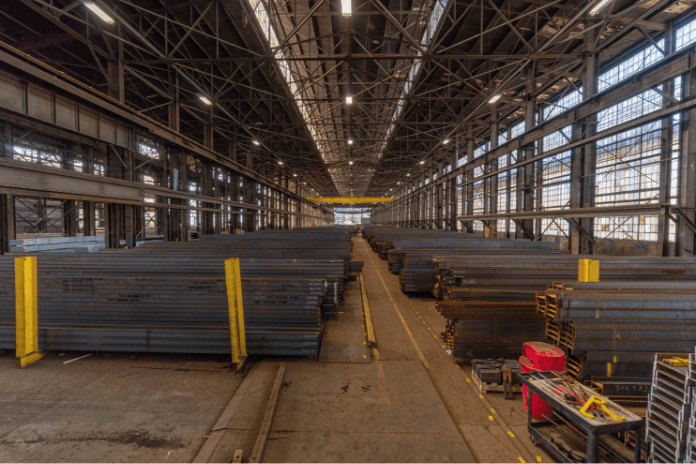
Steel is a great material that has enhanced strength and is greatly used in a variety of industries. It’s easy to say that the wide usage of steel has revolutionized our construction and manufacturing processes. When you’re looking for an ideal material to ensure your structures are durable and strong, there’s no better alternative.
It is an alloy that constitutes iron and carbon, which aid in strengthening the foundation of the material and make it fracture-resistant, which makes it different from iron. Its unique chemical composition ensures that it doesn’t react adversely to different elements and can withstand exposure to various elements for a prolonged period.
However, you’ll be surprised to hear about how many different types you can find when it comes to steel. When contacting steel suppliers in NY, you need to be aware of the different kinds of steel available and how they can be utilized for your needs.
In the 1960s, only 500 million tons of steel were being utilized every year. Today, steel usage has increased to millions of tons being used yearly. When it comes to quality, you need the best, and you can only find that with experienced steel suppliers in NY.
## Uses of Steel and Benefits
Presently, steel is widely used in buildings, tools, ships, infrastructure construction, cars, trains, electrical appliances, and even weapons. Depending on your requirements, you can find a steep type that works perfectly to cater to them.
Steel has become the primary choice of material over other materials like iron and aluminium. Buyers in NY looking for a reinforced material that can stand for years without being damaged will find their needs met with the right steel supplier.
## Types of Steel
While many steel compounds and mixtures are available in the market, not all are common or widely used. When you’re considering using steel for your next project, four common varieties tend to be popular with buyers in NY.
**Carbon steel:** In terms of looks, it is dull and has a matte-like finish. You can find three [grades](https://en.wikipedia.org/wiki/SAE_steel_grades) of carbon steel where the difference in these grades is the percentage of carbon present.
- Low-grade carbon steel (approximately 0.3% carbon)
- Medium-grade carbon steel (approximately 0.6% carbon)
- High-grade carbon-steel (approximately 1.5% carbon)
It also has other alloys infused in the steel, which make it exceptionally strong. While this type of steel is not resistant to corrosion, it is widely used in the manufacturing of automotive components, knives, etc.
**Alloy steel:** Manufactured from a mixture of several metals like copper, nickel, and aluminium. Alloy steel is more affordable when compared to other types of steel and are highly resistant to corrosion. This type of steel is generally utilized for mechanics, ship components, and pipelines.
The alloy steel strength depends on the concentration of different alloys in the material and what kind of alloys are being used. Many buyers have specific requirements for alloy steel and steel suppliers; NY caters accordingly.
**Stainless steel** is the most commonly known type of steel but not the most widely used. It looks shinier than other types of steel, and the main alloy used in this is chromium. You can find stainless steel variants with up to 20% chromium.
The chromium present in the steel enables it to be corrosion resistant. It can be easily moulded into a variety of shapes as well due to the chromium. The level of manipulation and flexibility is higher in this steel variant than others, making it ideal to use in surgical equipment, silverware, home applications, and cladding for commercial projects.
For buyers in New York who are looking for the ideal supplier for all their steel needs, here is why Bushwick stands out:
## Bushwick and Steel
When you’re looking for one supplier to meet your needs pan-America, there is no better alternative to Bushwick Metals. Their extensive operations in the Midwest, Northeast and South make them your ideal partner for any steel operations.
With [nearly 200 years](https://www.bushwickmetals.com/about-us/) of operation under its belt, Bushwick Metals has always strived for continual perfection and innovation in all its products. When you expect quality and strength at a reasonable price, Bushwick Metals is the only choice to opt for
Not only that, when you’re on a time crunch in New York and need immediate next-day delivery for steel, expect your needs to be met immediately when you’re working with Bushwick Metals. Besides New York, you can also find next-day delivery options in ten more states available.
Whether you’re in the steel scaffolding business or looking for ornamental metal, you can expect that only the highest quality-assured steel will be provided for your business.
You don’t need to be concerned about the time-consuming process when ordering from Bushwick Metals is a straightforward process that requires no hassles. All the steel that Bushwick Metals supply meets minimum regulations regarding strength, durability, and safety.
## Different Bushwick Products Available
Besides steel, there are various products and services you can find at your disposal when choosing to work with Bushwick Metals. Known as one of the premium steel suppliers throughout New York, you will find the following products available:
- Expanded Metal & Grating
- Heavy Structural Products
- Rebar
- [Steel Angles](https://www.bushwickmetals.com/product-category/angles/)
- [Steel Bars](https://www.bushwickmetals.com/product-category/bars/)
- [Steel Beams](https://www.bushwickmetals.com/product-category/beams/)
- [Steel Decking](https://www.bushwickmetals.com/product-category/decking/)
- Steel Channels
- Steel Plates and Sheets
- Steel Tubing and Piping
You can also find various services available like:
- [Saw Cutting](https://www.bushwickmetals.com/value-added-services/saw-cutting/)
- [Plate Processing](https://www.bushwickmetals.com/value-added-services/plate-processing/)
- Shearing and Bending
- [Section Bending and Cambering](https://www.bushwickmetals.com/value-added-services/section-bending-and-cambering/)
- Tee Splitting and Straightening
- Custom Roll Formed Floor and Roof Deck
If you’re looking for more services or products, simply contact the customer support team to see if your requirements can be accommodated. Whether you require warehouse storage for your materials or bigger sizes when it comes to various products, Bushwick Metals can handle all of them.
## Choose Bushwick Metals For Your Steel Requirements and More
When you’re looking for an experienced and trustworthy supplier for steel, choose to work with Bushwick Metals. With their wide selection of products and services, you won’t have any room to complain.
If you’re unsure about your order requirements, get in touch with the customer support team to ensure your needs are fulfilled from start to end. Bushwick Metals has a complete inventory of all grades of carbon steel available in different shapes and sizes.
For any project materials requirement, get in touch at [855-446-8735](tel:855-446-8735 "Contact Us by Phone 855-446-8735") or [reach out to us here](https://www.bushwickmetals.com/request-a-quote/).
[Back to News / Blog](https://www.bushwickmetals.com/news)
## Contact Us
- First Name\*
- Last Name\*
- Email\*
- Phone Number\*
- Company Name
- Website URL
- Message
- Upload a Drawing
Drop files here or Select files
Max. file size: 64 MB, Max. files: 5.
- Agreement\*
- [ ] Agree to Terms
- CAPTCHA
13096
[iframe](about:blank)
### Approvals
[](https://www.fmapprovals.com/)[](https://marks.ul.com/about/ul-listing-and-classification-marks/)[](https://www.sdi.org/)[](https://icc-es.org/)[](https://www.ul.com/services/environmental-product-declaration-epds-certification)
Notifications# Standard Plates
| Type | Size | Weight Per Ft. |
| --- | --- | --- |
| Standard Plates | 3 3/4 x 48 in | 153.14 lb |
### Approvals
[](https://www.fmapprovals.com/)[](https://marks.ul.com/about/ul-listing-and-classification-marks/)[](https://www.sdi.org/)[](https://icc-es.org/)[](https://www.ul.com/services/environmental-product-declaration-epds-certification)# Steel Decking
### Intsel Steel
[Composite / Floor Deck](javascript:;) [Form Deck](javascript:;) [Roof / B Deck](javascript:;)

## Roof Deck
Intsel Steel stocks steel deck in comprehensive range of sizes, types, and grades. Our best-in-class logistics, supply chain support, and value-added processing services fulfill our customers’ most demanding requirements. Our steel deck offerings are designed to economically meet the needs of many different applications, with finish options that help to tailor each product for its purpose.
As with all our steel products, Intsel Steel offer a comprehensive suite of value-added services that enable our customers to better manage their supply chains and stock inventory while minimizing overhead. These services include immediate, next-day delivery of virtually all our products as well as a number of steel-processing services that we can perform in-house to ensure your order is ready for use in your construction project or at your facility as soon as it arrives. Among our steel-processing capabilities are roll-forming, hot-dip galvanizing, cutting, and more. Because we store it until you need it, then prepare it for your specific application, you save time, money, and storage space. Simply call us with your order, and we’ll move mountains to get it there by tomorrow!
As one of the oldest steel suppliers in the country, we’re able to leverage our nearly two centuries of experience to provide you with guidance and expertise when it comes to inventory planning, supply-chain management support, and more. We’ll help you identify your needs and give you feedback on the best way to support your business objectives by making strategic buying decisions.
## Steel Deck
### TYPE B DECK / ROOF DECK
B deck provides the best balance of strength and economy of all the 1.5”-deep roof decks. Rigid insulation must be a minimum of 1” thick for B deck to be used. B deck is manufactured from steel conforming to A653. It is available with nested side-laps.
Several finishing options are available: The standard prime-painted finish is gray and covers both the top and bottom sides of the steel decking. The galvanized finish is available in G40, G60, and G90 coatings. The third option includes two coats of bright white primer on the bottom of the decking with a prime-painted or galvanized top. The prime-painted finish is intended to protect the steel for a reasonable installation period while exposed to ordinary atmospheric conditions and shall be considered an impermanent and provisional coating.
### TYPE N DECK
Twice as deep as B deck (and therefore considerably stronger), N Deck is designed for applications in which the supporting members need to be spaced as far apart as possible, minimizing the total number of structural members and thus reducing overall cost. This is ideal for large structures such as auditoriums and gymnasiums, in which the long structural members required to span large open spaces can be very heavy and quite costly.
Manufactured from steel conforming to A653, N deck is available with several finishing options and as nested side laps. The standard prime-painted finish is gray and covers both the top and bottom sides of the steel decking. The galvanized finish is available in G60 and G90 coatings. The third option includes two coats of bright white primer on the bottom of the decking with a prime-painted or galvanized top. The prime-painted finish is intended to protect the steel for a reasonable installation period while exposed to ordinary atmospheric conditions and shall be considered an impermanent and provisional coating.
### FORM DECK
Form deck can be used as a structural support for insulating roof-fill systems or a permanent form for concrete floor and roof slabs. Form deck’s applications include floors and stairways in both residential and commercial applications. This makes it ideal for projects in which steel or concrete composite is not required. We offer several profile patterns, each of which has been designed to reduce the required volume of fill, present a high strength-to-weight ratio, and decrease erection time.
## Composite Deck
### 1.5″ COMPOSITE / FLOOR DECK
Intsel Steel’s 1.5″ composite deck acts as a form during the concrete pour, allowing the designer to space the structural members to over 10’0″ o. c. without any additional shoring. Our 1.5″ composite deck has embossments in the vertical rib that bind with the concrete slab to create a composite-floor system. Once the concrete cures, the resulting composite-floor system offers both superior strength and stiffness. Available in nested and interlocking side-laps, 1.5” composite deck is manufactured from steel conforming to A653.
Our 1.5” composite deck is available with a galvanized coating. The galvanized finish is available in G60 and G90 coatings.
### 2″ COMPOSITE / FLOOR DECK
Intsel Steel’s 2″ composite deck acts as a form during the concrete pour, allowing the designer to space the structural members to over 12’0″ o. c. without any additional shoring. Our 2″ composite deck has embossments in the vertical rib that bind with the concrete slab to create a composite-floor system. Once the concrete cures, the resulting composite-floor system offers both superior strength and stiffness. Available in interlocking side-laps, 2” composite deck is manufactured from steel conforming to A653.
Our 2” composite deck is available with a galvanized coating. The galvanized finish is available in G60 and G90 coatings.
### 3″ COMPOSITE / FLOOR DECK
Intsel Steel’s 3″ composite deck acts as a form during the concrete pour, allowing the designer to space the structural members to over 14’0″ o. c. without any additional shoring. Our 3″ composite deck has embossments in the vertical rib that bind with the concrete slab to create a composite-floor system. Once the concrete cures, the resulting composite-floor system offers both superior strength and stiffness. Available in interlocking side-laps, 3” composite deck is manufactured from steel conforming to A653.
Our 3” composite deck is available with a galvanized coating. The galvanized finish is available in G60 and G90 coatings.
[Resources](https://www.bushwickmetals.com/resources/)
### Approvals
[](https://www.fmapprovals.com/)[](https://marks.ul.com/about/ul-listing-and-classification-marks/)[](https://www.sdi.org/)[](https://icc-es.org/)[](https://www.ul.com/services/environmental-product-declaration-epds-certification)# Steel Pipe Showdown: A53 Vs A500
December 17, 2021 in
Blog / Steel Tubing
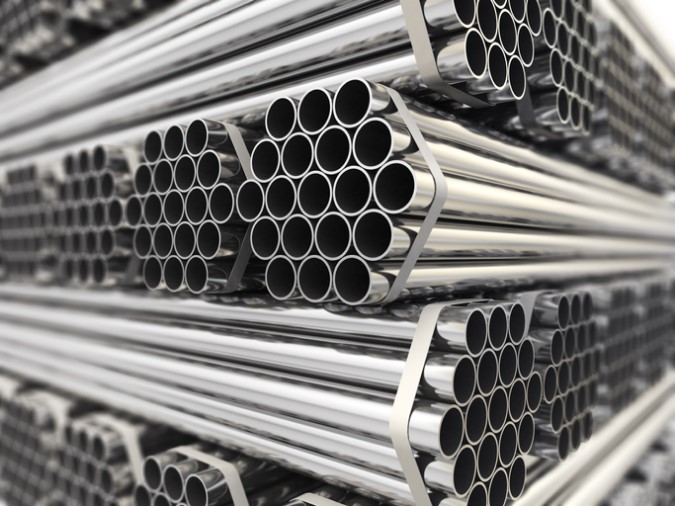
Pipes are an integral part of the construction industry. Not only do pipes carry water, gas, and oil to where they need to be in your industrial plant, but piping is also what carries away wastes. But the question is, between A53 and A500 steel pipe, which one should you choose?
Read on to learn the various elements of **A53 Vs A500** and find out how they measure up.
## **A53 vs. A500 Steel Pipes: What Are they?**
Both ASTM A53 and ASTM A500 specification steel pipes serve similar functions. Yet, there are significant differences that you must understand before making final purchase decisions. Don’t be surprised to find that some contractors may not understand these differences!
The ASTM A53 standard defines steel pipes intended for use in high-pressure gas or water transportation systems. It is one of the most important standards for industry standards related to steel. The A53 specification covers seamless and welded steel pipes, line pipes for oil and gas pipelines, and partially-processed tubing. It’s also ideal for electric resistance-welded subassemblies or pipeline joints.
The ASTM A500 specification covers black carbon steel mechanical tubing. It’s primarily used in industrial plant construction. It also includes a galvanized coating applied before shipment from factory stock.
Even though these pipes are made of steel, there are many differences between them. A53 pipes are thicker and stronger than A500 steel pipes. They can be used for high-pressure applications, while A500 steel pipes are applicable where pressure doesn’t exceed one hundred pounds per square inch. When choosing which pipe to use, consider the maximum expected pressure and the environmental conditions that the pipe may encounter.
## **What’s the Difference in Quality and Strength?**
A differentiating factor between A53 and A500 pipes is their yield strength. This refers to how much each metal can stretch before it breaks under pressure.
ASTM A510’s minimum [yield strength](https://www.sciencedirect.com/topics/engineering/steel-pipe) is 60,000 PSI, while ASTM A53 has 45,000 PSI. You’ll note that both materials have similar tensile properties at around 100,000 PSI.
A53 steel pipes are more flexible than A510, but it’s important to remember that A53 has lower yield strength.
## **Is There a Difference in Designation?**
Another characteristic of ASTM A500 and A53 [is their designation](https://www.astm.org/workitem-wk55130). It refers to how they were manufactured before being stamped with the standard for anyone building pipelines.
The A500 uses an open-hearth furnace, while the A53 leaves out this step in its manufacturing process. This makes the production of A53 faster and less expensive compared to the A500 carbon steel normalized pipe. There isn’t much of a difference between A53 vs A500 uses when it comes to their end-use applications. They’re both used in pipes, pressure vessels, tanks, and boilers.
## **Characteristics and Applications of A500 Steel Pipes**
ASTM A 500 Grade A is designed for mechanical strength rather than weldability. It’s more likely to break under stress instead of bending or buckling at high temperatures.
A500 steel pipes are used for structural purposes such as heavy-duty equipment and piping in the petrochemical and oil refinery industries. Yet, A53 is more commonly found than A500. The A510 offers a better balance between strength and weldability compared to ASTM A 500 Grade B.
## **Characteristics and Applications of A53 Steel Pipes**
ASTM A 53 carbon steel pipe grade C/ASTM A 530 Grade C has higher yield strength than its counterpart. You can bend or twist this material much more before it breaks. It’s perfect for your scaffolding needs!
A53 steel pipe grade C is used for mechanical purposes. Yet, its strength properties make it a perfect fit for heavy-duty equipment and piping in the oil industry.
## **Chemical composition**
The chemical composition of steel pipes affects the mechanical properties of the pipe, such as tensile and yield strength. The chemical composition of A500 steel pipe is equal to 0.28% C, 0.07% Mn, 0.07% Si, and 0.6-0.8% Ni.
The chemical composition of A53 steel pipe is typically equal to 0.22% C, 0.09% Mn, 0.09% Si, and 0.6-0.8% Ni. The A500 tolerances are more potent than the A53 pipe tolerances. They’re used in applications that need to be solid and durable against corrosion-related problems like seawater or sulphuric acid.
The chemical composition of the A500 steel pipe also allows it to be used in more applications than the A53 steel pipe. It has higher tensile strength, yielding strength, and corrosion resistance than the A53 steel pipe does. For these reasons, A500 steel pipes are usually more expensive than A53 steel pipes.
## **Weight**
The weight of a pipe is an essential factor to consider when choosing your steel pipe. Weight determines how much that pipe costs per foot or meter. Steel pipe prices are determined by the cost of the steel and the length.
The difference in weight can impact the cost of the pipe and how it is used. For example, if you need a section of underwater pipe, you may need one made from higher-density steel that’s welded together.
On the other, you may need one that’s light and flexible enough to bend and be transported to a different location easily. The weight of a pipe will also determine how much it costs to ship.
## **Strength**
A53 pipes are thinner than A500 steel pipes. This can be an advantage because they are easier to cut, weld, and fit.
A53 pipes are made with a higher percentage of manganese, which makes them softer than A500 steel pipes. It also makes them more flexible and better at withstanding pressure. This can be a disadvantage because they can collapse under pressure.
A500 steel pipes are much stronger than A53 steel pipes. The high percentage of nickel in A500 steel pipes gives them much greater strength. The downside is that they are more difficult to weld and cut than A53 steel pipes.
## **Talk to the Best A53 vs A500 Steel Pipe Supplier Today**
Are you in manufacturing, construction, or fabrication? Do you deal with gas and oil and want durable and quality A53 vs A500 steel pipes? At Bushwick Metals, we make the best and most [innovative steel pipes](https://www.bushwickmetals.com/product-category/tubing-piping/) that can meet all your needs. For years, we’ve worked with different industries to develop suitable steel pipes.
Whether you need steel pipes in bulk or need some credit financing for your next delivery, we’ve got you covered. [Request for a quote](https://www.bushwickmetals.com/request-a-quote/) or [contact us today](https://www.bushwickmetals.com/contact/) to get the best steel pipes.
[Back to News / Blog](https://www.bushwickmetals.com/news)
## Contact Us
- First Name\*
- Last Name\*
- Email\*
- Phone Number\*
- Company Name
- Website URL
- Message
- Upload a Drawing
Drop files here or Select files
Max. file size: 64 MB, Max. files: 5.
- Agreement\*
- [ ] Agree to Terms
- CAPTCHA
29244
[iframe](about:blank)
### Approvals
[](https://www.fmapprovals.com/)[](https://marks.ul.com/about/ul-listing-and-classification-marks/)[](https://www.sdi.org/)[](https://icc-es.org/)[](https://www.ul.com/services/environmental-product-declaration-epds-certification)
Notifications# Steel Angle Suppliers: How to Find the Right One
October 14, 2024 in
Steel Angles
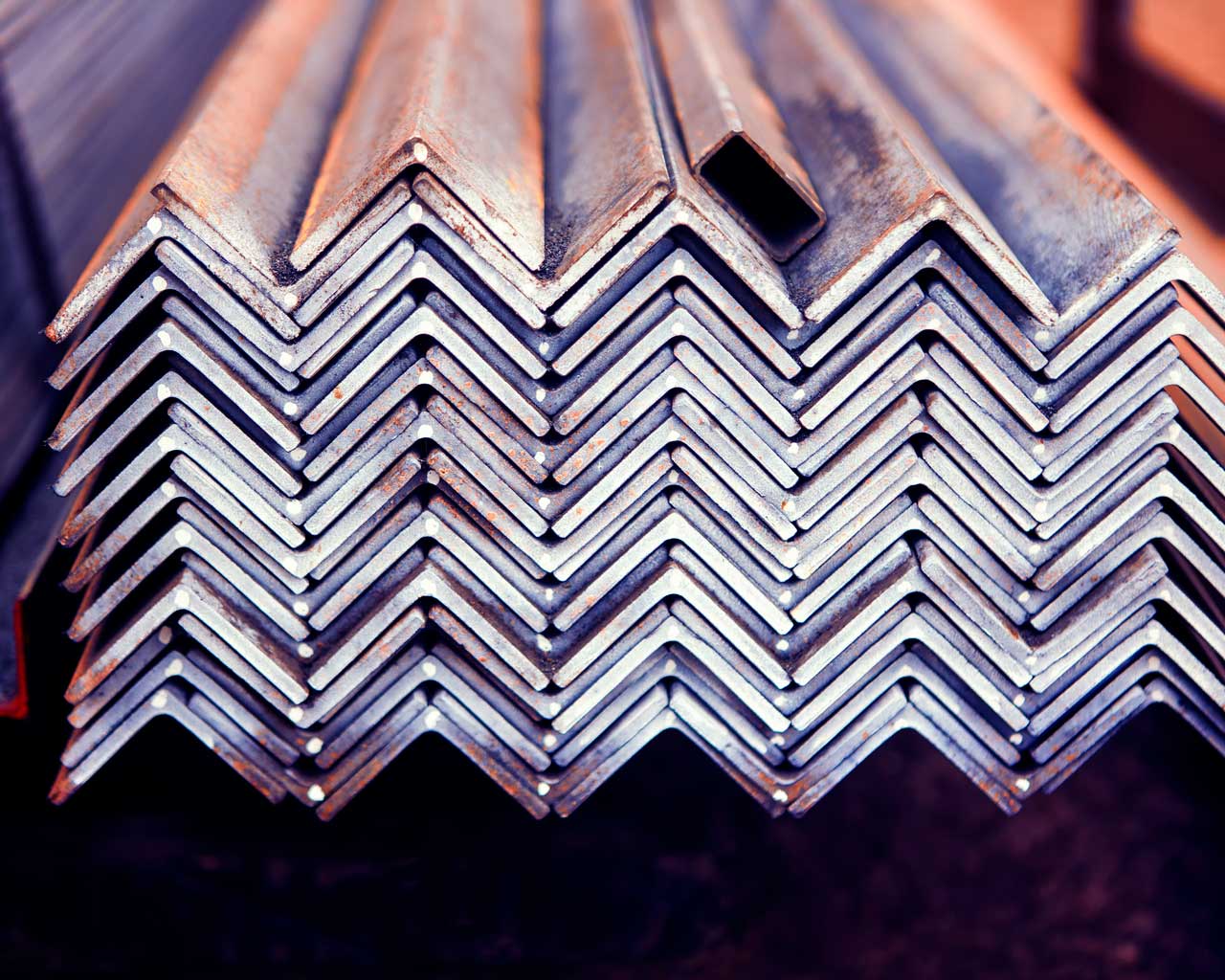
Steel angles are among the most versatile structural components in construction and manufacturing, offering a wide range of applications from building frameworks to equipment supports. However, the quality, availability, and service provided by your steel angle supplier can significantly impact your project’s success.
You need steel angle suppliers [who can create](https://www.steel.org/steel-technology/steel-production/) steel angles that meet the specs of your job. Here’s what to consider when choosing the right supplier.
## Understanding Steel Angles
Steel angles are L-shaped sections typically made from [carbon steel](https://www.bushwickmetals.com/difference-carbon-steel-vs-alloy-steel/). They are available in various sizes, thicknesses, and lengths, making them suitable for an array of structural and decorative applications. The two legs of the angle can be equal or unequal in length, with the size and thickness tailored to meet the load requirements of specific projects. Steel angles are known for their high strength, durability, and resistance to bending, which makes them ideal for construction, fabrication, and industrial uses.
## Key Considerations When Choosing a Steel Angle Supplier
- **Product Range and Availability:** One of the most important factors in selecting a steel angle supplier is the range of products they offer. A reliable supplier should provide a variety of sizes, thicknesses, and grades of steel angles to suit different project requirements. Whether you need standard stock sizes or custom lengths, your supplier should have the inventory and flexibility to meet your needs promptly. Intsel Steel, for example, offers a comprehensive range of steel angles, ensuring that you can find the exact specifications needed for your project without delays.
- **Quality Assurance:** The quality of the steel angles you receive is crucial for the safety and longevity of your structures. High-quality steel angles should meet or exceed industry standards for strength, durability, and resistance to environmental factors. Look for suppliers that source their steel from reputable mills and offer certifications that guarantee the material’s compliance with relevant standards. Intsel Steel ensures that all their steel angles are manufactured to the highest quality standards, providing peace of mind that your materials will perform as expected.
- **Customization Options:** Some projects require steel angles that deviate from standard sizes or finishes. In such cases, a supplier who offers customization options can be invaluable. Customization may include cutting to specific lengths, applying protective coatings, or even fabricating angles to unique shapes. Intsel Steel provides a range of customization services to meet the unique demands of your project, ensuring that you get exactly what you need without compromising on quality or efficiency.
- **Pricing and Value:** While price is always a consideration, it’s important to balance cost with value. The cheapest supplier might not always provide the best product or service, leading to potential issues such as delays, inferior materials, or lack of support. Instead, look for a supplier that offers competitive pricing without sacrificing quality or service. Intsel Steel strives to provide high-quality steel angles at competitive prices, ensuring that you get the best value for your investment.
- **Delivery and Logistics:** Timely delivery is critical in any construction or manufacturing project. Delays in receiving materials can cause significant setbacks, increasing costs and extending timelines. A reliable supplier should have a robust logistics network capable of delivering products on time, regardless of the order size or destination. Intsel Steel has a well-established delivery system that ensures your steel angles arrive when and where you need them, keeping your project on track.
- **Customer Support and Expertise:** A knowledgeable and responsive customer support team can make a significant difference in your overall experience with a supplier. From helping you choose the right products to troubleshooting any issues that arise, strong customer support is a hallmark of a reliable supplier. Intsel Steel prides itself on offering exceptional customer service, with experienced professionals ready to assist you at every stage of your project.
## Why Choose Intsel Steel as Your Steel Angle Supplier?
Intsel Steel has been a trusted name in the steel industry for decades, offering a wide range of steel products, including steel angles, to meet the diverse needs of its customers. Their commitment to quality, reliability, and customer satisfaction makes them an ideal partner for your next project. Whether you’re working on a small fabrication project or a large-scale construction job, Intsel Steel has the products, expertise, and service to help you succeed.
- **Extensive Product Inventory**: With a vast inventory of steel angles in various sizes, grades, and finishes, Intsel Steel ensures that you can find the right materials for your project quickly and efficiently.
- **Quality and Certification**: All steel angles provided by Intsel Steel meet stringent industry standards, ensuring that you receive only the best materials for your construction or manufacturing needs.
- **Customization Capabilities**: Intsel Steel offers a range of customization options, allowing you to tailor your steel angles to the specific requirements of your project.
- **Timely Delivery**: With a strong logistics network, Intsel Steel ensures that your materials are delivered on time, keeping your project on schedule.
- **Expert Support**: The experienced team at Intsel Steel is always available to provide advice, answer questions, and ensure that you have everything you need for a successful project.
## Intsel Steel’s Value-Added Services
Intsel Steel is committed to providing more than just high-quality steel products. Their range of value-added services is designed to enhance the efficiency, precision, and customization of steel materials, helping customers achieve their project goals with greater ease. Here’s a closer look at some of the key services they offer:
### Saw Cutting
[Saw cutting](https://www.bushwickmetals.com/value-added-services/saw-cutting/) is an essential service provided by Intsel Steel, allowing customers to receive steel materials cut to precise lengths. This service is crucial for projects requiring specific dimensions, as it ensures that the steel components are ready for immediate use upon delivery. Precision saw cutting helps reduce material waste, minimizes labor costs, and accelerates the assembly process, making it a valuable service for construction and manufacturing projects of all sizes.
### Plate Processing
[Plate processing](https://www.bushwickmetals.com/value-added-services/plate-processing/) at Intsel Steel involves a range of services that prepare steel plates for specific applications. This includes cutting, drilling, and shaping plates to meet the exact specifications of a project. Whether you need plates for structural components, machinery parts, or custom fabrication, Intsel Steel’s plate processing capabilities ensure that the final product meets your precise needs. Their advanced equipment and skilled technicians ensure accuracy and quality in every processed plate.
### Shearing and Bending
[Shearing and bending](https://www.bushwickmetals.com/value-added-services/shearing-and-bending/) are critical services for customers needing custom steel components shaped to exact specifications. Shearing involves cutting sheet metal and plate to precise sizes, delivering clean, straight edges without material deformation. Bending allows steel to be formed into specific angles or curves, making it ideal for constructing frames, supports, and other structural elements. Intsel Steel’s shearing and bending services provide the flexibility and precision necessary to meet the complex demands of modern construction and manufacturing projects.
### Section Bending and Cambering
Intsel Steel offers [section bending and cambering services](https://www.bushwickmetals.com/value-added-services/section-bending-and-cambering/) to accommodate projects requiring curved or cambered steel components. Section bending is the process of shaping steel sections, such as angles, channels, or beams, into smooth, curved profiles. This service is often used in architectural applications, bridge construction, and any project where a specific radius or curved design is required. Cambering involves the deliberate arching of steel beams to counteract deflection under load, ensuring that the beam remains level when installed. These services are crucial for projects where precision and structural integrity are paramount.
### Tee Splitting and Straightening
[Tee splitting](https://www.bushwickmetals.com/value-added-services/tee-splitting-straightening/) is the process of cutting wide flange beams or other sections down the web to create two tee sections. This service is particularly useful in projects where custom steel shapes are required. After splitting, straightening ensures that the tees are perfectly aligned and free of any distortions caused by the cutting process. Intsel Steel’s expertise in tee splitting and straightening allows them to deliver custom steel sections that meet the exacting standards of structural and architectural projects.
## Is Intsel Steel the Right Steel Angle Supplier for You?
Selecting the right steel angle supplier is crucial to the success of your project. By choosing Intsel Steel, you can be confident that you are working with a supplier who prioritizes quality, reliability, and customer service. Whether you need standard steel angles or custom solutions, Intsel Steel has the products and expertise to meet your needs. [Contact Intsel Steel](https://www.bushwickmetals.com/contact/) today to learn more about how they can support your next project.
[Back to News / Blog](https://www.bushwickmetals.com/news)
## Contact Us
- First Name\*
- Last Name\*
- Email\*
- Phone Number\*
- Company Name
- Website URL
- Message
- Upload a Drawing
Drop files here or Select files
Max. file size: 64 MB, Max. files: 5.
- Agreement\*
- [ ] Agree to Terms
- CAPTCHA
23689
[iframe](about:blank)
### Approvals
[](https://www.fmapprovals.com/)[](https://marks.ul.com/about/ul-listing-and-classification-marks/)[](https://www.sdi.org/)[](https://icc-es.org/)[](https://www.ul.com/services/environmental-product-declaration-epds-certification)
Notifications# How Structural Decking Transforms Construction Projects
November 13, 2023 in
Decking
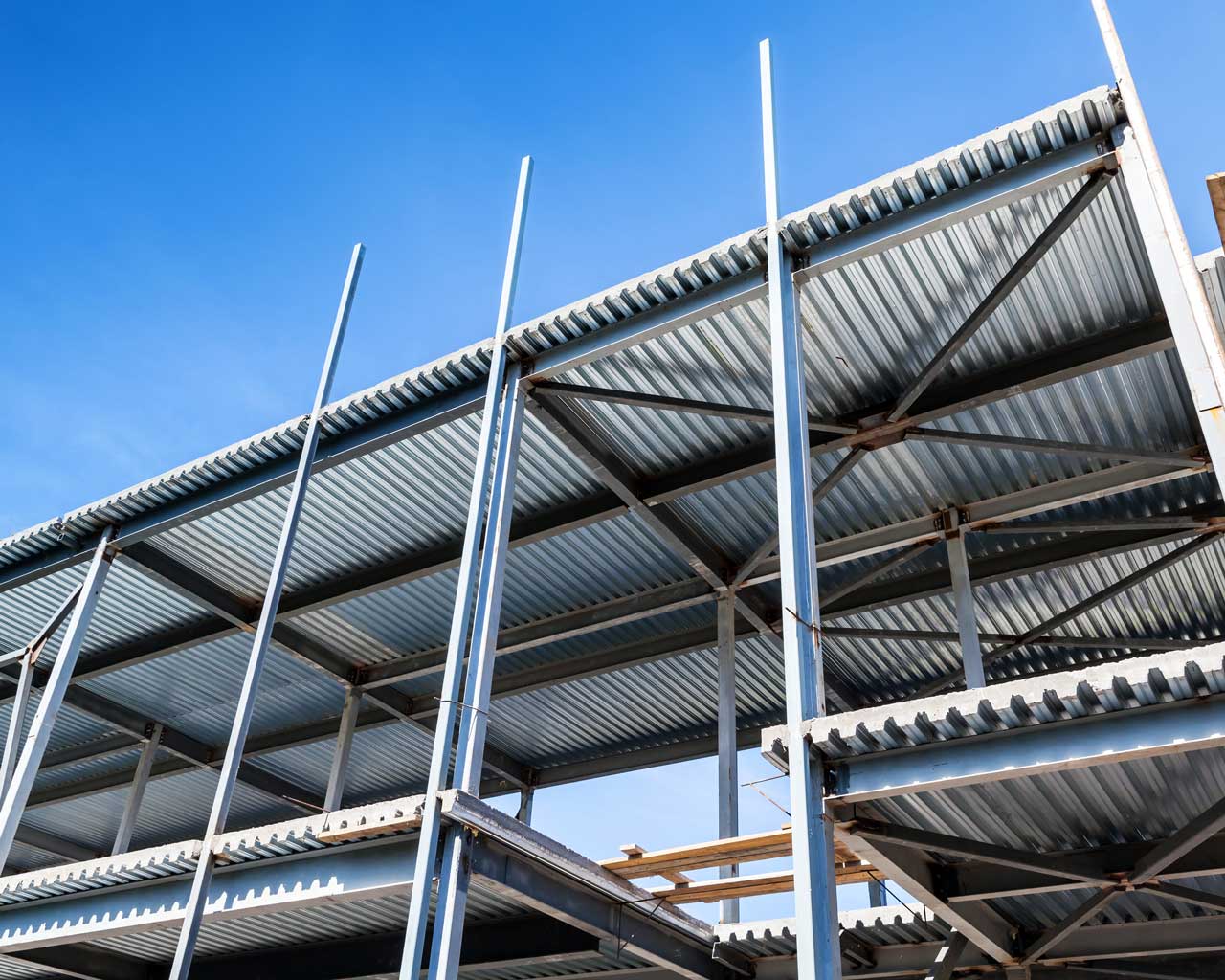
In a world of innovation, building design has become faster, stronger, cheaper, and [more sustainable](https://impakter.com/sustainable-buildings-pioneering-a-green-revolution-in-urban-design/). One of the transformational innovations driving this change is the structural deck. It is a potential game-changer for the construction industry.
This article explores the world of structural decking. Here, you’ll discover more about what this construction method offers for your project.
You’ll learn about unique features that could benefit your building design, like flexibility and composition. Plus, we’ll explore some of the amazing benefits you could see on your next construction project.
From lower costs to eco-friendly design, read on to discover what structural decking has to offer.
## **What Is Structural Decking?**
Structural decking is a construction technique. It involves installing a deck-like structure in a building’s design.
It’s something used in commercial and industrial buildings. But occasionally, you might find it in residential designs, too. The decking is a supportive framework. It can fit concrete slabs or other flooring types.
The decking acts as a robust and durable support structure. It comes in various materials for commercial buildings, including steel, composite, and wood. However, you’ll mainly find steel and composite structures.
Structural decking helps enhance a commercial or industrial space. It creates a more usable building with added support and strength.
## **Types of Decks**
Structural decking comes in different varieties of materials, designs, and functions. Here are the three you’ll most commonly see when reviewing decking.
### **Steel or Metal Deck**
Steel is the most common type of structural deck. It has excellent qualities like durability and strength. You’ll see roof, floor, and form decking options here. Each meets different construction demands.
### **Composite Deck**
A composite deck uses two or more types of material. However, you’ll mostly see a combination of steel and concrete. It offers the right structure that can support a heavy load.
### **Timber Deck**
Timber is most common in residential buildings. It’s mainly for aesthetic reasons. Wooden material is rare in industrial settings for decks.
## **Design Flexibility**
Structural decking offers design advantages. It is highly adaptable. As a feature, it helps architects and engineers go beyond conventional building designs.
They can explore unique, innovative shapes. That might be a curved surface or an unusual angle.
It offers versatility that’s difficult to achieve with more traditional methods. Metal decking can come embossed or perforated, too, as an aesthetic option. Plus, it can come in a range of finishes and stains.
Overall, it allows designers to create more attractive and interesting buildings. That helps construction companies offer distinct building designs to meet the needs of their clients.
## **Composition**
The decking material will determine the composition of the structure. [Steel decks](https://www.bushwickmetals.com/metal-deck-supplier/) contain high-strength sheets. But they come with different options to help meet a project’s load and span requirements.
In composite decks, the steep offers reinforcement for the concrete to improve load-bearing.
When starting any project using structural decking, it’s important to consider the performance, environmental conditions, and client needs.
## **Project Speed**
A major advantage of using structural decks is that they speed up construction projects.
For example, steel decks can arrive on your construction site pre-engineered. That means they are ready to install and erect on-site. The precision of the engineering means they fit together with ease. So they won’t hold up your project or cause unexpected issues.
They can also act as work platforms during construction, helping accelerate your project’s next phase.
They can also act as a ready-to-go mold for any concrete pouring job. All this helps you plan a more efficient, fast-tracked construction project. That’s a big help with demanding customer timescales or scheduling clashes.
## **Sustainability**
Any modern construction project needs to have sustainability as a key consideration. Structural decking offers an advantage here.
Steel is an easy material to recycle. So it improves the environmental credentials of any building.
If the building is demolished, reclaiming and reusing that steel decking is straightforward. So you are creating a structure with eco-friendly design in mind, minimizing waste.
Composite decks have environmental advantages too. The steel and concrete are long-lasting and need little maintenance. So it means a lower environmental impact during the life of the building.
The material in structural decking is so effective and strong that it reduces the need for excess design features. Again, this helps to minimize waste.
Off-site manufacturing of the deck panels means less waste on the construction site. That helps control the immediate environment and reduces the impact on the local area, including energy use.
## **Economic Benefits**
Structural decks offer a host of economic benefits to a construction project. If you’re managing a strict project budget, here’s what you need to know.
### **Cost-Efficient Timescales**
Structural decking is easy and fast to install. That has a positive impact on your [build timeline](https://www.softwareadvice.com/resources/what-is-construction-planning/).
A shorter project means fewer resources and lower labor costs. The deck’s potential to provide a dual role also helps save on time, materials, and labor expenses.
### **Cost Savings from Maintenance**
Structural decking is highly durable. It means that these aspects of the building will need minimal maintenance, which translates to lower repair costs over the lifespan of the building.
### **A Return on Investment**
The ability to recycle the steel deck at the end of the building’s life means you can recoup money on the investment. The steel can be reclaimed and sold.
### **Optimized Design**
Optimized steel structures help maximize the performance you get from the deck in terms of strength and load. That means less additional material is needed, reducing your building costs for the project.
## **Structural Decking: the Future of Construction Projects**
Structural decking is helping to transform the construction industry. It offers unparalleled design flexibility and valuable speed for your project.
With the cost savings and sustainability on offer, it’s easy to see why it’s becoming increasingly popular. As the construction industry continues to explore new and exciting building methods and designs, structural decking will be a central part of that effort.
[Contact our team](https://www.bushwickmetals.com/contact/) at Intsel Steel East for information on buying steel for your next construction project.
[Back to News / Blog](https://www.bushwickmetals.com/news)
## Contact Us
- First Name\*
- Last Name\*
- Email\*
- Phone Number\*
- Company Name
- Website URL
- Message
- Upload a Drawing
Drop files here or Select files
Max. file size: 64 MB, Max. files: 5.
- Agreement\*
- [ ] Agree to Terms
- CAPTCHA
17458
[iframe](about:blank)
### Approvals
[](https://www.fmapprovals.com/)[](https://marks.ul.com/about/ul-listing-and-classification-marks/)[](https://www.sdi.org/)[](https://icc-es.org/)[](https://www.ul.com/services/environmental-product-declaration-epds-certification)
Notifications# Steel Bars
### Intsel Steel
[Hot Rolled Flat Bar](javascript:;) [Hot Rolled Squares](javascript:;) [HR Rounds](javascript:;) [HR Strip](javascript:;)
## HOT-ROLLED-STEEL BARS
Offered in popular and hard-to-find shapes, including a hot-rolled rounds, squares, strip, and flats as well as reinforcing bars, our hot-rolled steel bars are available in a vast array of sizes and thicknesses. Intsel Steel also offers several different grades to meet the needs of our customers and for use in a wide range of applications.
We source our steel from all over the world to ensure our customers have access to the highest-quality structural materials. What’s more, we offer a number of value-added services, from saw-cutting to section-bending, to ensure our product is ready for use when it reaches your facility or project site. No matter how many bars you need or when you need them, Intsel Steel is ready to offer immediate delivery the highest-quality carbon-steel bars—often inside of 24 hours. because we keep one of the industry’s most extensive ranges of hot-rolled-steel bars in stock, our customers are able to better manage their inventory requirements, supply chain logistics, and storage costs. Contact us today and we’ll move mountains to get to you by tomorrow.
## MERCHANT-QUALITY BARS
A minimum of discard is taken from the ingot during the production of carbon-steel merchant bars, making them a lower-quality hot-rolled-steel bar that’s ideal for applications in which high-quality surface conditions aren’t critical. Ideal for fabricating steel-floor and -roof joists, walkways, railings, and concrete forms, these bars are free from visible piping, although some surface irregularities may be present. Merchant bars offer easy weldability and machinability and provide customers with an affordable option when no specific grade is required. Chemical composition is reported only on the ladle analysis. Merchant carbon-steel bars conform to ASTM A575 and are not recommended for forging, heat-treating, cold-drawing, or intricate machining.
## SPECIAL-QUALITY BARS
Produced under more stringent controls than merchant bars, our special carbon-steel bars are ideal for use when the material will be heat-treated or extensively machined. Blooms and billets are inspected and prepared by grinding, scarfing, and chipping in order to minimize surface imperfections and sufficient ingot is discarded to avoid piping. The chemistry of our high-quality special bars is subjected to both ladle and check analysis. Intsel Steel special carbon-steel bar conform to ASTM A576 and their end-use applications are often those in which the bars must rotate, twist, or bend during use. Thus, they’re ideal for automotive, industrial, and other industries that use steel as moving parts.
## LOW-CARBON BARS
Our low-carbon steel bars are merchant-quality bars with a moderate amount of manganese (more than other low-carbon steels) that are produced to a specific chemical composition. Also known as M1020 bars, these hot-rolled-steel bars, offering minimum tensile strength of 58 ksi and a minimum yield of 36 ksi, are for general-purpose use and suitable for welding and forming applications.Extremely versatile and easily machined, ASTM A-36 is produced to mechanical properties offering a minimum yield of 36 KSI and a minimum tensile strength 58 KSI. A-36 Bars are designed to be used in general engineering and structural applications in which high weldability is desired, yet high strength is not required.
## HIGH STRENGTH LOW ALLOY BARS
ASTM A-588 is a high-strength steel with minimal amount of alloy offering and a minimum tensile strength of 70 ksi and a minimum yield of 50 ksi for bars up to 4″ thick. These hot-rolled-steel bars are copper-bearing bars that offer approximately two to four times the corrosion resistance of carbon-steel bars without copper, making them suitable for exposed applications in their bare/unpainted condition. High-strength, low-alloy bars are used whenever reducing weight will result in a cost savings or when there are concerns about atmospheric corrosion.
### Approvals
[](https://www.fmapprovals.com/)[](https://marks.ul.com/about/ul-listing-and-classification-marks/)[](https://www.sdi.org/)[](https://icc-es.org/)[](https://www.ul.com/services/environmental-product-declaration-epds-certification)# The Benefits of Metal Deck Roofs in Cold Weather Regions
### Intsel Steel
# The Benefits of Metal Deck Roofs in Cold Weather Regions
A recent study suggests that the demand for metal roofing for re-roofing purposes [grew by 15% in 2020](https://www.prweb.com/releases/annual_industry_report_released_by_mra_shows_rise_in_u_s_metal_roofing_use_for_2020_re_roof_market/prweb18179048.htm) from 12% in 2021. And this growth is largely due to the increased need for roofing materials that can help protect homes against extreme weather conditions like the cold. So, if you live in a cold region and want to roof your home, consider metal deck roofs.
A metal deck roof features corrugated metal sheets (supported by joists or steel beams) that act as a structural roof deck. Its purpose is to support a roof’s insulating membrane, keeping your home warmer in the cold season and cooler in the hot season. Here are other benefits of using this type of roof on your residential property:
## **Durability**
Metal roofs are highly durable and withstand the harsh conditions of cold weather, including heavy snow, ice, and high winds. They can last for 50 years or more, which means you won’t have to replace them as often as other types of roofs. Their fire, mold, and mildew resistance is also exceptional.
The durability of metal roofs stems from strong, durable materials. Most metal roofs feature steel, aluminum, or copper as their main materials. These metals are strong and can withstand a lot of weather impacts.
The lifespan can vary with the [type of metal deck](https://www.bushwickmetals.com/metal-decking-types-and-usages/) used. It also varies with the thickness of the metal, the installation, and the climate. So, talk to a roofing contractor to learn more about your metal roof options and their durability.
## **Watertightness**
Metal roofs are very watertight, which helps prevent leaks and water damage. But their watertightness depends on various factors, like the type of metal used. Some metals (like copper) are more watertight than others (like aluminum).
Thicker metal is more watertight than thinner metal. Also, a well-installed roof is more watertight than a poorly installed roof. And a damaged or corroded roof is more likely to leak than a roof that is in good condition.
Metal roofs are watertight since they feature smooth, water-resistant materials. These materials make it difficult for water to penetrate the roof. They often have overlapping panels to prevent water from seeping through the seams between the panels.
## **Energy Efficiency**
A metal deck roof can [keep your home cooler](https://www.epa.gov/heatislands/using-cool-roofs-reduce-heat-islands) in the summer and warmer when winter comes. It reflects heat up and away from buildings to achieve this effect. As such, this type of roofing can save homeowners money on energy costs.
Metal deck roofs are also energy-efficient since they are lightweight. They don’t absorb as much heat as other roofing materials. And thanks to their durability, you won’t have to replace your roof as often.
Certain factors can affect the energy efficiency of metal deck roofing. These factors include the type, color, thickness of the metal, and roof installation. Some metals are more reflective than others, so the type of metal used will affect the roof’s energy efficiency.
Darker colors absorb a lot more heat than lighter colors, and thicker metal is more reflective than thinner metal. Even more, a well-installed roof is more energy-efficient than a poorly installed one.
## **Low Maintenance**
Metal roofs require very little maintenance, so you won’t have to spend a lot of time or money on upkeep. They’re low maintenance since they feature durable materials that withstand harsh elements. Their susceptibility to mold, mildew, or algae growth is also low.
You won’t have to re-shingle a metal roof as often as an asphalt shingle. It’s also easy to clean it with a soft brush and water. But there are some things you can do to help keep your metal roof in good condition.
Inspect your roof regularly for damage to identify any problems early on and repair them. Clean it regularly to remove dirt, debris, and algae growth, which can shorten its lifespan. You should also have your roof inspected every few years to ensure there aren’t any hidden problems.
## **Ice Dam Prevention**
A metal deck roof is less likely to form ice dams than other types of roofs. Ice dams can occur when snow melts on a roof and refreezes at the eaves. They can cause water to back up and leak into your home.
Metal roofs reflect heat away from the roof, which helps prevent ice from melting. They also reduce the chances of ice forming. Their smooth and slippery surfaces allow ice dams to slide off easily.
The snow guards on metal roofs help prevent snow from sliding down the roof in large sheets. This way, ice dams won’t form at the roof’s edges.
## **Snow Shedding**
Metal roofs can shed snow, preventing it from accumulating on your roof and causing damage. Their designs allow snow to slide off easily, so you don’t have to shovel it. In particular, they come with a smooth, slick surface.
You can have a metal roof installed with snow guards. Snow guards are small metal bars that help prevent snow from sliding down your roof in large sheets. They make it easier to remove snow from your roof.
A metal roof is a good option if you live in an area that gets a lot of snow. It will help to keep your roof clear of snow and ice, which can help to prevent damage to your home.
## **Wind Resistance**
A metal roof is very wind resistant, meaning it can withstand strong winds without sustaining damage. Such a factor is important in cold weather regions with high winds. Its structure comprises strong materials and screws or bolts to secure it to the roof deck.
Metal roofs also often come with interlocking panels that help keep them in place during high winds. They also undergo tests to withstand specific wind speeds. For instance, a metal roof rated for 120 mph winds can withstand winds up to 120 mph.
## **Looking to Install a Metal Deck Roof on Your Home?**
A metal deck roof is a great choice for cold-weather regions. It’s durable, low-maintenance, energy-efficient, and fire-resistant. You can also find it in various styles and colors, making it easier to pick one that matches the look of your home.
As the Northeast’s leading steel service center, Intsel Steel East offers an unsurpassed inventory range, an extensive collection of value-added services, and customer service that’s second to none. Our steel products include steel angles, bars, beams, decking, plates, tubes, tubing, and piping.
Check them out on our products page and [request a quote](https://www.bushwickmetals.com/request-a-quote/) for the specific one you want.
# A Legacy of Success Continues as Bushwick Metals Joins the Intsel East Family
When a business enterprise has been in continuous operations for over a century, that accomplishment without question is unique. It is also proof positive that the policies and performance of that enterprise have kept pace with the everchanging times, else it could not endure.
## Bushwick Metals Joins Intsel East
Now that Bushwick Metals is under the Stein family ownership as Intsel East, we have expanded our offerings, added the most advanced processing equipment, and modernized our facilities to better serve our customers. Best in class Voortman structural steel saw cutting systems, Kinetics plate processors, and a Gasparini roll former enable us to provide quality value added service at the shortest lead times. With several hundred thousand tons of inventory warehoused at strategically located service centers throughout the country, you will find that Intsel Steel is the true “One Stop Supplier” for all your steel needs.
At Intsel, we look to the future with confidence knowing that our combination of diversified product line, unsurpassed inventory range, and an extensive collection of processing services is a formula unmatched in the service center industry. Our round the clock loading and processing enables us to serve well the multitude of steel users whose requirements demand prompt service.
On behalf of the Stein family and over 1000 dedicated professionals in two countries, we thank you for your past patronage and hope to serve your needs again soon.
# Bushwick Metals’ Value Added Services Continue to Grow
Bushwick Metals LLC is pleased to offer a variety of new Value Added Services that will enable customers to outsource many time-consuming activities which slow production or create bottlenecks. A Peddinghaus HSFDB 2500 plate processor has been installed, expanding upon the capabilities of their existing Messer MG Titan Plasma and Oxy plate processing tables. The Peddinghaus is capable of drilling, tapping, countersinking, milling, scribing and high-definition plasma cutting. “These are some of the most difficult and time-consuming processes for many of our customers to perform,” reports Bushwick Metals executive VP Stewart Lichtman. “We can now provide customers with very high-quality parts and fast turnaround times at a significant savings compared to our customers doing these processes in-house.” Bushwick’s plate processing department uses the latest CAD software technology, resulting in better nesting to reduce material cost and scrap loss. In response to their well-received 2012 introduction of rotary tee splitting, straightening, and section bending services, Bushwick Metals has also added a new Roundo R7S section bender. This additional section bender enables the company to quickly and accurately roll to radius a wider array of steel shapes to meet customer specifications. “Bushwick Metals is the only full-line service center to provide all of these processes under one roof,” explains Lichtman. In addition to the above-mentioned Value Added Services, Bushwick Metals also offers plate rolling, punching, rebar fabrication, sheet/plate shearing and bending, beam cambering, saw cutting and custom deck sizes..
About Bushwick Metals LLC
Bushwick Metals LLC, based in Bridgeport, Conn., is a distributor of carbon steel, hi-strength-low alloy steel, stainless steel, and specialty products. Bushwick Metals and its affiliate companies, including Marmon/Keystone LLC, a distributor of steel and aluminum tubular products, are Marmon Distribution Services/Berkshire Hathaway companies and members of The Marmon Group, an international association of more than 150 business units that operate independently within diverse business sectors.
# Bushwick Metals Offers New Value Added and Rebar Services
Bushwick Metals LLC is proud to introduce several new Value Added Services, including precision tee splitting and straightening. Using a rotary shear and straightening line equipment, they are now able to provide a quality product that is far superior to traditional flame cut tees. In addition, Bushwick Metals has also added the capability to produce rolled products. Tubing, pipe, channels and angles can be rolled with a radius bend to customer specifications. These services are available at all Bushwick Metals locations.
At Tarco Steel, a Division of Bushwick Metals located in Binghamton, New York, rebar fabrication is now introduced to supplement the existing popular straight and cut rebar business currently offered across all Bushwick Metals locations. Using a state-of-the-art shear line, benders and automatic stirrup benders, they now offer shop drawings, placement drawings, placement accessories and a quality cut and bent product to meet their customers’ exact needs in the New York and New England regions.
About Bushwick Metals LLC
Bushwick Metals LLC, based in Bridgeport, Conn., is a distributor of carbon steel, hi-strength-low alloy steel, stainless steel, and specialty products. Bushwick Metals is an affiliate of Marmon/Keystone LLC of Butler, Pennsylvania, a distributor of steel and aluminum tubular products. Both companies are Marmon Distribution Services/Berkshire Hathaway companies and members of The Marmon Group, an international association of approximately 150 business units that operate independently within diverse business sectors.
# Bushwick Metals Acquires Tarco Steel
Bushwick Metals LLC has announced the acquisition of Tarco Steel, Inc. and Metal Fab LLC, a steel service center and fabrication shop located in Binghamton, New York, effective September 4. The companies will now be know as Tarco Steel, a Division of Bushwick Metals, LLC.
The Tarco Steel service center was founded in 1970 and serves the energy, manufacturing, steel fabrication, construction and maintenance industries in Central New York and Northeast Pennsylvania. Main product offerings include carbon and stainless steel, steel long products, sheet, plate, and fabricated and straight rebar.
Tarco Steel and Metal Fab also provide a wide variety of value added services for their customers, including cutting, machining and light fabrication. Their facility includes 1,200 square feet of office space, two warehouse buildings with a total of 47,000 square feet and five overhead cranes, and 50,000 square feet of outdoor storage. The companies serve the Binghamton area and employ about 35 people.
“Expanding into Central New York will accelerate Bushwick Metals’ growth in this region through increased service and more robust inventory levels,” says Stewart Lichtman, Bushwick Metals commercial vice president. Lichtman will oversee the Tarco Steel operation; former owner Janet Beal will serve as the branch manager. “This acquisition also allows us to offer additional value added services and rebar fabrication to our customers in other geographic regions,” Lichtman notes. Plans include installing additional processing equipment to increase Tarco Steel’s capacity and service its growing industrial base. “I am excited to be joining the Bushwick Metals family,” says Beal. “Our combination will allow both Bushwick and Tarco to better service customers, and we look forward to a prosperous future together.”
About Bushwick Metals LLC
Bushwick Metals LLC, based in Bridgeport, Conn., is a distributor of carbon steel, hi-strength-low alloy steel, stainless steel and specialty products. Bushwick Metals is an affiliate of Marmon/Keystone LLC of Butler, Pennsylvania, a distributor of steel and aluminum tubular products. Both companies are Marmon Distribution Services/Berkshire Hathaway companies and members of The Marmon Group, an international association of approximately 150 business units that operate independently within diverse business sectors.
##### Online
##### **[www.tarcosteel.com](http://www.tarcosteel.com/)**
##### **[www.bushwickmetals.com](https://www.bushwickmetals.com/)**
# AZCO Steel opens metal distribution center in Birmingham, AL
AZCO Steel, specializing in the sales and distribution of hard to find sizes and grades of structural, plate, sheet and bar products throughout North America, has announced the opening of a metals distribution center in Birmingham, Alabama. According to David Maslin, director of sales for AZCO, the new location will position AZCO closer to its southern customer base and will enhance customer service throughout the South. The 130,000 sq. ft. facility with existing rail service is located near the Warrior River, which will also make it convenient for the handling of barge shipments.The new facility will stock jumbo beams, heavy plates, large rounds and other hard to find items in the following grades: ASTM A-588, ASTM A992/ASTM A-572-GR50, and ASTM A-36.
The Birmingham operation will complement AZCO’s 300,000 sq. ft. facility located in South Plainfield, New Jersey. AZCO Steel, a division of Bushwick Metals, Inc. is an affiliate of Marmon/Keystone Corporation, a leading distributor of carbon, alloy, stainless and aluminum tubular and bar products, based in Butler, Pennsylvania.
Bushwick Metals and Marmon/Keystone are members of The Marmon Group, an international association of more than 100 companies that operate independently within diverse business sectors. Member companies have collective revenues of $6 billion.
# Bushwick Metals adds cambering machine at their NJ plant
Bushwick Metals, Inc., Bridgeport, Connecticut, is installing a Cambco Model 1170 cambering machine at its South Plainfield, New Jersey plant. The new cambering machine will be capable of cambering beams as large as W40x244#. This new machine will add capacity and size range to the existing Cambco Model 700 machine currently in operation at the Bridgeport facility. Azco Steel, a Bushwick Metals division specializing in marketing hard to find jumbo beams, will also offer this new service to its customers throughout North America.
According to Larry Sullivan, production manager, “The additional cambering machine in South Plainfield will give us the ability to camber much larger beams and gives us the advantage of cambering at multiple locations. This will reduce transfers between plants, increase efficiency and offer better service to our customers throughout the region.” The new cambering equipment is expected to be up and running in the first quarter of 2006.
Bushwick Metals has been servicing the Northeastern United States since 1829 with an extensive inventory of carbon steel, high strength low alloy and stainless steel products. Bushwick Metals, Inc. is an affiliate of Marmon/Keystone Corporation, a leading distributor of carbon, alloy, stainless and aluminum tubular and bar products, based in Butler, Pennsylvania.
Bushwick Metals and Marmon/Keystone are members of The Marmon Group, an international association of more than 100 companies that operate independently within diverse business sectors. Member companies have collective revenues of $6 billion.
### Approvals
[](https://www.fmapprovals.com/)[](https://marks.ul.com/about/ul-listing-and-classification-marks/)[](https://www.sdi.org/)[](https://icc-es.org/)[](https://www.ul.com/services/environmental-product-declaration-epds-certification)# Mild Steel vs. Stainless Steel: What’s The Difference?
November 29, 2021 in
Blog / Structural Steel
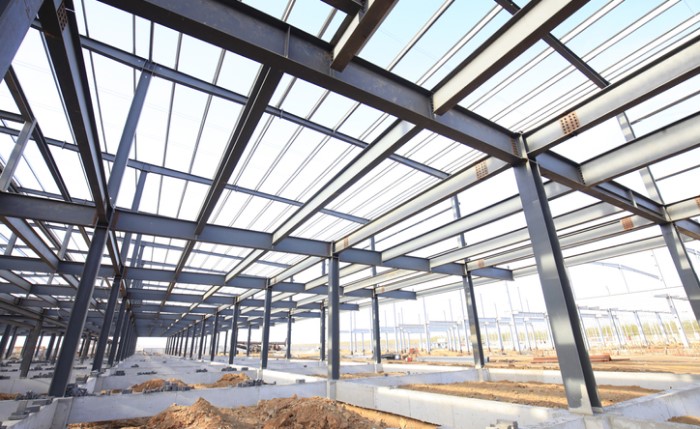
The use of steel in the US is constantly growing. During August 2021, [8,404,858 net tons](https://www.steel.org/2021/10/august-steel-shipments-up-28-7-percent-from-prior-year/) of steel were shipped by US steel mills, up from 6,532,652 net tons the previous year.
When deciding what type of steel to use for a task, several different factors come into play. This includes things such as costs, required strength, or conditions the metal will endure. As such, comparisons can be made for mild steel vs stainless steel to determine which you may need.
Understanding the differences between these types of steel is essential, as making the wrong choice for your desired application could have devastating results. To get a better idea of the advantages and disadvantages of each type, and which one you will want to use, keep reading.
## Differences between Mild Steel vs Stainless Steel
The different characteristics between these two types of steel come from the main alloying element.
The composition of mild steel mainly consists of carbon. Stainless steel uses less carbon and is instead alloyed with chromium. This may seem to be a small change, but these differing compositions are what give a variety of different properties between these two types of steel.
### Corrosion
The chromium used in stainless steel gives it more corrosion resistance than mild steel due to the way it reacts with oxygen. It produces a layer of chromium oxide which makes it naturally corrosion-resistant, provided that the layer is not damaged.
This also makes it ideal if the metal will be in contact with any chemicals such as strong cleaning products.
Mild steel does not contain chromium to produce this protective layer but instead will have a layer of iron oxide on the surface. This will react with moisture producing more iron oxide, resulting in rusting of the metal. To prevent this, mild steel needs to be processed further for use in an environment where rust may occur.
This is possible through processes such as [powder coating](https://www.powdercoating.org/page/WhatIsPC). This involves applying a dry powder to the surface of the metal via an electrostatic process. Powder coating is a cost-effective way of giving the metal a durable finish, which is more suitable for any application where the metal is visible or exposed to moisture.
Galvanization is a process that gives similar results, most commonly done by submerging the metal in molten zinc (known as hot dipping). This results in a protective layer on the surface of the metal, which helps to prevent corrosion.
### Hardness
The chromium used in stainless steel makes it harder and less malleable than mild steel, but also more brittle. Because of this, it is not as easy to alter as mild steel.
This means that mild steel is easier to fabricate than stainless steel, so it is more suitable if it will need to be bent or welded, for example.
If mild steel is being used but needs to be stronger, this can be done by [adding more carbon](https://www.bushwickmetals.com/high-carbon-steel-vs-low-carbon-steel/) or through galvanization.
### Aesthetics
There is a notable visual difference between mild steel and stainless steel. Stainless steel is famous for having a brushed/polished surface that is not present in mild steel. This is often seen as a desirable characteristic.
Mild steel is generally not considered to be as aesthetically pleasing, and as mentioned above is more susceptible to rust. Because of this, mild steel is more commonly used when the surface won’t actually be visible, such as internal structures.
When it is present in a situation where it will be exposed or visible, it will usually be painted or coated. This is to help prevent corrosion and give it a more visually appealing finish.
### Cost
Due to the differences in the composition of mild steel and stainless steel, stainless is always the more expensive option upfront. This often makes it the less appealing choice. It is worth remembering that stainless steel is stronger and much more corrosion-resistant. Because of this, mild steel could actually cost more to maintain in the long run due to maintenance costs.
## Uses of Each Type
The different characteristics of these two types of steel mean that each one has its advantages and disadvantages.
Due to the physical properties of mild steel, as well as how cheap it is, it is one of the most widely used types of steel in the world. Is mild steel better than stainless steel? That comes down to what it is being used for.
Some common applications of mild steel include:
- Structural/construction frames
- Pipes
- Signs
- Vehicles
- Gates/fences
- Furniture
- Machine parts
Due to its resistance to corrosion, high strength, and appearance, there are a number of applications that make stainless steel the better choice when compared to mild steel:
- Kitchenware (cutlery, sinks, pots/pans, etc.)
- Surgical tools/medical equipment
- Bridges
- Monuments/statues
- Vehicles
- Architecture
- Storage tanks
- Pipes
- Green energy production (solar, geothermal, hydro, and wind power)
- Food production/storage
Some common uses overlap between the two, due to both metals being ideal for the job. In instances like this, the more suitable type of steel would need to be determined based on the specifics of the application.
## What to Do After Your Decision
Based on the information, in this blog you’ll now have some sort of an idea of which type of steel is suitable for you. If you are still unsure, the team at [Bushwick Metals](https://www.bushwickmetals.com/) will be able to give you a more detailed explanation of mild steel vs stainless steel.
Bushwick Metals is one of the leading distributors in the Northeast and can supply you with everything you need. We supply mild steel, stainless steel, and more. Orders are processed around the clock and can be delivered in one or two days, so don’t hesitate to [contact us](https://www.bushwickmetals.com/contact/) and let us know what you’re after!
[Back to News / Blog](https://www.bushwickmetals.com/news)
## Contact Us
- First Name\*
- Last Name\*
- Email\*
- Phone Number\*
- Company Name
- Website URL
- Message
- Upload a Drawing
Drop files here or Select files
Max. file size: 64 MB, Max. files: 5.
- Agreement\*
- [ ] Agree to Terms
- CAPTCHA
96720
[iframe](about:blank)
### Approvals
[](https://www.fmapprovals.com/)[](https://marks.ul.com/about/ul-listing-and-classification-marks/)[](https://www.sdi.org/)[](https://icc-es.org/)[](https://www.ul.com/services/environmental-product-declaration-epds-certification)
Notifications# Steel Supply CT – Next Day Shipping And Value-Added Services
August 12, 2021 in
Blog / Steel Supply
New England is home to a massive growth of construction, and CT is one of the biggest focal points. New home construction has [surged massively](https://www.courant.com/business/hc-biz-viz-home-construction-hartford-county-20210706-3wbku4spjfhflcnpuh2qc4ggwq-story.html) in the last few years.
With 2021 entering its fourth quarter and the COVID-19 pandemic slowing, construction is booming. From warehouses to single-family homes, CT is seeing a massive upswing in construction.
But construction takes supplies, and when it comes to steel supply CT, there’s no time to waste. Bushwick Metals knows how to get our [high strength steel](https://www.bushwickmetals.com/high-strength-low-alloy-steel/) to you with swift satisfaction. To see more on what we offer to the Connecticut area, read on!
### **Ordered Today, Delivered Tomorrow**
Construction is a [lengthy process](https://constructionexec.com/article/construction-workers-work-longer-hours-due-to-the-skilled-labor-shortage#:~:text=Workers%20in%202017%20put%20in,end%20of%20August%20in%202017.), and doing things right makes it take even longer. With Bushwick’s steel, you can rest assured that you’ll be getting your order quickly. That way, construction can carry on as soon as possible – no waiting weeks and weeks for deliveries.
Bushwick offers free next-day delivery for all of Connecticut. Whether you’re down in Stamford or up in Putnam, Bushwick can get your materials to you quickly. Prompt, safe delivery gets your construction project up and running as quickly as can be.
## **Steel on Offer**
After more than a century in business, Bushwick has learned to carry everything needed. Whatever steel you may need, we can help you find it with ease.
Below is a list of our options in metal products. With steel supply CT being as important as it is, Bushwick knows never to skip out on supplies. From angles and bars to sheets and beams, Bushwick has what you need.
### **Expanded Metal & Grating**
Bushwick carries an extensive list of expanded metals and grating. There are fourteen options to ensure that we fit every need that you could have.
From lightweight safety gratings to closed-mesh gratings, Bushwick can fulfill any need. Be sure to check our full list for a comprehensive breakdown of each product.
### **Heavy Structural Products**
Sometimes your construction project requires a bit of extra reinforcement. If you’re building something heavy, you’ll need something heavy.
These products, often called “jumbo beams,” are for [supersized construction efforts](https://www.bushwickmetals.com/product-category/heavy-structural-products/). Bushwick Metals supplies everything from 10” x 100# up to 44” x 500#, and everything in between. Bushwick keeps one of the construction industry’s most extensive ranges of heavy structural products.
### **Steel Angles**
Bushwick Metals offers an extensive range of steel angles. Customers can expect bar angles, structural angles, and galvanized angles.
These angles are available in a wide variety of dimensions. If you happen to need something we don’t carry, we’re still happy to help!
Bushwick is able to roll and bend any steel angle to your specifications. We’re able to customize configurations in sizes ranging from 2” x 2” x ¼” to 8” x 8” x 1”.
### **Beams & Bars**
Bushwick offers a variety of bars, from merchant-quality all the way to high-strength low alloy bars. No matter what need you’ve found, Bushwick is happy to meet it. Special-quality and low-carbon bars are also readily supplied.
Our structural [steel beams](https://www.bushwickmetals.com/product-category/beams/) come in three grades and a wide variety of sizes. Bushwick carries A992/A572-50, A588, and A366 structural steel beams.
### **Steel Channels**
For any use of a C-channel, Bushwick carries a range of steel. We carry hot-rolled steel bar channels, stair-stringer channels, structural-steel channels, and a few miscellaneous channels as well.
Bushwick’s wide variety of C-channels will help keep your construction project on the move. If we don’t carry exactly what you need, we’ll do our best to shape your C-channel to your specifications.
### **Steel Decking**
Bushwick Metals sells a considerable range of [roof deck and steel joists](https://www.bushwickmetals.com/product-category/decking/). All deck available through Bushwick Metals is manufactured through members of the Steel Deck Institute.
Bushwick offers Type A, B, N, and Form deck. We have plenty of composite deck available as well, including 1.5”, 2”, and 3”.
Manufactured by members of the Steel Joist Institute comes our steel joist selection. Bushwick is happy to offer K, LH, and DLH series joists.
### **Steel Plates**
Bushwick is proud to offer the most extensive range of structural steel plates in the industry. Whatever needs your construction project has, Bushwick is certain to have the steel plating you need.
For riveting, bolting, and welding projects, Bushwick offers A36, A572-50, and A588 steel plates. Extreme conditions may call for our ASTM A516-GR70 steel plates. Those searching for extra strength and toughness will be impressed by our T-1 Type B Construction Alloy Steel.
Finally, for those needing longer-lasting steel, we have you covered. Our AR235 and AR400 abrasion-resistant plates are as durable as could be.
### **Steel Sheets**
For steel sheets, Bushwick offers five durable and flexible grades. Our carbon sheets come hot-rolled, cold-rolled, and galvanized. Our hot-rolled sheets also come pickled and oiled, or as Corten sheets.
We have sheets for whatever construction project you could dream of. With our quick delivery and wide range of options, Bushwick is happy to support you.
### **Steel Tubing & Piping**
Bushwick offers ten options of strong, effective piping. You can count on us to meet your precise requirements quickly and efficiently.
Whether you need square mechanical tubing, fence pipe, or just a standard, uncoated pipe, Bushwick has you covered. We’re able to meet all of your steel piping needs.
## **Steel Supply CT Made Easy**
No matter where you find yourself in Connecticut, you’ll find Bushwick Metals there to help. Our next-day delivery is available throughout all of Connecticut.
If you have specifications that you need met, Bushwick will do everything possible to meet them. For more than a century, we’ve earned your business by moving mountains to get steel supply CT moving throughout the state.
While looking more into the industrial steel supply business, explore our blog and products. We have deeply informative write-ups on what you could need, why you could need it, and most importantly, how we could get it to you.
[Bushwick](https://www.bushwickmetals.com/contact/) is happy to do everything possible to keep your construction project moving. Be sure to leave a comment discussing your own construction projects as you explore our informative website.
[Back to News / Blog](https://www.bushwickmetals.com/news)
## Contact Us
- First Name\*
- Last Name\*
- Email\*
- Phone Number\*
- Company Name
- Website URL
- Message
- Upload a Drawing
Drop files here or Select files
Max. file size: 64 MB, Max. files: 5.
- Agreement\*
- [ ] Agree to Terms
- CAPTCHA
10500
[iframe](about:blank)
### Approvals
[](https://www.fmapprovals.com/)[](https://marks.ul.com/about/ul-listing-and-classification-marks/)[](https://www.sdi.org/)[](https://icc-es.org/)[](https://www.ul.com/services/environmental-product-declaration-epds-certification)
Notifications# Roof Deck
| Type | Item Name | Thickness | Weight per Sq. Ft (Paint) | Weight Per Fq. Ft. (Galv) |
| --- | --- | --- | --- | --- |
| Roof Deck | B Deck | 0.0478 | 2.8 lb | 2.8 lb |
### Approvals
[](https://www.fmapprovals.com/)[](https://marks.ul.com/about/ul-listing-and-classification-marks/)[](https://www.sdi.org/)[](https://icc-es.org/)[](https://www.ul.com/services/environmental-product-declaration-epds-certification)# HP Beams
### Intsel Steel
HP BeamsJunior BeamsStandard I Beams - 20ft to 60ftWide Flange Beams
### Approvals
[](https://www.fmapprovals.com/)[](https://marks.ul.com/about/ul-listing-and-classification-marks/)[](https://www.sdi.org/)[](https://icc-es.org/)[](https://www.ul.com/services/environmental-product-declaration-epds-certification)# Choosing the Perfect N Decking: A Comprehensive Buyer’s Guide
November 6, 2023 in
Blog / Decking
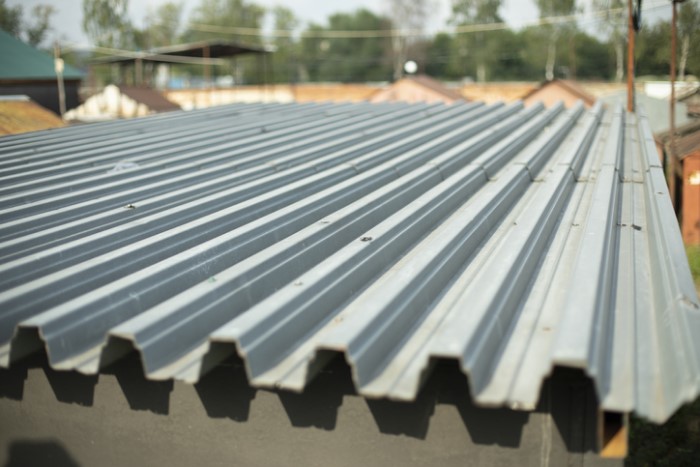
Picking out the ideal materials for your deck can be a daunting task, especially with so many decking options available on the market.
Whether you’re upgrading an existing deck or creating a new outdoor space, N decking might be your best choice.
Keep reading as we aim to help you understand the ins and outs of N decking and why it’s a fantastic choice for your decking project.
## **What Is N Decking?**
Named for its unique “N” shape in cross-section, N decking is a type of steel deck used in various construction and renovation projects.
Known for its strength and durability, N decking provides a stable base for flooring and roofing applications.
This [versatile decking option](https://www.bushwickmetals.com/product-category/decking/) is made from high-quality steel. It comes in a range of gauges, or thicknesses, allowing you to choose the perfect strength for your specific project.
## **Benefits of Using N Decking**
Among types of decking, the N deck stands out due to its remarkable advantages. Let’s dive into why this type of decking could be the ideal choice for your project.
### **Superior Strength**
The very design of N decking, shaped like an “N” in cross-section, lends it remarkable strength and stability. This strength stems from its steel composition, which is renowned for its superior load-bearing capabilities.
Whether hosting a small family gathering or a large party, you can rely on your deck to withstand the weight and activity without buckling.
### **Versatility to Match Your Needs**
From a cozy residential patio to a broad commercial rooftop, N decking can fit a wide range of applications. Its strength and design versatility make it an ideal choice for both light-duty and heavy-duty projects.
The customization options also mean that you can match your decking with your property’s aesthetic, creating a cohesive and attractive look.
### **Exceptional Longevity**
Unlike other decking materials such as wood or composite, steel does not warp, rot, or fall prey to termites. This means your N deck can retain its structural integrity and look for many years to come.
With proper care, which generally involves simple cleaning and occasional checks for rust, N decking can last for decades, outlasting most other decking options.
### **Eco-Friendly Choice**
N decking is not just a durable and versatile choice but also an eco-friendly one.
Steel is one of the [most recyclable materials](https://www.theworldcounts.com/challenges/planet-earth/mining/advantages-of-recycling-steel) in the world. Opting for steel decking can be a step towards a more sustainable lifestyle. You get a fantastic deck and peace of mind knowing you’ve made an environmentally-conscious choice.
### **Fire and Pest-resistant**
Unlike wooden decks, N decks are inherently [resistant to fire](https://www.aisc.org/why-steel/resources/fire-protection/), reducing the risk of fire-related accidents and damage. This resistance can offer significant peace of mind, particularly in regions prone to wildfires.
Plus, steel is not a material that attracts pests. You won’t have to worry about damage from termites or other insects.
By selecting N decking, you’re not just choosing a material for your project. You’re investing in a high-quality, durable, and reliable deck that will serve you well for many years to come.
## **Selecting the Right N Deck**
Choosing the perfect decking for your project involves more than picking the first option you come across. It requires understanding your needs, evaluating different options, and making a well-informed decision.
Here’s a detailed breakdown of what you should consider.
### **Understand Your Load Requirements**
The first step is to determine the load requirements of your project.
How much weight will your deck need to support? This can depend on various factors, from the intended use of the deck to local climate conditions.
For instance, a deck meant for light residential use will have different requirements than a commercial deck expected to support heavy equipment. If you live in an area with heavy snowfall, your deck must handle the additional weight of snow accumulation.
### **Gauge the Maintenance**
One of the most significant benefits of N decking is its low maintenance requirements. Unlike other decking materials like wood, which need regular sealing and staining, steel decking requires minimal upkeep.
Regular cleaning to prevent debris build-up and periodic checks for rust are usually all that’s needed to keep your N decking in prime condition.
### **Consider the Aesthetics**
While the strength and durability of N decking are its primary selling points, you should also consider the aesthetic appeal of your deck.
The color, finish, and overall look of your deck should complement the design of your property. Thankfully, N decking can be finished in various colors and textures, allowing you to match your deck’s look to your personal style and preferences.
### **Cost Effectiveness**
While the upfront cost of N decking can be higher than other materials, it’s essential to consider the long-term cost-effectiveness of your choice.
The durability and low maintenance requirements of steel decking often make it a more economical choice in the long run. Plus, its longevity means you’re less likely to need a replacement in the near future.
### **Consult a Professional**
Lastly, don’t hesitate to seek professional advice.
Experienced professionals can guide you through the process, helping you make an informed decision based on your specific needs and preferences.
Remember, the best deck for you is one that matches your needs, preferences, and budget and will serve you well for many years to come.
## **Ready to Begin Your Decking Project?**
When it comes to strength, versatility, and longevity, N decking is a standout choice for your decking project.
Understanding the benefits and options available can help you make an informed decision. With the right choice, you’ll have a deck that’s aesthetically pleasing and built to last.
Are you ready to begin your decking project? Our knowledgeable team is ready to assist you in choosing the perfect N decking. [Contact us today](https://www.bushwickmetals.com/request-a-quote/) to request a quote for our quality steel products.
[Back to News / Blog](https://www.bushwickmetals.com/news)
## Contact Us
- First Name\*
- Last Name\*
- Email\*
- Phone Number\*
- Company Name
- Website URL
- Message
- Upload a Drawing
Drop files here or Select files
Max. file size: 64 MB, Max. files: 5.
- Agreement\*
- [ ] Agree to Terms
- CAPTCHA
39363
[iframe](about:blank)
### Approvals
[](https://www.fmapprovals.com/)[](https://marks.ul.com/about/ul-listing-and-classification-marks/)[](https://www.sdi.org/)[](https://icc-es.org/)[](https://www.ul.com/services/environmental-product-declaration-epds-certification)
Notifications# Expanded Metal & Grating
### Intsel Steel
[Close Meshed Grating](javascript:;) [Expanded Metal Grating](javascript:;) [Expanded Metal U-Edging](javascript:;) [Flattened Aluminum](javascript:;) [Flattened Expanded Metal-Carbon Steel](javascript:;) [Flattened Stainless Steel Type 304](javascript:;) [Grate-Lock® Interlocking Type Mezzanine Grating](javascript:;) [Grip Strut® Safety Grating](javascript:;) [Grip Strut® Stair Treads and Ladder Rungs](javascript:;) [Heavy Duty Grip Strut® Safety Grating](javascript:;) [Standard/Raised Expanded Metal-Carbon Steel](javascript:;) [Standard/Raised-Aluminum](javascript:;) [Standard/Raised-Stainless Steel Type 304](javascript:;) [Welded Bar Grating Stair Treads](javascript:;)
## Expanded Metal and Grating
Intsel Steel offers one of the widest varieties of expanded metal and grating products in stock and available for immediate shipping to ensure your most exacting requirements can be met. With many configurations, types, and materials available, you’ll find the expanded metal and grating products that are ideal for your application:
- **Flattened Expanded Metal-Carbon Steel**
- **Standard/Raised and Flattened Stainless Steel Type 304:** conforms to F1267-01, Type 2, Class 3
- **Standard/Raised and Flattened Aluminum:** conforms to F1267-01, Type 2, Class 3
- **Standard/Raised Expanded Metal-Carbon Steel:** conforms to F1267-01, Type 1, Class 1
- **Expanded Metal Grating:** conforms to MIL-M-17194C (Metal Expanded Steel) and MYL-G 18015 (ships) (grating) and the deflection requirements of Federal specifications RR-G-661-B
- **Expanded Metal U-Edging**
- **Welded Bar Grating Stair Treads:** manufactured from standard 194 Grating with a patterned floor plate nosing and pre-punched end plates to facilitate installation
- **Close Meshed Grating**
- Grip Strut® Safety Grating
- Heavy Duty Grip Strut® Safety Grating
- Grate-Lock® Interlocking Type Mezzanine Grating
In addition to offering rapid delivery—usually the very next day!—we leverage our nearly two centuries of continuous service to provide you with the best industry insights and expertise available. We can assist with inventory planning, forecasting, supply-chain management, and more, enabling you can focus on your core business objectives without worrying about whether you’re stocking enough supplies or where you’re going to find that specialty-metal grating you need. It’s our job to make your job easier!
We also offer a number of value-added processing services, such as cutting, shearing, stamping, and slitting, for example. Find out more about our many services and supports by contacting Intsel Steel today. And remember, if you need expanded metal and grating now, contact us today and we’ll move mountains to get it you by tomorrow!
### Expanded Metal
A versatile material that is produced from solid sheets or plates of carbon steel, galvanized steel, stainless steel, or aluminum, expanded metal is available in four basic types: standard (or regular), flattened, grating and architectural (or decorative) meshes. The four primary applications for expanded metal include enclosures, protection, support, and decoration.
### Steel Grating
Intsel Steel’s grating is manufactured by the automatic weld-forge method, which joins the bearing bars to the cross bars, resulting in a sturdy panel with one-piece construction. Typical applications include floors, decks, fire escapes, and walkways. Our grating is available with either a smooth or serrated surface and finish options include black-painted finish, galvanized finish, mill finish, or bare finish. Made to NAAMM standards.
### Closed-Mesh Grating
Close-meshed grating is a pressure-locked grating product produced with close-bar spacing to accommodate the requirements for pedestrian comfort and safety. Typical applications include building entrances, air ducts, and sidewalk installations where ventilation and easy access are required. Closed-mesh grating is available in carbon steel, stainless steel, and aluminum. This product complies with standards as established by the American Disabilities Act (ADA).
### Grip Strut™ Safety Grating
Grip Strut is a lightweight metal grating designed for safety underfoot. The unique one-piece diamond shaped construction provides slip resistance in all directions. Grip Strut is ideally suited for all walking/working surfaces where mud, ice, snow, grease, oil, or detergents create slippery or hazardous conditions. Grip Strut grating is commonly used for work platforms, industrial flooring, catwalks, balconies, storage areas, walkways and stair treads.
### Grate-Lock™ Interlocking-Type Mezzanine Grating
Grate-Lock Grating is an easy-to-install system of interlocking planks, treads, and accessories, that provide safe, sturdy footing for mezzanine floors, platforms, walkways, and other applications. Increased load performance has been achieved through interlocking planks and a ventilated’ rung design. Hundreds of sole-gripping dimples ensure a safe surface in all kinds of environments. Grate-Lock is available in lighter-gauge steel if desired, which can result in substantial material savings.
### Heavy-Duty Grip Strut Grating
Heavy Duty Grip Strut is a one-of-a-kind plank grating sporting a hefty 24-foot clear span capability that offers the advantages of regular Grip Strut plus capabilities for greater loads and/or longer spans. Heavy Duty Grip Strut walkways are ideal for process plants, refineries, grain elevators, conveyor walkways, underbridge inspection walkways, and paper mills. Heavy Duty Grip Strut is more competitive than ever against Bar Grating.
Plain hot-rolled, pickled, and oiled steel and aluminum available upon request and special quotation. Hot-dip galvanized after fabrication is available upon request and special quotation. Special fabrication, cutting or specialty configurations available upon request and special quotation.
### Grip Strut® Stair Treads and Ladder Rungs
Intsel Steel offers a full range of standard and nonstandard stair-tread products, including Grip Strut, Heavy Duty Grip Strut, Perf-O Grip Traction Tread, and Grate-Lock stair treads. Products are available with or without abrasive nosing.
Intsel Steel offers a large variety of ladder rungs for use in different environments and industries. Grip Strut On-Diamond Ladder Rungs are ideal in environments where safe footing is hard to come by. Grip Strut Ladder Rungs ensure maximum slip resistance and safe footing. Traction-Tread Ladder Rungs are ideal for use in hand-over-hand ladder applications where safe footing is also required.
### Approvals
[](https://www.fmapprovals.com/)[](https://marks.ul.com/about/ul-listing-and-classification-marks/)[](https://www.sdi.org/)[](https://icc-es.org/)[](https://www.ul.com/services/environmental-product-declaration-epds-certification)# What Is Diamond Plate & What Are Its Uses?
### Intsel Steel
# What Is Diamond Plate & What Are Its Uses?
If you’ve ever noticed a shiny, textured metal sheet underfoot or as part of a vehicle, you’ve likely encountered a diamond plate. Known for its strength, durability, and distinct pattern, diamond plate has become a staple material across industries. But what is diamond plate, and what makes it so versatile? Let’s explore its characteristics, applications, and benefits.
## What Is Diamond Plate?
Diamond plate, also referred to as a tread plate or checker plate, is a type ofmetal [grating](https://www.bushwickmetals.com/product-category/expanded-metal-grating/) featuring a raised diamond or checkerboard pattern on one side. The pattern is not only visually striking but also provides functional benefits, such as enhanced grip and slip resistance. Diamond plates are commonly made from aluminum, steel, or [stainless steel](https://www.britannica.com/technology/stainless-steel), chosen for their durability and corrosion resistance.
### Key Characteristics:
- **Textured Surface**: A raised diamond or checker pattern enhances traction.
- **Smooth Reverse Side**: The underside is flat, making it easy to install on various surfaces.
- **Material Options**: Typically available in aluminum for lightweight applications and steel or stainless steel for heavy-duty use.
- **Versatile Finishes**: Comes in polished, brushed, or raw finishes to suit industrial or decorative needs.
## Primary Uses of Diamond Plate
Diamond plate’s combination of functionality and style makes it suitable for a wide range of applications.
### 1\. Safety and Industrial Applications
Its non-slip surface and durability make diamond plate a trusted material in high-traffic and heavy-duty environments:
- Stairs, walkways, and ramps
- Loading docks and elevator floors
- Machine shop and factory flooring
- Emergency vehicles like firetrucks and ambulances
- Work platforms and catwalks
### 2\. Transportation
Diamond plate is often used in the transportation industry for its ability to withstand wear and tear while providing safety:
- Truck beds and trailer floors
- Vehicle running boards
- Stone guards and mud flaps for trailers
- Automotive bodywork and interior protection
### 3\. Decorative and Architectural Uses
Beyond its functional uses, diamond plate adds a rugged, industrial aesthetic to design projects:
- Wall paneling and wainscoting
- Garage floors
- Mirror frames, signage, and custom decor
- Retail displays and interior accents
## Benefits of Using Diamond Plate
Why is diamond plate a go-to material in so many industries? Here are its standout advantages:
- **Slip Resistance**: The raised pattern reduces the risk of slips and falls, even in wet or oily environments.
- **Durability**: Engineered to withstand heavy loads, impacts, and abrasive conditions.
- **Corrosion Resistance**: Aluminum diamond plate resists rust, making it ideal for outdoor or humid settings.
- **Easy Maintenance**: Its smooth yet rugged surface is simple to clean and maintain.
- **Lightweight**: Aluminum versions offer strength without adding significant weight.
- **Aesthetic Appeal**: The polished finish adds a professional and industrial look to various settings.
- **Hygienic Surface**: Its non-porous nature prevents the buildup of dirt or bacteria, making it a great choice for clean environments.
## What is Diamond Plate Made of?
When selecting a diamond plate, consider the application and the material properties:
- **Aluminum**: Lightweight and rust-resistant, perfect for decorative and light-duty applications.
- **Steel**: Heavy-duty and durable, ideal for industrial flooring and transport applications.
- **Stainless Steel**: Combines the strength of steel with superior corrosion resistance, suited for hygienic or outdoor use.
From ensuring safety in industrial settings to adding a sleek, rugged aesthetic to decor, diamond plate is a versatile material with wide-ranging uses. Its textured surface provides slip resistance, while its robust construction guarantees longevity. Whether you’re designing a truck bed, a factory floor, or a unique interior space, diamond plate delivers both function and style.
## The Best Place to Buy Diamond Plates
Suppliers of specialty metals, such as Bushwick Metals, sell diamond plate steel. With a vast inventory of high-quality carbon steel structural, decorative, and plate products, Bushwick Metals is the Northeast’s leading wholesale steel distributor. [Contact Bushwick](https://www.bushwickmetals.com/contact/) today or [Request a Quote.](https://www.bushwickmetals.com/request-a-quote/)
# FAQs About Industrial Expanded Metal U-Edging at Bushwick Metals
Steel, an alloy of iron, can be as much as [1,000 times stronger](https://worldsteel.org/about-steel/steel-facts/) than raw iron. The metal’s strength comes from the addition of carbon and other strengthening alloys.
For many applications, the most cost-effective type of steel is expanded steel. Expanded metal has holes that allow manufacturers to stretch it into a lightweight mesh.
To make the sharp edges of the sheared mesh safer, it’s common to order lengths of the material with expanded metal U-edging. U-edging is a type of metal framing produced by folding a thin strip of metal into a U shape.
Expanded metal grating has a wide range of uses for manufacturers in all industries. For many smaller applications, expanded metal can provide nearly the same structural integrity as sheet metal while reducing the weight and material cost.
Any shop manager considering expanded metal for their next project probably has a few questions. Read on to learn why U-edging for expanded metal is a great choice for metal fabrication!
## **Common Expanded Metals**
Manufacturers can expand any metal with decent ductility. However, there are only a few types of metal that commonly get expanded.
Not only are less common metals often more difficult to expand, but the process can easily become expensive. The types of metal most often expanded for commercial use are steel, aluminum, and copper.
Metals can be expanded in a few different ways. Most commonly, manufacturers perforate sheet metal in rows and then pull the material apart to form a mesh.
Manufacturers can also flatten or otherwise finish the expanded metal depending on the application.
### **Steel**
By far the type of metal most often expanded into mesh is steel. Steel is useful for [many structural applications](https://www.steel.org/steel-markets/) due to its low cost, weldability, and strength.
There are several varieties of steel that are used for expanded metal, such as:
- Carbon
- Galvanized
- Stainless
Like with most kinds of expanded metal, expanded steel U-edging is an easy way to protect passersby from sharp edges.
### **Aluminum**
Aluminum’s uniquely low weight and corrosion resistance make it a good choice for uses such as vent covers and power cables. Because aluminum is easy to work with at low temperatures, the expanding process is easier than with other metals.
Because aluminum resists corrosion, it doesn’t have to be painted even if it will come into contact with water.
### **Copper**
Like aluminum, copper is also corrosion-resistant. It is also an excellent conductor of electricity, making it useful for electrical applications.
Copper’s rich color also makes it a popular choice for decorative expanded metal. If the material will be used decoratively, U-edging for expanded metal is a must.
## **Expanded Metal U-Edging: An Overview**
Expanded metal is a lightweight alternative to sheet metal that can be used for many of the same applications. However, the sharp edges of unfinished expanded metal can be unappealing as well as hazardous.
Most structures that use expanded metal will come into close contact with people.
Whether the person handling the structure is a worker or an end-user, it’s essential to make it safe. When expanded metal is cut into sections, the process usually leaves sharp and unsightly edges sticking out.
Not only can these sharp edges cut and scrape the skin, but they can also get caught on clothes and become a trip hazard.
One solution is to sand down any sharp edges, but the process is time-consuming. You can use metal frames made from channel or angle beams, but this requires more welds and can have a high material cost.
The easiest and least expensive way to protect people from the sharp edges of metal mesh is to cover them with U-edging. U-edging most often consists of steel or aluminum.
Manufacturers can cover the edges of expanded metal with U-edging either with welds or pressure. While expanded metal with U-edging is safer and more visually appealing, it tends to come in a few set dimensions unless ordered custom.
## **Uses of Expanded Metal**
Expanded metal is useful for home and industrial purposes, including grates, walkways, furniture, and fencing. Lengths of expanded metal with U-edging have just as many applications and are generally easier to handle and transport.
Other uses for [expanded metal](https://www.bushwickmetals.com/product-category/expanded-metal-grating/) include:
- Railing
- Truck and trailer decks
- Enclosures
- Architecture
- Ceiling and wall panels
- Cladding
- Shelving
Expanded metal also has several advantages over other materials. It weighs much less, making it a good choice for applications where solid metal isn’t necessary.
Additionally, expanded metal allows light, air, and water to pass through a barrier. This makes it a good option for filtration or applications where a structure needs good ventilation or drainage.
Another benefit of expanded metal is the lower cost of using it for manufacturing. Because the material is easier to cut, reshape, and transport than solid metal, it often costs less in material and labor.
Expanded metal with raw edges may be difficult to weld due to the thin structure and varied edges. U-edging provides a smooth and uniform surface to weld to other materials.
## **Find the Perfect Material for Your Project**
Whether your project is a large-scale structural job or a light custom fabrication order, expanded metal U-edging is an excellent choice. Your materials will be safer to handle and the finished product will be more polished.
Expanded metal U-edging not only makes expanded metal safer to handle, but it also makes the material easier to weld. No matter what project you need expanded metal for, Bushwick Metals can help.
With over a century in the metal industry, Bushwick Metals is a supplier you can trust. [Contact us](https://www.bushwickmetals.com/contact/) today to learn more about the value-added services we offer!
# The Benefits Of Serrated Steel Grating At Bushwick Metals
Imagine walking along an ocean boardwalk, watching the waves crash along the shore. You see a bird dive into the ocean as the water swells towards you. The large wave crashes against the boardwalk, and you look down. The serrated steel grating of the walk kept your feet nice and dry. How?
So, you want to know how these metal grates work, their benefits, and when you should use them for your at-home projects? Keep reading to deep dive into the process.
## What Are Serrated Type-Bearing Bars?
The metal serrated type-bearing bars make up the load area of the welded grating. Most bars are either welded or riveted together, depending on the client’s needs, wants, and specifications.
Serrated type-bearing bars are made from [low carbon steel](https://www.wisegeek.com/what-are-the-different-uses-of-low-carbon-steel.htm), aluminum, or stainless steel. The types of grating include serrated welded steel with either a semi-circular surface, a trapezoidal surface, or an intermittent surface. Pattern-wise, the materials come in a normal, interrupted, carrier bar, or carrier bar with crossbar shapes. Some grates come with tread strips.
## Uses of Steel Grating
Among the types of grating, serrated steel grating is used for a variety of walkways and platforms. Some apartment complexes choose to use serrated welded grating to create walkways along their units; engineers also create balconies using the same material.
For public construction projects, steel grating is used to create pedestrian cross-overs over highways and overpasses. Factories utilize the metal to create a safer working environment for their employees.
To create more grip and traction in environments filled with water, oil, and other natural elements, the best grating is used on stairs. Public beaches, parks, and other natural areas commonly have serrated steel grating stairs and walkways. In keeping the ground dry, workers install grating as drainage trench cover. The material gives overflowing water a convenient place to go.
## Kinds of Serrated Steel Grating
Before diving into serrated steel grating, let’s dive into the different types available. These platforms are made of aluminum, stainless steel, or low carbon steel.
You can choose the welded serrated steel grates. First, the pieces of metal are [welded together](https://waterwelders.com/types-of-welding-processes/). You can choose between flux-cored arc, stick-shielded-metal arc, gas metal arc, laser beam, electron-beam, plasma arc, gas tungsten arc, atomic hydrogen, and electroslag welding. If you don’t want welded-together grates, you can choose between three other options: swage-locked, press-locked, and riveted grates.
Let’s go over a few of the differences between the various types of materials used in serrated steel grating, as well as the benefits and drawbacks of each.
### Aluminum Bar Grating
Aluminum is not only lightweight, but it is also incredibly durable. This makes it a very versatile material with a wide variety of applications. Aluminum bar gratings can be used for both industrial and architectural purposes.
### Carbon Steel Grating
Carbon steel is an incredibly strong material, meaning that it can hold up in various applications and is highly durable. That said, carbon is highly susceptible to corrosion, meaning it is not a good choice for any materials that are highly corrosive or are kept in corrosive environments.
## Benefits of Serrated Welded Grating
Builders choose serrated welded grated due to the special features that come with the material. With the raised surface of the metal grates, the slip resistance performance is excellent. In wet and slippery places, the grooves and edges of the material give people footholds. With most types of grating, a galvanized surface treatment is included. The treatment allows for amazing corrosion resistance performance. Because of this, serrated steel grating products come with a long product service life.
If you need a walkway or ramp in an environment that’s either salty or corrosive due to to other chemicals, consider steel grating. The metal has high-quality chemical stability, meaning that corrosion won’t affect your projects as much. For public works projects, using steel grating gives both you and the public peace of mind. The serrated surface gives pedestrians traction and helps prevent them from slipping. Plus, weather debris does not collect on the platforms due to the gaps in each grate.
## Partnering With a Professional
If you’re interested in using the serrated steel grating but don’t know how to get started, consider partnering with a professional team. Along with helping you determine the best metal grate for your project, a company like Bushwick Metals can also [assist in steel saw cutting](https://www.bushwickmetals.com/precision-steel-saw-cutting-services-at-bushwick-metals/), shearing, stamping, and slitting metal.
### Expanded Metal Options
Do you need a solid metal surface for your construction project? Expanded metal options include standard/regular, flattened, architectural/decorative meshes, and grating. You can choose between carbon, galvanized, or stainless steel, or aluminum. If you need [expanded metal](https://www.bushwickmetals.com/product-category/expanded-metal-grating/) in other shapes and sizes, Bushwick Metals has what you need. Those looking specifically for grating should keep reading, to figure out which kind works best for them.
### Grating Options
The engineers utilize an automatic weld-forge methodology to craft the types of grating. The machine joins the bearing bars directly to the cross bars in a form of one-piece constructed machine. For color options, you can choose between black-painted, galvanized, mill, or bare finish.
#### Closed-Mesh
This is a grating product that locks through pressure. The spacing is closed bars to allow for ease of motion for pedestrians. The option also complies with the ADA (American’s with Disabilities Act).
#### Grip-Strut Safety
A one-piece diamond-shaped grate made from lightweight metal, the product is made with complete slip resistance in mind for workers dealing with rough weather.
#### **Grate-Lock™ Interlocking-Type Mezzanine**
This is a system made of interlocking planks, treads, and other parts. The rung design allows for ease of motion on all terrains. Plus, you can use lighter-gauge steel as the building material for appropriate building projects.
#### **Heavy-Duty Grip Strut**
This is a plank grating system that allows for a 24-foot clear span if so desired. The material allows you to support heavier loads for longer periods of time. If you own a large corporation with many factories, consider this option to improve the experience of your employees.
## Common Materials in Serrated Steel Gratings
- Low carbon steel is easy to mold and weld and is an economical choice. It is often used in commercial or industrial settings.
- Stainless steel is useful in corrosive environments, such as those where it may encounter chemicals or food.
- Aluminum is lightweight and nonmagnetic, and is often used in a commercial setting on ships or in waste treatment.
The material you choose will depend on the specifics of your project. Experts at Bushwick Metal can help you determine what the best material is for your use.
## Ways to Produce Serrated Steel Gratings
Swage-locked grates are very strong and weight less than other options. Instead of being welded together, they are pinched by machinery. Hydraulic pressure is used to make press-locked grates, which are just as strong as welded grates. The hydraulic pressure permanently locks the bars in place and gives a smooth finish. Cold press riveting is the oldest type of grates, and produces grates that are both stiff and strong.
Both welded and non-welded serrated steel gratings are very strong. These grates don’t bend and can carry large amounts of weight. They are easy to install, and if you later need to change the area, they can be removed just as easily. When compared to flat surfaces, even smooth steel gratings, serrated gratings make workers or pedestrians safer. Even in rain or high winds the serration provides a foothold for shoes, and serrated steel grating is sometimes known as anti-slip grating.
## Standards For Steel Gratings
Manufacturers commonly use standards set by the [American National Standards Institute (ANSI)](https://www.ansi.org/) when creating their products. ANSI five classifications focus on the type of work that the grating will perform and the weight it can hold.
- Light Duty grates are meant for pedestrians, and can hold up to 2,000 lbs. This classification is not intended to be used by vehicles.
- Medium Duty grates are used for light traffic, such as in a parking lot in a residential area or on sidewalks, where there is very little traffic. They are used to support between 2,000 lbs. and 5,000 lbs.
- Heavy Duty grates are for commercial vehicles, such as tractor trailers or box trucks. This type can support between 5,000 lbs. and 7,500 lbs. of weight.
- Extra Heavy Duty grates are often used for bridges and highways, and they can carry up to 10,000 lbs.
- Special Duty grates are the highest class, and are used to handle over 10,000 lbs. of weight. They are often used in airports.
Serrated steel gratings are used for a wide variety of applications, so it makes sense that there are various classifications of them, ranging from small light-duty grates to enormous special-duty grates used in airports. These classifications make it significantly easier to decide which type of grate you need to use for your project.
Even knowing the ANSI classifications, though, you might have some questions about which grating to choose or which one best applies to your project. Our team of experts at Bushwick Metal can take a look at your project and help you determine which grates are most appropriate for your needs.
## Want to Use Steeling Grating for Your Next Project? Contact Us Today?
Serrated steel grating is a wonderful building material that can help you accomplish a variety of projects. Engineers design the bearing bars to hold a heavy load with minimal effort. The serrated designs allow for maximum traction and weather resistance.
Do you feel as if these grates suit the upcoming project you have in mind? Maybe you have the ideal type in mind, or you still need help figuring it out? Either way, consider engaging with a professional who can help you get what you need. The team at Bushwick Metals is dedicated to helping you find which types of grating will work best for your project. [Contact us](https://www.bushwickmetals.com/contact/) today to get started.
# Grip Strut Grating Options At Bushwick Metals
Slips and falls are the foremost cause of claims for workers’ compensation. In fact, floors and flooring materials contribute to more than [2 million fall injuries](https://www.metsengineering.com/wp-content/uploads/2015/07/METS_Resources_2014_Occupational-Health-Safety_DC.pdf) each year. When it comes to your employees’ safety in the workplace, there should be no compromising. You want to make sure that your floors are sufficiently safe to prevent slips and falls.
However, what type of metal grating should you install to protect your employees?
Grip Strut leads the industry in safety grating and is ideally suited for all walking and working surfaces where conditions create slippery or hazardous conditions. By utilizing Grip Strut safety grating in your facility, you assure not only the safety of your employees and visitors but also [OSHA compliance](https://www.law.cornell.edu/cfr/text/29/1910.22).
At Bushwick Metals, we offer several different options of Grip Strut grating to support your business. Let’s take a look at those options.
## Grip Strut Safety Grating
Grip Strut is a lightweight but high-strength metal grating that is designed for safety underfoot. It is fairly easy to fabricate and install and is low maintenance. By installing Grip Strut safety grating, your business can save money due to its low material cost, nominal erection cost, and long-lasting, rust-resisting materials and finishes.
Some types of conditions where Grip Strut is ideal are
- ice
- snow
- mud
- oil
- grease
- detergents
- other industrial applications
Manufactured with unique diamond-shaped openings and formed side channels, Grip Strut lets fluids and ice easily pass through the grating. The openings eliminate the possibility of a puddle or piece of material causing a fall. These design factors allow these types of metal grating to provide the maximum multi-dimensional slip resistance.
Grip Strut safety grating is commonly used for
- work platforms
- industrial flooring
- balconies
- walkways
- catwalks
- storage areas
- stair treads
Due to its design, Grip Strut safety grating performs well in areas with inclines and grades. The open nature also makes this type of steel grating very easy to clean, which minimizes overall maintenance.
At Bushwick, we offer five options for Grip Strut safety grating. These options vary depending on the gauge and type of metal that you want to utilize as well as the width of the plate.
1. 14 GA galvanized steel with 4 3/4-inch width (2-Diamond planks)
2. 12 GA galvanized steel with 7-inch width (3-Diamond planks)
3. 0.080 aluminum 5052-H32 with 9 1/2-inch width (4-Diamond planks)
4. 0.100 aluminum 5052-H32 with 11 3/4-inch width (5-Diamond planks)
5. 16 GA type 304 stainless steel with 18 3/4-inch width (8-Diamond planks)
## Heavy Duty Grip Strut Safety Grating
In some cases, you might need a heavier duty safety grating than the options listed above. Heavy Duty Grip Strut safety grating is manufactured with a stronger gauge metal which makes it more robust. This allows the plank to support greater loads on longer spans.
Also, Heavy Duty Grip Strut safety grating has a larger, serrated, diamond matrix opening. The serrated surface increases slip protection.
Bushwick Metal’s Heavy Duty Grip Strut safety grating is a one-of-a-kind plank grating that has up to a 24-foot clear span. This metal grating offers all of the same advantages as regular Grip Strut but with additional benefits.
Ideal use cases for Heavy Duty Grip Strut safety grating are
- [process plants](https://www.metsengineering.com/wp-content/uploads/2015/07/METS_Resources_2014_Occupational-Health-Safety_DC.pdf)
- refineries
- conveyor walkways
- papermills
- underbridge inspection walkways
- grain elevators
Plain hot-rolled, pickled, and oiled steel and aluminum Heavy Duty Grip Strut safety grating options are available upon request and special quotation. Hot-dip galvanized after fabrication is also available upon request and special quotation.
Standard options that are available for Heavy Duty Grip Strut safety grating are
1. 9 GA galvanized steel with 27 5/8-inch width
2. 10 GA galvanized steel with 13 3/4-inch width
3. 11 GA galvanized steel with 9 1/4-inch width
4. 30-inch width
5. 36-inch width
## Grip Strut Stair Treads and Ladder Rungs
Grip Strut On-Diamond stair treads and ladder rungs are particularly ideal for environments where safe footing is hard to come by. The serrated open diamond pattern in the web of the channel of these ladder rungs allows debris to fall through.
For example, Grip Strut stair treads and ladder rungs are ideal for applications that
- are outdoors
- involve heights
- have potentially slippery situations that can benefit from extra grip strength
Bushwick Metals offers a 5-foot traction length x 12-foot long ladder rung option. These ladder rungs ensure maximum slip resistance and safe footing and have a very high strength-to-weight performance.
By providing slip-resistant stair treads and ladder rungs, you will be providing your employees with a safer work environment.
## Select the Best Steel Grating For Your Operation
At Bushwick Metals, we have over 200 years of experience that can help you determine which grating is best suited for your operation’s needs.
Our company has three main goals:
1. To source only the first-rate structural steel and plate products from every part of the world and provide the most extensive range of steel products to you.
2. To create a warehouse with an extensive inventory of steel structural plates and ornamental products to make sure we can deliver them to you within a day. We aim to help our customers avoid warehousing fees, allowing you to manage your production schedules and material costs more efficiently.
3. To provide steel-processing services to help you meet strict deadlines and decrease your basic equipment investments.
We are committed to providing quality services. In addition to Grip Strut safety grating, we also offer Grate-Lock interlocking type mezzanine grating, close meshed grating, and [expanded metal grating](https://www.bushwickmetals.com/product-category/expanded-metal-grating/).
Reach out to us today and [request a quote](https://www.bushwickmetals.com/contact/). Let us know what your operation’s needs are, and we will strive to fulfill them.
# The Different Types Of Expanded Metal And Their Uses
Expanded metal would most likely be the right product choice for your next project due to its strength and durability. It outranks its competitors, like chicken wire, as it is cost-effective and comes in multiple sizes and weights.
Examples of metals used to make expanded metal include aluminum, stainless and galvanized steel, copper, and titanium. There are several types of expanded metal. Each type is made in different ways that provide various functions. Let’s figure out which one suits your needs the best.
## What Is Expanded Metal?
The process of creating expanded metal was first developed and copyrighted in the 1880s in Hartlepool, UK. Despite advancements in technology, the modern process of expanding metal remains similar to the original technique.
Expanded metal is a metal produced from a solid metal sheet. Stainless steel, aluminum, steel, titanium, and copper sheets are used. The sheet goes through a process of cutting and stretching using industrial machinery. Stretching and cutting result in a mesh with diamond-shaped spaces. Many other patterns can also be created.
The ratio of open to closed mesh area specifies the amount of space for the passage of light, air, and water. The ratio can be changed according to the mesh usage. As the process starts with a small sheet of steel and results in the production of a large mesh, it is lightweight and cost-effective, making it the best pocket-friendly option to choose among others.
The versatility of expanded metal widens the opportunity for usage. It can be used for a variety of applications. While still allowing airflow and light in, expanded metal is very strong and durable.
The diamond shape does the best at absorbing energy and deforms the least after being installed. Other design variants consider the size and angles of the shapes and how well they can absorb energy.
## How Is Expanded Metal Made?
The manufacturing of expanded metal begins with a metal sheet. The sheet is cut and stretched. This procedure expands the cuts uniformly into diamond-shaped openings. There is no metal wastage during the expanding procedure, making expanded metal a green product. As mentioned, expanded metal comes from a single sheet of any metal. An industrial cutting machine moves back and forth to cut the sheet in alternating cuts for a specific shape. Several different knife patterns can be used to cut the sheet into different shapes and sizes. The purpose of creating expanded metal is to stretch it. You only need a small piece of metal for this process.
Expanded metal machines have various functions. Sometimes the process requires multiple machines. The standard method is to expand the metal sheet in a press that creates the diamond-shaped voids. Then, a flattening machine is used to flatten out the metal, followed by a shearing and slitting machine which cuts and creates the holes. This process can vary based on the available resources.
## Different Types of Expanded Metal
There are 4 main types of expanded metals: standard expanded metal, flattened expanded metal, expanded metal mesh, and expanded metal grating. They all start as a metal sheet but evolve into their respective types.
- ### Standard Expanded Metal
Standard expanded metal is created by entering a metal sheet in a machine press that cuts and stretches metal. Through this process, overlapping strips of a diamond pattern are created. This pattern permits air circulation, but it does not let the metal lose its strength and durability. In contrast to other types, standard expanded metal turns into a finished product as soon as it is made in the press. Expanded metal can be produced in various sizes and weights and these can be used when making lockers, warehouse fencing and machinery safety doors.
- ### Flattened Expanded Metal
Flattened expanded metal is about 5% lighter than the standard expanded metal. After the standard process is used to make standard expanded metal, another step is involved, which creates flattened expanded metal. After exiting the machine the cold rolling press is used to flatten it. This step of the process helps to make the metal mesh flatter, thinner, and longer. Flattened expanded metal is perfect for fences, ventilation, cages and flooring. The slip-resistant coating is perfect for constructing walkways or stairways, allowing pedestrians a durable surface with a great grip.
- ### Expanded Metal Mesh
The expanded metal mesh comes in various shapes and sizes. It ranges from delicate mesh to stronger ones. It is made by using a single sheet of solid metal that is compressed and stretched. Ornamental and constructive products are made using expanded metal mesh such as dividing screens, fences, and aerated storage systems.
- ### Expanded Metal Grating
Low carbon steel plates are created using this type. They are heavier than ordinary ones. These are used for areas where durability is necessary such as walkways, stairs or main pedestrian zones. [Expanded metal grating products](https://www.bushwickmetals.com/product-category/expanded-metal-grating/) have a terrific strength-to-weight ratio. They are also naturally slip-proof and do not require a nonslip coating as the slitting and stretching of metal plates result in a non-slip surface. This type proves to be one of the most economical and strong materials.
## Raised vs Flat Expanded Metal
There are [3,500 different types](https://www.worldsteel.org/about-steel.html) and grades of steel on the market today, but this article will focus on two types: raised metal, and flat expanded metal.
Both types of metal have their pros and cons, so it is important to learn about what each brings to the table so that you choose the right type for your project:
### Raised Expanded Metal
Raised metal, also known as standard metal, is a steel product used for anything from fences to grates. It’s called standard metal because its final form is exactly how it is when it leaves the expanding press.
The strands on raised metal have horizontal angles. making a less smooth surface. The characteristics of each sheet are customizable depending on the pattern size and the amount of expansion applied. Despite the customizable size and thickness of the sheet, the holes and the strands around them are uniform in size and thickness.
Some of the primary applications of raised metal are fences, walkways, and grates. The reason that raised metal is coveted for these purposes is because it is durable and strong. The small openings also allow for air, liquid, and light to pass through. It acts as a strainer by allowing those things to pass through while stopping large objects.
Some other standard uses for the raised expanded metal are for use in lockers as walls and doors to close off areas of warehouses.
### Pros and Cons
Raised metal is structurally stronger than [other types of expanded metal](https://www.bushwickmetals.com/different-types-of-expanded-metal/). The strands distribute a load of weight more evenly, allowing the expanded metal to support more weight than flat expanded metal can.
Additionally, because of the angled strands, raised expanded metal provides more grip and makes them skid-resistant for anyone walking on them. This makes them a great option for walkways. Because they come from steel, raised expanded metal is very durable and will last a long time. This means it will save you money because you won’t need to pay for repairs or a replacement for 40 or more years.
Some cons of raised expanded metal are that it is not as aesthetically pleasing as flat expanded metal. It is also heavier and denser, which can cost you more to have it delivered.
### Flat Expanded Metal
Flat expanded metal is made the same way that raised expanded metal is, with one difference in the process. After exiting the press it is milled to make a smooth and flat surface. By removing the ridges of standard or raised expanded metal gives the expanded metal a much sleeker appearance.
Compared to raised expanded metal, flat expanded metal is thinner and flatter. It is most useful where abrasion isn’t as important and aesthetics are more valuable. Removing the ridges also makes flat expanded metal weigh less than raised expanded metal. It also has a finished surface to make it look even more aesthetically pleasing.
Some typical uses of flat expanded metal are fencing, use for enclosures and safety areas, and even walkways on billboards. It can also make great railings, gates, paths, and grates.
### Pros and Cons
The big pro of flat expanded metal is that it weighs less. Because it weighs less, it costs less to transport and manufacture. It can save you money by opting to go with flat expanded metal.
Its distinctive finish also sets it apart from raised expanded metal. If the grip is less important than appearance for what you need the expanded metal for, flat expanded metal will be a better fit for you.
Similar to raised expanded metal, flat expanded metal is great for letting light, air, and water through it while still presenting a barrier to larger objects. It is also a very strong and durable material for whatever application you are using it for. Corrosion won’t be an issue either since it is made from stainless steel and coated to protect it from the elements.
Some cons of flat expanded metal are that you don’t have as good of a grip in wet conditions if it is used as a walkway. It also isn’t as strong as raised expanded metal due to being flattened out and stretched.
Ultimately, flat expanded metal looks much nicer and is less expensive but it isn’t as utilitarian as the raised expanded metal alternative.
## Uses of Expanded Metal
Expanded metal is used in projects involving architecture, agriculture, horticulture, transportation, and art installation. The metal allows for flexible designs while also being very sturdy and durable. Due to great variations in size and dimension, its uses are endless.
Sizes of expanded metal depend on the company you purchase it from. Overall, it is generally used as a barrier for lighter objects.
## Benefits of Expanded Metal
Expanded metals have hundreds of uses and there are many advantages of this type of metal. Some are described below:
- An advantage of expanded metal is that it is environmentally friendly and is considered a green product. The process through which expanded metal is created, from raw product to end product, there is very little waste (scrap metal), making it a cost-effective solution.
- The material is recyclable and less expensive than metal sheets.
- Expanded metal permits air, fluid or light to flow through so you can protect an area without closing it off entirely.
- Due to its diamond-shaped openings, air, water, fluid, and dirt can easily pass across to maintain a safe slip-resistant surface.
- It is made using a wide variety of steel and other metals. It can be used as per your needs such as small battery cells and heavy-duty shelves.
- Since expanded metal is made by using steel, its strength and flexibility are matchless. It has an extremely high [strength-to-weight ratio](https://www.sciencedirect.com/topics/engineering/strength-to-weight-ratio), making it durable. It can endure a lot of weight.
- There are many diverse options. You can get it cut to the shape and size according to your needs, especially when you buy it from Bushwick Metals.
## Expanded Metal Products
Each type of extended metal can be used to make different products. Common products made by using expanded metals are:
- Air or fluid filters
- Radar antennas
- Battery cells
- Speaker covers
- Ventilation systems
- Satellite antennas
- Benches
- Outdoor grills
- Securing walls
- Fences
- Ceilings
- Protective appliance covers (an air conditioning unit is covered by expanded metals)
- Reinforcing concrete
- Basement window well covers
- Stairs and walkways, especially in industrial settings
- Benches
- Heavy-duty shelves
## Find the Best Expanded Metal Near You
Take time to consider the components of what you are constructing and how the benefits of expanded metal will work to your advantage. One of the good things about expanded metal is that it is used for projects ranging from small developments around the house to massive construction sites.
Bushwick Metals takes pride in staying committed to providing quality services to its customers. Our company has 3 major goals:
- To source only the first-rate structural steel and plate products from every part of the world. We aim to provide the most extensive range of steel products to our customers.
- To create a warehouse with an extensive inventory of steel structural plates and ornamental products to make sure we deliver them to customers within a day. We aim to help customers avoid warehousing fees, allowing them more efficient management of their production schedules and material costs.
- We strive to provide steel-processing services to help our customers meet strict deadlines and decrease their basic equipment investments.
We contribute to your workload by producing the optimal products and managing your costs. All you need to do is figure out what your project needs and put your plan into action. We will do the rest. Head over to our products section to see the selection of services we offer. Don’t let any project hold you back anymore. We have the expanded metal and it is ready for your use.
We are proud to have the power of Triple-S Steel and have been making structural steel products for more than 100 years. We have 5 locations, some of which include carbon service centers.
If you have further questions, comments, or concerns, feel free to [contact us](https://www.bushwickmetals.com/contact/). We would love to help you out!
# Order Galvanized Grating Online!
Grating is important in industrial, commercial and even residential settings where it is often used for outdoor or emergency access. Grating has been around for a long time and is generally a manufactured grid or metal lattice of parallel bearing bars held within a frame.
Do you have a construction project coming up that requires grating? If so, it’s time to consider galvanized grating. This affordable, corrosion-resistant grating is available in many forms. Bushwick Metals can customize it to fit your project’s needs.
## Why Use Galvanized Grating?
You have seen galvanized grating on outdoor steps for drainage. You may have also seen it on the decks of boats. It is even present on sidewalks where flooding is possible. This type of grating often blends into the background while letting air, water, and light pass through otherwise solid surfaces.
Its non-slip design extends for industrial vertical movement, especially if water is present. That’s why galvanized grating is a prime choice for stair treads and ladder rungs. In industrial or damp areas it offers a gripping surface. On ships or at water treatment plants, these gripping treads prevent accidents. For construction projects where looks don’t matter, galvanized steel serves well. It is a good option for [corrosion-resistant](https://www.bobvila.com/articles/galvanized-steel-vs-stainless-steel/) grating.
## Advantages of Using Galvanized Grating
There are a number of advantages to pedestrian grating; it refracts direct light, yet lets light through. It does not form a solid floor and so allows air, noise, and water to pass between floors if required. This is great for an industrial setting, but its non-slip design also adds security and safety to users in wet or slippery environments. It’s often found in snowy or wet places. The robust nature of pedestrian grating means that it’s perfect for emergency exits.
One of the biggest advantages of galvanized gratings is the price. When compared to stainless steel options, it is economical. In fact, galvanized steel costs [almost ten times less](https://sciencing.com/about-6711987-price-steel-vs--stainless-steel.html) than stainless steel. If you have a project in need of grating, opt for galvanized grating. Shop affordable, corrosion-resistant, strong galvanized grating from Bushwick Metals. Save on the high costs of stainless steel. Get similar results from high-quality galvanized steel.
Given gratings use outdoors, galvanization is normal. Galvanized steel is much more resistant to corrosion than even our top-notch modern steels. Galvanization is where a protective layer of zinc is applied, coating the steel to prevent corrosion and rusting. While stainless steel offers this same protection, it is much more expensive. Generally, unless there is a very good reason (such as prolonged exposure to acid), galvanized grating is the way to go.
## Galvanized Grating At Bushwick Metals
At Bushwick Metals, we have a huge selection of galvanized steel gratings. Our grating is manufactured using the automatic weld forge method, which is made by electronically fusing the steel crossbars to the loaders. The Automatic Weld Forge Method results in a sturdy one-piece constructed panel that can be applied and installed quickly and easily.
Our grating is available with either smooth or serrated surfaces. Typical applications for our range are floors, decks, fire escapes, and walkways. They are available in various finishes: black painted, galvanized, or mill finish bare. We make our galvanized gratings to [NAAMS Standards](https://www.naamsstandards.org/).
### Welded Bar Grating Stair Treads
Our welded stair treads are manufactured from 194 standard grating with a patented floor plate nosing and pre-punched endplates to facilitate installation. These weights are based on use of 194 Welded Grating and a base tread length of 18″. Get in touch and we’ll help you re-calculate weights if you want to use a different size length or tread.
### Close Meshed Grating
Bushwick Metals’ Closed Meshed Grating is a pressure locked grating product, produced with close bar spacing to accommodate the requirements for pedestrian comfort and safety. Our closed Meshed Grating is available in carbon steel, stainless steel, and aluminum. The product complies with standards as established by the American Disabilities Act (A.D.A.). We can help you customize this product to meet your needs.
### Grip Strut® Saftey Grating
The unique one-piece diamond-shaped construction of grip strut provides slip resistance in all directions. Grip Strut is a lightweight metal grating designed for safety underfoot. It is ideally suited for walking/working surfaces where mud, ice, snow, grease, oil, and detergents create slippery or hazardous conditions.
We also offer Grip Strut Heavy Duty Safety Grating, a plain HRP&O Steel and Aluminum which is also available to be Hot Dip Galvanized after fabrication. Take advantage of our expertise. Ask us how this product can help you. It’s a one-of-a-kind plank grating solution sporting a hefty 24-foot clear span capacity that can handle heavy loads.
### Grate-Lock® Interlocking Mezzanine Grating
Grate-Lock Grating is an easy-to-install system of interlocking planks, treads, and accessories, providing safe, sturdy footing for mezzanine floors, platforms, walkways, and other applications. Increased load performance has been achieved through interlocking planks and a “ventilated” rung design. Hundreds of sole-gripping dimples ensure a safe surface in all kinds of environments. Grate-Lock lets you specify lighter gauge steel for substantial material savings. Ask us for more information on this innovative product.
### Grip Strut® Stair Treads and Ladder Runs
We also offer a full range of standard and nonstandard Stair Tread products from Grip Strut, Heavy Duty Grip Strut, Perf-O Grip Traction Tread, and Grate-Lock. Our products can come with or without abrasive nosing. Grip Strut On-Diamond Ladder Rungs are perfect in environments where safe footing is hard to come by. Grip Strut Ladder Rungs ensure maximum slip resistance and secure footing. Traction Tread Ladder Rungs are ideal for use in hand-over-hand ladder applications where safe footing is also required. You can buy it online, but if you have any special requests or questions, don’t hesitate to contact us.
## Buying Galvanized Grating Online
Galvanized grating offers a variety of advantages over stainless steel and other grating options. It is also easy to order online from Bushwick Metals. We offer a [wide range of expanded metal grating](https://www.bushwickmetals.com/product-category/expanded-metal-grating/), including galvanized safety grating, galvanized steel floor grating, and more.
Buying construction materials online can be difficult. At Bushwick Metals, we make it possible for our clients to shop online. You get the materials you need as soon as possible. When you order, choose from a variety of configurations and types of galvanized grating. Your product arrives ready for installation. Consult with our experts, and they can tell you which products would be the most appropriate for your project. If your metal needs further processing, we also offer several processing services. These include slitting, stamping, and shearing.
Our shipping processes also make buying galvanized steel grating online simple. Orders may arrive the following day. These quick shipments are available in states along the East Coast including New York, New Jersey, Connecticut, Delaware, Pennsylvania, Massachusetts, Rhode Island, Maryland, Vermont, New Hampshire, and Maine.
## Shop Bushwick Metals
At Bushwick Metals, we have served customers for almost two centuries. Our staff has the expertise needed to advise you. Ask about sizing, type, and configuration for all galvanized grating materials.
When you shop online with us, work with our experts to customize your order and get it next day. Order from Bushwick Metals and get the advantages of a small-town hardware store with the ease of online shopping. If you have any questions, feel free to [contact us](https://www.bushwickmetals.com/contact/)! Get in touch Toll-Free at [855-446-8735](tel:855-446-8735 "Contact Us by Phone 855-446-8735") or email [sales@bushwickmetals.com](mailto:sales@bushwickmetals.com).
# Differences Between Raised vs Flat Expanded Metal And Where To Get Both
Did you know that steel buildings and infrastructure have a lifespan of [up to 100 years](https://www.worldsteel.org/about-steel/steel-facts.html)? Steel is the most commonly used metal in today’s world, and that is largely because of its durability, strength, and versatility. Anywhere that you go in the world you will be surrounded by buildings and items made of steel.
There are 3,500 different grades of steel for a variety of applications, so knowing the difference between raised vs flat expanded metal is important for finding the right fit for your construction project. Steel has made building projects simpler and more durable than ever before, and with good reason. Whether your next project requires raised steal or [flat expanded steel](https://www.bushwickmetals.com/product-category/expanded-metal-grating/), there’s a perfect option for what you need.
Keep reading to learn about raised vs flat expanded metal, and the pros and cons of each.
## Raised vs Flat Expanded Metal
There are [3,500 different types](https://www.worldsteel.org/about-steel.html) and grades of steel on the market today, but this article will focus on two types: raised metal, and flat expanded metal.
Both types of metal have their pros and cons, so it is important to learn about what each brings to the table so that you choose the right type for your project:
### Raised Expanded Metal
Raised metal, also known as standard metal, is a steel product used for anything from fences to grates. It’s called standard metal because its final form is exactly how it is when it leaves the expanding press.
The strands on raised metal have horizontal angles. making a less smooth surface. The characteristics of each sheet are customizable depending on the pattern size and the amount of expansion applied. Despite the customizable size and thickness of the sheet, the holes and the strands around them are uniform in size and thickness.
Some of the primary applications of raised metal are fences, walkways, and grates. The reason that raised metal is coveted for these purposes is because it is durable and strong. The small openings also allow for air, liquid, and light to pass through. It acts as a strainer by allowing those things to pass through while stopping large objects.
Some other standard uses for the raised expanded metal are for use in lockers as walls and doors to close off areas of warehouses.
### Pros and Cons
Raised metal is structurally stronger than [other types of expanded metal](https://www.bushwickmetals.com/different-types-of-expanded-metal/). The strands distribute a load of weight more evenly, allowing the expanded metal to support more weight than flat expanded metal can.
Additionally, because of the angled strands, raised expanded metal provides more grip and makes them skid resistant for anyone walking on them. This makes them a great option for walkways. Because they come from steel, raised expanded metal is very durable and will last a long time. This means it will save you money because you won’t need to pay for repairs or a replacement for 40 or more years.
Some cons of raised expanded metal are that it is not as aesthetically pleasing as flat expanded metal. It is also heavier and denser, which can cost you more to have it delivered.
### Flat Expanded Metal
Flat expanded metal is made the same way that raised expanded metal is, with one difference in the process. After exiting the press it is milled to make a smooth and flat surface. By removing the ridges of standard or raised expanded metal, it gives the stainless steel expanded metal a much sleeker appearance.
Compared to raised expanded metal, flat expanded metal is thinner and flatter. It is most useful where abrasion isn’t as important and aesthetics are more valuable. Removing the ridges also makes flat expanded metal weigh less than raised expanded metal. It also has a finished surface to make it look even more aesthetically pleasing.
Some typical uses of flat expanded metal are fencing, use for enclosures and safety areas, and even walkways on billboards. It can also make great railings, gates, paths, and grates.
### Pros and Cons
The big pro of flat expanded metal is that it weighs less. Because it weighs less, it costs less to transport and manufacture. It can save you money by opting to go with flat expanded metal.
It also has a distinctive finish that sets it apart from raised expanded metal. If the grip is less important than appearance for what you need the expanded metal for, flat expanded metal will be a better fit for you.
Similar to raised expanded metal, flat expanded metal is great for letting light, air, and water through it while still presenting a barrier to larger objects. It is also a very strong and durable material for whatever application you are using it for. Corrosion won’t be an issue either since it is made from stainless steel and coated to protect it from the elements.
Some cons of flat expanded metal are that you don’t have as good of grip in wet conditions if it is used as a walkway. It also isn’t as strong as raised expanded metal due to being flattened out and stretched.
Ultimately, flat expanded metal looks much nicer and is less expensive but it isn’t as utilitarian as the raised expanded metal alternative.
## Choosing the Right Expanded Metal for You
No matter what your application or project is, when it comes to raised vs flat expanded metal there is an option that will suit your needs. Whether it is walkways or fencing, or even decorations, expanded metal is a perfect option for you.
Knowing which option fits you best is a key component to ensuring that your project is completed to your satisfaction. Intsel Steel and Bushwick Metals have both raised and flat expanded metal for your next project. [Contact us](https://www.bushwickmetals.com/contact/) to find the expanded metal that you’ve been looking for in your project needs.
### Approvals
[](https://www.fmapprovals.com/)[](https://marks.ul.com/about/ul-listing-and-classification-marks/)[](https://www.sdi.org/)[](https://icc-es.org/)[](https://www.ul.com/services/environmental-product-declaration-epds-certification)# Steel Beams
### Intsel Steel
[HP Beams](javascript:;) [Junior Beams](javascript:;) [Standard I Beams - 20ft to 60ft](javascript:;) [Wide Flange Beams](javascript:;)
## Structural-Steel Beams
Intsel Steel stocks three grades of structural-steel beams in a vast range of sizes and profiles that can be used for a variety of general construction applications. We source our steel from all over the world to ensure our customers have access to the highest-quality structural materials, and our customers rely on their strength and load-bearing capabilities to build bridges, buildings, parking garages, and more. Our vast inventory includesWide Flange & H Beams **,** HP Shape Beams **,** I Beams, and Junior Beams.
All structural-steel beams arrive ready for use on-site and are appropriate for use in general structural applications in which the beam is riveted, bolted, or welded. Because we keep one of the industry’s most extensive ranges of structural-steel beams in stock, our customers are able to better manage their inventory requirements, supply chain logistics, and storage costs. When you need structural-steel beams, call Intsel Steel and we’ll move mountains to get them to you by tomorrow!
### A992/A572-50
A high-strength, low-alloy structural steel alloy, this hot-rolled structural steel is the most commonly used steel material in construction applications. Dual certified to A572 Grade 50, this grade includes a mixture of columbium and vanadium, which improves strength and enhances weldability. With a minimum yield of 50 ksi and a minimum tensile strength of 65 ksi, this grade of steel is useful wherever high corrosion resistance is required and when weight reduction will translate to cost savings.
### A588
A high-strength, low-alloy structural steel alloy, this is a copper-bearing steel that offers a minimum yield of 50 ksi, a minimum tensile strength of 70 ksi, and has approximately two to four times the corrosion resistance of carbon steel without copper, so it does not require painting, even when used in applications exposed to outdoor conditions. A588 structural-steel beams can be used whenever a cost savings from a weight reduction can be gained or when there are concerns about atmospheric corrosion.
### A36
A low-carbon hot-rolled steel that’s widely used in general structural applications and offers excellent weldability and machinability, A36 is produced to mechanical properties offering a minimum yield of 36 ksi and a minimum tensile strength of 58 ksi. An affordable mild steel, its ductility makes highly useful for buildings and bridges. A36 is available as a special order from the mill.
### Approvals
[](https://www.fmapprovals.com/)[](https://marks.ul.com/about/ul-listing-and-classification-marks/)[](https://www.sdi.org/)[](https://icc-es.org/)[](https://www.ul.com/services/environmental-product-declaration-epds-certification)# Hot-Rolled Steel Grades Explained
April 4, 2022 in
Blog / Rolled Steel
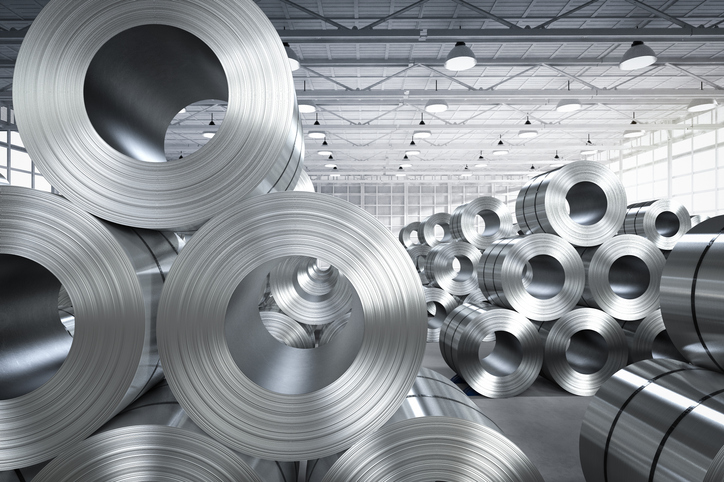
We get it; you’re in the construction business—you’re not a _spy_. Why should you be expected to decipher a bunch of secret codes to get to the best hot-rolled steel components for your next construction project? And by secret codes, we mean the various grades of steel, of course. Despite how confusing they can be, those series of letters and numbers are packed full of useful information.
Keep reading this short guide to hot-rolled steel grades to crack the code and get on with your job!
## What Is Hot-Rolled Steel?
Most modern steel manufacturing is either [cold rolling or hot rolling](https://www.bushwickmetals.com/differences-cold-vs-hot-rolled-steel/). Hot-rolled steel is the least expensive and least complex type for steel mills to produce, and it sees extensive use in the automotive and construction industries.
Making hot-rolled steel involves heating a slab of steel to over 2000°F. The width and thickness of this heated slab are then reduced to desired values as it is run through a series of rolling mills. The resulting steel sheet is then cooled via several different processes, including [pickling and oiling](https://www.bushwickmetals.com/what-is-hot-rolled-pickled-and-oiled-steel/).
Even if you’ve determined by now that you need a component made of hot-rolled steel, you still need to figure out which particular _steel grade_ is best for the application you have in mind.
## What Are Steel Grades?
Steels are graded according to standards set by two different organizations. The Society of Automotive Engineers (SAE) and the American Society for Testing and Materials (ASTM) each have a unique system for classifying steel by type, application, characteristics, specific use, etc.
The [SAE’s system](https://www.engineeringtoolbox.com/aisi-sae-steel-numbering-system-d_1449.html) uses a simple four-digit number, alternatively known as the American Iron and Steel Institute (AISI). For example, plain carbon steel grades start with 10 and end in two more numbers that indicate the steel’s carbon content. That would mean that the code “1095” refers to a plain carbon steel with a concentration of around 0.95% carbon.
The [ASTM uses a letter prefix](https://www.astm.org/Standards/steel-standards.html) to indicate the type of metal (“A” is used for ferrous metals like iron and steel). This prefix is followed by a sequence of numbers that indicates the metal’s other properties.
## What Are the Most Common Hot-Rolled Steel Grades?
The following are the most commonly used types of steel grades for hot rolling:
- A-36
- 1010
- 1018
- A-1011
- 1026
- A-500
- 1045
- 1141
### A-36
This is one of the most popular hot-rolled steels that we sell at Bushwick. With a carbon content of between 0.25% and 0.29%, this is low carbon steel. As mentioned above, the “A” in this ASTM grade denotes steel. And in this case, the “36” means that this steel’s tensile strength has a minimum yield of 36,000 psi. A-36 is easy to machine and weld, and its mechanical characteristics are superb.
A-36 is popular for use in structural applications. It is common steel for making bars, channels, angles, plates, tubes, and shafts.
### 1010
This steel has a very low (from 0.08%–0.13%) carbon content. It is readily machinable and weldable, and it forms easily compared to higher carbon and alloy steels.
### 1018
AISI 1018 is another fairly low-carbon steel (0.14%–0.20% carbon content). Aside from slight differences in ductility and tensile strength, it is nearly indistinguishable from AISI 1010.
Both 1010 and 1018 are ideal for use in structural, automotive, and furniture applications.
### A-1011
This designation is for high-strength low-alloy steel that contains trace amounts of other elements. It boasts improved formability and is extremely versatile.
A-1011 sees common use in [structural steel sheets](https://www.bushwickmetals.com/product-category/sheets/), automotive bodies, and drums.
### 1026
The characteristics of AISI-designated 1026 are very similar to those of ASTM’s A-36 steel. They have similar chemical properties, and 1026’s 0.22%–0.26% carbon content places it on the upper end of the low carbon steels. When hot rolled, 1026 and A-36 also perform nearly identically. Both 1026 and A-36 are suitable when more strength and durability than 1010 or 1018 are required.
Hot-rolled 1026 is a regular constituent of structures, automotive components, and furniture.
### A-500
A-500 is another low carbon (up to 0.26% by weight) steel that is commonly hot rolled. It is very similar to A-36, except that A-500 is only used to make tubing. Despite the specificity of the form in which it’s available, A-500 still sees common use in structural applications.
### 1045
This steel contains 0.42%–0.50% carbon, making it a medium carbon steel. As such, it is generally stronger than other hot-rolled steels that have lower amounts of carbon. And due to its higher carbon content, it can be heat treated with quench hardening or annealing, which greatly alters its mechanical characteristics compared to lower carbon steel. However, because of its increased hardness, it is much less ductile. This should be kept in mind when considering what application to use it in.
### 1141
Being another medium carbon steel, 1141 contains 0.37%–0.45% carbon. However, what sets it apart from similar “10” varieties of steel is its additional 1.35%–1.65% manganese and 0.08%–0.13% sulfur content. These additional elements make 1141 more conducive to heat treating than 1045 steel.
Despite its medium carbon content, which generally translates to greater hardness, 1141 is also much less harsh on machining tools. That makes it something called a “free machining steel.” However, the added sulfur means that 1141 is unsuited to welding.
AISI-designated 1141 is typically used to make a few different fasteners and other parts that require relatively heavy machining.
## What Is Hot-Rolled Steel Used For?
Hot-rolled steel serves multiple purposes. Here are a few examples:
- Materials for buildings: From [steel bars](https://www.bushwickmetals.com/product-category/bars/) to steel beams, there is a good steel alloy for every project.
- Support for big rigs: Modern truck frames are constructed out of steel.
- Supplies for builders: Hot-rolled steel makes doors and shelves stronger.
Here are five industries that benefit from hot-rolled steel supplies.
## The Automotive and Transportation Industry
Quality steel is a staple in the automotive industry because it has an excellent strength-to-weight ratio. This is why the most aerodynamic cars will have steel components. Besides automobiles, steel also benefits
- Ship manufacturers
- Aircraft manufacturers
- Train manufacturers
### The Best Hot Rolled Steel Grades for Automotive Businesses
In the automotive world, A36 is the preferred grade for most manufacturing projects. Unlike most steel materials, A36 hot-rolled steel is very affordable, so it’s the best option for lengthy manufacturing runs. Some companies also use 1011 steel sheets and plates to build different automotive products. This grade is durable, and it’s very easy to work with.
Hot-rolled [steel tubes](https://www.bushwickmetals.com/product-category/tubing-piping/) help automotive businesses too. An A513 is a good grade because it’s easy to cut and weld.
## The Construction Industry
In the construction industry, steel is extremely useful because it’s
- Highly durable
- Energy efficient
- Long-lasting
- Reliable
Thanks to refined construction practices, steel structures are everywhere in the United States. It’s used for railroads, homes, commercial buildings, and more.
### The Best Hot Rolled Steel Grades for Construction Businesses
Thousands of construction companies invest in A36 hot-rolled steel bars and A513 hot-rolled sheets. However, A36 steel bars are used more often because they have outstanding mechanical properties.
## Energy Providers and Suppliers
The energy industry is always evolving. When there are big changes, all energy providers and suppliers must keep up with the latest advancements. If they cut corners, they will lose money. Every business in this industry needs the right infrastructure to be successful. There are many ways to create a sound infrastructure, but a typical blueprint will always require steel.
### The Best Hot Rolled Steel Grades for Energy Suppliers
Typically, 1011 hot-rolled steel sheets and hot-rolled A513 steel bars are the best products roofing companies. They use high-quality 1011 steel sheets during roof repairs and A513 steel slabs for solar panels.
## Packaging Businesses
Steel packaging provides superior protection against the elements. It’s a staple for most food and beverage packages.
### The Best Hot Rolled Steel Grades for Packaging Businesses
In this industry, most businesses use A36 hot-rolled steel because it’s malleable and cost-efficient.
## Appliance Businesses
Approximately 75% of all modern appliances are made of steel. Without steel, these products will lack structure and stability.
## What Grade of Hot-Rolled Steel Do I Need?
Now that you’ve caught up with all the most popular hot-rolled steel grades, you probably know which one to order from us today at Bushwick Metals (especially if you want it delivered tomorrow). So, whether you’d like [a quote on exactly what you need](https://www.bushwickmetals.com/request-a-quote/) or you still have questions, you can easily get in touch with us— [click here](https://www.bushwickmetals.com/contact/)!
## **Cold vs Hot-Rolled Steel**
Now that you’ve read all about cold and hot-rolled steel, it’s time to figure out which is right for you! When it comes to choosing between cold and hot-rolled steel, there are several different factors you should take into consideration. Cold-rolled steel is processed at low temperatures, then recrystallized through a rolling process. The process aids in giving the steel a smoother finish, thus making it easier to cut and form. Hot-rolled steel, on the other hand, is made by heating the steel beyond its recrystallization point, sometimes to temperatures of over 1,000 degrees Fahrenheit, and then cooling it quickly in order for it to retain its shape and strength.
The [main difference](https://www.bushwickmetals.com/differences-cold-vs-hot-rolled-steel/) between cold and hot-rolled steel is their mechanical properties. Cold-rolled steel tends to be more durable for molding than hot-rolled steel due to the way it has been processed. However, hot-rolled steel offers the advantage of being easier to work with overall.
## [**When Should I Use Hot-Rolled Steel?**](https://www.rapiddirect.com/blog/hot-rolled-vs-cold-rolled-steel/)
Certain projects tend to be better suited for [hot-rolled steel](https://www.bushwickmetals.com/hot-rolled-steel-grades-explained/). This includes, but is not limited to projects like railway tracks, food and beverage packages, and agricultural equipment. Hot-rolled steel is also able to handle some give or stress, so it works well for things like bridges, that are supporting large amounts of weight. Hot-rolled steel offers an affordable, strong option for industrialized applications.
Cold-rolled steels are best used when a highly complicated design must be constructed because it cools more uniformly than hot-rolled steel. It works great for items such as automotive components or home appliances. In addition, its sleek and polished appearance offers an attractive, modern aesthetic. However, it is not as hard as hot-rolled steel and in addition, tends to be placed at a higher price point.
When selecting which type of steel is right for you, you should carefully consider what qualities are needed for your project or product requirements, since these can vary widely. If it’s [construction equipment or materials](https://www.bushwickmetals.com/advantages-of-steel-in-construction/), hot-rolled steel is likely a great option. However, if you need something with a highly-specialized design, cold-rolled steel may just be a more attractive alternative.
## [**Things to Remember**](https://www.wasatchsteel.com/pros-cons-hot-rolled-steel/)
There are also a few things that you should always keep in mind when deciding between hot or cold-rolled steel. The biggest thing to remember is that [hot-rolled steel](https://www.bushwickmetals.com/hot-rolled-round-bar-steel-grades/) simply just isn’t suited for certain applications. In general, you should avoid using hot-rolled steel for any projects that require highly-detailed or very intrinsic molding. Hot-rolled steel doesn’t offer as much design accuracy as cold-rolled steel does, so you may not be able to get the exact design you want. In addition, hot-rolled steel is also much rougher to the touch than steel that has been cold-rolled, because of how much faster it is cooled. However, hot-rolled steel also tends to be more affordable for large projects and is fast and extremely easy to mold. Ultimately you should take all of your project’s factors into consideration in order to decide what steel is right for you!
[Back to News / Blog](https://www.bushwickmetals.com/news)
## Contact Us
- First Name\*
- Last Name\*
- Email\*
- Phone Number\*
- Company Name
- Website URL
- Message
- Upload a Drawing
Drop files here or Select files
Max. file size: 64 MB, Max. files: 5.
- Agreement\*
- [ ] Agree to Terms
- CAPTCHA
45051
[iframe](about:blank)
### Approvals
[](https://www.fmapprovals.com/)[](https://marks.ul.com/about/ul-listing-and-classification-marks/)[](https://www.sdi.org/)[](https://icc-es.org/)[](https://www.ul.com/services/environmental-product-declaration-epds-certification)
Notifications# What Is Metal Fatigue?
September 22, 2021 in
Blog / Structural Steel
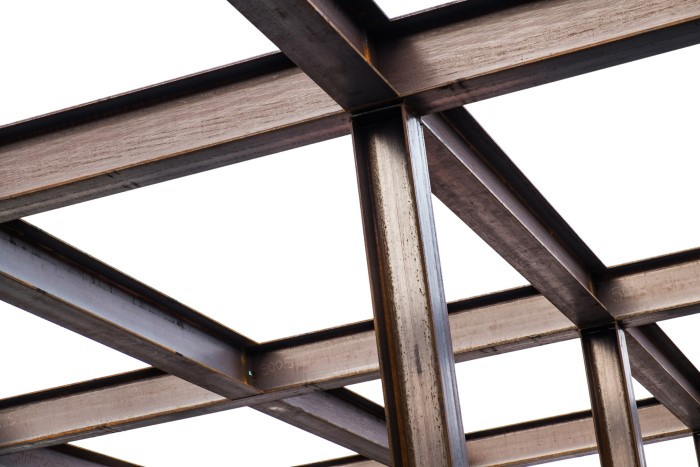
Metal means much to Americans. In the week ending on August 7, 2021, Americans produced [nearly 1.9 million tons](https://www.steel.org/industry-data/) of raw steel. The steel went into a number of products, including roadways and bridges. Not all of this metal will last. Metal fatigue is the scourge of any metal product, and manufacturers must take steps to avoid fatigue.
What exactly is metal fatigue? How can manufacturers categorize it, and what causes it? What should manufacturers do to limit fatigue in their designs?
Answer these questions and you can make metal objects that will stand the test of time. Here is your quick guide.
## What Is Metal Fatigue?
Metal fatigue occurs when metal becomes weakened through time. Metal products and objects will sustain some sort of stress in their life. If they begin to falter under repeated stresses, they are suffering from metal fatigue. There are three stages of metal fatigue. Stage one occurs after an object has gone through a succession of load cycles. Cracks begin to form on its surface, especially around the edges and other points where stress is concentrated.
Stage two sees the cracks growing. They may become noticeable to the naked eye, or they may be concealed in some way. A person using the object may notice that it feels a little weaker.
Stage three sees the rate of crack formation skyrocket. Pre-existing cracks have grown in length and size, while new cracks form all over the object. The metal eventually fails, which can result in injury.
## Forms of Metal Fatigue
There are a few different kinds of metal fatigue. Thermal fatigue failure occurs due to temperature changes. The temperature may drop or rise, but the fluctuations make the metal change shape and crack.
Corrosion fatigue failure is an environmental phenomenon. A corrosive environment like a body of water will wear metal down. Many bridges collapse because of corrosion fatigue. The Morandi Bridge collapsed in 2018 after corrosion in its steel cables reduced the bridge’s strength by [20 percent](https://globalresilience.northeastern.edu/corrosion-faulty-concrete-suspected-in-genoa-italy-bridge-collapse/).
Vibration fatigue occurs when equipment vibrates against a piece of metal over a long period of time. Engines that vibrate against a bridge can cause the bridge to become fatigued. Fretting fatigue occurs through friction. Another object that grinds against a metal object will eventually destroy its integrity, wearing through the object.
Mechanical failure combines corrosion and vibration fatigue. It occurs when a metal object suffers from several kinds of stress at once. You may have heard of steel fatigue. This refers to fatigue that steel objects face, not a separate type of metal fatigue entirely. All metals are subject to fatigue in their own ways.
## Fatigue Strength
Fatigue strength refers to the ability of a metal to resist fatigue. No metal has complete strength, especially against the elements. But some metal products can last for years without compromising their integrity. The kind of metal that a metal supplier provides is an important component of strength. Tungsten and steel are stronger metals than iron and copper.
The design of the object itself is another critical component. A bridge that is too long and too thin may be prone to vibration fatigue. A product that does not have a coating on the outside may wear down from corrosion. A manufacturer can perform tests to evaluate the degree of fatigue strength in their product. They run copies of their products through repeated stresses and evaluate the effects.
A manufacturer should assess all kinds of fatigue, especially corrosion fatigue. An object may be able to withstand vibration fatigue while failing to overcome a corrosive environment. They should then adjust the purpose of their product.
## Metal Fatigue Solutions
There are many solutions that manufacturers and suppliers can use for fatigue. The solutions for a problem depend on the product itself, so not all solutions may be always ideal.
A manufacturer should make metal products with very sturdy materials. Aluminum may be lightweight, but it is prone to several kinds of fatigue. They should use the [best quality steel for construction](https://www.bushwickmetals.com/whats-the-best-quality-steel-for-construction/) instead. Manufacturers should work closely with suppliers. A close relationship will let them gain access to the latest metals.
Many people are deterred from using good-quality metal because they are afraid of the expense. Crafting a good relationship with a supplier can lead to expenses being reduced. But it will cost more money to remove a faulty product with weak metal from the market than to use a strong and pricey metal.
During tests, manufacturers should plot a graph of stress cycles. The graph should detail what particular stress level their product can withstand without fracturing or puncturing. If this level is low, they must go back and redesign their product. The edges of holes are focal points for stress. They can place the hole elsewhere, making the entire object less vulnerable to fatigue.
Objects with turning components tend to become fatigued quickly. Fans, propellers, and other rotating pieces should be a top priority of manufacturers and suppliers. They should make sure that the parts can spin without too much vibration or friction. This may require greasing the parts on a regular basis.
## Meet the Best Metal Supplier
Metal fatigue is a constant threat to anything made of metal. After sustaining enough stress, an object will develop cracks. The cracks will deepen, threatening the integrity of the object. Stressors are everywhere. The corrosive flow of water will wear an object down. Vibrations, friction, and temperature changes will also impact an object.
Manufacturers should select sturdy materials like stainless steel. They must test their products over time, making sure they can withstand all major stressors. Stop metal fatigue in its tracks. Bushwick Metals serves communities throughout the Northeast. [Request a quote](https://www.bushwickmetals.com/request-a-quote/) today.
[Back to News / Blog](https://www.bushwickmetals.com/news)
## Contact Us
- First Name\*
- Last Name\*
- Email\*
- Phone Number\*
- Company Name
- Website URL
- Message
- Upload a Drawing
Drop files here or Select files
Max. file size: 64 MB, Max. files: 5.
- Agreement\*
- [ ] Agree to Terms
- CAPTCHA
86269
[iframe](about:blank)
### Approvals
[](https://www.fmapprovals.com/)[](https://marks.ul.com/about/ul-listing-and-classification-marks/)[](https://www.sdi.org/)[](https://icc-es.org/)[](https://www.ul.com/services/environmental-product-declaration-epds-certification)
Notifications# A Closer Look At Steel Sheets: Types, Uses, and Advantages
May 13, 2024 in
Blog / Steel Sheets / Steel Supply
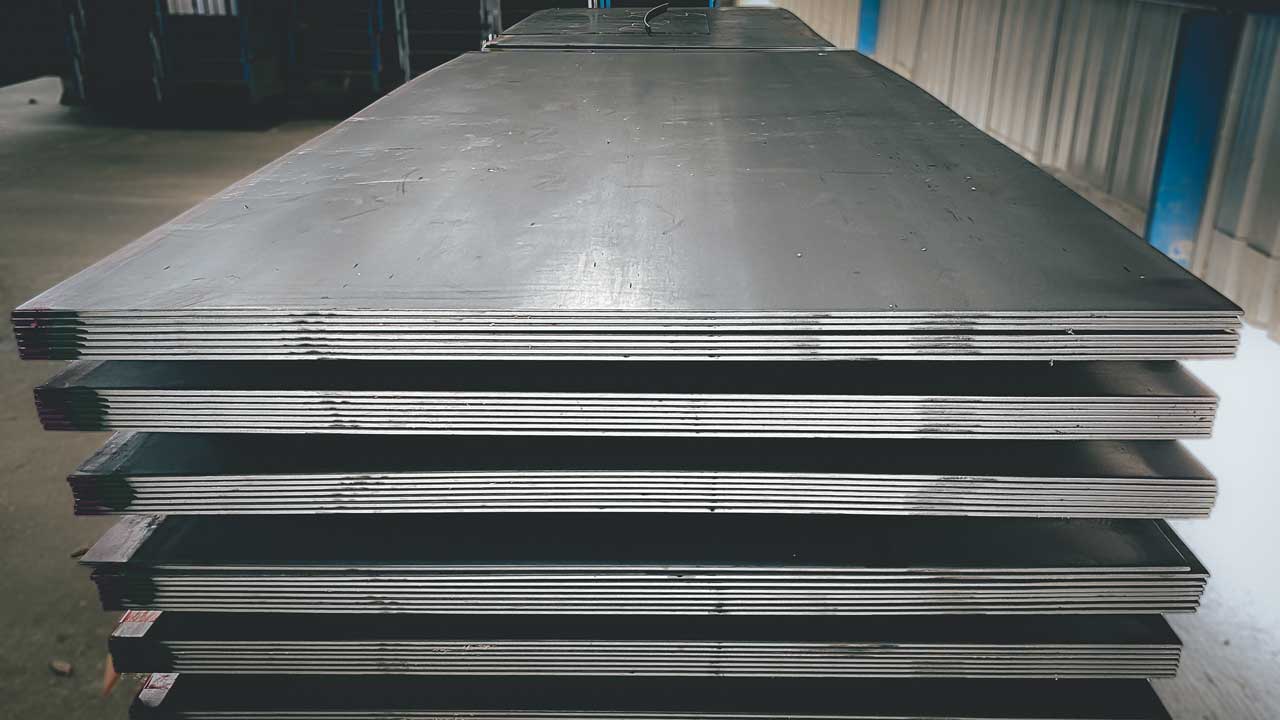
Steel has long been one of the most important materials in the world, and it makes up [99% of all metal consumption](https://materials.imdea.org/what-is-the-most-used-material-in-the-world-and-the-least-researched/) globally.
A wide range of industries use steel, including manufacturing, automotive, aerospace, and construction. There’s a huge selection of parts available, and structural steel sheets are one of the most useful. There are different types and they serve a wide range of applications.
In this guide, we’ll take a closer look at steel sheets and how different industries use them. Keep reading for more.
## **What Are Steel Sheets?**
[Steel sheets](https://www.bushwickmetals.com/product-category/sheets/) are made by beating and flattening steel into thin parts. The thickness can vary depending on the type of steel and the rolling (flattening pressure).
Standard steel sheets typically range from 30 to 7 gauge, but custom sheets can be outside of this range. Note that the higher the gauge, the thinner the sheet. Sheets with a lower gauge are more durable.
They can be molded and cut to make different shapes and sizes, though bending them is often difficult. It’s possible to apply surface treatments to produce certain characteristics.
## **Types of Steel Sheets**
If you need steel sheets, one of the first things you need to decide on is the type of steel. This can have a significant effect on the properties of the final part.
### **Stainless Steel Sheet**
This is the most widely used type of steel due to its many benefits. It’s flexible, easy to mold, and has a unique sheen. Its ductility makes it simple to work with.
Three steel sheet grades are commonly used:
- Martensitic (contains no nickel).
- Austenitic (grade 300 stainless steel, most common)
- Ferritic (grade 400 series, contains little nickel)
Grade 304 is most widely used in different industries. Grade 316 is also noteworthy, as it offers the best corrosion resistance
### **Alloy Steel Sheet**
Alloy steel is an economical type that typically contains various other elements, such as copper, nickel, and aluminum. These make it more [resistant to corrosion](https://www.corrosionpedia.com/definition/5/corrosion-resistance). The mix of these elements also affects the strength and thickness so alloy steel can be ideal for a range of applications.
### **Carbon Steel Sheet**
This is another common type and it’s very strong. One of the main disadvantages is that it’s highly corrosive, but a coating can be used to make it less prone to rusting.
There are six grades available depending on the carbon content, and they vary in terms of strength, durability, ductility, and brittleness. As such, it can be ideal for a wide range of uses.
### **Cold-Rolled Steel Sheet**
This involves taking a hot-rolled sheet and then processing it further in cold-reduction materials. It cools at room temperature, which results in closer dimensional tolerances. This makes it ideal for applications that require a high degree of accuracy.
It offers a wider range of surface finishes and is typically stronger than hot-rolled steel. This results in improved aesthetics, which can be beneficial in certain use cases.
### **Total Steel Sheet**
Tool Steel is typically used for making cutting and drilling tools. It’s ideal for this as it’s incredibly hard and heat resistant.
It contains additional elements, including cobalt, tungsten, and vanadium, with very little carbon. The amount of each element can be controlled to achieve the desired characteristics in the final product.
### **Galvanized Steel Sheet**
Galvanized steel sheets are typically pre-plated with zinc or a combination of zinc and iron. It’s generally available as hot-dipped metal-coated galvanized sheets or as electro-galvanized sheets.
It goes through an annealing process, which makes it ideal for use in simple products. The zinc also helps add corrosion resistance. The overall composition affects both of these factors, along with the steel sheet costs.
## **Steel Sheet Uses**
The versatility and advantages of steel sheets make them ideal for a huge range of applications. It’s possible to vary the composition to get desirable results, so if a company needs sheets that are highly durable, ductile, corrosion-resistant, etc., they can get exactly what they need.
The aerospace industry makes use of stainless steel sheets. This is for both vehicle bodies and smaller components.
The food industry also often uses stainless steel sheets for home appliances, cutlery, and kitchen utensils. It’s easy to clean, making it a very hygienic option. Similarly, stainless steel sheets are commonly seen in the medical industry for the manufacturing of medical devices and equipment.
In the construction industry, cold-rolled steel sheets are a common choice for various projects. They’re often used for building garages, sheds, and various other industrial structures.
Hot-rolled steel sheet is widely used in the automotive industry. It’s ideal for vehicle frames and bodies, as well as some other components.
Galvanized steel offers excellent corrosion resistance, which makes it a popular choice for shipping. It works well for building marine vessels and ship hulls. It’s also often used in agriculture for items like irrigation pipes and greenhouse equipment, as these are often exposed to water.
## **Importance of Steel Sheet**
Steel itself has become one of the most widely used materials in the world because it’s reliable, durable, and cost-effective. It’s also 100% recyclable, so it can be a very environmentally friendly choice.
Perhaps the main benefit of steel sheets is their versatility. The manufacturing processes and composition can be varied to get different results. As such, you can determine your requirements early on and then have suitable sheets manufactured for you.
Intsel Steel East is a [leading steel supplier](https://www.bushwickmetals.com/steel-suppliers-nj/) based in New Jersey. We keep a range of popular parts in stock, and if we don’t have exactly what you need, we can produce it. Let us know your requirements, and we’ll be able to ensure you get the exact parts you need.
## **Getting Steel Sheets From Intsel Steel East**
Steel sheets can vary a lot, making them ideal for a range of applications. They’re commonly used in various industries and can serve all kinds of purposes.
Intsel Steel East is the Northeast’s leading steel distributor. We’ve been in business for over a century and can often provide next-day delivery. Get in touch today to [request a quote](https://www.bushwickmetals.com/request-a-quote/) for steel sheets or any of our other quality steel products.
[Back to News / Blog](https://www.bushwickmetals.com/news)
## Contact Us
- First Name\*
- Last Name\*
- Email\*
- Phone Number\*
- Company Name
- Website URL
- Message
- Upload a Drawing
Drop files here or Select files
Max. file size: 64 MB, Max. files: 5.
- Agreement\*
- [ ] Agree to Terms
- CAPTCHA
96340
[iframe](about:blank)
### Approvals
[](https://www.fmapprovals.com/)[](https://marks.ul.com/about/ul-listing-and-classification-marks/)[](https://www.sdi.org/)[](https://icc-es.org/)[](https://www.ul.com/services/environmental-product-declaration-epds-certification)
Notifications# Structural Steel Supply From Maine To Virginia
November 18, 2020 in
Blog
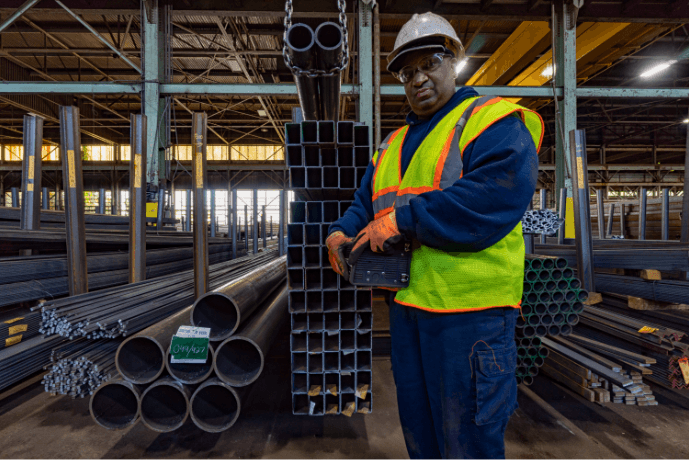
The East Coast of the USA is one of the busiest, most prosperous and populated parts of the planet. That means a lot of steel! Structural steel builds the world around us. It is ubiquitous in modern constructions, heavy industry, and many types of transportation. Wherever you are on the Eastern Seaboard, Bushwick Metals can supply you with the most appropriate and cost-effective solution for your structural steel needs.
## Structural Steel Supply At Bushwick Metals
Structural steel has the high tensile strength needed for major constructions with little bowing. It can be developed neatly into pretty much any shape and is inherently fire resistant. The tallest structures in the world use structural steel, as do the world’s longest bridges and heaviest rigs.
When you need structural steel supply, choose Bushwick Metals. We have been in business in one form or another [since 1829](https://www.bushwickmetals.com/about-us/). Our 190 years of experience and service to our customers can be seen in everything we do, from finding the right solution for you to organizing logistics and deliveries. When you’ve been in business for nearly 200 years, you learn a thing or two about exceeding customer expectations.
We’re service orientated and provide one of the deepest and widest ranges of products in the country. Our structural steels include angles, channels, joists, beams, bars, sheets and more. As well as off-the-shelf steels, we can source specialty products and offer some of the most robust ranges of structural steels you could find anywhere. With approximately 750,000 square feet of warehousing coupled with around-the-clock processing and loading, Bushwick Metals can meet the demands of customers that rely on prompt deliveries.
## Location Is Key
This leads us to the importance of location. While you can order a watch from halfway around the world and get it in a few days, structural steel tends to be more challenging to ship. Transport costs matter. The further you haul it, the more you’ll pay. Finished products are nearly always delivered to the customer by truck. If your requirements are urgent, it pays to pick a company in your region.
If your project or construction is on a tight schedule, you need a regional company that isn’t going to get held up in something going on halfway across the country. It’s also best to avoid the shipping costs that go with thousand-mile routes, which may require special convoys and oversized loads. Distance adds to cost, but also, perhaps more importantly, risk. At Bushwick Metals, we don’t expect you to take risks. We get our products to our customers.
If you need a product tomorrow, anywhere from Maine to Virginia, we can help. Less than a truckload is no problem. Our customers often ask us, “will you have a truck in the area?” With our size and warehouses in New Jersey, Connecticut, and New York, the answer is almost always “yes!”
We have five locations that can serve you from Maine to Virginia with on-time deliveries. They are all ready to help you and aim to exceed your requirements for structural steel supply. Our corporate headquarters is located in Shelton, Connecticut, not far from the interstate for quick access. This is mission control of the Bushwick family, where we co-ordinate the running of the business and ensure our quality control and customer service standards. In New York and New Jersey, our main Sales office is in Englewood, New Jersey, where we can process sales from anywhere in the region. We aim to be exceptionally responsive: our sales team works hand-in-hand with Bushwick’s logistics team to ensure next-day delivery in most cases.
Additionally, we have three further warehouses, where our products are processed and stored, and from where they are dispatched. Bushwick’s Binghampton division is located in Binghampton, New York, Pennsylvania. Our Delaware Warehouse is located in New Castle, Delaware. [AZCO Steel](http://www.azcosteel.com/), which is part of our corporate family, as a division of Bushwick Metals, is in South Plainfield New Jersey. AZCO steel has been in business since 1947 and has around 1,000,000 square feet of warehouse space.
## Structural Steel Solutions
All of this means we don’t merely sell structural steel; we provide structural steel supply solutions. We can manage inventory and supply-chain solutions, as well as offering responsive, often next day delivery. We warehouse, process, and store the steel you need. We’ll co-ordinate logistics and transport to meet your needs.
So whether you are up in Maine or down in Virginia, choose Bushwick Metals for your structural steel solutions. Give our helpful, friendly, and knowledgeable team a call today at [855-446-8735](tel:855-446-8735 "Contact Us by Phone 855-446-8735"). We’re looking forward to [learning more](https://www.bushwickmetals.com/contact/) about your unique business needs. You won’t be disappointed with our services.
[Back to News / Blog](https://www.bushwickmetals.com/news)
## Contact Us
- First Name\*
- Last Name\*
- Email\*
- Phone Number\*
- Company Name
- Website URL
- Message
- Upload a Drawing
Drop files here or Select files
Max. file size: 64 MB, Max. files: 5.
- Agreement\*
- [ ] Agree to Terms
- CAPTCHA
35502
[iframe](about:blank)
### Approvals
[](https://www.fmapprovals.com/)[](https://marks.ul.com/about/ul-listing-and-classification-marks/)[](https://www.sdi.org/)[](https://icc-es.org/)[](https://www.ul.com/services/environmental-product-declaration-epds-certification)
Notifications# Steel Plate – Exploring Different Grades and Their Applications
### Intsel Steel
# Steel Plate – Exploring Different Grades and Their Applications
Together with iron, steel makes up [about 95%](https://www.usgs.gov/centers/national-minerals-information-center/iron-and-steel-statistics-and-information) of the world’s total metal tonnage in any given year. These materials are ever-present in our lives, with steel being crucial to everything from cars and construction to medical purposes.
If you’re working to hone your steel operation, knowing more about the metal is always vital. One of the more complex facets of the industry is the many different steel plate grades. By some estimations, there are thousands, making memorizing each one a tall task.
If you’re curious about the world’s iron and carbon alloy, we’re here to help. Read on for a quick guide to some of steel’s most popular uses and grades.
High-quality steel comes in a class of its own, and it’s not just judged by how much it costs. When it comes to steel plate grades, they can be an essential component that can determine how you decide which steel plate is fit for your requirements.
### Steel plate grades are determined by various factors, which include:
- The composition of steel (ratios of various substances like steel, iron, aluminum, and more)
- Strength
- Formability
- Yield
- Size (width and thickness)
- Corrosion Resistance
- Cost
Many standards that steel plates are judged up can also be dependent on the technology and process used to make them. ASTM International is a global standards organization that analyses and publishes various technical standards for a wide range of materials. It currently publishes around 12,000 technical standards and is followed by governments globally.
## **What Are The Different Steel Plates Grades?**
Steel is split into [four main categories](https://www.linkedin.com/pulse/what-different-types-steel-grades-atmastco-limited/): Carbon steel, Alloy, Stainless, and Tool. Some of these are graded for structural steel, while others use the durable metal for less heavy-duty purposes.
A steel’s grade isn’t indicative of its quality, as the term would imply. Rather, steel grades are a way to categorize steel and what it’s used for. Here are some more of the most common grades of steel.
Like many other materials used for various construction purposes, steel plates are also utilized similarly. However, rigorous testing and evaluation of each steel plate must be done to ascertain its durability and quality for the long term.
Steel plate grades are an optimal way to determine which steel plate is ideal for your requirements. Depending on what you’re going to be using the steel plates for, the grade that it’s classified can be very important. There are various standards that different organizations release, but the one that is most followed is released by [ASTM International](https://www.astm.org/).
## Why They Are Crucial
Many people don’t understand the importance of steel plate grades and why they are essential before starting any type of construction. If you are involved with the construction business, you should know that these grades are crucial to comply with while not mandatory for all projects.
Adhering to these grades can ensure health, safety, durability, quality, and optimal adherence to other structures when the construction is ongoing. Depending on who you are working with, these standards might also become compulsory to follow.
## ASTM Standards
ASTM standards can vary depending on which material and structure you’re working with. Here are some common standards that are used for steel plates.
- **A36**: This is a carbon steel variant utilized in general plate applications where the plate might be riveted, bolted, or welded. The minimum yield strength of 36 KSI. The plates need to have a minimum thickness of 8 inches.
- **A572-50**: This type of steel is used in general plate applications, similar to A36. It is composed mainly of Columbian-Vanadium steel. It should have a minimum yield of 50 KSI and is optimal where weight-saving is crucial to saving costs. You can find these steel plates up to 4 inches thick.
- **A588**: High-strength, low-alloy steel that is used in general plate applications. It is copper-bearing steel and has two to four times the corrosion resistance of carbon steel without copper. It offers a minimum yield strength of 42 KSI to 50 KSI. Cost savings can be achieved by reducing weight in this grade, optimal for many construction purposes.
- **ASTM A516-GR70**: This standard is crucial to fulfill when you require a steel plate that can withstand extreme conditions. It is ideal for containers like vessels, tanks, and boilers where high-pressure conditions are present. It is silicon-killed carbon steel with a fine-grain structure.
- **T-1 Type B Construction Alloy Steel to A514**: With a minimum yield strength of 100 KSI, it offers excellent strength, fabrication, and toughness properties. It is highly used in structural applications where strength is required to reduce overall weight and size. This standard is ideal if you plan to use steel plates for bridges, construction equipment, mining equipment, liners, bucket, and cranes.
- **AR235, AR400 Abrasion-Resistant Plate**: When looking for longevity, you need to find steel plates that can withstand abrasion, impact, and regular wear and tear. You can find two types of hardness for steel plates AR235 is ideal for moderate-resistance applications. AR400 is ideal for high-resistance applications. They are not suitable for structural and load-bearing applications. These standards suit mining and earth-moving equipment, mixing drums, material handling, chutes, and hoppers.
- **A709**: A709 steel is categorized as a low-alloy steel. It’s also known for its high strength and is dominantly used in structural applications.
You’ll find A709 steel in vital infrastructure like bridges and buildings. It’s among the easiest steels to fabricate and is also known as an easy-to-weld steel. Consumers who favor this steel likely desire its adaptability and its resistance to outdoor conditions, such as severe weather.
- **A913**: A913 is similar to A709 in many ways. Both are “high-strength low-alloy” steels, and both are dominantly used for infrastructure. They have similar resistance to the outdoors, making both ideal for construction.
A913 sets itself apart from A709 with its durability and resistance to fatigue. As such, it’s mostly favored in applications that put the steel under high stress.
- **A992**: A992 is also known as ASTM A992 and is the standard among structural steel. A992 has a higher tensile strength than the common A36 steel, making it desirable for high-stress construction. It’s easy to fabricate due to good weldability and is mostly found in commercial buildings and bridges.
- **A514**: A514 is one of the many grades of steel that isn’t desirable for construction projects. Instead, A514 is most used in the construction industry as equipment. The steel is perfect for the creation of heavy machinery and equipment.
Outside of the construction industry, you’ll also find A514 in mining operations. Its most notable quality is its resistance to extreme temperatures, making it suitable for freezing weather. As such, it’s common for equipment intended for use in extreme cold.
## Finding Out The Right Steel Plate Grade for Your Needs
When you’re wondering what type of steel plate grade is optimal for your requirements, you need to know what each grade can be used for and where it is ideal.
- **A36**: Structural steel channels, steel plates, wide flange beams, I-beams, structural angles. It is ideal for many applications, including fixtures, rings, bearing plates, cams, and many others.
- **A500** is a cold-formed welded and seamless carbon steel structural tubing in rounds and shapes. Ideal for bridges and buildings, as well as general structures.
- **A572**: Available in five grades, 42, 50, 55, 60, and 65. The most common one used for applications is A572-50. It is used in various structural applications like buildings, bridges, transmission towers, construction equipment, and truck wireframes.
- **A588**: Has a wide range of applications, including transmission and phone towers, bridges, gusset plates, and housing enclosures. It has optimal strength to weight ratio.
Depending on what industry you are working in and what you’re looking for, steel plates can be the ideal solution. For some grades, there are additional standards like steelmaking and heat treatment.
You will also find sub-categories within some grades, as is the case for A572, A516, and many others. The sub-categories can be divided based on varying levels of strength, toughness, durability, weight-saving, etc.
## Contact Bushwick Metal Experts When **Deciding On Your Steel Grade**
With thousands of steel plate grades, there’s a perfect choice for any operation. Think of what sort of steel your project requires before purchasing your steel so that you can find the perfect grade.
Intsel Steel East is the leading distributor of steel in the northeast. We have more than a century of service with half a dozen locations across the East Coast from our partnership with Bushwick Metals. We have been catering to all metal requirements of our US customers for over a century and can provide you with any metal specification. [Contact us](https://www.bushwickmetals.com/contact/) for a quote on your next delivery of high-quality steel.
# Steel Floor Plate Sizes At Bushwick Metals
Steel isn’t just a super-strong construction material. It’s also essential for maintaining the social responsibility and sustainability of any given project. For one thing, steel is 100% recyclable, meaning that it has a low environmental impact. Additionally, steel is great for the world economy. The steel industry supports [96 million jobs](https://worldsteel.org/steel-by-topic/statistics/steel-industry-economic-impact/) across the globe.
Because of these factors, many businesses are investing in projects that use more steel than before. Steel sheet floor plates, for example, are a popular way for businesses across industries to create a safer, greener workspace. But how do you use steel sheet floor plates? And what are the most common steel floor plate sizes? Read on for a complete guide to sizing and usage that will help you select the best option for your purposes.
## What Are Steel Sheet Floor Plates?
As suggested by the name, floor plates are flat sheets of steel that can be placed on the ground. However, they are not any kind of ordinary flooring.
Floor plates are a special kind of flooring that is primarily used to prevent slippage. They come with a raised tread pattern on the top to prevent workers, or even products, from slipping and tumbling to the ground. Because of this, floor plates are most common in industries where workers face slippery conditions. They are also prevalent in the transportation and storage of goods that could easily slide across the floor.
## How Do Steel Sheet Floor Plates Work?
Steel floor plates have a raised surface that works by increasing the traction between the floor and whatever hits its surface. This could include a package, a crate, or even a worker’s boot. This increase in traction is the equivalent of “pumping the breaks” on a sudden movement. It slows down the contact between an item and the ground, thus creating a sense of stability. As a result, steel sheet floor plates create slip-resistant floors.
You can find steel floor plates with a variety of different tread patterns. Checker plates resemble a checkers board, while diamond plates look like a collection of quadrilaterals. However, both types of patterns work equally well when it comes to enjoying the benefits of floor plates.
## What Size Steel Floor Plate Is Best for Worker Safety?
This is a natural question, as many businesses purchase steel floor plates with worker safety in mind. In the United States, [trips and falls](https://www.grainger.com/know-how/safety/walking-working-surfaces/slip-trip-hazards/kh-6-tips-help-prevent-slips-trips-and-falls) account for 15% of all accidental deaths and 25% of injury claims. Because of this, slip-resistant floors are key to earning your workers’ trust and guaranteeing their safety.
But, what size steel floor plate is best for worker safety? The answer to this question depends a lot on your workspace and the type of slippage that could happen there. If you are purchasing a floor plate for an industrial kitchen floor, you may consider a smaller floor plate.
Our smallest steel floor place spans 48 x 96 inches. You can purchase one of these to protect workers in a cooking area. However, if you are worried about slippage in a larger space, such as a construction trailer, you may consider a larger size. Our largest steel floor plate is 60 x 240 inches.
## Which Size Steel Plate Has the Best Price for the Quality?
When researching workplace flooring, it’s normal to worry about costs. Many business owners wonder about floor plate sizing in terms of price/quality ratio. Which floor plate size is the least expensive one?
The reality is that steel plate flooring can cut a lot of costs for your business. However, there is no one “cheap” size that will keep overall prices low. The reason for this you must size your floor plates according to your workplace.
This is particularly true for logistics and supply chain companies. Most of these businesses do everything in their power to keep shipments safe. However, harsh weather conditions and slippery roads can take their toll on transported goods. When crates or packages slip and fall, a company’s products can be damaged. This can significantly reduce the amount of profit that your business gains from a single shipment.
Steel floor plates prevent this slippage and can prevent a business from losing money on damaged goods. However, this only works if you buy the right size plates for your needs. In order to determine which size floor plate is best for you, measure the interior of your freight. Then, order floor plates that will cover the interior. This will eventually help your business save money.
## What Steel Floor Plate Sizes Are Available?
Steel floor plates come in a variety of cuts and sizes. However, not every supplier can provide the exact floor plates that you require. Luckily, Bushwick Metals provides a wide variety of [steel floor plates](https://www.bushwickmetals.com/product-category/plates/) in several different sizes. In fact, our inventory includes ten different floor plate sizes with a range of dimensions.
Our selection includes the following floor plate sizes (in inches):
- 48 x 144 with 1/8 thickness
- 48 x 240 with 1/8 thickness
- 60 x 120 with 1/8 thickness
- 60 x 240 with 1/8 thickness
- 48 x 96 with 1/8 thickness
- 48 x 120 with 1/8 thickness
- 48 x 96 with 1/4 thickness
- 60 x 240 with 3/8 thickness
- 48 x 240 with 1/2 thickness
- 60 x 240 with 1/2 thickness
Whether you need a steel floor plate to line the floor of your truck or to up the safety of your industrial kitchen, we have floor plates that will fit your purposes.
## Order Your Steel Floor Plates Today
Do you need to increase the safety of your workplace? Or, are you hoping to reduce the slippage of your crate shipments? Either way, Bushwick Metals has the best floor plates for you.
[Get in touch with us and place an order](https://www.bushwickmetals.com/contact/). We offer a wide variety of steel floor plate sizes for all of your slip-resistant flooring needs. The best part is that we offer a next-day delivery service. As a result, you can get your steel floor plates practically as soon as you order them.
# Universal Mill Plates: Our Sizes And Capabilities
Steel is one of the most popular building materials in the world. Along with iron, it comprises [95 percent of metal production](https://www.usgs.gov/centers/national-minerals-information-center/iron-and-steel-statistics-and-information) in the United States. But why is steel so popular? Its strength, durability, and versatility make it ideal for all types of metalwork. From heavy-duty bridges to creating intricate detail work, steel is a top choice!
Bushwick Metals is the East Coast’s largest steel product provider. Explore our impressive universal mill plate range and find out how we aim to exceed expectations!
## What Is A Universal Mill Plate?
A universal mill plate, or UM plate, is a flat sheet of metal rolled to a specific size. The width, up to 12″, is first created by a vertical roll. The plate is then set to a specific thickness by a horizontal roll, with the minimum being 1/4″.
UM plates are ideal for building projects due to their strength and structural integrity. You can also create different instruments and objects with UM plates. Your project will determine the plate’s size and weight specifications.
Although universal mill plates are tough, they’re no match for the weather. If you’re considering outdoor construction, you might need to look at another option. Galvanized or stainless steel does better in harsh conditions.
## Which Steel Grades Are Available?
There are over [3,500 different grades of steel](https://worldsteel.org/about-steel/about-steel/) manufactured today. Each has unique chemical, physical, and environmental elements. But don’t worry, you won’t have to choose between such a wide variety because we only stock the specific grades you’ll need!
### A36 Steel Plate
The A36 steel plate is one of the most commonly used grades in construction. It’s often an essential component in buildings, bridges, agricultural equipment, and automotive parts. With its [low carbon content](https://www.bushwickmetals.com/high-carbon-steel-vs-low-carbon-steel/), this grade is soft enough for welding and forming.
### A572-50 Steel Plate
The A572 Grade 50 steel plate is a tough, low-alloy steel. It’s often used to build cranes, road plates, bridges, and buildings. This steel grade is ideal for reducing costs because its strength means fewer materials are needed.
### A588 Steel Plate
The A588 steel grade combines strength and corrosion resistance. It boasts two to four times the rust protection of carbon steel without added copper. This grade is perfect for welding, rivets, and bolts and is often found in bridges and buildings.
### ASTM A516-GR70
This carbon steel plate is optimal for high-pressure vessels like boilers and tanks. It functions best in moderate to low-temperature situations. The A516 Grade 70 plate is especially vital in structures where notch toughness is key.
### ASTM A514/T-1 Type B Alloy Steel Plate
Also known as the T-1 steel plate, the A514 plate is a high-strength quenched and tempered steel. It’s heat-treated with a two-step process that increases strength by altering the grain structure. This steel plate is widely used in bridges, mining and construction, and other high-impact projects.
### AR235 And AR400 Abrasion-Resistant Plate
For impact and abrasion resistance, these two steel grades are the go-to. They can withstand much more than the [common A36 grade](https://www.bushwickmetals.com/a36-steel-plates-properties-uses-an-overview/) and offer a long life expectancy. These grades are not ideal for projects that require a lot of welding due to cracking possibilities.
AR235 offers moderate resistance, whereas AR400 is ideal for high-resistance projects. Typical uses include mining equipment, mixing drums, material handling, and linings. This steel grade should not be utilized in structural or load-bearing construction.
Choosing the correct steel grade is essential in ordering the proper universal mill plates. That’s why we recommend contacting us before you order if you’re unsure! The professionals at Bushwick Metals can guide you through the entire process.
## Universal Steel Plates in Every Size
As your number one steel distributor, Bushwick Metals offers an extensive [inventory of steel plates](https://www.bushwickmetals.com/product-category/plates/). Our structured steel plates range in size from 1/4″ x 9″ to 2″ x 12″ to suit every project.
Available 1/4″ UM plates:
- Size: 1/4″ x 9″, Weight: 7.66 lb
- Size: 1/4″ x 10″, Weight: 8.51 lb
- Size: 1/4″ x 11″, Weight: 9.36 lb
- Size: 1/4″ x 12″, Weight: 0.21 lb
Available 5/16″ UM plates:
- Size: 5/16″ x 9″, Weight: 9.57 lb
- Size: 5/16″ x 10″, Weight: 10.63 lb
- Size: 5/16″ x 11″, Weight: 11.70 lb
- Size: 5/16″ x 12″, Weight: 12.76 lb
Available 3/8″ UM plates:
- Size: 3/8″ x 9″, Weight: 11.49 lb
- Size: 3/8″ x 10″, Weight: 12.77 lb
- Size: 3/8″ x 11″, Weight: 14.04 lb
- Size: 3/8″ x 12″, Weight: 15.32 lb
Available 7/16″ UM plates:
- Size: 7/16″ x 9″, Weight: 13.40 lb
- Size: 7/16″ x 10″, Weight: 14.89 lb
- Size: 7/16″ x 12″, Weight: 17.87 lb
Availale 1/2″ UM plates:
- Size: 1/2″ x 9″, Weight: 15.32 lb
- Size: 1/2″ x 10″, Weight: 17.02 lb
- Size: 1/2″ x 11″, Weight: 18.72 lb
- Size: 1/2″ x 12″, Weight: 20.42 lb
Available 5/8″ UM plates:
- Size: 5/8″ x 10″, Weight: 21.27 lb
- Size: 5/8″ x 12″, Weight: 25.53 lb
- Size: 5/8″ x 9″, Weight: 19.15 lb
Available 3/4″ UM plates:
- Size: 3/4″ x 9″, Weight: 22.97 lb
- Size: 3/4″ x 10″, Weight: 25.52 lb
- Size: 3/4″ x 12″, Weight: 30.63 lb
Available 7/8″ UM plates:
- Size: 7/8″ x 9″, Weight: 26.81 lb
- Size: 7/8″ x 10″, Weight: 29.78 lb
- Size: 7/8″ x 12″, Weight: 35.74 lb
Available 1″ UM plates:
- Size: 1″ x 10″, Weight: 34.03 lb
- Size: 1″ x 12″, Weight: 40.840 lb
- Size: 1″ x 9″, Weight: 30.63 lb
Available 1 1/4″ UM plates:
- Size: 1 1/4″ x 10″, Weight: 42.53 lb
- Size: 1 1/4″ x 12″, Weight: 51.04 lb
- Size: 1 1/2″ x 10″, Weight: 51.05 lb
- Size: 1 1/2″ x 12″, Weight: 61.26 lb
Available 2″ UM plates:
- Size: 2″ x 10″, Weight: 68.06 lb
- Size: 2″ x 12″, Weight: 81.68 lb
With 37 universal mill plate sizes, we’re up for the challenge of supplying our customers with whatever they need. Do you need something specific? Take advantage of our value-added services with customization options!
## Our Value-Added Services
Yes, our inventory is impressive, but our customer service beats all! Choose our [value-added services](https://www.bushwickmetals.com/value-added-services/) when you place your order and receive precisely what you need. Saving our customers time and money is our goal!
We offer the following optional services with every order:
- Saw cutting
- Plasma cutting
- Oxy-fuel cutting
- Drilling
- Tapping
- Milling
- Plate shearing
- Plate bending and forming
- Slotting
- Countersinking
- Carbide and Plasma scribing
- Beveling
On top of that, our customers can expect the fastest delivery possible! We try to get every order distributed within a 24-hour window. No more waiting for days for products to show up when you really need them!
## Try Bushwick Metals For Your Steel Needs!
A universal mill plate can be an integral part of your construction work. Sometimes you may need a custom size, specific shape, or other details that are hard to find.
At Bushwick Metals, we know how much time and quality affect your business. That’s why we work hard to deliver each order as fast as possible, without sacrificing value. We believe our customers deserve the best of the best!
Whether you need a UM plate cut to size or a bulk order delivered tomorrow, we can do it! [Request a free quote today](https://www.bushwickmetals.com/request-a-quote/) or contact us for more information about our products and services.
# A36 Steel Plates: Properties & Uses \| An Overview
In 2020, the global steel plate market reached a value of [$53.9 billion](https://www.wrde.com/story/45217263/steel-plate) and is expected to grow to $65 billion by 2026. Over the years, steel has quickly become one of the most common materials for structural applications. Steel is an alloy of carbon and iron, but there are many different types with many different uses.
When planning a project, choosing the correct materials is essential. This article will provide an overview of A36 steel, which is one of the most common types of steel on the market. Keep reading to see why A36 steel might be the perfect choice for you.
## What Is A36 Steel?
ASTM International (American Society for Testing and Materials) is a standards organization that regulates the standards of a huge range of materials, systems, services, and products all over the world.
One such material is A36 steel, which is one of the most common metals used for structural purposes. For most types of steel, the chemical composition is what determines the grading.
## A36 Steel Chemical Composition
A36 is low carbon steel, and as such has a carbon content of less than 0.3% (by weight). This makes it very resistant to heat treatment.
A number of [other alloying elements](https://www.azom.com/article.aspx?ArticleID=6117) may be present in small amounts to give the final product desirable characteristics. As with most alloys, the amounts of these various elements can vary slightly. A typical makeup would be as follows:
- Iron – 98%
- Carbon – 0.25 – 0.29%
- Copper – 0.2%
- Manganese – 1.03%
- Phosphorous – 0.04%
- Silicon – 0.28%
- Sulphur – 0.05%
These values may be different depending on the shape of the part being made or the application of the material.
## A36 Steel Properties
The chemical makeup of steels determines the characteristics. This low amount of carbon gives A36 steel many desirable qualities:
### Formability
Good formability means that a metal can be easily formed into a shape as required, without necking or cracking. Necking is when a specific point on a part thins faster than the surrounding material. Necking eventually leads to cracking.
A metal’s elongation is the amount of strain it can endure under tensile testing. The greater the elongation, the more strain it can take.
### Weldability
This quite simply refers to a metal’s ability to be welded. A36 steel has good weldability, so it is relatively easy to join two pieces together with a strong weld. Common methods such as gas metal-arc, shielded metal-arc, submerged-arc, flux core, and resistance welding are all suitable.
### Machinability
This is a measure of how easily the material can be machined (i.e. cut) while keeping a good finish. This is ideally done while maintaining a low cost. Cutting A36 steel is generally quite quick and easy. It also does not cause much wear to the cutting tool used.
### Ductility
A ductile material is one that will deform permanently when stress is applied. This could be bending, stretching, or spreading.
When a part is stressed, it will first deform elastically, meaning it will return to its original shape. When it goes past the ‘elastic limit,’ it will not return to its original shape. A36 steel is quite ductile, able to elongate to roughly 20% of the original length. More brittle materials will fracture more easily when stressed.
### Strength
A36 is a very strong grade steel, which is one of the main reasons for its popularity.
A36 plates that are less than 8″ thickness can have a minimum yield strength of 36,000 psi and an ultimate tensile strength of 58,000-80,000 psi. This is an impressive level of strength, especially when taking into account the weight of the metal. This level of strength, along with the ductility of A36 steel, means that it has excellent impact resistance.
### Cost
One of the main advantages of A36 steel is that it is relatively cheap to manufacture. This is an advantage across all industries, regardless of application. As A36 steel is often used for structural components, it is beneficial to be able to produce large quantities for bridges or buildings without having to spend excessive amounts.
## What Are A36 Steel Splates Used For?
Structural applications are perhaps the most common uses for A36 steel. The mechanical properties make it an ideal construction material. It is not naturally corrosion-resistant, so is more often used for internal structures.
If needed, A36 steel can be galvanized to improve its corrosion resistance. This is done if the steel will be in an environment where it is exposed to moisture or weathering. External structures such as bridges and oil rigs are suitably made with A36 steel plates.
The strength-to-weight ratio is also a very useful trait when it comes to such applications.
A36 uses also often include some smaller applications:
- Walkways
- Boat landing ramps
- Base plates
- Parking garages
While it is less common, A36 steel plates are also sometimes used within the oil and gas industry, industrial manufacturing, and road plates.
[Steel plates](https://www.bushwickmetals.com/product-category/plates/) are also available in several other grades. Each grade has different characteristics to make them suitable for varying applications.
## What Do You Need?
When it comes to different metals, the choices are nearly endless. For some jobs, A36 steel is the perfect material, but for others, you may need something harder, lighter, or more resistant to corrosion, for example.
Bushwick Metals is a leading supplier of metals, with a large number of types and parts in stock, ready to go. Our value-added services put us ahead of the competition, and we offer next-day delivery, so whatever you need, we’ll get it to you right away.
If you’re ready to order or just have some questions, the team is always ready to help. [Click here](https://www.bushwickmetals.com/contact/) to get in touch with us today.
# Common Applications Of AR Steel Plates And Where To Purchase Them
The global AR steel plate market was valued at [$2.661 billion in 2020](https://www.marketwatch.com/press-release/ar-steel-plate-market-2021-global-industry-analysis-trends-market-size-and-forecasts-up-to-2026-with-dominant-regions-and-countries-data-2021-12-22). By the end of 2027, this is expected to grow to $3.925 billion.
If you are looking to invest in steel plates for a project, the first thing you need to know is that there are a number of types. For a successful project, making the right choice is essential. AR steel is one of the more common, with various different applications.
For an explanation of what AR steel plate is, and how it could be useful to you, keep reading.
## What Is AR Steel Plate
Abrasion-resistant (AR) steel is a [high-carbon steel alloy](https://www.bushwickmetals.com/high-carbon-steel-vs-low-carbon-steel/). As the name suggests, it is more resistant to abrasions than other steel.
As with all types of steel, it has a number of different characteristics, which determine the applications it is suitable for.
Like most metals, AR steel has a number of grades available. Some of the most common are AR400, AR450, AR500, and AR600. The primary difference in these grades is the BHN (brittle hardness number). The higher the BHN, the higher the level of hardness.
Typical levels are as follows:
- AR400: 360-400 BHN
- AR450: 430-480 BHN
- AR500: 460-544 BHN
- AR600: 570-625 BHN
## AR Steel Chemical Composition
Each grade has a slightly different chemical composition, resulting in varied characteristics.
A typical example is AR500 steel. As with all steels, this is primarily iron, with the following composition:
- Carbon – 0.31%
- Manganese – 0.95%
- Phosphorus – 0.025%
- Sulfur – 0.005%
- Silicon – 0.65%
- Chromium – 0.75%
- Nickel – 1%
- Molybdenum – 0.75%
- Boron – 0.003%
This particular grade has a yield strength of 200 ksi, a tensile strength of 225 ksi, and an elongation of 12″ (with a 2″ thickness)
## Manufacturing Process
A two-part process known as [quenching and tempering](https://www.tec-science.com/material-science/heat-treatment-steel/quenching-and-tempering/) is used to produce AR steel. This causes a change in the grain structure which helps increase the toughness of the metal as well as increasing the formability. The change in grain results in through-hardening.
### Quenching
The process of quenching involves heating the material (usually to 1,300 – 1,650°F) followed by rapid cooling with water.
This increases the hardness of the steel and forms a crystal-like structure within it.
### Tempering
Done after quenching, the metal is re-heated to a below-critical temperature (roughly 300-700°F) and then cooled naturally at room temperature.
The heating breaks down the previously formed crystal structure, which then forms again during the cooling stage. The majority of the strength and hardness will be retained while increasing the ductility of the steel. Through-hardening is a term that refers to the structural change in the grain from this process.
## The Advantages of AR Steel
There are several advantages to AR steel for many applications. These characteristics are the result of the chemical composition of the steel, as well as the manufacturing process.
### Hardness and Wear Resistance
Due to the additional carbon present in AR steel, the hardness and toughness are enhanced. It will maintain its form even after a large amount of wear and tear.
In a number of projects, wear and tear can be the main cause of failures. The wear resistance of AR steel can be a huge advantage here. Fewer breakdowns mean less time and money spent on repairs, as well as fewer interruptions to production.
This makes it more suitable for high-wear applications, and less so for structural applications support beams in buildings or bridges.
### Formability and Machinability
With metals, as hardness increases, formability decreases. As a very hard metal, AR steel doesn’t generally have great formability. It does, however, have several options in this aspect. The different grades available have different levels of formability. Depending on your project, you can assess your options, and find the right grade of AR steel for you.
AR500 and AR600 for example, are harder grades. They will provide exceptional durability but can be difficult to machine. AR plate steel welding is also fairly difficult for these grades.
Other grades such as AR400 and AR450 are more balanced in terms of hardness and formability. They can be reasonably machined or welded but are still quite durable in comparison to other steels.
### Cost
Generally, AR steel is a bit more expensive than other types. In the long run, however, it could actually result in lower costs. The hardness and durability mean that less maintenance or repairs will be needed. A cheaper metal that is less durable will be more likely to fracture and need replacing more often.
It is worth noting that grades with a higher BHN generally cost more than those with a lower BHN, but other factors will also have an effect on the overall cost (i.e. market conditions, order size, etc.).
## Common Uses of AR Steel Plate
The most prominent advantage of AR steel is its durability. It is primarily used for applications that involve a lot of wear, such as:
- Excavators
- Tunnel construction equipment
- Material conveyors
- Bulldozers
- Boring machines
- Chutes
- Silos
- Steel rolling equipment
- Balers
- Coal hoppers
- Pulverizer lining
The list goes on, and there are many other common uses amongst various types of machinery as well as power plants.
## Choosing the Right Materials
Just like every other metal, AR steel plate has a number of pros and cons. When it comes down to choosing the right material for your project, all of these should be taken into account.
[Bushwick Metals](https://www.bushwickmetals.com/) have been supplying high-quality steel for over 100 years. Whether you need AR steel plate metal or any other steel for your project, we’ve got you covered. We provide value-added services such as plate processing, saw cutting, and bending, and offer next-day delivery, so your order can be out to you as soon as you need it.
If you are interested in making an order, or just have some questions, get in touch with us by [clicking here](https://www.bushwickmetals.com/contact/). We are always ready to help.
### Approvals
[](https://www.fmapprovals.com/)[](https://marks.ul.com/about/ul-listing-and-classification-marks/)[](https://www.sdi.org/)[](https://icc-es.org/)[](https://www.ul.com/services/environmental-product-declaration-epds-certification)# Steel Plates
### Intsel Steel
[Floor Plate](javascript:;) [Standard Plates](javascript:;) [Universal Mill Plates](javascript:;)
## Structural-Steel Plate
At Intsel Steel, we offer the most extensive range of structural-steel plate you’ll find—and we can deliver it next day in most cases! In addition to our comprehensive inventory and rapid delivery, we also offer a number of processing services that can help you manage your projects and inventory more efficiency and keep costs low.
Thanks to all of these value-added services, our clients can order structural-steel plate precisely when, where, and how they need it, enabling them to take delivery of our product and put it to use right away. Some of our processing services for structural-steel plate include plasma cutting, drilling, tapping, rolling, bending, forming, and more. Contact us today to tell us what you need, and we’ll move mountains to get it to you by tomorrow!
### A36
This grade is a carbon steel used in general plate applications in which the plate is riveted, bolted, or welded. Structural-steel plate that conforms to A36 is produced to chemical and mechanical properties that offer a minimum yield strength of 36 ksi and a minimum tensile strength of 58 ksi on plates up to 8” thick. On plates 8″ thick and over the minimum yield strength is 32 ksi.
### A572-50
A high-strength, low-alloy steel, A572 Grade 50 is used in general plate applications in which the plate is riveted, bolted, or welded. This type of structural-steel plate is comprised of a columbium-vanadium steel that offers a minimum yield of 50 ksi and is ideal for applications when reducing weight will result in cost savings. Charpy V-Notch testing is available. Intsel Steel stocks A572-50 plates up to 4″ thick.
### A588
A high-strength, low-alloy steel, A588 is used in general plate applications in which the plate is riveted, bolted, or welded. This structural-steel plate conforms to A588 and is a copper-bearing steel that offers a minimum yield strength in the range of 42 KSI to 50 ksi (depending upon thickness, see table) and has approximately two to four times the corrosion resistance of carbon steel without copper. These structural-steel plates are ideal for applications in which cost savings can be achieved by reducing weight or when there are concerns about atmospheric corrosion. Charpy V-notch testing is available. Intsel Steel stocks A588 plates up to 8″ thick.
### ASTM A516-GR70
This pressure-vessel-quality steel plate is designed to withstand the extreme conditions associated with containers such as vessels, tanks, and boilers, in which the contents therein are under high pressure. Ideally used in low-temperature applications where notch toughness is required, A516-GR70 grade is a silicon-killed carbon steel that’s made of fine-grain structure. Intsel Steel stocks A516-GR70 plates in normalized, as-rolled condition up to and including 1-1/2″.
### T-1 Type B Construction Alloy Steel to A514
This quenched-and-tempered high-strength alloy steel is produced to a minimum yield strength of 100 ksi and offers excellent strength, toughness, and fabrication properties. Ideal for structural applications where its high yield strength can help to reduce part size and overall weight, this type of structural-steel plate is used extensively in bridge fabrication, construction equipment, mining equipment, chutes, liners, bucket and blade parts, and cranes.
### AR235 and AR400 Abrasion-Resistant Plate
Impact- and abrasion-resistant steels that offer a significantly longer useful life over lower carbon-steel plates—such as A36—when employed in applications where abrasion, impact, and wear are concerns. Our abrasion-resistant plate is available in two grades of hardness: AR235 for moderate-resistance applications and AR400 for higher-resistance applications. These grades of steel are not intended to be used for structural or load-bearing applications and should not be considered for applications in which there will be a high degree of welding due to the potential for the abrasion-resistant plate to crack. Abrasion-resistant steel plate can be machined and will take a accept amount of forming and rolling and is an excellent choice for when abrasive aggregates are being used. Typical applications for this type of steel plate include mining and earth-moving equipment, liners, mixing drums, material handling, chutes, and hoppers.
### Approvals
[](https://www.fmapprovals.com/)[](https://marks.ul.com/about/ul-listing-and-classification-marks/)[](https://www.sdi.org/)[](https://icc-es.org/)[](https://www.ul.com/services/environmental-product-declaration-epds-certification)# The Different Types Of Expanded Metal And Their Uses
August 10, 2021 in
Blog / Expanded Metal & Grating

Expanded metal would most likely be the right product choice for your next project due to its strength and durability. It outranks its competitors, like chicken wire, as it is cost-effective and comes in multiple sizes and weights.
Examples of metals used to make expanded metal include aluminum, stainless and galvanized steel, copper, and titanium. There are several types of expanded metal. Each type is made in different ways that provide various functions. Let’s figure out which one suits your needs the best.
## What Is Expanded Metal?
The process of creating expanded metal was first developed and copyrighted in the 1880s in Hartlepool, UK. Despite advancements in technology, the modern process of expanding metal remains similar to the original technique.
Expanded metal is a metal produced from a solid metal sheet. Stainless steel, aluminum, steel, titanium, and copper sheets are used. The sheet goes through a process of cutting and stretching using industrial machinery. Stretching and cutting result in a mesh with diamond-shaped spaces. Many other patterns can also be created.
The ratio of open to closed mesh area specifies the amount of space for the passage of light, air, and water. The ratio can be changed according to the mesh usage. As the process starts with a small sheet of steel and results in the production of a large mesh, it is lightweight and cost-effective, making it the best pocket-friendly option to choose among others.
The versatility of expanded metal widens the opportunity for usage. It can be used for a variety of applications. While still allowing airflow and light in, expanded metal is very strong and durable.
The diamond shape does the best at absorbing energy and deforms the least after being installed. Other design variants consider the size and angles of the shapes and how well they can absorb energy.
## How Is Expanded Metal Made?
The manufacturing of expanded metal begins with a metal sheet. The sheet is cut and stretched. This procedure expands the cuts uniformly into diamond-shaped openings. There is no metal wastage during the expanding procedure, making expanded metal a green product. As mentioned, expanded metal comes from a single sheet of any metal. An industrial cutting machine moves back and forth to cut the sheet in alternating cuts for a specific shape. Several different knife patterns can be used to cut the sheet into different shapes and sizes. The purpose of creating expanded metal is to stretch it. You only need a small piece of metal for this process.
Expanded metal machines have various functions. Sometimes the process requires multiple machines. The standard method is to expand the metal sheet in a press that creates the diamond-shaped voids. Then, a flattening machine is used to flatten out the metal, followed by a shearing and slitting machine which cuts and creates the holes. This process can vary based on the available resources.
## Different Types of Expanded Metal
There are 4 main types of expanded metals: standard expanded metal, flattened expanded metal, expanded metal mesh, and expanded metal grating. They all start as a metal sheet but evolve into their respective types.
- ### Standard Expanded Metal
Standard expanded metal is created by entering a metal sheet in a machine press that cuts and stretches metal. Through this process, overlapping strips of a diamond pattern are created. This pattern permits air circulation, but it does not let the metal lose its strength and durability. In contrast to other types, standard expanded metal turns into a finished product as soon as it is made in the press. Expanded metal can be produced in various sizes and weights and these can be used when making lockers, warehouse fencing and machinery safety doors.
- ### Flattened Expanded Metal
Flattened expanded metal is about 5% lighter than the standard expanded metal. After the standard process is used to make standard expanded metal, another step is involved, which creates flattened expanded metal. After exiting the machine the cold rolling press is used to flatten it. This step of the process helps to make the metal mesh flatter, thinner, and longer. Flattened expanded metal is perfect for fences, ventilation, cages and flooring. The slip-resistant coating is perfect for constructing walkways or stairways, allowing pedestrians a durable surface with a great grip.
- ### Expanded Metal Mesh
The expanded metal mesh comes in various shapes and sizes. It ranges from delicate mesh to stronger ones. It is made by using a single sheet of solid metal that is compressed and stretched. Ornamental and constructive products are made using expanded metal mesh such as dividing screens, fences, and aerated storage systems.
- ### Expanded Metal Grating
Low carbon steel plates are created using this type. They are heavier than ordinary ones. These are used for areas where durability is necessary such as walkways, stairs or main pedestrian zones. [Expanded metal grating products](https://www.bushwickmetals.com/product-category/expanded-metal-grating/) have a terrific strength-to-weight ratio. They are also naturally slip-proof and do not require a nonslip coating as the slitting and stretching of metal plates result in a non-slip surface. This type proves to be one of the most economical and strong materials.
## Raised vs Flat Expanded Metal
There are [3,500 different types](https://www.worldsteel.org/about-steel.html) and grades of steel on the market today, but this article will focus on two types: raised metal, and flat expanded metal.
Both types of metal have their pros and cons, so it is important to learn about what each brings to the table so that you choose the right type for your project:
### Raised Expanded Metal
Raised metal, also known as standard metal, is a steel product used for anything from fences to grates. It’s called standard metal because its final form is exactly how it is when it leaves the expanding press.
The strands on raised metal have horizontal angles. making a less smooth surface. The characteristics of each sheet are customizable depending on the pattern size and the amount of expansion applied. Despite the customizable size and thickness of the sheet, the holes and the strands around them are uniform in size and thickness.
Some of the primary applications of raised metal are fences, walkways, and grates. The reason that raised metal is coveted for these purposes is because it is durable and strong. The small openings also allow for air, liquid, and light to pass through. It acts as a strainer by allowing those things to pass through while stopping large objects.
Some other standard uses for the raised expanded metal are for use in lockers as walls and doors to close off areas of warehouses.
### Pros and Cons
Raised metal is structurally stronger than [other types of expanded metal](https://www.bushwickmetals.com/different-types-of-expanded-metal/). The strands distribute a load of weight more evenly, allowing the expanded metal to support more weight than flat expanded metal can.
Additionally, because of the angled strands, raised expanded metal provides more grip and makes them skid-resistant for anyone walking on them. This makes them a great option for walkways. Because they come from steel, raised expanded metal is very durable and will last a long time. This means it will save you money because you won’t need to pay for repairs or a replacement for 40 or more years.
Some cons of raised expanded metal are that it is not as aesthetically pleasing as flat expanded metal. It is also heavier and denser, which can cost you more to have it delivered.
### Flat Expanded Metal
Flat expanded metal is made the same way that raised expanded metal is, with one difference in the process. After exiting the press it is milled to make a smooth and flat surface. By removing the ridges of standard or raised expanded metal gives the expanded metal a much sleeker appearance.
Compared to raised expanded metal, flat expanded metal is thinner and flatter. It is most useful where abrasion isn’t as important and aesthetics are more valuable. Removing the ridges also makes flat expanded metal weigh less than raised expanded metal. It also has a finished surface to make it look even more aesthetically pleasing.
Some typical uses of flat expanded metal are fencing, use for enclosures and safety areas, and even walkways on billboards. It can also make great railings, gates, paths, and grates.
### Pros and Cons
The big pro of flat expanded metal is that it weighs less. Because it weighs less, it costs less to transport and manufacture. It can save you money by opting to go with flat expanded metal.
Its distinctive finish also sets it apart from raised expanded metal. If the grip is less important than appearance for what you need the expanded metal for, flat expanded metal will be a better fit for you.
Similar to raised expanded metal, flat expanded metal is great for letting light, air, and water through it while still presenting a barrier to larger objects. It is also a very strong and durable material for whatever application you are using it for. Corrosion won’t be an issue either since it is made from stainless steel and coated to protect it from the elements.
Some cons of flat expanded metal are that you don’t have as good of a grip in wet conditions if it is used as a walkway. It also isn’t as strong as raised expanded metal due to being flattened out and stretched.
Ultimately, flat expanded metal looks much nicer and is less expensive but it isn’t as utilitarian as the raised expanded metal alternative.
## Uses of Expanded Metal
Expanded metal is used in projects involving architecture, agriculture, horticulture, transportation, and art installation. The metal allows for flexible designs while also being very sturdy and durable. Due to great variations in size and dimension, its uses are endless.
Sizes of expanded metal depend on the company you purchase it from. Overall, it is generally used as a barrier for lighter objects.
## Benefits of Expanded Metal
Expanded metals have hundreds of uses and there are many advantages of this type of metal. Some are described below:
- An advantage of expanded metal is that it is environmentally friendly and is considered a green product. The process through which expanded metal is created, from raw product to end product, there is very little waste (scrap metal), making it a cost-effective solution.
- The material is recyclable and less expensive than metal sheets.
- Expanded metal permits air, fluid or light to flow through so you can protect an area without closing it off entirely.
- Due to its diamond-shaped openings, air, water, fluid, and dirt can easily pass across to maintain a safe slip-resistant surface.
- It is made using a wide variety of steel and other metals. It can be used as per your needs such as small battery cells and heavy-duty shelves.
- Since expanded metal is made by using steel, its strength and flexibility are matchless. It has an extremely high [strength-to-weight ratio](https://www.sciencedirect.com/topics/engineering/strength-to-weight-ratio), making it durable. It can endure a lot of weight.
- There are many diverse options. You can get it cut to the shape and size according to your needs, especially when you buy it from Bushwick Metals.
## Expanded Metal Products
Each type of extended metal can be used to make different products. Common products made by using expanded metals are:
- Air or fluid filters
- Radar antennas
- Battery cells
- Speaker covers
- Ventilation systems
- Satellite antennas
- Benches
- Outdoor grills
- Securing walls
- Fences
- Ceilings
- Protective appliance covers (an air conditioning unit is covered by expanded metals)
- Reinforcing concrete
- Basement window well covers
- Stairs and walkways, especially in industrial settings
- Benches
- Heavy-duty shelves
## Find the Best Expanded Metal Near You
Take time to consider the components of what you are constructing and how the benefits of expanded metal will work to your advantage. One of the good things about expanded metal is that it is used for projects ranging from small developments around the house to massive construction sites.
Bushwick Metals takes pride in staying committed to providing quality services to its customers. Our company has 3 major goals:
- To source only the first-rate structural steel and plate products from every part of the world. We aim to provide the most extensive range of steel products to our customers.
- To create a warehouse with an extensive inventory of steel structural plates and ornamental products to make sure we deliver them to customers within a day. We aim to help customers avoid warehousing fees, allowing them more efficient management of their production schedules and material costs.
- We strive to provide steel-processing services to help our customers meet strict deadlines and decrease their basic equipment investments.
We contribute to your workload by producing the optimal products and managing your costs. All you need to do is figure out what your project needs and put your plan into action. We will do the rest. Head over to our products section to see the selection of services we offer. Don’t let any project hold you back anymore. We have the expanded metal and it is ready for your use.
We are proud to have the power of Triple-S Steel and have been making structural steel products for more than 100 years. We have 5 locations, some of which include carbon service centers.
If you have further questions, comments, or concerns, feel free to [contact us](https://www.bushwickmetals.com/contact/). We would love to help you out!
[Back to News / Blog](https://www.bushwickmetals.com/news)
## Contact Us
- First Name\*
- Last Name\*
- Email\*
- Phone Number\*
- Company Name
- Website URL
- Message
- Upload a Drawing
Drop files here or Select files
Max. file size: 64 MB, Max. files: 5.
- Agreement\*
- [ ] Agree to Terms
- CAPTCHA
78040
[iframe](about:blank)
### Approvals
[](https://www.fmapprovals.com/)[](https://marks.ul.com/about/ul-listing-and-classification-marks/)[](https://www.sdi.org/)[](https://icc-es.org/)[](https://www.ul.com/services/environmental-product-declaration-epds-certification)
Notifications# Request a Quote
### Intsel Steel
### Request a Quote
- First Name\*
- Last Name\*
- Email\*
- Company Name\*
- Address\*
- City\*
- State\*
StateAlabamaAlaskaArizonaArkansasCaliforniaColoradoConnecticutDelawareDistrict of ColumbiaFloridaGeorgiaHawaiiIdahoIllinoisIndianaIowaKansasKentuckyLouisianaMaineMarylandMassachusettsMichiganMinnesotaMississippiMissouriMontanaNebraskaNevadaNew HampshireNew JerseyNew MexicoNew YorkNorth CarolinaNorth DakotaOhioOklahomaOregonPennsylvaniaRhode IslandSouth CarolinaSouth DakotaTennesseeTexasUtahVermontVirginiaWashingtonWest VirginiaWisconsinWyomingArmed Forces AmericasArmed Forces EuropeArmed Forces Pacific
- Postal Code\*
- Phone Number\*
- Fax Number
- More Info
Please send info on the following
- [ ] Services
- [ ] Catalog
- [ ] Beams
- [ ] Angles
- [ ] Tubing & Pipe
- [ ] Channels
- [ ] Expanding Metal & Grating
- [ ] Joist & Deck
- [ ] Bars
- [ ] Sheets
- [ ] Stainless Steel
- [ ] Plates
- [ ] Data
- Message
- Upload a Drawing
Drop files here or Select files
Max. file size: 64 MB, Max. files: 5.
- Agreement\*
- [ ] Agree to Terms
- CAPTCHA
96550
[iframe](about:blank)
[Download Credit Application](https://www.bushwickmetals.com/wp-content/uploads/2021/01/credit-application.pdf)
### Approvals
[](https://www.fmapprovals.com/)[](https://marks.ul.com/about/ul-listing-and-classification-marks/)[](https://www.sdi.org/)[](https://icc-es.org/)[](https://www.ul.com/services/environmental-product-declaration-epds-certification)
Notifications# HR Rounds
| Type | Thickness | Size in Inches | Estimate Weight in Lbs - 1ft | Estimate Weight in Lbs - 20ft |
| --- | --- | --- | --- | --- |
| HR Rounds | NULL | 5/8 | 1.043 | 20.86 |
### Approvals
[](https://www.fmapprovals.com/)[](https://marks.ul.com/about/ul-listing-and-classification-marks/)[](https://www.sdi.org/)[](https://icc-es.org/)[](https://www.ul.com/services/environmental-product-declaration-epds-certification)# Which Should You Choose? Mechanical Vs. Structural Tubing
August 12, 2024 in
Blog / Steel Tubing
When working on steel projects, it’s important to choose the right metal tubing. The world of metal tubing is vast. In the end, it can get confusing.
There are many kinds of tubing for many applications. Also, the terms and meanings related to tubing can seem unclear.
It’s important to understand the subtleties of metals when designing and working on projects. To that end, you’ve come to the right place to learn the difference between mechanical vs structural steel tubing.
Read on to learn when to choose mechanical vs. structural tubing.
## Mechanical vs. Structural Tubing: What’s the Difference?
Typically, builders use mechanical tubing for light gauge structural applications. Fabricators produce mechanical tubes to meet specific criteria. These criteria may include use requirements or client specifications. Alternatively, they may consist of various tolerances or chemistries. This specificity allows for uniformity throughout the composition of the metal. This uniformity is much more present in tubing than in standard pipes.
Fabricators can indeed create tubing to very exacting standards. More often than not, however, end-users use tubing with typical properties. These properties may focus on the yield strength of a particular size tube. They may also encompass a specific wall thickness.
Some applications, however, require severe forming. In this instance, an end-user may not specify a yield strength. Instead, they’ll choose a mechanical tube with specifications that are “fit for use.” Nevertheless, mechanical tubing is suited for a wide range of structural purposes. End-users also commonly deploy it for nonstructural uses.
On the other hand, end-users use structural tubing specifically for structural applications. This tubing has standard sizing parameters. The sizing standards of structural tubing dictate which metals are appropriate for use. Often, you’ll hear structural tubing referred to as hollow structural sections (HSS).
## Mechanical vs Structural Tubing Overview
### Manufacturing Process:
- Mechanical Steel Tubing: Mechanical tubing is manufactured to precise dimensions and tolerances, often through processes such as cold drawing or hot finishing. This results in tubing with tight dimensional control and uniformity, suitable for applications where precise dimensions are critical.
- Structural Steel Tubing: Structural tubing is typically produced through hot rolling or cold forming processes. It is designed to meet specific mechanical property requirements, such as strength and stiffness, for use in structural applications.
### Physical Properties:
- Mechanical Steel Tubing: Mechanical tubing is characterized by its uniformity and consistency in mechanical properties, such as tensile strength, yield strength, and hardness. It is often used in applications where strength, precision, and surface finish are important, such as in machinery, automotive components, and precision instruments.
- Structural Steel Tubing: Structural tubing is designed to support loads and resist forces in structural applications, such as building frames, bridges, and support columns. It is characterized by its high strength-to-weight ratio, making it suitable for load-bearing structures.
### Intended Uses:
- Mechanical Steel Tubing: Mechanical tubing is commonly used in applications where precise dimensions, tolerances, and surface finishes are critical. This includes components such as shafts, bushings, cylinders, and hydraulic systems in various industries.
- Structural Steel Tubing: Structural tubing is primarily used in construction and engineering applications where strength, durability, and load-bearing capacity are essential. It is commonly used in the construction of buildings, bridges, infrastructure, and other load-bearing structures.
### Shapes and Sizes:
- Mechanical Steel Tubing: Mechanical tubing is available in a wide range of shapes and sizes, including round, square, rectangular, and special shapes. It can also be produced in various wall thicknesses to meet specific requirements.
- Structural Steel Tubing: Structural tubing is typically available in standard shapes such as square, rectangular, and round, with standardized dimensions and wall thicknesses specified by industry standards (e.g., ASTM).
## Specifications of Mechanical vs Structural Tubing
Premium mechanical tubing has a few common specifications. For example, the top metal fabricators often create mechanical and structural tubing that meets the American Society for Testing and Materials (ASTM) specifications. Typically, this kind of high-quality metal tubing will meet ASTM A500 and A513 specs. The steel tubing that top companies produce might meet either Type 1 or 2 specifications for the A513 class.
However, premium mechanical tubing is not limited to these specifications. Leading steel manufacturers can fabricate mechanical tubing to meet any specifications that you require. For example, galvanized mechanical tubing is a special line of mechanical tubing. It complies with A1057 and A787 coating specifications. The triple coating process of this mechanical tubing extends the life of the product.
Structural steel tubing has its own set of specifications. The specifications typically vary based on their design. They also vary between manufacturers. Common specifications for structural tubing include ASTM A500, Grades B, and C. A847 and A1065 are also common specifications for structural tubing. In recent years, ASTM A1085 has also become a popular choice among end-users.
When ordering both mechanical and structural tubing, end-users specify the outside dimension (OD). The outside dimension is the wall thickness or gauge of the tubing. This ordering method is a deviation from metal pipe products. When ordering metal pipes, end-users specify the inside dimension (ID) of the product.
### Tubing Applications
There are many applications for both mechanical and structural tubing. For example, an end-user might use mechanical tubing for [solar racking](https://steeltubeinstitute.org/wp-content/uploads/2020/06/handbookofWCSMT.compressed.pdf).
You may also find mechanical tubing used for agriculture and dairy equipment. Meanwhile, a builder may use mechanical tubing for greenhouse structures and equipment. Builders may also use mechanical tubing to raise carports and metal buildings. Companies may also use them to build trailers.
Another place where you’ll see mechanical tubing frequently is in the construction of playgrounds or recreational equipment. In manufacturing settings, you’ll often see mechanical tubing used for conveyor rollers. Furthermore, you’ll frequently see mechanical tubing used to construct canopies. You may even see it used for structures such as the supporting framework of satellite dishes.
There are also many applications for structural tubing. For instance, you may see it used for the erection of buildings. Alternatively, engineers may use structural tubing to erect bridges or towers. Manufacturers also use structural tubing for the construction of cranes.
Everywhere you go, you’ll see structural tubing used for the construction of metal poles. On the highway, you’ll frequently see structural tubing used for sign supports.
Also, manufacturers might use structural tubing in the [automotive industry](https://www.manufacturingtomorrow.com/news/2019/05/04/what-are-the-applications-of-automotive-steel-pipes-in-the-automotive-industry/13326/). Manufacturers also frequently use structural tubing for the construction of offshore production and drilling platforms.
### Don’t Confuse Tubes With Pipes!
You may wonder, “What’s the difference between pipes and tubes?” Both pipes and tubes have the same basic construction. Right?
Well, not necessarily. Pipes and tubes might look similar. However, they have drastically different characteristics. End-users use pipes to accommodate larger applications. A pipe can range in size from half an inch to several feet in diameter. However, end-users order tubes in smaller diameters.
You might see a 10-inch diameter pipe used for many applications. However, you’ll rarely—if ever—see a 10-inch tube used for any construction. Still, users sometimes require [odd tubing sizes](https://www.bushwickmetals.com/having-problems-finding-odd-tubing-sizes/). Also, there’s a big difference in wall thickness between pipes and tubes. Typically, manufacturers specify tube thickness by gauge.
A gauge is a system used to measure thinner thicknesses. For example, the common 20-gauge tube is only 0.035 inches thick. Meanwhile, manufacturers classify pipe thickness according to a pipe schedule. Common pipe schedules are SCH20, SCH40, and SCH80. SCH80 is an extra-strong pipe with thicknesses that range from 0.432 to 0.095 inches.
There’s a lot to consider when choosing the right mechanical or structural steel tubing. An expert fabricator, however, can help make the process easier.
## Source Your Materials From a Trusted Metal Supplier
Now you know more about the difference between mechanical vs structural tubing. What you need now is a fabricator who can help you select the perfect materials for your next project.
Bushwick Metals has engineered and produced high-quality industrial metal products for more than 100 years. We’re the leading steel distributor in the Northeast United States. Our vast wholesale structural-steel service center is an icon in the industry.
With Bushwick Metals, you can count on the benefit of value-added service. What’s more, we’re committed to fast, frequent next-day delivery.
Contact a Bushwick Metals material specialist today at 855-446-8735 or [connect with us](https://www.bushwickmetals.com/contact/) online. We’re ready and waiting to help you fulfill your industrial steel fabrication needs.
[Back to News / Blog](https://www.bushwickmetals.com/news)
## Contact Us
- First Name\*
- Last Name\*
- Email\*
- Phone Number\*
- Company Name
- Website URL
- Message
- Upload a Drawing
Drop files here or Select files
Max. file size: 64 MB, Max. files: 5.
- Agreement\*
- [ ] Agree to Terms
- CAPTCHA
63482
[iframe](about:blank)
### Approvals
[](https://www.fmapprovals.com/)[](https://marks.ul.com/about/ul-listing-and-classification-marks/)[](https://www.sdi.org/)[](https://icc-es.org/)[](https://www.ul.com/services/environmental-product-declaration-epds-certification)
Notifications# Privacy Policy
### Intsel Steel
**Bushwick Metals Inc.** respects your privacy and the purpose for which our site visitors provide us information. We do not share, sell, or rent any of the information collected to any third parties and do not intend to do so in the future.
**Information Collected**
If you request or submit information to Bushwick Metals Inc. by sending an e-mail via the "mail to:" function or filling out a "request for information" form, we may save your e-mail address as well as any other information you may provide. This information may be used to contact you in the future by mail, e-mail, or phone to convey information about Bushwick Metals Inc. solutions or services that we feel may benefit you. Your e-mail and other information you provide will not be sold to any third party.
**Information Collected by Others**
This notice addresses only the policy of Bushwick Metals Inc. website and not the sites that users access via links from our site. Bushwick Metals Inc. is not responsible for the information collection policies of other sites, nor for the practices employed by websites linked to or from our website, nor for the information or content contained therein. Often links to other websites are provided solely as pointers to information on topics that may be useful to our visitors. Users are advised to review the privacy policy of other websites.
**Cookies**
Bushwick Metals Inc. website does not use cookies, but cookies by third parties may be utilized.
**Additional Utilities**
We partner with Microsoft Clarity and Microsoft Advertising to capture how you use and interact with our website through behavioral metrics, heatmaps, and session replay to improve and market our products/services. Website usage data is captured using first and third-party cookies and other tracking technologies to determine the popularity of products/services and online activity. Additionally, we use this information for site optimization, fraud/security purposes, and advertising. For more information about how Microsoft collects and uses your data, visit the [Microsoft Privacy Statement](https://privacy.microsoft.com/privacystatement).
Additionally, we partner with VWO to provide A/B testing in order to optimize and improve user experience. Website usage data is captured using technologies like cookies, web logging, and/or other direct and indirect methods. For more information visit the [VWO Privacy Policy](https://vwo.com/privacy-policy)
**Updating, Correcting, and Deleting Personal Information**
If you would like to have your personal information removed from Bushwick Metals Inc., please send an e-mail via the feedback form, with "Remove personal information" in the subject line. To update, change, or correct your personal information, please send an e-mail via the feedback form with the appropriate changes.
**Legally Compelled Disclosure of Information**
Bushwick Metals Inc. may disclose information when legally compelled to do so; in other words, when we, in good faith, believe that the law requires it or for the protection of our legal rights.
**Periodic Policy Changes**
Please note that Bushwick Metals Inc. reviews its privacy practices from time-to-time (i.e. to track technology and/or legal changes), and that these practices are subject to change. To ensure continuing familiarity with the most current version of our privacy policy, please bookmark and periodically review this page.
This policy statement is made in the name of Bushwick Metals Inc. and is effective as of 3-31-08. This statement does not create an agreement between Bushwick Metals Inc. and users, and as such, does not create any legal rights for any party.
**For inquiries contact:**
Bushwick Metals Inc.
560 North Washington Ave.,
Bridgeport, CT 06604
Toll Free: 800-221-0340
Tel: 203-576-1800
Fax: 203-330-9578
[sales@bushwickmetals.com](mailto:sales@bushwickmetals.com)
### Approvals
[](https://www.fmapprovals.com/)[](https://marks.ul.com/about/ul-listing-and-classification-marks/)[](https://www.sdi.org/)[](https://icc-es.org/)[](https://www.ul.com/services/environmental-product-declaration-epds-certification)# Heavy Wall Structural Tubes: Unmatched Durability for Demanding Applications
### Intsel Steel
# Heavy Wall Structural Tubes: Unmatched Durability for Demanding Applications
## An Introduction to Structural Tubes
Structural projects in demanding industries require materials that offer reliability, strength, and longevity. Heavy wall structural tubes emerge as a cornerstone in such applications, offering unmatched durability and performance. Whether in towering skyscrapers or deep-sea oil rigs, these tubes are indispensable for their ability to endure extreme conditions and bear immense loads.
## Understanding Heavy Wall Structural Tubes
### Definition and Characteristics
Heavy wall structural tubes are robust, cylindrical steel products with a thicker wall compared to standard tubes. This added thickness translates into superior strength and resistance to wear and tear.
### Comparison to Standard Structural Tubes
Unlike standard tubes, heavy wall tubes can handle higher stress levels, making them ideal for applications where safety and durability are paramount. They are preferred in scenarios requiring high pressure or exposure to corrosive environments.
### Manufacturing Process
The production of these tubes involves precision hot or cold rolling, followed by controlled heat treatments to ensure uniformity and enhanced mechanical properties. Advanced testing methods further guarantee their compliance with strict industry standards.
## Key Advantages of Heavy Wall Structural Tubes
### Superior Strength and Load-Bearing Capacity
The thickness of these tubes allows them to carry heavier loads without deforming, making them suitable for both static and dynamic applications.
### Enhanced Durability and Longevity
Heavy wall structural tubes are designed to withstand prolonged exposure to environmental stressors, offering a longer service life than their standard counterparts.
### Resistance to High Pressure and Extreme Temperatures
These tubes excel in extreme conditions, such as high-pressure industrial systems or environments with fluctuating temperatures.
### Excellent Torsional Resistance
Their structural integrity ensures stability against twisting forces, making them ideal for applications involving torque.
## Applications in Demanding Industries
### Oil and Gas Sector
- **Offshore Platforms and Rigs:** Heavy wall structural tubes are foundational in the oil and gas industry, particularly for offshore platforms where structural integrity is non-negotiable.
- **High-Pressure Pipelines:** Their ability to handle high pressures makes them ideal for transporting oil and gas over long distances, ensuring safety and efficiency.
### Construction and Infrastructure
- **High-Rise Buildings:** In skyscraper construction, these tubes serve as essential load-bearing elements, contributing to overall stability.
- **Bridges and Heavy-Load Structures:** For bridges and other heavy infrastructure, heavy wall structural tubes provide the necessary strength to endure dynamic loads and environmental factors.
### Industrial Machinery
- **Heavy Equipment Frames:** Industrial machinery relies on these tubes for frameworks that can sustain repeated heavy usage.
- **Hydraulic Systems:** Their resistance to pressure makes them integral to hydraulic machinery, where reliability is crucial.
### Transportation
- **Railway Infrastructure:** In railway systems, these tubes support tracks and other components, ensuring smooth and safe operations.
- **Heavy-Duty Vehicle Chassis:** Trucks and other heavy vehicles use these tubes in their chassis for durability and performance.
## Selecting the Right Structural Tubes
The [choice](https://www.bushwickmetals.com/product-category/tubing-piping/) of structural tube depends on wall thickness, material grade, and the specific application requirements. It’s important to note that the specific grade (A, B, C, or D) within these standards may be chosen based on the required strength and application.
### ASTM Standards and Specifications
Adhering to [ASTM standards](https://www.astm.org/products-services/standards-and-publications/standards/steel-standards.html) ensures the material’s quality and suitability for industrial applications. Heavy Wall Structural Tubes typically conform to ASTM A500 standards, which cover cold-formed welded and seamless carbon steel structural tubing.
### The key ASTM standards for Heavy Wall Structural Tubes include:
- **ASTM A500**: This is the most common specification for square, rectangular, and round HSS (Hollow Structural Sections). It covers tubes used for welded, riveted, or bolted construction of bridges and buildings, as well as general structural purposes.
- **ASTM A1085**: This standard provides improved properties compared to A500, including tighter tolerances and a minimum thickness requirement.
- **ASTM A847**: This specification is for HSS with improved atmospheric corrosion resistance.
### Key aspects of these standards include:
- **Wall thickness**: For A500, the minimum wall thickness at any point must not be less than 90% of the specified nominal wall thickness, while the maximum should not exceed 110%.
- **Strength requirements**: A500 Grade B, the most common grade, specifies a minimum yield strength of 42,000 psi (290 MPa) and a minimum tensile strength of 58,000 psi (400 MPa) for shaped structural tubing.
- **Size limitations**: A500 encompasses tubes up to a maximum total perimeter of 88 inches.
## Installation and Maintenance Best Practices
- **Welding Considerations:** Heavy wall structural tubes require specialized welding techniques to maintain their integrity during assembly.
- **Corrosion Protection Methods:** Applying coatings or using corrosion-resistant materials can extend the lifespan of these tubes.
- **Regular Inspection and Maintenance Tips:** Scheduled inspections help identify wear and tear early, allowing for timely repairs and preventing failures.
## Cost-Effectiveness and Long-Term Value
- **Initial Investment vs. Long-Term Benefits:** While the upfront cost of heavy wall structural tubes might be higher, their durability reduces replacement and maintenance expenses over time.
- **Reduced Maintenance and Replacement Costs:** The robust nature of these tubes minimizes the frequency of repairs or replacements.
- **Enhanced Safety and Reliability:** Investing in heavy wall tubes enhances safety for both workers and end-users, making them a wise choice for critical applications.
## Are Heavy Wall Structural Tubes Right For You?
Heavy wall structural tubes represent the pinnacle of durability and reliability in challenging environments. Their role in industries such as construction, oil and gas, and transportation underscores their value. As technology and materials science evolve, these tubes will likely continue to play a critical role in infrastructure and industrial development.
## How Intsel Steel East / Bushwick Metals Can Help
At **Intsel Steel East / Bushwick Metals**, we bring over a century of expertise in structural steel products. Our comprehensive inventory includes high-quality heavy wall structural tubes tailored to meet the most demanding specifications. Coupled with value-added services like cutting and bending, we provide solutions that align with your project needs.
[Contact us today](https://www.bushwickmetals.com/contact/), and let us help you build with strength and confidence.
# Innovative Uses of Wide Flange Beams in Modern Architecture
In modern architecture, wide flange beams have become essential components, shaping the skylines and interiors of contemporary buildings. These beams, known for their strength and versatility, are at the forefront of innovative architectural design. Today, these versatile beams are pivotal in creating and redefining a building’s functionality and aesthetics.
Let’s explore how W-beams are revolutionizing modern construction and why they are a go-to choice for architects and builders aiming to push the boundaries of design.
## What are Wide Flange Beams?
Wide flange beams, often referred to as W-beams, are structural steel components characterized by their broad, flat flanges and a thinner web. Unlike other beam types such as I-beams or H-beams, W-beams are designed to bear heavy loads over extended spans. Their unique design allows for greater load distribution while providing enhanced strength and stability, especially in challenging architectural layouts.
## Historical Context: Traditional Uses of Wide Flange Beams
Historically, wide flange beams have been used primarily for their structural capabilities, supporting large loads in industrial and commercial buildings. Their robustness made them a favorite for constructing warehouses, factories, and high-rise buildings, where long, uninterrupted spans were necessary to accommodate large equipment and heavy machinery. Over time, their use expanded into the construction of bridges and highways, where their ability to support significant weight and resist bending made them invaluable.
## Innovative Architectural Applications
Open-Concept Spaces: In modern architecture, there is a growing demand for open-concept spaces that offer expansive, column-free interiors. This application is particularly popular in contemporary residential and commercial projects, where open, airy spaces are highly valued.
Aesthetic Structural Elements: Wide flange beams are no longer hidden behind walls and ceilings. Architects are increasingly exposing these beams as visible frameworks of a building in their designs, adding an industrial chic or modern minimalist touch. This concept adds character to a space, blending form and function seamlessly.
Cantilevered Structures: W-beams are also used to create dramatic cantilevered structures, where parts of a building project outwards without support from below. These cantilevers create bold, visually striking features that appear to defy gravity. They allow for innovations that challenge traditional building methods, thus adding dynamic elements to modern architecture.
Sustainable Design: In the era of green building practices, W-beams play a crucial role in sustainable architecture. Their strength allows for large spans with less material, thus reducing the overall carbon footprint of a building. In addition, their durability and recyclability contribute to [LEED certification](https://www.usgbc.org/leed#:~:text=LEED%20(Leadership%20in%20Energy%20and,environmental%2C%20social%20and%20governance%20benefits.), making them an excellent choice for environmentally conscious designs.
## Case Studies: Iconic Buildings Featuring Wide Flange Beams
Some of the widest-flange beams are used in some of the most iconic modern architecture buildings. For example, the use of such beams to design [New York City’s High Line](https://edc.nyc/project/high-line) enabled the creation of an innovative elevated park that merges urban renewal with out-of-the-box design. Similarly, the boldness of architectural statements that W-beams can create is displayed through the dramatic cantilevered structures at the [Perot Museum of Nature and Science in Dallas](https://www.perotmuseum.org/exhibits/halls/the-building/#:~:text=Designed%20by%20Pritzker%20Architecture%20Prize,by%20the%20Dallas%20Morning%20News.).
## The Benefits of Using Wide Flange Beams in Modern Architecture
Strength and Flexibility: Wide flange beams offer superior structural properties that allow architects to experiment with bold, creative designs. Their ability to bear heavy loads over extended spans provides flexibility in creating functional and aesthetic structures.
Versatility in Application: Whether in residential skyscrapers or modern homes, wide flange beams are adaptable to a wide range of architectural styles. Their use is not confined to commercial projects; they are increasingly being incorporated into residential designs, where open spaces and exposed elements are in high demand.
Save on Time and Money: Such prefabricated structures utilizing W-beams not only have good designs but also have promising time and cost savings. They can be easily fixed with a few extra support elements, which generally reduce the cost of the builder.
## Future Trends: The Evolving Role of Wide Flange Beams
This will be much the same in the future as architecture continues to evolve in the role that wide flange beams will play. Advances in material science and fabrication techniques promise to enhance their strength and reduce their weight, making them even more integral to modern designs. These beams will be expected to help provide the basic framework for the development of smart building technologies, which should underlie innovative, energy-efficient designs in sustainable architecture.
## Why Choose Intsel Steel East for Wide Flange Beams?
[Intsel Steel East](https://www.bushwickmetals.com/) is a leading wide flange beam supplier whose quality assurance and ability to fulfill custom beam requirements are unrivaled. Our commitment to on-time delivery and excellence in customer service has made us the go-to choice for architects and builders who want to bring their most ambitious architectural ideas to life. No matter if your project is a small residential development or a large commercial undertaking, Intsel Steel East has the expertise and resources to see it through.
## Conclusion
Wide flange beams offer more than just structural support; they are the backbone of modern architecture, enabling innovative designs and sustainable building practices that shape the future of construction. As you plan your next project, consider the vast possibilities that wide flange beams present. [Contact us](https://www.bushwickmetals.com/) for expert guidance and supply solutions to bring your vision to life.
# How Rectangular Steel Tubing Enhances Structural Integrity
Selecting the appropriate materials for manufacturing and building projects is crucial to obtaining cost-effectiveness, structural integrity, and visual appeal. Rectangular steel tubing is a flexible alternative that has become increasingly popular recently. This article will examine the advantages of using rectangular steel tubes, including their cost-effectiveness, adaptability, and superior structural qualities.
## Understanding Rectangular Steel Tubing
Rectangular steel tubing is a flexible metal shape utilized in various industries. Methods like extrusion or [cold forming](https://imageindustries.com/resources/blog/an-introduction-to-cold-forming-and-its-benefits/) usually create it, providing a balance of stability and strength at a comparatively low weight. Available in multiple diameters and thicknesses, it is perfect for welding and structural components.
While both round and square tubes have advantages, rectangular steel tubing frequently compromises mechanical strength and mobility. Although round tubes have excellent [structural integrity](https://www.bushwickmetals.com/understanding-the-different-types-of-structural-steel-tubes/), their circular form may limit some applications. On the other hand, square tubing might be uniform but may lack the same amount of bending resistance.
## Key Benefits of Rectangular Steel Tubing
The flexibility and toughness of rectangular steel tubes make them indispensable in many sectors. Here are some essential benefits of the rectangular steel tubes:
### The Strength and Durability of Rectangular Steel Tubing
Rectangular tubes are renowned for their remarkable strength and ability to support heavy loads. Because of the effective weight distribution provided by their rectangular form, they are perfect for bearing large loads and withstanding structural stress.
### Versatility in Design
Rectangular tubes provide engineers and architects the creative freedom to develop complex, aesthetically pleasing structures. They are perfect for producing geometric forms, angles, and frames that improve a project’s aesthetics because of their straight sides and sharp edges.
### Cost-Effectiveness
The rectangular form of steel tubes increases material efficiency by providing strength and stability using less material. Rectangular steel tubes are a financially sensible choice for manufacturing and building projects because of their optimal resource utilization, which lowers waste and material costs. Furthermore, rectangular tubes are comparatively lightweight, making installation and transit easier.
## Applications in Construction
Rectangular steel tubes are a popular building component on construction sites. Some of their applications include:
### Support Beams and Columns
Sturdy support systems are necessary at construction sites because steel beams and concrete slabs frequently need support. Rectangular steel tubes have directional strength, which can withstand heavier stresses in a single direction. It can be helpful when the weight comes from one direction, such as in bridges or support beams.
### Load-Bearing Walls and Floors
Rectangular steel tubes have a square cross-section. Their rectangular planar design allows them to tolerate larger external loads and provides superior torsional and bending stiffness compared to circular tubes. In addition, rectangular tube materials are more stable buildings because of their higher yield strength, superior compression resistance, and capacity to tolerate higher pressure and impact forces.
### Architectural Features
Rectangular steel tubes are necessary for building external walls and roof structures, which may provide a straightforward, layered, and smooth architectural aspect. Additionally, they are essential in the structural support structures of prominent buildings like rail stations and subways. Rectangular steel tubes can offer reliable structural support to ensure building safety by bearing heavy external loads and pressures. They are also used extensively in the guardrails of bridges and as structural support for billboards.
## Advantages of Rectangular Steel Tubing in Manufacturing
Rectangle steel pipes are growing more popular among manufacturers due to their numerous advantages. Here’s how they benefit the manufacturing sector:
### Fabrication Efficiency
Producing and tailoring rectangular tubes to fit unique project needs is easy. You can seamlessly integrate them into intricate structures by drilling, bending, welding, and molding them into various forms.
### Product durability
Robust and long-lasting materials are necessary for industrial machinery and equipment to ensure optimal functionality and durability. Rectangular steel pipes are excellent in manufacturing because of their reputation for robustness and longevity. These pipes are perfect for severe industrial situations since they endure powerful impact pressures and carry heavy weights.
## Case Studies: Successful Projects Using Rectangular Steel Tubing
Rectangular steel tubes are essential components of many industrial and construction projects. Here are successful projects that showcase their creative and practical application.
### · Barqueta Bridge in Seville, Spain.
The Barqueta Bridge in Seville uses rectangular steel tubes, which serve as the primary beams and supports. Because of the steel tubes’ strength and resilience, the bridge can bear the weight of passing cyclists and pedestrians and the effects of the wind and bad weather.
### · Montjuïc Olympic Stadium in Barcelona, Spain
The Montjuïc Olympic Stadium is a prominent example of an iconic edifice made of rectangular steel tubes. Architects designed the roof structure, which stretches over the stands and offers protection for spectators, using rectangular steel tubes.
### · Europe’s Nord Stream Pipeline
[The Nord Stream pipeline](https://www.nord-stream.com/the-project/pipeline/) is the natural gas transportation infrastructure connecting Russia and Germany across the Baltic Sea. This 1,200-kilometer underwater pipeline uses specially made rectangular steel tubes to endure harsh environments, such as corrosion and high pressure.
## Choosing the Right Supplier for Rectangular Steel Tubing
If you want rectangular steel tubing, you need the right supplier. Consider their quality assurance, customization options, and reliable delivery services. At Bushwick Metals / Instel Steel East, we are well-positioned to meet these needs thanks to our extensive inventory and customer-focused service.
## Rectangular Steel Tubing at Bushwick Metals / Instel Steel East
Rectangular tubes are an excellent option for various industrial and construction tasks because of their many advantages. They blend affordability, eco-friendliness, usefulness, and adaptability because of their remarkable strength, load-bearing capability, and design flexibility. [Contact](https://www.bushwickmetals.com/contact/) Bushwick Metals / Instel Steel East for more information
# The Different Types Of Structural Steel
Steel is one of the sturdiest and most reliable metals that we know. With its powerful composure, longevity, and ability to be crafted into various shapes, there’s no end to what you can accomplish with the power of steel on your side.
You may not realize it every time you drive, use, build, or are located anywhere around it, but structural steel has four basic but different types. Each structure of steel type offers different levels of versatility and flexibility. Not only that, but structural steel also has many different structural shapes and best-use criteria.
That’s why it’s essential to know and understand the different structural steel types. That way, you can make a quality difference in your next project.
## **Structural Steel Types**
When you seek premium carbon steel structures or just want to use an ornamental steel plate product as a finishing touch, you need a premium product. More importantly, you need a reputable structural steel supplier that is knowledgeable and provides premium products. One of the best structural steel product suppliers has almost 200 years of service and dedicates itself to providing stellar customer service.
Every structural steel type has a repertoire of various components, structures, uses, and benefits. It’s important to understand that structural steel interplays’ potential abilities and will often depend on the shape, size, and intended use. The four basic and core types of steel are explained below.
## **Structural Steel Types of Materials**
There are various types of structural steel materials that can be used to create structural steel. Some of the more popular materials include:
Carbon Steel: One of the most popular types of steel, carbon steel is made without any additional alloying elements and has a low carbon content.
High Strength Low Alloy Steel: These metals are designed to have better corrosion resistance and contain various alloy properties.
Forged Steel: As the name implies, forged steel is made from shaping the metal while it’s in its solid state, much like how blacksmiths shaped metals in the past.
## **Structural Steel Guide**
Steel has no exact substitute. Steel is a unique material that has no equal, especially when it comes to construction. There’s just no other product or material that can come close to it in potency or durability. That’s why most construction buildings use various structural steel frames to give them versatility, support, and strength.
## **The Types of Steel**
If you have an upcoming project or need steel for a particular need, the below information will help guide you. Each one of the below types of steel has its own chemical structure and use.
### **1\. Alloy Steel**
Alloy steel is made up of various metals and is considered to be one of the most affordable. It does resist corrosion, but its strength is based on the different other metals that are in it. Most of the time, those elements are nickel, copper, and aluminum.
Most of the time, alloy steel is used in compressor colts, fan shafts, gears, pump shafts, and more similar parts.
### **2\. Stainless Steel**
Almost everyone knows about stainless steel, as this is the most used and most common type of steel. Stainless steel usually contains up to 20% chromium, which is the alloy material within it. Stainless steel is almost always resistant to corrosion.
Stainless steel is moldable and used in surgical practice equipment, silverware, and even outside cladding on industrial buildings. The trick with stainless steel is determining which of the 1000 grades of steel you want. That’s because it can almost always be customized to your needs.
### **3\. Carbon Steel**
Carbon steel may lack shine, but it has three different variations you may want to consider. The three variations include a low, medium, and high carbon steel composition substrate. In fact, carbon steel is so popular it makes up about 90 percent of all steel production.
What that means in practical terms is that low-carbon steel has about .30 percent of carbon. Medium carbon steel has about .60 percent of carbon. High carbon steel has about 1.5 percentage of carbon.
Carbon steel is often used in automotive parts and kitchen devices because of its strength.
### **4\. Tool Steel**
Tool steel is strong, hard, and often used for hammers or any other metal tool type. Most of the time, tool steel has components of tungsten, cobalt, and other such composition material. What’s more, the tool steel is very heat resistant and has versatility and durability that’s hard to beat.
### **5\. High-Strength Low-Alloy Steels**
High-strength low-alloy (HSLA) steel is often chosen over [carbon steel](https://www.bushwickmetals.com/high-carbon-steel-vs-low-carbon-steel/) as it has excellent mechanical properties and high corrosion resistance. One thing that makes HSLA steel different from other types of structural steel is its design purpose.
Most steels are made to meet specific chemical compositions. HSLA steel is instead made to meet mechanical properties.
As the name suggests, it has low levels of alloying elements. The elements that it contains often include vanadium, titanium, manganese, boron, and molybdenum. They can be added individually or in combination to achieve different characteristics.
[HSLA steels](https://www.bushwickmetals.com/high-strength-low-alloy-steel/) are particularly resistant to atmospheric corrosion. The most common applications are in structural shapes and plates.
### **6\. Forged Steels**
Forged steel is a type that has been pressed or hammered into a desired shape. This process is known as forging, and it results in steel that’s usually stronger and more durable than other types.
The forging process involves heating the steel to make it more malleable. It’s then possible to shape it by applying pressure.
When thermal and mechanical energy are applied to steel ingots or billets, the steel deforms into the desired shape. This approach is often used to produce gears, shafts, valves, bearings, hinges, and other components.
### **7\. Quenched and Tempered Alloy Steels**
These steels are ones that have gone through a specific heat treatment process. It results in strong, hard, and tough steel.
The quenching process starts by heating the steel to a high temperature, and it’s then cooled rapidly in a liquid such as oil or water. This produces a hard martensitic microstructure.
Tempering involves reheating this steel (though to a lower temperature) and allowing it to cool slowly. This softens the structure so that it becomes more ductile.
[Quenched and tempered](https://www.fidelisfea.com/post/what-is-quenching-and-tempering-in-metals-and-how-does-it-work) alloy steel is a common choice for building construction. They’re also often used for shafts/bolts and within the mining industry.
## **The Types of Structural Steel**
The types of structural steel are drawn down from the category of steel listed above. These different types of structural steel can be used for many different purposes, depending on many variables. However, most structural steel is used for construction purposes. There are various types of structural steel shapes and purposes.
### **The Shapes of Structural Steel**
There are many different shapes of structural steel. Each shape has different uses and benefits. The variety of shapes for structural steel include but aren’t limited to:
- Channel or C-Shape
- [Angle](https://www.bushwickmetals.com/product-category/angles/) or L-Shape
- [Plate](https://www.bushwickmetals.com/product-category/plates/)
- [I-Beam](https://www.bushwickmetals.com/product-category/beams/)
- Tee-Shape
- Bearing Shape or H-Shape
- Hollow Steel Section
There are more, but these are the most common. The following section discusses these shapes in more detail.
### **Channel or C-Shape**
[Channel](https://www.bushwickmetals.com/product-category/channels/) or C-shaped members of steel are some of the most common. These members are useful in many different industries, including solar, construction, transportation, and even agriculture. C-shaped parts are made from hot-rolled steel and offer a lot of strength and integrity for construction.
### **Angle or L-Shape**
These parts are so named because they are shaped like the letter “L.” These members are perfect when used as connection members. Most commonly, these members are used as a connection between “I” pieces and other steel stapes. L-shaped members provide high structural capacity and help with resistance to bolt shear. You can place L-shaped members back-to-back, creating a “T” shape, as well.
### **Plate**
A steel plate is a sheet of steel and is very versatile. It can be cut and shaped in many sizes to accommodate many different projects. These are commonly used for strengthening the foundations of a building. Steel plates help hold a lot of weight and are often used on bridges for this reason. They help make a good base for constructing buildings and are resistant to corrosion and abrasion. These are often used in constructing high rises, stadiums, bridges, and even heavy machinery.
### **I-Beam**
“I” shaped steel members resemble the letter “I.” I-shaped members are used for many types of load combinations. The only one they are not used for is pure rotation. I-shaped members are great for resisting flexure and compressions. They also help conserve structural steel compared with other shapes. These are versatile members and are the best for structural design. They also have good compatibility with other members.
### **Tee-Shape**
These members are shaped like the letter “T.” T-shaped members can be used similarly to the I-shaped members, which means they can be used in many different applications. Most commonly, they are used as connection members between I-shapes and other shapes. T-shaped members are also a perfect substitution for I-shaped members.
### **Bearing Shape or H-Shape**
These members are called so because of their resemblance to the letter “H.” They consist of 3 pieces of steel that come together in the form of an “H.” These members serve a similar function to the I-shaped members, but there are a few differences. They are usually heavier than an I-shape and are thicker in the center web, also. They can also take on more force because of this.
### **Hollow Steel Section**
Hollow steel sections are welded steel tubes that are hollow in the center. These pieces are used in buildings, bridges, and other large steel structures. They can be round, square, or rectangular. These are very common and perfect for many different applications. They are also used in manufacturing. These use less steel than other shapes and are the perfect way to save on costs.
It is the category that the structured steel is used for that makes for its shape. They are almost always very stiff and robust and will withstand some enormous loads without sagging. Ideally, they also can withstand heat treatments.
## **The Shapes of Structural Beams**
There are also a lot of different shapes that your structural steel can take. As this material is often used for steel framing, most differences involve modifying the shape for a unique location or task. Here are a few of the options you have to choose from:
American Standard Beam: This beam is commonplace in North America and comes with a rolled section and two parallel flanges.
Angle-Shaped Beam: The angle-shaped beam is shaped in an L-shape to create a 90-degree angle. They are commonly used for floor systems.
Bearing Pile Beam: These H-shaped beams are perfect for those structures built on a shallow foundation. With bearing pile beams, you can create a deep foundation system and utilize the beam structure to transfer and balance the load.
## **Project-Driven Approach for Steel Shapes and Use**
The best steel supply companies will be above to give you high tensile strength steel if you need it for a significant construction project. They will also be able to provide you with steel shapes that come with joists, beams, bars, angles, and more. You need your steel supplier to be able to be quick, efficient, and versatile.
You also want them to be budget-friendly to your business or project. The various yields of strength grades in the structural steel range from 195 to 960 megapascal (MPa). But the mass and weight density can be 8.0 g/cc.
Every type of structural steel contains various components or alloys. Some structural steel products only have iron and carbon. Some structural steel products have Aluminum, Chromium, Phosphorus & Sulfur, and other types of alloys.
## **The Right Structural Steel**
The type of structural steel that is right for your project is the one that fits your needs best. Structural steel product solutions depend on the type of steel, the structural steel types, the supply chain, and the inventory of where you make the purchase. When it’s time to get the right structural steel type for your project, reach out to Bushwick Metals.
Bushwick Metals has almost two hundred years of experience, which helps give them superb and expert customer service. They will coordinate what you need when you need it to meet your timeline. Bushwick Metals has been in business for so long because they know how to provide the quality you need and the logistics you want at a price you can afford.
That’s why with one phone call or [click](https://www.bushwickmetals.com/contact/), you can speak to a friendly and knowledgeable customer service representative today. By facilitating what structured steel products you need today, your project’s tomorrow is already assured. Make sure to check out our site to see what we have to offer you, or reach out to us to receive a free quote. We can’t wait for the chance to serve you!
# A Guide to A36 Steel Properties
Did you know that more than [1.6 billion tons of steel](https://www.sciencedirect.com/topics/engineering/steel-production) are produced each year?
Steel is popular for structural applications. It is strong, durable, and flexible, making it ideal for constructing buildings and infrastructure. What’s more, it is resistant to fire, moisture, and pests.
There are many [different types of steel](https://www.bushwickmetals.com/a572-vs-a36-grade-comparison-and-uses/) available, including A36 steel. To learn more about the properties of this type of steel, keep reading this helpful guide.
## **What is A36 Steel?**
A36 steel is a type of low-carbon steel with a carbon content of less than 0.3%. This makes it easy to machine, weld, and form, making it a versatile and popular general-purpose steel. The low carbon content also means that heat treatment has limited effects on the steel.
Additionally, A36 steel contains small amounts of other alloying elements such as sulfur, silicon, manganese, and phosphorus. These elements help improve the steel’s mechanical and chemical properties.
However, since A36 steel does not contain high amounts of nickel or chromium, it may not exhibit excellent resistance to corrosion.
## **A36 Steel Properties**
A36 steel is often labeled by mechanical properties and not a chemical composition. Here are some notable A36 steel characteristics:
### **Ultimate Tensile Strength**
The ultimate tensile strength (UTS) of A36 steel ranges from 58,000 to 79,800 psi (400 to 550 MPa). UTS refers to the maximum stress a material can withstand in tension.
Usually, the A36 tensile strength is used to evaluate the material’s strength. The precise ultimate tensile strength is often determined by factors such as forming method and chemical composition.
### **Yield Tensile Strength**
Yield strength is the stress at which the steel starts to bend or deform and will no longer return to its original shape once you remove the stress. A36 steel’s yield tensile strength is 36,300 psi or 250 MPa.
### **Density**
Density is a measure of a material’s mass per unit volume. It helps calculate the weight of a structure or component made of the material.
The A36 steel density is approximately 7.85 g/cm³ (0.284 lb/in³). Since it is relatively low, it makes it easy to work with. What’s more, it is suitable for applications where weight is a concern.
### **Elongation at Break**
Elongation at break is a measure of a material’s ductility—the ability of it to deform without breaking. The elongation at break of A36 steel is 20.0% when tested in a 200mm gauge length. This means that when you stretch or pull A36 steel, it can extend up to 20.0% of its original length before breaking.
Additionally, the A36 steel has an elongation at a break of 23.0% when tested in a 50mm gauge length.
### **Modulus of Elasticity**
The modulus of elasticity is a measure of a material’s ability to return to its original shape after subjection to stress. For A36 steel, the modulus of elasticity is 29,000 ksi or 200 GPa.
### **Bulk Modulus**
Bulk modulus refers to the measurement of a material’s resistance to uniform compression. It is vital for evaluating the performance of materials like steel in applications where it is subjected to compressive loads. The bulk modulus of A36 steel is typically 20,300 ksi or 140 GPa.
### **Poissons Ratio**
The [Poisson’s ratio](https://byjus.com/physics/poissons-ratio/) of A36 steel is 0.260. This means that for every 0.260 units of transverse strain, there will be 1 unit of longitudinal strain.
### **Shear Modulus**
The shear modulus refers to the measure of a material’s resistance to shear stress. A36 steel sheer modulus stress is 11,500 ksi or 79.3 GPa.
### **Hardness**
A36 steel hardness depends on the heat treatment. But it’s usually around 119-162 Brinell hardness (HB).
## **A36 Steel Equivalent**
A36 steel has equivalent materials with different standards. These include:
- EN 10025
- JIS G3101
- DIN 17100
While the materials may have similar chemical and mechanical properties, they may differ in some specifications, such as the thickness or width range.
## **Get High-Quality Steel Today**
Need A36 steel? Look no further, Intsel Steel East. We are your go-to steel supplier and deliver to your location.
[Contact us today](https://www.bushwickmetals.com/contact/) to learn more.
# Understanding the Different Types of Structural Steel Tubes
Research has shown that the [steel tube market](https://www.globenewswire.com/news-release/2022/07/05/2474369/0/en/Rapid-Industrialization-to-catalyze-the-Steel-Tubes-Market-reaching-US-93-3-Bn-in-2022.html) has reached $93.3 in 2022. These results show just how important steel is for the construction industry to complete these projects.
Steel is something that has only increased in demand within the last year. Especially as construction work is picking up, [requiring large amounts](https://www.cbre.com/insights/books/2022-us-construction-cost-trends) of steel and steel tubes.
But what are the different types of structural steel tubes that you have to choose from? There are many different kinds of tubes, but they aren’t all going to have the same purpose.
Keep reading to find out more about structural steel tubes and other structural steel shapes.
## **Structural Steel Tubes Uses**
Structural steel tubes are used for a great many uses in construction. They are used by hobbyists as well as construction companies building buildings.
They are often used for structural support to give buildings more stability. They come in various sizes to help support a variety of structures that need to withstand pressure.
They are often used for dock piles and road bore casting as well. Anywhere where you need extra support, different grades of steel tubes can be useful for creating that structure.
These are generally construction materials that you will never end up seeing. As they are internal structures that provide support without being visible within the structure.
You will often use these steel tube options in buildings, bridges, and framing. Most construction jobs cannot be done without steel tubes.
## **Different Types of Structural Steel Tubes**
As with any other kind of construction materials, steel tubes come in a wide variety. You have different steel tube options and grades of steel tubes to choose from.
Because of this, you should understand more about this kind of steel product. So that you know exactly what kind of steel tube to choose that you need.
Some tubes are similar, but most have certain projects that they work best with. Keep reading to find out more about the kinds of steel tubes you could use.
### **Spiral Steel**
Spiral steel is very economical and a popular choice amongst construction workers. It is very durable and is considered to be a long-lasting option for providing structural support.
Spiral steel is often used for road casting, trenches, and piling. Though there are other projects that this kind of steel tubing could be used for.
### **Seamless Steel**
Seamless steel is a structural steel shape that is a common option for internal support. It is durable and popular for projects like dock piling, caissons, and bollards.
As well as pipe piling to help create deep foundations for a variety of structures.
### **ERW Steel**
ERW steel tubes are also known as high-quality line pipe that is a popular option. Construction professionals often use this option for utility and oil companies specifically.
ERW pipe can be used for columns, docks, or for tunnel construction. It provides a great option that will be long-lasting and very durable.
### **DSAW Carbon Steel**
DSAW carbon steel tubes are structural steel tubes that are available in a variety of different grades. They are usually welded on both OD and ID.
These types of steel tubes are often used for projects like road casing, culverts, and road borings. Though they can be used for many other things depending on the grade that you get.
### **Culvert**
Culvert pipe is one of the different types of structural steel tubes that aren’t known for being high quality. Rather, it is used for diverting water around and under driveways.
Though it is also used to help divert water around temporary bridges, drainage systems, sewer systems, and water systems. Because of this, culvert pipe is common in farming and irrigation as well.
So this type of tube is structural but serves a very different purpose than most steel tubes. It won’t work for projects where you need structure and support within a project.
### **Fence Pipe**
Fence pipe is very self-explanatory as it is used for building fences. This type of structural steel tubes is incredibly durable and strong, making it perfect for fencing.
It is often used for building fences, enclosing parks, enclosing parking lots, and more. It isn’t usually used for buildings or construction, it provides fence support.
If you are building a fence or any kind of enclosure, it is important to use fence pipe. Because this kind of pipe is designed to be out in the elements, withstanding wear and tear.
## **Steel Tube Options at Bushwick Metals**
If you need to buy structural steel tubes, Bushwick Metals is a great place to do this. As this steel distributor offers all [kinds of steel tubes](https://www.bushwickmetals.com/product-category/tubing-piping/) to choose from.
If you need this structural material for a project, you may need different kinds of tubes. Bushwick Metals offers the varieties that you may need, such as:
- Double Extra Strong Pipe
- Fence Pipe and Tube
- Galvanized Awning Tube and Pipe
- Light Wall Pipe
- Round Mechanic Tubing
- Square and Rectangular Mechanical Tubing
- Standard Pipe
- Structural Steel Rectangular Tubing
- Structural Steel Square Tubing
These are all options that you may need for your construction project. Whether you are building a building, a bridge, or a fence.
## **Types of Steel Tubes You May Need**
If you are working on a construction project of any kind, you probably need structural steel tubes. There are many different types of structural steel tubes you could use.
Do you need structural steel pipes for your next big project? [Contact us today](https://www.bushwickmetals.com/contact/) at Bushwick Metals for steel tube options.
# 9 Advantages of Using Steel in Construction Projects
So, your construction firm is in the running for a major construction contract. You’re putting the finishing touches on your bid. But you still need lower construction costs. Yes, inexpensive building materials can make your bid stand out. But you want this construction gig to last and to impress your clients. And that’s where the advantages of steel in construction should enter your presentation.
Before presenting your next construction bid, read about the benefits of steel construction. Steel helps save on the budget and can save unwanted expenses. Are you a production coordinator having difficulty finding materials [due to shortages](https://www.14news.com/2021/04/22/construction-materials-short-supply-due-pandemic/#:~:text=As%20a%20result%20of%20the%20COVID-19%20pandemic%2C%20building%20material%20production%20has%20dramatically%20decreased)? There is still time to consider steel construction in your construction projects. Reliable and durable, read why steel construction makes your construction firm stand out.
## The Main Advantages of Steel in Construction
Construction coordinators turn to steel because of its high availability. As a result, steel makes up over [half the demand](https://worldsteel.org/steel-topics/steel-markets/buildings-and-infrastructure/#:~:text=%C2%A050%25%20of%20world%20steel%20demand) for building materials. And if you to build a build, consider steel.
Also, construction coordinators can buy steel in forms like rebar or raw. Of course, construction firms can rely on [Bushwick Metals](https://www.bushwickmetals.com/products/) for their construction projects. We also assist construction coordinators and firms with steel construction management. Also, our steel is carbon-based. So, construction firms can build sound and environmentally friendly buildings.
### Steel Construction Helps the Environment
Construction firms are mobilizing to be [carbon compliant by 2050](https://worldsteel.org/media-centre/blog/2019/role-steel-reducing-operational-CO2-emissions-buildings/#:~:text=These%20emissions%20must%20be%20significantly%20reduced%20as%20buildings%20become%20net%20zero%20operational%20carbon%20by%202050.). The advantages of structural steel in construction helps reduce carbon emissions.
Unlike lumber, which requires many trees to be cut down, steel is recyclable. Firms and coordinators can repurpose it for other steel construction. For example, wide flange beams made in America consist of over [90% scrap metal](https://www.bushwickmetals.com/american-made-wf-beams/#:~:text=If%20you%E2%80%99re%20buying%20American-made%20WF%20beams%2C%20they%E2%80%99re%20likely%20to%20contain%20as%20much%20as%2095%20percent%C2%A0scrap%20metal.).
### It helps Save on Energy Costs
As energy bills continue to soar, your firm can save clients money with steel. One of the advantages of steel in construction is its energy efficiency. Interior steel beams, for example, can store energy inside buildings.
The benefits of steel construction tie into renewable energy. So, for example, you can use steel construction for roofing to install solar panels. Steel construction also supports geothermal energy. Furthermore, steel also reinforces window panels. That way, firms can add another layer of tightness to keep out cold air.
### Steel Construction Reinforcement
Steel constructions works best for infrastructure projects. Steel works with water distribution projects. Coordinators can use use steel like rebar as extra support for power stations. And the same is true for gas systems. Firms can read our blog [about the benefits of rebar](https://www.bushwickmetals.com/new-york-rebar-supply/).
### Steel Is a Light Load
Besides its reputation for strength, steel is also a light construction material. Concrete production coordinators can use steel as a lighter and cost effective alternative. It’s also not a headache for coordinators to move steel. [Bushwick Metals has warehouses](https://www.bushwickmetals.com/locations/) throughout the New England states. We take the lead in steel supplies for Northeast construction projects.
### Steel Has Many Construction Options
Steel construction also welcomes creative opportunities. Architects can use steel structures to produce stable works of art.From simple to complex coordinators can use our [steel-shaping services](https://www.bushwickmetals.com/value-added-services/) for construction projects. Didn’t plan for expansion? No problem. Steel construction gets the job done.
If you need to add an extra office, you can use steel to build into and expand the current structure. Also, expanding with steel doesn’t interfere with or compromise the current building’s integrity. Steel construction doesn’t have to be for permanent buildings. The advantages of steel in construction also apply to temporary buildings.
Specialists like welders can break them down. Also, the same steel is reusable for other construction projects.
### Steel is Durable
Construction firms should invest in steel construction because it’s affordable and durable. Steel requires next to no maintenance. As a result, it can withstand [rotting and other weather damage](https://www.bushwickmetals.com/benefits-of-i-beams-construction/#:~:text=Steel%20is%20extremely%20durable%20because%20it%20can%20endure%20severe%20weather%20conditions.%20It%20is%20even%20regarded%20as%20the%20most%20long-lasting%20construction%20material.%20Steel%20I-beams%2C%20unlike%20wood%2C%20are%20not%20prone%20to%20rotting%2C%20aging%2C%20mildew%2C%20or%20termites.). Also, galvanized steel aids in avoiding rust. Furthermore, steel construction is essential for earthquake and seismic activity support.
Unlike lumber, which can warp over time, steel doesn’t warp. Steel, yet, has [high ductility properties](https://industrialphysics.com/knowledgebase/articles/ductility-testing/#:~:text=It%20can%20be%20applied%20to%20a%20wide%20variety%20of%20materials%20and%20allows%20you%20to%20see%20the%20bend%20or%20fracture%20point%20of%20each.%20In%20simple%20terms%20it%20is%20a%20measurement%20of%20how%20far%20a%20sample%20stretches%20before%20it%20breaks.). These advantages of structural steel in construction can save on costly repairs.
### Steel Construction Saves Time
The time to finish construction can make or breaks bids. Steel construction saves time because firms can buy [them in sheets](https://www.bushwickmetals.com/product-category/sheets/), beams, and other forms. This can save you time molding and shaping the steel.
### Steel Construction Is Fire Resistant
Unfortunately, wooden construction projects present high fire risks. But, construction firms don’t have to worry about high levels of fire danger with steel. Our steel is built with a high carbon alloy. This same alloy has flame-retardant layers.
### Steel Construction Helps Against Pests
Another headache for construction projects is keeping out rodents and other pests. One of the underrated advantages of structural steel in construction is pest control.
Steel materials prevent rodents from chewing their way inside. Also, steel construction also wards off bugs and insects. Thanks to this, you can reduce property damage repairs.
## More About the Advantages of Steel in Construction
Construction firms have relied on Bushwick Metals for over one hundred years. Second, to none, we are the undisputed steel supplier in the Northeast region. From panels to decks, we offer the materials to meet your construction projects. Our advantages of steel in construction extend beyond our inventory. With Intsel Steel, Bushwick Metals remains steadfast for our next-day delivery services. We have warehouses throughout the east coast. And we only use high-grade steel materials. So coordinators can rely on consistent results and durable construction projects.
[Contact Bushwick Metals](https://www.bushwickmetals.com/contact/) today to help you with your construction projects. We also can cut and shape steel to meet your specialized demands.
# The Difference Between An H-Beam And I-Beam
Are you hearing conflicting advice about whether H-beams or I-beams are more appropriate for a project you’re working on? It happens, and while it’s frustrating to hunt down information you can trust, it’s crucial to be aware of the differences between the two. This way, you’ll be able to make the right choice for your project.
However, the truth can be deceptive when you compare H-beam vs I-beam supports. Honestly, the difficult choice ahead might be what led you to this article in the first place. Fret not, though. By the time you finish this article, you will understand why one type of beam may work better than the other for your construction project.
## What Does a Beam Do?
Before jumping into the differences between an I-beam and an H-beam, it’s critical to understand what steel beams are generally used for. A beam is designed to support loads in a building that run perpendicular to the longitudinal axis. That means they run horizontally to the ground. If you’re a fan of home improvement shows, you’ll know that adding wood beams to residential homes became popular in recent years.
[A column](https://structuralengineeringbasics.com/what-are-beams-and-columns-building-construction/), on the other hand, supports loads in a building that run parallel to the longitudinal axis. These beams run vertically from the ground and bare the load on top of them. Depending on the structure you build, H-beams or I-beams may present you with better options.
## What Is an H-Beam?
What is an H-beam? An h-beam is a steel structure that looks like its name suggests it should look: It’s a steel beam shaped like a capital H. This structural beam made from rolled steel provides an impressive amount of strength when used in commercial building projects.
Most of today’s steel buildings use H-beams. Unlike the alternative, these beams don’t taper off, and their surfaces remain parallel. They are also fabricated, unlike an I-beam. This means that they were not originally a single piece, but they were designed as build-up beams. Their flanges (the horizontal pieces) are welded to the web (the vertical piece) to create the shape of an H-beam. Because of the way they were built, they’re also known as “wide flange beams.”
The advantages of using H-beams include the following:
- Reasonable strength-to-weight ratio
- Optimal area distribution
- Economical section steel that gives better mechanical properties
## What Is an I-Beam?
What is an I-beam? An I-beam is also a steel structure that looks like its name suggests: It’s a steel beam with two horizontal planes (flanges) connected by a vertical section (or web). Much like the shape of a capital I, the height of the cross-section will be higher than the width of a flange. You will also notice tapered edges on the flanges with this type of [steel beam](https://www.bushwickmetals.com/product-category/beams/). This unique look is part of what makes it easy to see the difference between an H-beam and an I-beam. While an H-beam is quite uniform in its shape, an I-beam will be taller than it is wide.
The tapering in an I-beam creates thinner slopes for the upper and lower flanges. You can expect a 1:6 ratio, which means the thin edges point toward the outside. Thicker I-beams exist on the market, but they’re known for having a shortage of torsion resistance. They don’t resist twisting as well as the standard I-beam or the H-beam.
I-beams, unlike H-beams, are made using only one piece of steel rather than welding three pieces together. The way I-beams are made gives them certain advantages over H-beams in some building situations, which we will cover later in this article.
## What’s the Difference Between an I-Beam and H-Beam?
Depending on your project, one may weigh you down while the other may buckle under the pressure of the weight they’re supporting. Keep reading to learn about the key differences between the two beam types. This way, you’ll be able to make a more informed decision about which beam will best suit the needs of your project.
### Which One Weighs More?
An H-beam will typically have more weight than an I-beam (as well as greater length), which means that an H-beam can support heavier loads than its counterpart. That’s not always what you’re looking for in a steel beam, however. Different structures won’t call for the use of H-beams because the extra weight on the wall can lead to structural problems. In cases where a beam’s weight is a concern, an I-beam presents a better option due to its lightweight design.
### Which One Is Stronger?
An I-beam can be perfect for supporting loads that cause local buckling. Local buckling means that an individual portion cannot support its weight load and as a result, it becomes unstable and poses a threat to the integrity of the project as a whole.
Though I-beams can prevent local buckling, they will not be able to handle the same force as an H-beam due to their lighter design. Overall, the title of “Stronger Beam” goes to H-beams.
An H-beam’s durability comes from its strength-to-weight ratio in the cross-section. This optimized design means that these beam types have more strength against heavier loads. An H-beam can also be easier to weld, and because it has a large surface area in its cross-section, it earns a high strength rating.
### What About the Beveling?
H-beams have a bevel where three pieces of steel join and look like one piece of solid metal (when we’re talking about high-quality, expertly-welded beams). I-beams do not have this type of bevel, as they’re made from a single piece of steel. I-beams are not fabricated by riveting sheets or welding. Milling or rolling creates shorter top and bottom flanges on I-beams.
### What’s the Span?
H-beams cover spans of up to 330 feet.
I-beams cover spans that range from 33 to 100 feet.
That said, a single H-beam will cover a great distance, while construction teams using I-beams will need to use at least three units to equal the distance an H-beam can cover.
### What Does the Web Center Look Like?
An H-beam’s central web has more thickness (usually equal to the length and thickness of the flanges), which means it has a sturdier construction. An I-beam’s central web is taller than the flanges are wide, so it isn’t as thick in the central web. This means that I-beams cannot handle the same amount of force as their counterpart.
### What Do the Flanges Look Like?
An H-beam has flanges at the top and bottom that extend further from the web than those of an I-beam. Though an I-beam also has top and bottom flanges, they’re not as wide as an H-beam’s flanges. They’re also shorter than an H-beam’s flanges. Shorter and thinner flanges might not sound desirable in plenty of situations, but again, the unique design of an I-beam gives it certain advantages over an H-beam.
## When Should You Use H-Beams?
H-beams find most of their use in residential projects (like homes and apartment units, but they’re also perfect for the following builds:
- Bridges: Beam bridges are simple structures that are supported by H-beams, depending on their load requirements. H-beams enable the weight to be distributed evenly throughout the beam, making them a better choice for the bridge, as the structure can now support more weight without any trouble.
- Platforms: H-beams can be ideal when you’re on a construction site and you’re looking to give the structure greater durability and strength. When you’re considering H-beam vs I-beam, consider your construction requirements. H-beams are more suitable when you’re looking to build solid structures, like platforms.
- Mezzanines: If you’re planning to build various intermediate floors in a building, you need beams that can hold the weight without looking too unsightly. H-beams are perfect for this because they enable even weight distribution and ultimate functionality without ruining the aesthetics of the mezzanine floor from any angle.
- Trailers: Any trailer model requires a solid structure so that it can remain durable throughout the years. Just as beams in a building help support the roof and other physical components, beams in a trailer help ensure its structural integrity long-term.
- Commercial Buildings: When you’re looking to ensure that the commercial building you’re constructing can withstand higher load requirements without any problems, using heavier and sturdier H-beams can be an ideal option. H-beams can ensure that your customers are also satisfied with the quality of the building.
- Skyscrapers: High-rise buildings require innovative and creative ways to be supported while ensuring that they don’t lose their visual charm. When you’re looking to create the ideal skyscraper without various, unsightly supporting structures, using H-beams within the structural foundation can be ideal.
- Industrial Complexes: All industrial processes require handling large volumes and weights almost daily. The key considerations when constructing such buildings are that
1) they don’t fall under excessive weight and
2) that they’re safe for the employees.
H-beams are the ideal support to use for high-load and high-volume areas like industrial complexes.
- Framing for Truck/Trailer Beds: Trucks need to handle a lot of volume and weight while transporting various goods across thousands of miles. Using H-beams to support these frames helps ensure that there are no accidents or adverse incidents that might otherwise occur when using weaker support beams.
Any job that calls for larger load-bearing will involve H-beams. Their broad surfaces make them perfect for connecting building components with high-strength bolts. While it’s difficult to generalize the appropriateness of each beam type, these supports often find their way into large-scale construction projects.
## When Should You Use I-Beams?
I-beams give more flexible options for construction projects. You’ll find these beams used in the following ways:
- Bridges: When you’re looking to build an aesthetically-focused bridge that doesn’t need to continuously handle extremely large loads of traffic, I-beams are ideal. The straight and narrow design can also ensure that the aesthetic integrity of the bridge is not compromised.
- Support Beams in Steel Buildings: If you’re planning on putting multiple supporting beams within a steel building, you need to ensure they are evenly distributed. The main difference between I-beams and H-beam is that I-beams are more versatile and can be placed anywhere. This includes narrow steel buildings that are constrained by space limits but still need superior strength.
- Elevators: Elevators are narrow areas that don’t have a ton of space. To ensure that they can handle a specific amount of weight without being compromised, you might want to utilize an I-beam’s support. I-beams can come up to 30 meters, which makes them ideal to use in elevators.
- Support Columns: If you’re trying to maintain aesthetics and structural integrity, getting the versatile I-beams to be the supporting column is ideal. They can be fitted within any space without being too exposed.
- Workplace Platforms: When you’re looking to install platforms into already existing workplaces, I-beams are the way to go. They don’t need much space and cause minimal disruption to the area.
- Factories and Warehouses: Similar to H-beams, I-beams are ideal for high-load and high-volume places, especially areas where the space is too constrained for an H-beam.
- Miscellaneous Civil Projects: Many civil projects utilize I-beams because of their versatility, eco-friendly features, and durability.
- Framing for Truck/Trailer Beds: Many advanced trailer and truck models utilize I-beams instead of H-beams when they’re looking to insert multiple beams without ruining the aesthetic look of the model.
You can find I-beams in steel fabrication as well. For most construction projects, this type of support will be installed as the framework for buildings or trusses. Homeowners also install I-beams in basements to [stabilize the basement walls](https://pro.homeadvisor.com/article.show.Stabilizing-Basement-Walls-with-Steel-I-Beams.13691.html) without risking the area’s structural integrity.
The more I-beams used in a project, the fewer support structures are required. As a result, these beams offer tremendous time and money-saving benefits for the right building.
## Still Debating About an H-Beam vs I-Beam?
It’s critical to know the differences between I-beam and H-beam supports for any construction project. Now that you’ve gained an education in H-beam vs I-beam 101, where do you go from here?
It doesn’t matter whether you’re starting a new construction project or modifying an existing building: You’re going to want advice, especially if you’re still not sure which beam you should use in your building project. Seek a professional in the industry who can provide sound recommendations that add value to your property. By trusting an expert in the field, you can rest assured that you’re making a choice that will support the integrity of your work.
Did you find this article useful and informative? Do you have more questions about steel products or services? Give us a call at 1-855-446-8735 or [request a quote](https://www.bushwickmetals.com/request-a-quote/) today.
# The Benefits Of Ordering Steel Cut To Length
Reports show a [2.2% increase in demand](https://worldsteel.org/steel-topics/statistics/world-steel-in-figures-2022/) for steel in 2022. Showing just how important this material is and how many people are using it. This growth is only considered to become greater as people are needing steel now more than ever. Many choose steel cut to length for many different reasons.
Cut to length steel is a popular choice and one that people should consider. If you need to purchase steel, this is an option that might be a great fit for what you are needing. Especially if you are ordering a large quantity of steel of various lengths. Keep reading to find out if cut to length steel is the right fit for you.
## Reduces Waste
When you order steel for a specific project, chances are you need to cut it to a certain length. When you do this, you will have steel that goes to waste as it isn’t used. Not only is this wasting resources, it wastes your money. You paid for that steel that you end up cutting off and discarding because you do not need it for your project.
Whether you are a contractor, owner, or DIYer, this is not ideal. You do not want to waste any steel that you are paying for as this can add up fast. This is an issue that could be easily fixed by ordering cut to length steel. Resulting in you only buying the lengths that you need, nothing more, nothing less. This is especially beneficial for those ordering large amounts of steel. Steel cut to length could save you quite a bit of money as well as provide you with exactly what you need.
## Less Manual Labor
If you were to order steel that has to be an exact length, you most likely have to cut it. Things like steel coils and steel sheets can be quite difficult to cut yourself. Especially if you have placed a large order of steel that you need. Cutting steel down to length means that you need people to do this labor-intensive work. That could create additional costs to have employees get this job done for you. It can also be dangerous as they will be working with tools that could cut or injure them along the way.
By ordering ctl steel, you can avoid all of this hassle when placing your order. You can buy the steel and have the steel distributor cut it to length for you, reducing the work you have to do. This is one of the best benefits of having steel cut to length for you. And steel distributors like Bushwick Metals even offer this service to the whole eastern half of the United States.
When ordering ctl steel, you also don’t have to own your own steel-cutting tools or equipment. These tools can cost a lot of money and can be difficult to maintain. Not everyone has these items, so getting the steel cut for you will be your best option.
## Better Efficiency
Having your steel cut for you is very efficient and cuts back on the work that you have too do. So when you receive your order, the steel will be ready to go. You don’t have to set aside a week to cut the steel yourself before you can begin the project. You can get right to work as the steel will already be ready to go where it needs to go.
Making this option not only efficient for the work you are doing but convenient too. Reducing your workload and producing a material that is ready to be used. This is ideal for [large-scale projects](https://www.ncbi.nlm.nih.gov/pmc/articles/PMC4075790/) that you may need to get to work on. Or if you are running behind and need to use the steel that you have ordered right away. You don’t have to take into consideration how long you will need to cut the steel yourself. Saving you a great deal of time if you need that steel for a project right then.
## Quality Cuts
When you get your cut to length steel from a steel distributor, you know you are getting quality. You may be able to cut the steel yourself, but will it create a good end result? Things like a blanking line can be difficult and take time to do. And you may not necessarily be qualified to make cuts in steel that are going to be high quality. Steel distributors will have the right kinds of equipment that are made for this job. So you are guaranteed to get a nice cut on your steel products.
Having the right cuts can be very important as many projects require exact measurements. Something that you may not be able to achieve on your own.
## What Kinds of Steel Can be Cut to Length?
There are all kinds of steel products that can be cut to length. Many are products that you may need in your various jobs or projects. Steel distributors like Bushwick Metals offer a wide variety of steel products. Most being cut to length steel options that can be very useful and convenient.
You can choose steel products like steel coils, [steel sheets](https://www.bushwickmetals.com/product-category/sheets/), and [steel beams](https://www.bushwickmetals.com/product-category/beams/). As well as a variety of other products that you can have cut to a specific length.
## Benefits of Having Steel Cut to Length
If you are ordering steel, you probably need specific lengths for your project. Steel cut to length is a great option and can cut down on your workload and provide fantastic results.
Do you need steel products cut to length? [Contact us today](https://www.bushwickmetals.com/contact/) at Bushwick Metals for all kinds of cut to length steel options.
# Structural Steel Processing At Bushwick Metals
Projections show that the global structural steel market will reach a size of [$226.91 billion by 2030](https://www.precedenceresearch.com/structural-steel-market).
Steel is the most widely used material on the planet due to the various advantages it brings. Structural steel processing allows companies to produce different kinds of steel parts to meet various specifications. Bushwick Metals is a professional steel fabrication company that offers a wide range of products and services that could be ideal for your project.
For a rundown of what structural steel fabrication is, and the services we offer, keep reading.
## What Is Structural Steel Fabrication?
Steel fabrication is a process that can involve a range of techniques to produce specific parts. Steel construction relies on these parts to complete projects with various requirements. Steel processing can meet different specifications in terms of shape, size, and type of products. This often requires specialized equipment and a high degree of skill.
## Value-Added Services
While various suppliers offer steel parts, Bushwick Metals stands out without value-added services. Through custom steel processing, we can produce parts exactly as you need them.
### Saw Cutting
We have multiple saws capable of cutting [steel beams](https://www.bushwickmetals.com/product-category/beams/) and bundles down to the required sizes. We can perform highly complex, accurate cuts that meet or exceed industry-standard tolerances. This can be done with beams up to 44 inches and bundles up to 24 x 44 inches.
### Plate Processing
This is perhaps our most common steel process, and we offer a range of different techniques, such as:
- Oxy-fuel cutting
- High-definition plasma cutting
- Tapping
- Drilling
- Countersinking
- Milling
- Carbide Scribing
All of these are done using a single machine to maximize efficiency. This keeps costs, turnaround times, and scrap material to a minimum. Our built-in nesting software makes this possible while maintaining both accuracy and quality.
### Shearing and Bending
We have numerous shears that can process sheets as thin as 16 gauge and plates as thick as 5/8 inches. These can be up to 12 feet in length. We also have multiple press brakes that can bend sheets and plates anywhere up to 1/2 inch thick (with a minimum length of 12 feet). They can be bent to almost any shape with a high degree of accuracy.
### Section Bending and Cambering
We can take steel from our huge inventory and accurately bend it to meet your need. We’re able to bend a range of products including:
- Bars
- Beams
- Channels
- Tees
- Angles
- Tubes
- Pipes
Bending can achieve almost any shape, so whatever requirements you have, we’ll be able to meet them. We’ll also camber beams if you need to meet certain load capacities. We can camber any beams up to 40 inches wide as long as they are 25 feet or longer. The maximum camber will depend on the size and length of the beam.
### Tee Splitting and Straightening
Thermal cutting can cause beams to bow and twist. We use a rotary-mechanical shear to split beams, which gives much better results. After splitting, we use our roll-straightening service to ensure our tees are the highest quality available.
### Custom Roll Formed Floor and Roof Deck
We have a state-of-the-art roll former that can roll out different types of roof and floor decks. The deck we produce [can be galvanized](https://www.corrosionpedia.com/definition/2153/galvanized-steel) or painted, depending on your needs, and can be roll-formed anywhere from 3 to 40 feet in length.
## Bushwick Metals Products
Over the years, our company has grown. We have multiple warehouses, and in these, we maintain a wide range of popular steel products. We’ve built up one of the most diverse inventories of metal products in the US.
As standard, we keep the following in stock in all of our warehouses:
- Angles
- Bars
- Beams
- Tubing & Piping
- Sheets
- Plates
- Channels
- Decking
- Rebar
- Expanded metal & Grating
- Heavy Structural Products
On some rare occasions, you might need something that we don’t regularly stock. In these situations, we can either fabricate the parts you need or order them from one of our many suppliers across the globe.
## Why Bushwick?
Bushwick Metals has been in the steel industry for more than a century. As such, it’s safe to say we know what we’re doing. Our warehouses maintain a huge inventory of standard parts, so in many cases, you’ll be able to get what you need immediately. If you need more specific parts, we offer custom steel fabrication which is done in-house.
We provide next-day delivery, so as soon as your parts are ready we can get them out to you. This will keep your project running smoothly, and can be very helpful if any sudden changes require new parts. We have a lot of experience in supply chain management which we can use to help keep your project on track. Steel can take up a lot of space on-site, and you might not be able to store everything you need. We can plan out a delivery schedule with you so that we bring parts out to your site as and when you need them.
Our many years in the industry have also helped us build a strong network of connections. This allows us to source the highest quality materials for the best prices.
## Structural Steel Processing
Structural steel processing is crucial to a wide range of projects. If you need steel parts, you want to be sure that they’re high quality, and that they meet whatever specifications you have. At Bushwick Metals, we can ensure you get the exact parts you need. With our next-day delivery service, we’ll get things out to you as soon as possible, preventing any downtime in your project. To find out more about what we offer, [click here to contact us today](https://www.bushwickmetals.com/contact/).
### Approvals
[](https://www.fmapprovals.com/)[](https://marks.ul.com/about/ul-listing-and-classification-marks/)[](https://www.sdi.org/)[](https://icc-es.org/)[](https://www.ul.com/services/environmental-product-declaration-epds-certification)# Steel Channels
### Intsel Steel
[Bar Channels](javascript:;) [Misc Channels](javascript:;) [Stair Stringer Channels - Jr Channels](javascript:;) [Structural Channels](javascript:;)
## Steel Channel Stock
Also known as C-channel due to its shape, our steel channels are available in an extensive range of types, grades, and lengths. Steel channel is lighter and a bit more flexible than I-beam, but it also has less torsional strength. At the same time, it offers more rigidity than flat steel stock. It has many construction applications, including building walls and roofs, but you can also find steel channels in use in industrial applications, such as truck trailers, machine bases, conveyor systems, and storage systems
As with all our steel products, we offer a comprehensive suite of value-added services that enable our customers to better manage their supply chains and stock inventory while minimizing overhead. These services include immediate, next-day delivery of virtually all our products. We also offer a number of steel-processing services that we perform in-house to ensure your order is ready for use in your construction project or at your facility as soon as it arrives. Among our steel-processing capabilities are section bending/rolling, saw cutting, hot-dip galvanizing, custom splitting, and more. Because we store it until you need it, then prepare it for your specific application, you save time, money, and storage space. Simply call us with your order, and we’ll move mountains to get it there by tomorrow!
### Hot-Rolled Steel Bar Channels
In A36 grade is available in stock lengths up to 20 ft is a general-purpose material that can be easily processed. It’s ideal for railings, fencing, trailers, bracing and light structural support.
### Stair-Stringer Channels
In A36 grade available in stock lengths up to 20 ft. Specially designed for supporting stair stringers, these are also known as junior channels and can be used in other applications where lightweight structural support is needed.
### Structural-Steel Channels
In grades A36, A572, and A588 is available in stock lengths of 20 ft, 30 ft, 40 ft, 50 ft, and 60 ft. Other lengths are available upon request.
- **A36 structural-steel channel** is a low-carbon structural steel thatcan support a range of applications such as trailers, walkways, ramps, and other types of structural support. Can be easily machined/processed.
- **A572-50 structural-steel channel** is a high-strength, low-alloy structural steel that’s intended for for riveted, bolted, or welded construction of bridges and other construction applications.
- **A588 structural-steel channel** is another type of high-strength, low-alloy structural steel that’s ideal for use in welded bridges and buildings. It offers excellent resistance to corrosion from atmospheric conditions and is both lightweight and durable.
### Miscellaneous Channels
Also known as MC channels, in grades A36, A572, and A588 is available in stock lengths of 20 ft, 30 ft, 40 ft, 50 ft, and 60 ft. Other lengths are available upon request.
- **A36 miscellaneous channel** is a low-carbon structural steel thatcan support a range of applications but is specifically designed for the construction of vehicles and ships. Can be easily machined/processed.
- **A572-50 miscellaneous channel** is a high-strength, low-alloy structural steel that’s intended for riveted, bolted, or welded construction and is available in shapes designed for vehicle construction and shipbuilding.
- **A588 miscellaneous channel** is another type of high-strength, low-alloy structural steel in shapes that are ideal for use in building vehicles and ships as well as applications where durability, light weight, and corrosion resistance are required.
### Approvals
[](https://www.fmapprovals.com/)[](https://marks.ul.com/about/ul-listing-and-classification-marks/)[](https://www.sdi.org/)[](https://icc-es.org/)[](https://www.ul.com/services/environmental-product-declaration-epds-certification)# Advantages Of Using Steel Roof Decking for Construction Projects
September 9, 2024 in
Blog / Decking
Steel roof decking offers significant advantages in the construction of large or tall structures. Choosing the appropriate materials from a reliable supplier is pivotal for the success of any construction project. When selected and utilized correctly, the right steel roof deck product can significantly impact your project’s financial outcome.
## What is a Roof Deck?
Steel or metal decking is a foundational element for structural roof or composite floor decks. Typically supported by steel beams or joists, these decks are meticulously engineered to uphold the membrane of a roof. Beyond this, they play a crucial role in bonding with and supporting concrete to form a robust composite steel floor deck. Thanks to steel’s superior strength-to-weight ratio, steel roof decks are particularly advantageous for high-rise buildings. Whether your project requires platforms for roofing or concrete flooring, steel decking offers a reliable and efficient solution.
## What is Steel Roof Decking Used For?
Architects, steel fabricators, general contractors, roofing specialists, and builders across the U.S. commonly utilize steel roof decks. The primary advantage of steel decks lies in their exceptional strength-to-weight ratio, which not only renders them cost-effective but also simplifies installation for large-scale projects.
Steel roof decking, as the term implies, is particularly effective for roofing applications, especially when used in conjunction with steel joists or beams. These decks offer a solid platform that supports the installation of roofing materials, such as insulation, lightweight concrete, and waterproof membranes.
Installation of steel roofs typically involves mechanical fastening, welding, or screwing the sheets into place. A critical aspect to remember is that steel roof decks are characterized by their smooth, unembossed surfaces. Consequently, they are not suitable for supporting structural concrete. For projects requiring structural concrete and a composite floor deck system, a steel floor deck is a necessary alternative.
## Types of Roof Decking
Which steel roof deck you purchase is going to depend on your specific needs and wants. Let’s take a look at the different steel roof decks so you can [find the best type](https://www.bushwickmetals.com/product-category/decking/) to suit your needs.
- **Type B Roof Deck** is most commonly used in commercial and industrial buildings. This deck type features a 1.5-inch deep rib pattern, providing an optimal balance between strength and weight. Its design allows for efficient installation, making it a popular choice for both roofing and flooring applications. The Type B deck is also compatible with a wide range of roofing materials, from built-up roofing systems to single-ply membranes, providing versatility for various construction needs. Additionally, its rib design improves the structural integrity of the building, ensuring stability even under heavy loads. The rib pattern also contributes to excellent span capacity, reducing the need for additional structural support.
- **Type A Roof Deck** is used primarily in roofing applications where a shallow profile is sufficient. It features a 1.5-inch depth, making it ideal for lighter loads and shorter spans. Rather than being commonly selected for new construction, these decks are predominantly utilized for repairs and reroofing projects. The key attribute of Type A decks is their low strength-to-weight ratio, which makes them ideally suited for these applications.
- [**Type N Roof Deck**](https://www.bushwickmetals.com/type-n-roof-deck/) is ideal for projects requiring long spans without intermediate supports, making it a preferred option for large commercial spaces, warehouses, and industrial facilities. This deck has a deeper rib profile, typically around 3 inches, which provides enhanced load-bearing capacity and structural rigidity. The Type N deck is particularly effective in buildings that need to support heavy equipment or machinery on the roof, as its design minimizes deflection and maintains the roof’s structural integrity. The deeper ribs also facilitate better water drainage, which is crucial for maintaining the roof’s longevity and reducing maintenance needs. This type of deck is often used in conjunction with insulation and waterproofing systems to create a durable, weather-resistant roof.
- **Form Deck** is primarily used as a stay-in-place formwork for concrete slabs, typically in floor and roof applications. Unlike composite decks, Form Deck does not bond with concrete but serves as a temporary support during the concrete pour and curing process. It is available in various profiles, including Type A, Type B, and Type F, each offering different depths and spans to accommodate specific project needs.
Form Decks are valued for their versatility and ease of installation. They can be customized in various widths and gauges to meet specific project requirements, ensuring optimal performance and cost-efficiency. The ability to select different profiles and materials allows for tailored solutions that fit the unique demands of each construction project. Additionally, Form Decks can be easily integrated with other roofing and flooring systems, offering a flexible option for architects and engineers.
In multi-story buildings, Form Decks are often used in combination with structural steel framing to create strong, durable floors and roofs. They are particularly useful in projects where speed of construction is a priority, as the decks can be installed quickly, allowing for the immediate pouring of concrete. This method not only accelerates the construction timeline but also provides a stable working surface for subsequent trades.
## Advantages of Using Steel Roof Decking
Steel roof decks offer numerous benefits, making them a preferred choice for modern construction. Here, we explore the advantages in more detail:
- **Longevity:** Steel roof decks are celebrated for their exceptional lifespan, often lasting between 40 to 70 years, depending on environmental factors and maintenance practices. This longevity is primarily due to steel’s resistance to common issues such as rot, insect damage, and warping, which plague other materials like wood. For businesses, this means reduced frequency of roof replacements, translating to significant cost savings over time. Moreover, the inherent durability of steel ensures that structures remain robust, providing long-term protection against the elements.
- **Safety**: Steel roof decking is a highly safe option for buildings, especially in areas prone to extreme weather conditions. Unlike traditional roofing materials, steel does not combust, reducing the risk of fire hazards. This fire-resistant quality is particularly important in commercial or industrial settings, where safety is paramount. In the event of a lightning strike, steel roofs are designed to dissipate the electrical charge, preventing potential damage. Additionally, steel’s non-combustibility can help in lowering insurance premiums, providing an added financial benefit.
- **Energy Efficiency:** Energy efficiency is a growing concern for building owners, and steel roof decking offers a substantial advantage in this area. Steel reflects a significant portion of the sun’s rays, which helps in keeping buildings cooler during the summer months. This reflective property reduces the need for air conditioning, leading to lower energy consumption and utility bills. When paired with proper insulation, steel roofs can enhance the building’s overall energy efficiency, creating a more comfortable indoor environment year-round. This is particularly beneficial in large commercial buildings where [energy costs](https://www.decra.com/is-metal-roofing-energy-efficient) can be a significant portion of operating expenses.
- **Environmentally Friendly:** Sustainability is increasingly becoming a priority in construction, and steel roof decks stand out as an environmentally friendly option. Steel is 100% recyclable, which means that at the end of its life, the material can be repurposed without losing its inherent properties. This reduces the need for new raw materials, conserving natural resources and minimizing environmental impact. Furthermore, the production process for steel has become more energy-efficient and less polluting over the years, making it a responsible choice for eco-conscious builders. Incorporating steel into your roofing solutions contributes to the broader goals of sustainability and environmental stewardship.
- **Durability:** The strength and durability of steel roof decking are unparalleled, making it an ideal choice for both commercial and industrial applications. Steel’s high strength-to-weight ratio means that it can support heavy loads without requiring extensive structural support, making it suitable for large spans and open spaces. This property is particularly beneficial in construction scenarios where long-term performance and structural integrity are critical. Steel roof decks also withstand extreme weather conditions, including heavy snow, high winds, and intense rain, without deteriorating or losing their structural integrity. This reliability reduces maintenance needs and ensures that the building remains safe and functional for decades.
## Consult with a Roof Deck Expert
Steel roof decking is not just a roofing solution; it’s an investment in your building’s future. Whether you’re constructing a new facility or renovating an existing structure, choosing steel roof decking offers a durable, safe, and environmentally friendly option that will serve your needs for many years to come. For more insights and detailed guidance on selecting the right type of steel roof decking, feel free to [reach out](https://www.bushwickmetals.com/contact/) to our team at Bushwick Metals.
[Back to News / Blog](https://www.bushwickmetals.com/news)
## Contact Us
- First Name\*
- Last Name\*
- Email\*
- Phone Number\*
- Company Name
- Website URL
- Message
- Upload a Drawing
Drop files here or Select files
Max. file size: 64 MB, Max. files: 5.
- Agreement\*
- [ ] Agree to Terms
- CAPTCHA
44994
[iframe](about:blank)
### Approvals
[](https://www.fmapprovals.com/)[](https://marks.ul.com/about/ul-listing-and-classification-marks/)[](https://www.sdi.org/)[](https://icc-es.org/)[](https://www.ul.com/services/environmental-product-declaration-epds-certification)
Notifications# Steel Tubing & Piping
### Intsel Steel
[Double Extra Strong Pipe](javascript:;) [Fence Pipe and Tube - Hot Dipped Galvanized](javascript:;) [Fence Pipe and Tube - SS Galvanized](javascript:;) [Galvanized Awning Tube & Pipe](javascript:;) [Light Wall Pipe](javascript:;) [Round Mechanic Tubing](javascript:;) [Square and Rectangular Mechanical Tubing](javascript:;) [Standard Pipe](javascript:;) [Structural Steel Rectangular Tubing](javascript:;) [Structural Steel Square Tubing](javascript:;)
## Steel Tubing and Pipe
Intsel Steel is ready to meet all your tubing and pipe needs, with an extensive range of products available in many different grades:
- Square Mechanical Tubing
- Square and Rectangular Mechanical Tubing: available in A500-B, A500-C and A513
- Rectangular Mechanical Tubing
- Structural Steel Square Tubing
- Structural Steel Rectangular Tubing
- Round Mechanic Tubing
- Light Wall Pipe: welded, black, plain end
- Standard Pipe: uncoated, coated, and galvanized
- Double Extra Strong Pipe: plain end
- Fence Pipe and Tube – Hot Dipped Galvanized
- Fence Pipe and Tube – SS Galvanized
- Galvanized Awning Tube and Pipe
When you need steel tubing and pipe, you can count on Intsel Steel to meet your exact requirements with an array of value-added processing services and rapid delivery of your product. The vast majority of our customers benefit from next-day delivery which helps to reduce their inventory requirements and make smarter buying decisions.
And because we offer many different steel-processing services, you’ll get your steel tubing and pipe products delivered exactly when, where, and how you need them, which can dramatically boost your efficiency, reduce overhead by helping you avoid making capital equipment purchases, and streamline your on-site workload. Intsel Steel has invested in the best technology and equipment in order to offer many value-added processing services, including lasering, machining, milling, drilling, shearing, and much more.
We also leverage our nearly two centuries of continuous operation in the steel industry to offer our customers the most insightful guidance and valuable expertise, including inventory planning, materials management, forecasting, and more. At Intsel Steel, we provide our customers with the most comprehensive and high-quality products, services, and support than anyone else in the industry. Give us a call and see for yourself: whether you need custom or off-the-shelf steel products, we’ll move mountains to get them to you tomorrow!
Furnace Butt-Welded Pipe, Continuous Weld: This pipe is produced in continuous lengths from coiled skelp and subsequently cut into individual lengths. Its longitudinal butt joint is forge-welded by the mechanical pressure developed in rolling hot-formed skelp through a set of round pass-welding rolls. Conforms to A53 Type F.
Electric-Resistance-Welded Pipe: Produced in individual lengths or in continuous lengths from coiled skelp and subsequently cut into individual lengths, electric-resistance-welded pipe has a longitudinal butt joint. The joint is fused by the heat produced from an electric current and through the application of pressure. It is mainly used for low/medium-pressure applications such as transportation of water or oil. Conforms to A53 Type E.
### Seamless Pipe
Seamless pipe is a tubular product made without a welded seam that’s manufactured by extruding hot-working steel billet. The resulting form is cold-finished as needed to produce the desired shape, dimensions, and properties. Seamless pipe has many applications across a range of industries due to its strength, uniform shape, and ability to withstand high temps and pressures (dependent on type). Conforms to A53 Type S.
### Round Mechanical Tubing
Manufactured from M1010 strip steel, round mechanical tubing features a uniform wall thickness thanks to close strip tolerance. Welding flash is removed by either rolling or cutting. Hot-rolled round mechanical tubing is formed from hot-rolled M1010 pickled strip and has a good finish suitable for painting. Cold-rolled round mechanical tubing is manufactured from cold-rolled M1010 No. 2 finish strip and is particularly appropriate for applications requiring high finishes. Both types can be formed, bent, swedged, flattened, etc.
### Fence Pipe
Strong and durable fence posts and rails made of high tensile steel, our fence piope is cold rolled and water quenched to resist bending and dents. A triple-coat protection is applied to seal the
surface and prevent oxidation and flaking to ensure long-lasting performance.
### FS Tubing and Pipe
FS tube is a hi-strength, light wall product that is designed for the awning industry and
can be used in load-bearing applications. This product can be substituted for fence pipe
and standard pipe. Available in two finishes including Clean-Coat, a clear acrylic that acts as a
rust inhibitor and primer, and Gatorshield® galvanized finish.
### Clean-Coat
Gatorshield: The steel strip used in the manufacture of our galvanized FS tubing and pipe product conforms to A569 for 1008–1010 carbon steel and A568 for 1015–1022 carbon steel. This material is protected with Gatorshield, a unique triple-coating galvanizing process developed by Allied Tube and Conduit, that has proven to be the best product choice for outdoor structures versus all competitive product offerings. Derived from Allied’s original Flo-Coat product, it is manufactured using the same advanced processing technique as the original. Gatorshield galvanized steel tubing is created by adding 50% more Western-grade pure zince, which results in superior corrosion protection. The surface of our FS tubing and pipe can also be painted or powder coated for aesthetic purposes with little advance preparation.
Galvanized Awning Tube & Pipe: This pipe is designed specifically for the awning and canopy industry. For years, awning and canopy manufacturers have been using Schedule 40 pipe because they had no other choice. Intsel Steel’s Awning Tube & Pipe is stronger, yet lighter in weight, than conventional Schedule 40 Pipe and can be used as an alternative in load-bearing applications. It offers the same structural characteristics as Schedule 40 Pipe, but at a much more affordable price.
### Approvals
[](https://www.fmapprovals.com/)[](https://marks.ul.com/about/ul-listing-and-classification-marks/)[](https://www.sdi.org/)[](https://icc-es.org/)[](https://www.ul.com/services/environmental-product-declaration-epds-certification)# Form Deck
| Type | Item Name | Thickness | Weight Per Sq. Ft. |
| --- | --- | --- | --- |
| Form Deck | 9/16” Form Deck | 26 Ga | 0.0164 |
### Approvals
[](https://www.fmapprovals.com/)[](https://marks.ul.com/about/ul-listing-and-classification-marks/)[](https://www.sdi.org/)[](https://icc-es.org/)[](https://www.ul.com/services/environmental-product-declaration-epds-certification)# HR Rounds
| Type | Thickness | Size in Inches | Estimate Weight in Lbs - 1ft | Estimate Weight in Lbs - 20ft |
| --- | --- | --- | --- | --- |
| HR Rounds | NULL | 2 5/8 | 18.4 | 368 |
### Approvals
[](https://www.fmapprovals.com/)[](https://marks.ul.com/about/ul-listing-and-classification-marks/)[](https://www.sdi.org/)[](https://icc-es.org/)[](https://www.ul.com/services/environmental-product-declaration-epds-certification)# Target Markets
### Intsel Steel
### Steel Fabricators & Manufacturers
Intsel Steel is dedicated to serving fabricators and manufacturers of all sizes. Alongside our quality products we offer a full range of processing services and logistical support. This results in fast and efficient orders that are flexible to the requirements and timeline of a given project. Whether it be with advice on materials management or any one of our value-added services, we are committed to passing on the value that we provide to help ensure the long-term success of the fabricators and manufacturers who work with us.
### Metal Construction & Scaffolding
Hot-rolled steel is one of our specialties, and the only thing that matches the quality of our steel is our expertise and customer support. We work with all of our construction clients to assess a strategy that will bring the best results for their buying decisions. This can be help with inventory planning or sharing tactical insights to help a client optimize their supply chain. A construction client might come to us at first with just steel in mind, but at the end of they day they’ll end up with a game plan and a partner to help them realize their goals.
### Ornamental Metal & More!
At Intsel Steel, we buy in bulk so our clients don’t have to! This is especially useful when it comes to ornamental metals and other specialty orders. We help reduce our clients’ overhead by offering manageable order sizes and special-order products for what we don’t have immediately in stock. There’s no one size fits all when it comes to metal distribution, and no one knows that better than us.
### Approvals
[](https://www.fmapprovals.com/)[](https://marks.ul.com/about/ul-listing-and-classification-marks/)[](https://www.sdi.org/)[](https://icc-es.org/)[](https://www.ul.com/services/environmental-product-declaration-epds-certification)# Bushwick Metals: Massachusett’s Leading Steel Supplier
July 22, 2022 in
Blog / Steel Supply

The global steel market reached a value of [$1,092 billion in 2020](https://www.globenewswire.com/news-release/2022/02/03/2378598/0/en/Global-Steel-Market-is-projected-to-grow-at-a-CAGR-of-3-9-By-2031-Visiongain-Research-Inc.html).
All kinds of industries make use of steel products, and as such the need for steel is always rising. If you need steel parts you want to make sure they’re high quality and suited for your needs. Bushwick Metals is a leading steel supplier in MA that can provide everything you need. For a rundown of our products and services, keep reading.
## Bushwick Metal Products
Bushwick is one of the most well-equipped and well-stocked wholesale steel suppliers in Massachusetts. We keep a wide range of structural steel parts in stock to fit a range of applications.
### Angles
We have various types of steel angles available in a selection of sizes. Our angles come in “leg in” and “leg out” configurations and we have the following [steel grades](https://www.bushwickmetals.com/structural-steel-grades-explained/):
- A36 carbon steel
- A572 structural steel
- A588 structural steel
- A709 and AASHTO M270 steel are both available on request
Our structural steel angle ranges in size from 3” x 2” x 3/16” to 8” x 8” x 1-1/8”, and our bar angle ranges from 1/2” x 1/2” x 1/8” to 21/2” x 2-1/2” x1/2”. If you need your angle to be more durable and corrosion-resistant we also have hot-dipped galvanized A123 angles in sizes from 1-1/4” x 1-1/4” x 1/8” to 8” x 6-1/2” x 1/2”.
### Bars
We have a range of bars available, both in common and uncommon shapes. Some of the types we stock include:
- Hot-rolled steel bars
- Merchant quality bars
- Special-quality bars
- Low-carbon bars
- High-strength low-alloy bars
With this wide range of choices, we’re able to cover the need of almost any project.
### Beams
Our structural steel beams come in a wide variety of profiles and sizes. We also have multiple steel grades if you need something with specific properties:
- A992/A572-50
- A588
- A36
Some of the more popular types that we keep in stock are I Beams, HP Beams, Junior Beams, Wide Flange Beams, and H Beams. All are delivered ready to use and are perfect for various structural applications.
### Channels
Steel channel (also known as C-channel) has similar applications to I-beam but is lighter and more flexible with lower torsional strength. It’s often used for building walls and roofs, but also has several industrial applications.
The types we keep in stock include:
- Hot-rolled steel bar channels
- Stair-stringer channels
- Structural steel channels
- Other miscellaneous channels
As these channels can be used for varying applications we keep several different grades in stock including A36, A588, and A572-50.
### Rebar
You’ll need rebar if you’re reinforcing concrete and we have plenty of different tolerances available. Our products are perfect for the construction of buildings, bridges, roadways, and more. We use HSLA (high-strength low-alloy) structural steel for our rebar which is corrosion-resistant.
We can also bend the rebar into over 80 preprogrammed shapes, so you won’t have to worry about any bending on-site.
### Plates
At Bushwick Metals, we keep a [variety of steel plate grades](https://www.bushwickmetals.com/steel-floor-plate-sizes-at-bushwick-metals/) of structural steel plate in stock to meet varying applications. These different grades have various yield strengths and tensile strengths, and we sell them in a range of thicknesses. Some also have certain properties that you may need such as being [resistant to corrosion](https://www.corrosionpedia.com/definition/5/corrosion-resistance) or abrasion.
## Value-Added Services
Bushwick Metals is dedicated to maintaining the highest quality steel supply in Massachusetts. Because of this, we offer a range of value-added services to ensure our products are the best available.
Our product line is one of the most comprehensive in the industry, and we keep a huge range of products stocked in all of our warehouses. To ensure our products meet your need perfectly we perform various fabrication processes in house, including:
- Saw cutting
- Shearing and bending
- Tee splitting & straightening
- Plate processing
- Section bending and cambering
- Custom roll formed floor and roof deck
Our employees are all fully trained to ensure your products meet the highest standards and are ready to use as soon as they arrive on your work site. Our warehouses work around the clock to ensure we always have everything our customers need.
## Meeting Your Needs
One of our main goals is to remain the best structural steel supplier in the industry by providing the best goods and services to our customers. All in-house machining is done using the latest technologies to ensure parts meet all standards and tolerances. Despite our huge product range, some projects require very specific parts that aren’t made as standard. In these cases, we can custom fabricate the parts to your exact specifications.
We have almost 200 years of experience as a steel provider, which has led to a vast knowledge of manufacturing processes. On top of this, we offer material-management services to help you keep things in order throughout your project.
With our experience in the steel supply industry, we’ve become very good at helping our customers manage projects and save costs. We have a good understanding of the market so can make informed material purchases to keep costs low.
Sometimes plans change and you might need to get something out to your worksite as fast as possible. We offer next-day delivery on any stocked items, keeping your downtime to a minimum and ensuring your project runs smoothly.
## The Ideal Steel Supplier
With the wide range of products and services we offer, and with next-day delivery in Massachusetts, we’ve got you covered in any situation. As a leading steel supplier, we will go out of our way to help ensure your project is completed properly and in good time.
If you have any questions about our products or services [click here](https://www.bushwickmetals.com/contact/) to contact us today.
[Back to News / Blog](https://www.bushwickmetals.com/news)
## Contact Us
- First Name\*
- Last Name\*
- Email\*
- Phone Number\*
- Company Name
- Website URL
- Message
- Upload a Drawing
Drop files here or Select files
Max. file size: 64 MB, Max. files: 5.
- Agreement\*
- [ ] Agree to Terms
- CAPTCHA
36806
[iframe](about:blank)
### Approvals
[](https://www.fmapprovals.com/)[](https://marks.ul.com/about/ul-listing-and-classification-marks/)[](https://www.sdi.org/)[](https://icc-es.org/)[](https://www.ul.com/services/environmental-product-declaration-epds-certification)# The Melting Point Of Metals
September 15, 2021 in
Blog
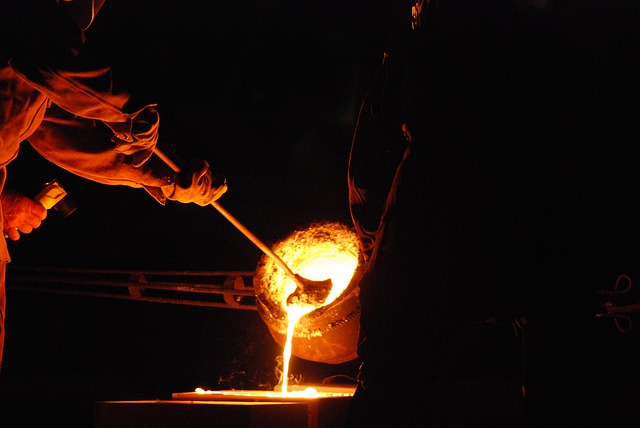
In our modern world, metal plays an incredibly integral role in our daily lives. From the phone in your pocket to the skyscrapers in city skylines, metal makes those things possible. Metals have [several properties](https://www.goodscience.com.au/year-10-chemistry/properties-of-metals/) to be considered when choosing one for your construction project.
Their malleability, electrical and thermal conductivity, density, strength, and hardness should be considered. Another important consideration is the melting point of the metal. The melting point of metals (sometimes known as the melting temperature) is the temperature to melt metal at which it reaches an equilibrium between solid and liquid phases.
Knowing the melting point for metals is important for a few reasons. Many construction processes like welding and casting require metals to be in a liquid state to be formable. And many metals fail, structurally speaking, before melting, which can lead to component failure.
Knowing the melting point of metals is essential for construction efficiency and safety, and helps you choose the best material for the job.
## Different Types of Metals
Metals can be grouped into [three main categories](http://www.mr-dt.com/materials/metals.htm): ferrous, non-ferrous, and alloys.
Ferrous metals are made mainly of iron (with small amounts of other elements). They are prone to rust and are magnetic. Generally, ferrous metals are strong and hard. Non-ferrous metals have no iron in their composition. They tend to resist corrosion, have less mass, and are non-magnetic.
Alloys are substances created with a mix of two or more metals. Alloys are often created with the goal of being lightweight and reducing the melting point of the metal. Because alloys are a mixture of substances, the melting point of alloys is sometimes given within a range, as it can vary, based on the specific composition of the metal.
## Low-Melting Point Metals
Metals with a [low melting point](https://msestudent.com/15-metals-with-the-lowest-melting-point/) liquefy at a low temperature and then re-solidity. Metals with a melting point below 842°C/450°F are considered low-melting point metals.
Low-melting point metals are especially useful for joining or casting parts. They are also often used as a temperature safety valve (when they melt, shutting down the machine) and in projects that require liquid metal. Many low-melting-point metals are alloys, created specifically for that characteristic.
## High-Melting Point Metals
Let’s take a look at [some of the most common](https://www.engineeringtoolbox.com/melting-temperature-metals-d_860.html) metal’s melting points (and their uses), from lowest to highest:
Lead: 327°C/621°F. Industrial uses: Lead is one of the lowest melting point metals of any metal. Because of the low melting point, lead is often used as a solder. It is used extensively in construction and plumbing.
Zinc: 420°C/787°F. Industrial uses: Zinc is malleable and flexible, and is durable and resistant to corrosion. It is often used in roofing (especially roofs with steep pitches) and exterior cladding on structures.
Magnesium: 650°C/1202°F. Industrial uses: Magnesium is incredibly lightweight, and is often used in products and tools that benefit from lighter weight. It is often used in automobiles and aerospace applications.
Aluminum: 660°C/1220°F. Industrial uses: Aluminum is extremely versatile and is often used for framing, plumbing, and other structural and mechanical applications. It is also a very popular roofing material.
Brass 930°C/1710°F. Industrial uses: Brass is a popular choice for applications that require low friction, such as bearings, sockets, gears, hinges, and casings.
Gold: 1063°C/1945°F. Industrial uses: Aside from the decorative uses of gold, it is also useful in architecture to reflect heat and retain it. It is also used in electronics and space exploration, especially in satellites.
Cast Iron: 1204°C/2200°F. Industrial uses: Common industrial uses of cast iron include plumbing and pipes, automotive parts, and machine parts.
Nickel: 1453°C/2651°F. Industrial uses: Nickel is mostly used for building components (usually in alloys such as stainless steel and nickel silver).
Wrought Iron: 1540°C/2800°F. Industrial uses: Wrought Iron is used mainly in decorative items such as fences, doors, gates, and railings. It is also widely used in nuts and bolts.
Copper: 1084°C/1983°F. Industrial uses: Copper is widely used in electronic equipment, such as wiring, and motors. It is often used in roofing and railings. It solders well, creating strong bonds and junctions.
Stainless Steel: 1510°C/2750°F. Industrial uses: Stainless steel is widely used in construction due to its flexibility, strength, and rust resistance. It is often used for support and strength in architecture.
Chromium: 1860°C/3380°F. Industrial uses: Chromium’s hardness and erosion resistance make it an indispensable industrial metal. It is most often used to create alloys and for plating surfaces.
### Refractory Metals
Titanium: 1668°C/3034°F. Industrial uses: Titanium is most often used in alloying and engine applications. It is often found in components of aircrafts, ships, and heat exchangers.
Zirconium: 1855°C/3371°F. Industrial uses: Zirconium is widely used in the chemical industry and in nuclear reactors.
Tungsten: 3422°C/6192°F. Industrial uses: Tungsten is the highest melting point metal of all metals, and is incredibly hard. Because of these properties, it is often used in heating elements, lighting filaments, and creating cutting tools.
## Why Steel Stands Out
By comparing the melting temperature of metals, it is easy to see that structural construction benefits from the wide range of metals available. But in a crowded field, steel stands out as the most adaptable and multi-functional choice.
Steel is strong, reliable, and cost-effective. It binds well to concrete and is resistant to corrosion as well as extreme temperatures. Our [quality steel products](https://www.bushwickmetals.com/products/) are tough enough to provide support for the largest project, and also an attractive choice for finishing touches when presentation matters.
And we have a staff of dedicated and knowledgeable employees, as well as multiple warehouses and around-the-clock processing. We provide not only top-of-the-line steel stock but also [value-added services](https://www.bushwickmetals.com/value-added-services/). Let us show you why we are industry leaders in wholesale structural steel. We can provide you with affordable, reliable products and excellent service. [R](https://www.bushwickmetals.com/request-a-quote/) [equest a quote](https://www.bushwickmetals.com/request-a-quote/) today.
[Back to News / Blog](https://www.bushwickmetals.com/news)
## Contact Us
- First Name\*
- Last Name\*
- Email\*
- Phone Number\*
- Company Name
- Website URL
- Message
- Upload a Drawing
Drop files here or Select files
Max. file size: 64 MB, Max. files: 5.
- Agreement\*
- [ ] Agree to Terms
- CAPTCHA
76267
[iframe](about:blank)
### Approvals
[](https://www.fmapprovals.com/)[](https://marks.ul.com/about/ul-listing-and-classification-marks/)[](https://www.sdi.org/)[](https://icc-es.org/)[](https://www.ul.com/services/environmental-product-declaration-epds-certification)
Notifications# How Much Does Commercial Metal Decking Cost?
October 7, 2024 in
Decking
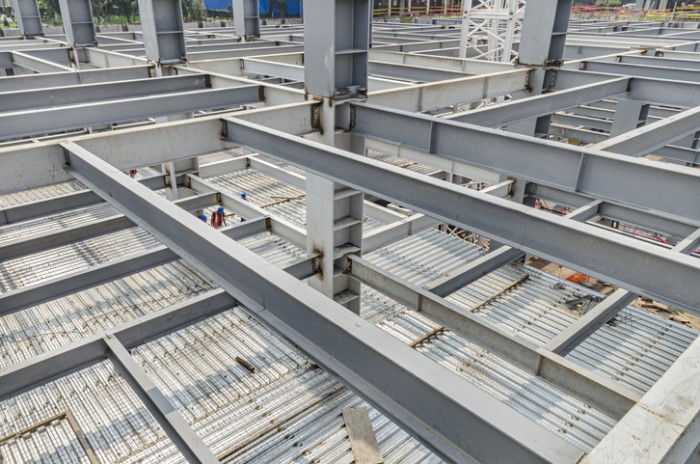
If you’re trying to calculate the metal decking cost for a commercial project, the final price will be determined by a range of variables. For this reason, determining an exact price can be difficult. However, understanding the considerations that go into the price can help give an accurate project cost. Continue reading below to learn what those variables are and other relevant information.
## Metal Decking Cost Starts With the Market Price of Steel
Steel prices often fluctuate, with heavy price changes happening in as little as a month. Since the [market price of steel](https://tradingeconomics.com/commodity/steel) varies so quickly, you’ll want to act on any received quotes as soon as possible. If you have to postpone a metal deck project, you should get a new quote closer to your construction date. Otherwise, you risk being caught by surprise by higher costs than what was initially discussed.
Most commercial decks are created using [Hot Dipped Galvanized Steel](https://www.bushwickmetals.com/hot-dipped-galvanized-pipe/). The prices of this specific type of steel have been steadily rising over the last few years, thus causing metal decking costs to increase.
## Steel Gauge and Thickness
The gauge, or thickness, of the metal decking, is another critical factor in determining cost. Thicker gauges provide greater load-bearing capacity and durability, which is essential for certain applications, such as in high-traffic areas or where heavy equipment will be used.
Lighter Gauge Decking (20-22 gauge): This is typically used in applications where the decking is not expected to bear heavy loads. It is less expensive but may require additional structural support to meet load requirements. Lighter gauge decking is often used in residential or light commercial buildings where cost savings are a priority.
Heavier Gauge Decking (16-18 gauge): Thicker and stronger, heavier gauge decking is used in applications where significant weight or structural integrity is required. Although it is more expensive, it offers long-term durability and can reduce the need for additional supports, potentially lowering overall construction costs.
The prices per square foot of each of these gauges can vary based on the general market price of steel, but their averages at current price levels are as follows:
| | | |
| --- | --- | --- |
| Gauge | Weight (lbs per square foot) | Price (per square foot) |
| 22 | 1.9 | $6-$7 |
| 20 | 2.3 | $8-$9 |
| 18 | 2.9 | $9.50-$11 |
| 16 | 3.5 | $11-$13 |
As you can see, using a thicker steel gauge for a larger deck can cost significantly more than using a thinner gauge. For example, building a 100-square-foot deck with 22 gauge steel would cost between $600 and $700 using the above averages. But, the same-sized deck with 16 gauge steel would cost between $1,100 and $1,300. That’s a significant cost difference.
## Project Scale and Customization
The most obvious consideration in your metal deck price is the size of your project. Once you’ve determined the previous factors, such as steel gauge and type, you can use the size to determine an accurate cost. Generally, there will be other materials necessary in these projects, so don’t forget to incorporate those costs into your overall price estimate, too.
- Large-Scale Projects: Bulk purchasing for large-scale projects can often lead to cost savings. Suppliers may offer discounts for large orders, reducing the per-unit cost of the decking. Additionally, large projects often have the advantage of economies of scale, where the cost per square foot decreases as the quantity increases.
- Customization: Custom orders, such as decking with specific finishes, coatings, or cut-to-length pieces, can increase costs. While customization allows for greater flexibility and precision in meeting project specifications, it often requires additional manufacturing processes, leading to higher prices.
## Installation Costs
Installation is another factor that contributes to the overall cost of metal decking. The complexity of the installation, including labor, equipment, and time, will affect the total expense.
- Labor Costs: Skilled labor is required to install metal decking correctly. The cost of labor can vary depending on the region, the complexity of the installation, and the contractor’s experience. In general, simpler installations with standard decking profiles will be less expensive, while complex projects with custom profiles or challenging site conditions will incur higher labor costs.
- Equipment and Safety: Installing metal decking requires specialized equipment, such as cranes and scaffolding, as well as safety measures like harnesses and guardrails. These equipment needs can add to the overall cost, especially in large or high-rise projects where safety is a significant concern.
If you’re a project manager or purchasing coordinator who plans to hire someone to apply the metal decking, it’s a good idea to shop around for the best companies and local prices.
Remember, it’s not always good to pick the cheapest company. You’ll also want to verify the company you hire is licensed, insured, experienced, and reliable. Read online reviews and don’t be afraid to ask for verification of licensing and insurance. Once you’ve vetted two or more companies, you can choose the best quote between them.
## Metal Decking Cost Depends On The Type
There are two common forms of [metal decking](https://www.bushwickmetals.com/product-category/decking/) used in roof projects, called B Deck and N Deck. Less common forms of metal decking are A Deck and F Deck. For floor decking, common types include B-36 Formlock, W2-36 Formlock, and W3-36 Formlock. The type of metal decking used can affect the price of your materials.
## Roof Decking Types
### B Deck
B Deck is the most widely used roof decking type due to its versatility and cost-effectiveness. It is primarily utilized in supporting built-up roofing systems, including single-ply, built-up, or modified bitumen roofs. The B Deck’s wide rib pattern, typically 1.5 inches deep, offers excellent load-bearing capabilities while allowing for efficient material use. Available in gauges ranging from 22 to 16, B Deck is suitable for a variety of applications, from commercial buildings to light industrial structures. Its compatibility with various roofing materials makes it a go-to choice for many contractors.
### N Deck
N Deck is specifically designed for long-span conditions, making it ideal for projects where the distance between supports exceeds ten feet. The deeper rib profile, usually 3 inches, provides superior strength and rigidity, allowing it to span greater distances without requiring additional support structures. This makes N Deck a preferred choice for large commercial buildings, warehouses, and industrial facilities where open floor plans are necessary. The gauges for N Deck range from 22 to 16, with thicker gauges providing even greater load capacity and durability.
### A Deck/F Deck
A Deck, also known as “narrow rib decking,” is characterized by its closely spaced ribs, which were common in older construction practices. Due to its narrower rib profile, A Deck is less strong compared to modern decking options, making it less suitable for new construction. However, it remains in use for repair and restoration projects where matching the existing structure’s decking is crucial. F Deck is slightly stronger than A Deck and also finds its primary use in renovation projects, particularly when preserving the architectural integrity of older buildings. Both A Deck and F Deck are typically found in gauges ranging from 22 to 16.
## Floor Decking Types
### B-36 Formlock
B-36 Formlock floor decking is a versatile and widely used type of metal decking designed to support concrete slabs in floor systems. Its ribbed profile allows it to accommodate slab thicknesses ranging from 3.5 to 7 inches, making it ideal for short-span conditions. The Formlock design not only provides a secure bond between the decking and the concrete but also enhances the composite action of the floor system, resulting in improved load distribution and structural integrity. Available in gauges from 22 to 16, B-36 Formlock is commonly used in commercial and residential buildings where reliable, cost-effective floor systems are required.
### W2-36 Formlock
W2-36 Formlock is a robust floor decking option designed to handle heavier loads and thicker slabs. With the capacity to support slab thicknesses from 4 to 8 inches, W2-36 Formlock is suitable for applications where moderate to heavy loads are expected. The deeper rib profile provides additional strength, making it ideal for floors in industrial buildings, parking structures, and multi-story construction. The Formlock design ensures a strong bond with the concrete, which helps in distributing loads evenly and enhancing the overall structural performance. Like other Formlock types, it is available in gauges from 22 to 16.
### W3-36 Formlock
W3-36 Formlock is the strongest type of metal floor decking available, designed for applications requiring maximum strength and durability. It can accommodate slab thicknesses between 5 and 9 inches, making it suitable for heavy-duty applications such as industrial floors, mezzanines, and high-traffic areas. The deeper rib and thicker gauges, ranging from 22 to 16, provide superior load-bearing capacity, ensuring long-term performance even under the most demanding conditions. The Formlock design enhances the composite action between the deck and the concrete slab, resulting in a floor system that is both strong and stable, capable of supporting substantial loads with minimal deflection.
## What Impacts the Total Metal Decking Cost?
Determining a specific metal decking cost is difficult because the overall price depends on various factors. Some of the components influencing your metal deck price are the following:
- The market price of steel, which fluctuates frequently
- The steel gauge used for decking, such as 22, 20, 18, and 16 GA
- The size of your metal decking project
- The labor costs for your decking project
- Roof decking types like B deck, N deck, and A deck/F deck
- Floor decking types like B-36, W2-36, and W3-36 form lock
### Location and Delivery
The location of the project site and the cost of delivery can influence the overall cost of metal decking.
- Proximity to Suppliers: Projects located near metal decking suppliers or manufacturing facilities may benefit from reduced delivery costs. Conversely, remote locations may incur higher shipping expenses, particularly for large or heavy decking materials.
- Delivery Logistics: The size and weight of metal decking panels require careful planning for delivery. Oversized loads may require special permits or transportation methods, adding to the overall cost. Additionally, site access issues, such as narrow roads or limited space, can complicate delivery and increase costs.
## Intsel’s Wide Array of Products
Your total metal deck price will partially depend on the [products](https://www.bushwickmetals.com/products/) you use to bring your metal deck to life. Intsel has a wide range of inventory options that make us the best option for all your metal decking requirements, including steel and composite decks to meet all your needs.
## Intsel’s Value Added Services
Beyond the massive range of metal decking products we provide, our team also offers the best value-added services to meet all of your decking and metal needs. Our extensive services include:
- Section bending and cambering
- Plate processing
- Saw cutting
- Shearing and bending
- Custom roll-formed floor and roof deck
- Tee splitting and straightening
With the extent of our services and our exceptional products, you’ll get a solution that’s truly worth the cost with Intsel.
## Intsel’s Customer Support
No matter your metal decking needs, you need to choose a provider who is there for you when you need them. Intsel provides high-quality customer support to meet all your requirements during and after your metal decking project.
Our professional team values communication and can help you solve any problems during the decking process. Whenever you need a helping hand, Intsel has you covered from start to finish.
## Intsel’s Delivery Options
Another reason why people choose Intsel Steel East is because of our next-day delivery service. With Intsel, you can easily meet all of your metal decking project requirements and have your project completed in no time with the materials you need and the services necessary to help you. It’s a fast and convenient solution to complete your metal deck efficiently.
## We Can Help You Calculate Your Metal Decking Cost
Intsel Steel East is the leading steel distributor for all your metal decking needs, providing the best decking materials and vital services to help you complete the job. Intsel Steel East has a dedicated team of professionals committed to providing solutions to complete your metal decking project.
[Request a quote](https://www.bushwickmetals.com/request-a-quote/) from Intsel Steel East today to determine your overall metal deck price!
[Back to News / Blog](https://www.bushwickmetals.com/news)
## Contact Us
- First Name\*
- Last Name\*
- Email\*
- Phone Number\*
- Company Name
- Website URL
- Message
- Upload a Drawing
Drop files here or Select files
Max. file size: 64 MB, Max. files: 5.
- Agreement\*
- [ ] Agree to Terms
- CAPTCHA
78484
[iframe](about:blank)
### Approvals
[](https://www.fmapprovals.com/)[](https://marks.ul.com/about/ul-listing-and-classification-marks/)[](https://www.sdi.org/)[](https://icc-es.org/)[](https://www.ul.com/services/environmental-product-declaration-epds-certification)
Notifications# Why Is an I-Beam Stronger Than a Solid Beam?
April 10, 2023 in
Beams
# **Why Is an I-Beam Stronger Than a Solid Beam?**
When you consider the physical properties of steel, it’s unsurprising that it is the [most-used metal](https://industrytoday.com/6-reasons-steel-is-one-of-the-most-used-metals-today/) in new construction today. Steel can withstand the elements, bear significant weight loads, and is highly sculptable.
Why does it matter that steel is easy to sculpt? It allows manufacturers to create a variety of [steel beam styles and shapes](https://www.bushwickmetals.com/product-category/beams/) for different construction projects.
On the surface, you might think that a solid steel beam would be the strongest option. The truth is that i-beam strength is greater, particularly when you consider that the same cross-section can bear more weight when sculpted into an “I” shape.
Ready to learn more about i-beam strength and why i-beams outperform solid beams? Read on to find out.
## **I-Beam Strength Produces Even Weight Distribution**
As we mentioned earlier, i-beams get their name due to their “I” shape. The flange is significantly wider than the web, which changes the way in which the entire beam distributes weight.
When weight is applied to the flange, the flange holds that weight evenly from one side to the other, reducing the tension on the web. By the time that tension reaches the neutral axis (the center of the web), the tension is reduced to nothing. Thanks to this even weight distribution created by the i-beam’s “I” shape, it can efficiently bear the weight applied to the flange.
## **High Load-Bearing Capacity**
Imagine an i-beam and a solid beam with the same cross-section. Because an i-beam is rolled into that “I” shape, the i-beam will have more flange surface area than a solid beam. For the same amount of steel used and the same overall weight, you’ll get a higher load-bearing capacity and a high moment of inertia with an i-beam because of its ability to redistribute that weight.
I-beams also have a high load-bearing capacity because they will bend under high stress, rather than buckle. Bending is preferable because a bending beam supports other members, rather than exerting additional tension on them. As a result, i-beams reduce the need for several additional construction supplies and support structures that would otherwise have to make up for the additional tension caused by buckling.
## **Vibration Dampening**
Many structures rely on steel construction, ranging from commercial garages to large buildings to bridges. All of these structures are subject to potential vibration due to:
- human activity, such as walking and jumping
- machinery and equipment during construction and repair
- constant external forces such as traffic on or near the structure and high wind
Steel is a stiff and durable material. It’s easy to assume that an i-beam, due to its comparatively thin web thickness, would be less stiff than a solid beam. However, they are still quite stiff and their ability to absorb weight also makes them the ideal beam for dampening vibration before it reverberates from one beam to another.
## **Additional Benefits of I-Beams**
I-beams aren’t just considered the “universal beam” of steel construction because of their strength. They also offer additional benefits that are hard to beat, especially where money and conservation are concerned. Let’s take a quick look at some of the additional benefits of i-beams.
### **Dimension Versatility**
Each construction project is unique and will require beams of different sizes. I-beams are extremely versatile when it comes to things like the depth of section, flange width, and flange thickness.
The dimensions you choose will determine the weight capacity of your i-beam. For example, an i-beam with a depth of section of 5 inches, a flange width of 3 inches, and a flange thickness of 0.326 inches can bear 10 pounds per foot. By increasing the depth of section to 12 inches, the flange to 5 inches, and the flange thickness to 0.544 inches, that i-beam can now bear 31.8 pounds per square foot.
### **Minimum Waste**
Steel is considered one of the most [environmentally friendly construction materials](https://www.bioenergyconsult.com/steel-is-environmentally-friendly-building-material/) because it tends to produce less waste, withstand harsh weather conditions, and can reduce energy consumption in the buildings it is used to construct. Plus, steel is easy to recycle thanks to its durability and sculptability, meaning that if a steel building comes down, most of those steel components can be salvaged.
I-beams, in particular, minimize construction waste. As we’ve already mentioned, an i-beam with the same cross-section as a solid beam is going to be larger and capable of bearing more weight. Plus, the bending capacity of an i-beam reduces the need for additional supporting materials.
### **Improved Fabrication**
Metal fabrication refers to all processes of shaping structural steel, including bending and cutting. The process of fabricating i-beams is remarkably fast and simple, making the material efficient and affordable to produce. Construction firms looking to purchase i-beams will reap the benefits of this efficiency and affordability in the form of low costs.
I-beams aren’t just easy to fabricate. They’re also easy to work with, assuming you have the right skills and tools. I-beams get their nickname, “the universal beam,” because experienced engineers and construction workers find that i-beams are suitable for a wide range of construction projects, from metal buildings to metal bridges and beyond.
## **I-Beam Strength Is Hard to Beat**
When you’re preparing for a new construction project, one of the biggest considerations is the type of steel beams you’ll use for structural support. While it may seem intuitive that solid beams provide the most strength, you shouldn’t underestimate i-beam strength. There are also several additional i-beam benefits worth considering.
Now that you know you’re in the market for i-beams, where can you turn? INTSEL Steel East is here to help. We offer a wide variety of products and services for steel construction.
To get started, [request a quote](https://www.bushwickmetals.com/request-a-quote/). Along with high-quality products and services, we value customer service and transparency. Let us answer any questions you have before making your final decision.
[Back to News / Blog](https://www.bushwickmetals.com/news)
## Contact Us
- First Name\*
- Last Name\*
- Email\*
- Phone Number\*
- Company Name
- Website URL
- Message
- Upload a Drawing
Drop files here or Select files
Max. file size: 64 MB, Max. files: 5.
- Agreement\*
- [ ] Agree to Terms
- CAPTCHA
52455
[iframe](about:blank)
### Approvals
[](https://www.fmapprovals.com/)[](https://marks.ul.com/about/ul-listing-and-classification-marks/)[](https://www.sdi.org/)[](https://icc-es.org/)[](https://www.ul.com/services/environmental-product-declaration-epds-certification)
Notifications# Steel Supply In Delaware
March 18, 2022 in
Blog / Steel Supply
As of 2020, the global structural steel market had a [value of $96.9 billion](https://www.grandviewresearch.com/industry-analysis/structural-steel-market).
If you’re looking at steel suppliers in Delaware, you don’t need to look any further than Bushwick Metals. Our stock caters to almost any product, and if there is anything specific you need, we can get it out to you quickly and efficiently. To find out more about why Bushwick Metals is the best choice for buying steel for projects, keep reading.
## Why Bushwick?
There are plenty of steel suppliers within Delaware, and with so many options, it can be hard to know what the best choice is. Bushwick Metals takes pride in going above and beyond to make sure our customers are given the best service possible.
### Value-Added Services
All metal suppliers can provide you with parts, but for many, that is the extent of what they do. Bushwick Metals also carries out a number of additional services, helping us produce parts that meet your needs exactly.
Bushwick Metals services consist of the following:
- Saw cutting
- Plate shearing
- Plate bending
- Section bending
- Cambering
- Tee splitting and straightening
- Plate processing
- Custom roll formed floor and roof deck
We have five locations through four states along the East Coast, and all of these are outfitted to perform all of these services.
### Next-Day Delivery
We have several locations that enable us to provide next-day delivery across the entire Northeast, Midwest, and South of the United States. When trying to get a construction project done, delays are the last thing you need. We understand this and will ensure that you have everything you need on time.
This doesn’t just help your project run smoothly, but can also make things logistically easier on your end. If you don’t have a lot of space on your worksite to store products, we can work with you to develop a delivery schedule.
### Meeting Your Needs
With a delivery schedule, we can determine what you will need and when you will need it. Then you can get on with your work, and each day we will deliver the parts you need. We also offer contract pricing plans to help keep things organized.
On rare occasions, we might not have the items in stock that you need. If this is the case, we can source materials from all over the globe. We work hard to ensure we can provide you with any kind of steel for manufacturing.
Bushwick Metals has been in business for almost 200 years, resulting in a vast knowledge of all aspects of the steel supply industry. Throughout the years, we have developed several advanced offerings.
We can offer materials-management advice to help you select the best products for your project. Coupled with our knowledge of inventory planning, you can be sure you will have everything you need with minimal waste. We also offer best-in-class supply-chain support, so we will never be short of anything that you need.
We can discuss your project with you, and help lay out an overall plan so you can get your job done efficiently. We have a vast knowledge of lead times, shipping processes, and international purchasing, which we can leverage to your advantage.
Our team also has the expertise to analyze the current market and make future predictions about pricing trends to help you get the best possible deals.
## Bushwick Metals Products
As the leading steel supplier in the Northeast, we keep a wide variety of different steel products in stock and ready to go. Below is a summary of some of the most widely used products we stock.
### Steel Angles
Our angles are available in a range of sizes which can be rolled or bent to a specified radius. Grades kept in stock include A36, A572, and A588, with other grades available on request. We also have hot-dipped galvanized steel angle (A123 specification) if you need an angle that is more durable and corrosion-resistant.
### Steel Beams
We have beams to suit a range of applications, ready to use on-site. This includes I beams, Wide Flange & H Beams **,** Junior Beams, and HP Shape Beams.
The types of steel readily available include:
- Low-carbon hot-rolled steel (A36)
- High-strength, low-alloy, copper-bearing structural steel (A588)
- High-strength, low-alloy, hot-rolled steel alloy (A992/A572-50)
### Steel Plates
Bushwick Metals maintains one of the most extensive ranges of steel plates in the industry. Together with our value-added services, we can quickly machine your steel plate to your exact specifications.
We keep a range of grades in our standard stock:
- A36
- A572-50
- A588
- ASTM A516-GR70
- T-1 Type B A514
- AR235 and AR400 abrasion-resistant plate
### Steel Tubing and Pipes
[Our tubing and piping](https://www.bushwickmetals.com/product-category/tubing-piping/) range covers a variety of applications, whether it is for structural purposes, gas/liquid transportation, or scaffolding. Whatever you need, we either already have it, or we can get it. Our standard stock of steel tubes and pipes consists of different shapes, lengths, diameters, grades, and treatments.
### Rebar
If your project involves concrete, [rebar](https://www.bushwickmetals.com/product-category/rebar/) is definitely something to consider. Reinforced concrete is far more durable than standard concrete, being less likely to crack due to stress or pressure. Like our other materials, rebar is available in a range of lengths, diameters, and grades (A-36, M1020, and A588). With our value-added services, you can have your rebar cut down or bent as needed to suit your project.
### Expanded Metal and Grating
The expanded metal and grating at Bushwick Metals are available in many different configurations, styles, and materials. Some of the more common options include expanded metal U-edging, Grip Strut safety grating, and flattened expanded metal-carbon steel. All types can be machined to meet your needs and sent out for delivery as soon as they are ready.
## The Best Steel Suppliers in Delaware
Bushwick Metals maintains one of the most comprehensive metal supplies in the industry, and with value-added services and next-day delivery, it’s clear that we are not just one of the best steel suppliers in Delaware, but in the entire eastern US.
If you have any questions or would like to request a free quote, [click here to contact us](https://www.bushwickmetals.com/contact/) today.
[Back to News / Blog](https://www.bushwickmetals.com/news)
## Contact Us
- First Name\*
- Last Name\*
- Email\*
- Phone Number\*
- Company Name
- Website URL
- Message
- Upload a Drawing
Drop files here or Select files
Max. file size: 64 MB, Max. files: 5.
- Agreement\*
- [ ] Agree to Terms
- CAPTCHA
[iframe](https://www.google.com/recaptcha/api2/anchor?ar=1&k=6LdSY4oUAAAAAGDEi3d2uBuqBCntpVCNaASyqOUc&co=aHR0cHM6Ly93d3cuYnVzaHdpY2ttZXRhbHMuY29tOjQ0Mw..&hl=en&v=rW64dpMGAGrjU7JJQr9xxPl8&theme=light&size=normal&cb=9rtyegtugh2l)
67108
[iframe](about:blank)
### Approvals
[](https://www.fmapprovals.com/)[](https://marks.ul.com/about/ul-listing-and-classification-marks/)[](https://www.sdi.org/)[](https://icc-es.org/)[](https://www.ul.com/services/environmental-product-declaration-epds-certification)
Notifications# Steel Supply In Rhode Island \| Next Day Delivery
October 17, 2022 in
Blog / Steel Supply
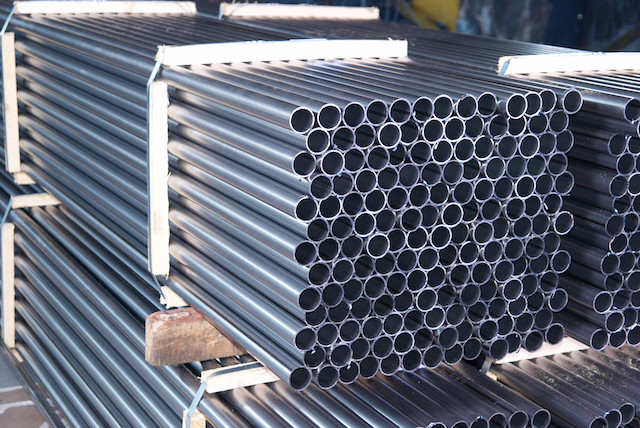
As of August 6, 2022, the year-to-date production of steel was around [54.47 million net tons](https://www.steel.org/industry-data/).
For a long time, steel has been the backbone of Rhode Island. Although there’s been a worldwide pandemic, the need for steel in Rhode Island hasn’t stopped. Whether your construction project is commercial or residential, you’ll need to procure steel for your project.
At Bushwick Metals, our materials are always of the highest quality. All of our materials come from top-rated manufacturers, and we offer various finishing techniques. Read on to learn everything there is to know about steel supply in RI.
## What Makes Bushwick Metals Better?
At Bushwick Metals, we maintain one of the largest supplies of steel parts in the US. Our vast range of products and commitment to customer service makes us the best choice when looking for a steel supplier in Rhode Island. We excel not just in terms of what we have, but also in getting it out to you.
As the leading steel distributor in RI, we offer [next-day delivery](https://www.bushwickmetals.com/steel-beam-delivery/) throughout the state. Whatever parts you need, we’ll make sure you get them as soon as possible. This can be vital if you’re working on a time-critical project. We’ve been in business for over 200 years, and this has given us a lot of experience in supply chain management. When working on a big project, it’s likely that you won’t have enough room on-site to store all the parts and materials you need. We can help with this by ensuring we bring out parts as and when you want them. We’ll discuss your entire project with you, and develop a plan so that we can make regular deliveries with the products you need. If anything changes, just let us know, and we can make any necessary adjustments. We also offer a range of value-added services to make sure you get the exact parts you need to complete your project.
### Value-Added Services
Despite how comprehensive our stock is, there are plenty of projects that will require more specific parts. To ensure you always have what you need, we provide value-added services through which we can take standard parts, and alter them before we deliver them to you.
#### Saw Cutting
Most of our products are available in a range of sizes. You can cut these down after we deliver them to you, but if you want to save some time we can take care of this at our facility. We have multiple saws along with decades of experience, ensuring we can get beams, pipes, and more cut to the perfect size for your project.
#### Shearing and Bending
With our shears and press brakes, we can machine sheet and plate metal as needed. Most job sites don’t have the equipment to do this, but we can get it done quickly and accurately so that the parts are ready to use as soon as you have them.
#### Plate Processing
As one of the most widely used steel products, we offer a range of plate processing techniques. This includes things like drilling, tapping, milling, countersinking, and [oxy-fuel cutting](https://www.engineeringchoice.com/what-is-oxy-fuel-cutting/). All of these processes are done with a single machine to maximize efficiency. This helps to reduce turnaround times so you can get on with your project, and it keeps costs down.
#### Section Bending & Cambering
It’s not uncommon to need things like beams, popes, angles, channels, and more to be bent. We can easily take care of this, bending parts to almost any shape while maintaining a high level of accuracy. Our capabilities are just as effective when it comes to cambering. We can camber a beam up to 40″ wide quickly and accurately. (Min length – 25′).
#### Tee Splitting & Straightening
Traditionally, tees are split using thermal cutting methods. The problem is that this can bow and twist them, causing them to split. To avoid this, we use a rotary-mechanical shear. This results in straighter tees as they’re put under less internal stress. Along with our roll-straightening, we’re able to provide some of the straightest, highest quality tees available.
#### Custom Roll Formed Floor and Roof Deck
We can roll out type B 1.5″ roof deck, as well as 1.5″ composite floor deck from 16 gauge to 22 gauge. This can be anywhere between 3 and 40 feet long, and we offer painted and galvanized finishes.
## Our Products
We have more than a century of experience as a steel supply company, and a business doesn’t last that long unless it provides quality products. Each of our locations is stocked with a full range of different parts, allowing us to boast one of the most comprehensive ranges in the entire steel industry.
Some of the more common products we have ready to go are:
- Bars
- Angles
- Channels
- Beams
- Pipes
- Tubing
- Plates
- Sheets
We also have much more on top of this. Whatever you need, we’ve almost certainly got it. On the rare occasions when a customer needs something we don’t stock, we can get it ordered in.
Over the years, we’ve built a vast network of connections, giving us access to various other companies in the steel industry, so we can get exactly what you need.
## Steel Supply in RI
If you need a reliable steel supply in RI, Bushwick Metals is the answer. We work to source the highest quality materials and get our steel construction supplies out to you as fast as possible. With our next-day delivery, you can be sure that your project won’t come to a standstill, keeping things efficient and productive.
If you’re ready to get started with ordering your Rhode Island steel supplies, [click here](https://www.bushwickmetals.com/request-a-quote/) to request a free quote from us today.
[Back to News / Blog](https://www.bushwickmetals.com/news)
## Contact Us
- First Name\*
- Last Name\*
- Email\*
- Phone Number\*
- Company Name
- Website URL
- Message
- Upload a Drawing
Drop files here or Select files
Max. file size: 64 MB, Max. files: 5.
- Agreement\*
- [ ] Agree to Terms
- CAPTCHA
3342
[iframe](about:blank)
### Approvals
[](https://www.fmapprovals.com/)[](https://marks.ul.com/about/ul-listing-and-classification-marks/)[](https://www.sdi.org/)[](https://icc-es.org/)[](https://www.ul.com/services/environmental-product-declaration-epds-certification)
Notifications# HR Rounds
| Type | Thickness | Size in Inches | Estimate Weight in Lbs - 1ft | Estimate Weight in Lbs - 20ft |
| --- | --- | --- | --- | --- |
| HR Rounds | NULL | 29/32 | 2.19 | 43.8 |
### Approvals
[](https://www.fmapprovals.com/)[](https://marks.ul.com/about/ul-listing-and-classification-marks/)[](https://www.sdi.org/)[](https://icc-es.org/)[](https://www.ul.com/services/environmental-product-declaration-epds-certification)# Composite Metal Deck: The Ultimate Flooring Solution
October 2, 2023 in
Blog / Decking

Creating new buildings is more important than ever before. The global population is expected to be [nearly 10 billion](https://cdn.redshift.autodesk.com/2018/08/13000-buildings-per-day-infographic1.pdf) by 2050, creating a greater need for housing complexes, industrial manufacturing spaces, and workplace office buildings than ever before.
To accommodate this growing need, people will need to create strong, durable, and long-lasting structures. Composite metal deck solutions can help ensure strong building foundations. Read on to learn more about this material and its many benefits.
## **The Basics of Composite Metal Deck Solutions**
A [metal decking floor system](https://www.bushwickmetals.com/product-category/decking/) is one of the most important components of a steel building. Whether it’s a single-story unit or a multi-story skyscraper, decking is essential for strengthening the floor system. Unfortunately, this often means that people need to add extra weight to the floor, which puts a lot of pressure on the framing of the building.
Composite flooring was created as a solution to this problem.
Composite metal decking is a type of flooring made from steel. It comes with an embossed pattern manufactured onto the sides at even distances from each other. These patterns help the surrounding concrete bond strongly to it as it cures.
This makes the structure of the steel building significantly stronger.
After the concrete is completely cured, the metal decking and the concrete become one unit. They’re totally bonded together into one complete metal floor deck. This final product is extremely strong and ensures that your building has a top-notch foundation.
## **The Benefits of Composite Flooring**
The strength of composite metal is the main reason that architects, metalworkers, and construction/manufacturing companies prefer the material.
It can withstand a lot of weight over a long period of time, making it ideal for both high-foot-traffic areas and heavy equipment storage. It is also weather-resistant and won’t corrode due to water damage.
They also have high ratios of strength to weight. They’re light but give a lot of tensile reinforcement. This means that they’re simple to work with, incredibly strong, and have a higher axile strength than alternatives.
### **Sustainability**
Building operations constitute about [40% of carbon emissions](https://architecture2030.org/why-the-building-sector/) around the world each year. Using sustainable materials to create structures is a critical step toward reversing the climate crisis. Composite metal decking is one of the most eco-friendly solutions available.
This is because it’s made of steel. It creates a long-lasting structure, so materials don’t need to be replaced regularly. Even better, it can be continuously recycled without getting rid of any of the inherent properties that make it a valuable building material.
Smart construction processes are also available for composite metal. These systems use fewer natural resources and fossil fuels. So, you’re saving the world in more ways than one!
### **Cost-Effective**
The lightweight flooring doesn’t just mean less waste. It also means lower project times. This means that you don’t need to pay workers as much because there’s less labor required for the construction process.
You will also pay less for the decking itself. After all, thinner decking means fewer materials are used. Of course, this translates to an overall lower price.
Plus, less concrete is needed, and props also won’t be used during construction. You don’t need to shell out for these unnecessary material costs.
Storage requirements are also lower because of the thinner material. This means lower loading costs. It also means that you won’t have to pay for as much storage or warehouse space as you would for thicker, non-composite metal decking.
### **Easy to Use**
The construction method for composite flooring isn’t just efficient. It’s also easy and time-saving.
You won’t need any additional reinforcement for most buildings when you use strong composite metal decking. Sure, there will be some times when the design parameters necessitate them, but they’ll be few and far between.
This is partly because the slabs come in several different thicknesses. Construction firm owners, metal manufacturing companies, and individual metalworking businesses can select thinner slabs if they need to work with a lightweight solution. This means that foundation loads will take less material, cost less, and be easier to transport and work with.
## **The Types of Decks Made From Composite Metal**
There are multiple types of composite metal deck solutions that you should know about. The first thing to know is that there are two different side lap types:
- Standard interlocking side laps, which are connected by professional seam welding tools
- Screw fastened side laps, which lock slabs together with strong industrial screws
Standard interlocking side laps are the most common and generally preferred method. But all applications are different, so keep an open mind and examine all your options.
### **Thickness**
The biggest distinction between types of decking lies in the metal’s thickness.
1.5″ decking is generally the most lightweight option. It can hold up concrete slabs of between 3.5″ and 7.5″, so it’s effective for many single-story buildings. They’re ideal for short-term conditions.
3″ composite metal deck types are often the thickest available option. They’re good for long-span floor conditions. They can hold concrete slabs between 5″ and 9″ thick, making them ideal for extremely sturdy structures and multi-story complexes.
There are several metal thicknesses between these two extremes. 2″ decking, for example, is also common. Talking with an expert can help you determine what your requirements are.
## **Get Started**
While there are many different building materials that architects and builders can choose for construction, composite metal deck solutions are one of the best. Now that you know why, it’s time to begin designing and constructing steel buildings the right way.
Bushwick Metals, also known as Intsel Steel East, is committed to helping you select the right type of composite decking for your project. We’ll also talk about logistics and decide whether you need custom services like saw cutting section bending, and plate processing. We’re excited to talk about how we can help, so [contact us](https://www.bushwickmetals.com/contact/) for a quote on quality steel products.
[Back to News / Blog](https://www.bushwickmetals.com/news)
## Contact Us
- First Name\*
- Last Name\*
- Email\*
- Phone Number\*
- Company Name
- Website URL
- Message
- Upload a Drawing
Drop files here or Select files
Max. file size: 64 MB, Max. files: 5.
- Agreement\*
- [ ] Agree to Terms
- CAPTCHA
43025
[iframe](about:blank)
### Approvals
[](https://www.fmapprovals.com/)[](https://marks.ul.com/about/ul-listing-and-classification-marks/)[](https://www.sdi.org/)[](https://icc-es.org/)[](https://www.ul.com/services/environmental-product-declaration-epds-certification)
Notifications# Steel Beam Delivery Services: Take Advantage Of Next-Day Delivery
April 18, 2022 in
Beams / Structural Steel
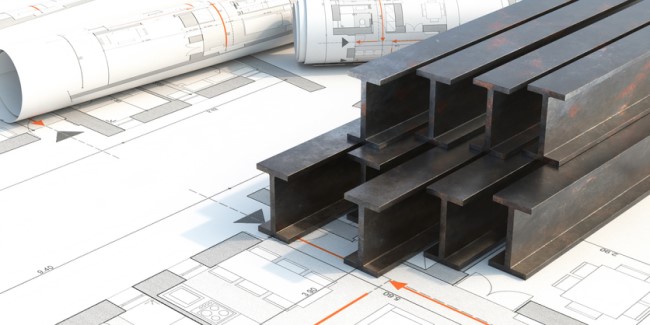
These days, sourcing high-quality steel beams is not easy. Issues with the supply chain have caused so many delivery delays that projects across the country are on hold. In the Northeast, these delays are even worse. Thanks to those famous [East Coast winters](https://www.channel3000.com/i/northeast-faces-heavy-snow-and-blizzard-conditions-this-weekend-but-models-are-still-unclear-on-how-bad-it-will-be/), a lot of deliveries are halted by issues like snow, ice, and extreme temperatures. Luckily, there is a way to source your steel beams quickly and efficiently. Bushwick Metals offers a super speedy, next-day steel beam delivery service.
This special service is available all across the Northeast in states including New York, Maine, New Jersey, and Connecticut. But, can you source steel beams from Bushwick Metals? And what kinds of orders does the company accept? Read on to learn more about the steel beams that you can order via our next-day delivery service.
## What Kinds of Steel Beams Do You Offer?
Bushwick Metals offers three major categories of [structural steel beams](https://www.bushwickmetals.com/product-category/beams/), each representing one of three steel grades: A992/A572-50, A588, and A36. We stock all three of these products in an impressive number of sizes and profiles. As a result, most projects can source their materials from our stock.
The best part is that we deliver our supplies in a ready-to-use state. This means that you won’t have to make any major adjustments to our product before adding them to your project. This means that you can simply receive your order and be free to weld, bolt, or rivet away! Below, we have included some additional information about our offerings.
### A99/AA572-50
This is one of our best-sellers, as it is useful in most construction projects. These beams are very strong, yet relatively easy to weld. While this might sound counterintuitive, it is possible due to the precise materials mixed into the alloy. This grade contains both columbium and vanadium, making it both strong and weldable. Its minimum yield is 50 ksi, while its minimum tensile strength is 65 ksi. This means that you can use it in situations of high corrosive resistance in addition to weight reduction.
### A588
If you are looking for something with high corrosion resistance, this is the steel beam for you. The A588 is a steel alloy that includes copper. As you probably know, copper-bearing steel is much less likely to corrode.
In fact, this particular grade has two to four times the corrosion resistance of a copperless carbon steel. As a result, we highly recommend this product to anyone building in an area known for atmospheric corrosion.
The A588 is also considered a high-strength beam. It offers a minimum yield of 50 ksi and a minimum tensile strength of 75 ksi. Like the A99/AA572-50, the A588 can be used in situations of cost savings from weight reduction.
### A36
This is our most affordable steel beam, as well as our most weldable one. The A36 is a low-carbon, hot-rolled steel that is also considered a “mild steel.”
It doesn’t have the same strength as the A99/AA572-50 or the A588. Its minimum yield is 36 ksi, while its minimum tensile strength is 58 ksi. This means that the A36 is ideal for general structural applications and bridges. We source this particular product through a special order straight from the mill.
## How Are You Able to Guarantee Next-Day Delivery? What About the Supply Chain?
This is one of our most common questions. Because of the [current supply chain situation](https://www.nbcnews.com/business/business-news/why-store-shelves-are-empty-omicron-bad-weather-hurt-supply-chain-rcna11859), many customers marvel at how quickly we are able to source and deliver our products. However, Bushwick Metals has a few advantages that help us circumvent many of these challenges.
To begin with, we have one of the most extensive collections of steel beams in the United States. We are constantly sourcing our materials from producers located all across the globe. As a result, our stock is quite full of beams in a wide variety of shapes, sizes, and materials. We offer everything from HP Shape beams to l beams and Junior beams. Our stock even includes Wide Flange and H beams. We keep our supplies full so that we can offer you excellent products as soon as you need them.
## Does My City Qualify for Next-Day Steel Beam Delivery?
We are a steel distributor located in [the Northeast](https://proxy-nyc.hidemyass-freeproxy.com/proxy/en-za/aHR0cHM6Ly93d3cuYnVzaHdpY2ttZXRhbHMuY29tL2xvY2F0aW9ucy8) of the United States. Because of this, we only offer our next-day delivery service to people located in this part of the country.
Whether you are based in a major metropolis like Philadelphia or a small town in northern Maine, we have got you covered. Bushwick Metals has a lot of experience delivering our products, even in difficult circumstances. However, if you are located in another region and are interested in placing an order with us, please get in touch. We can give you an idea of whether it is possible to place your shipment and how long it will take to deliver.
## Get in Touch With Us Today
Are you tired of waiting weeks, or even months, for your steel beam delivery to arrive? Would you like to do business with a steel distributor who can get your products to you in a timely fashion? If so, you should reach out to us today.
[Click here](https://www.bushwickmetals.com/contact/) to fill out our contact form. We would be more than happy to answer any of your questions about our next-day delivery service.
Alternatively, you can always [ask us for a quote](https://www.bushwickmetals.com/request-a-quote/) to help you estimate the cost of your next project. Our mission will be to supply you with high-quality steel beams in record time.
[Back to News / Blog](https://www.bushwickmetals.com/news)
## Contact Us
- First Name\*
- Last Name\*
- Email\*
- Phone Number\*
- Company Name
- Website URL
- Message
- Upload a Drawing
Drop files here or Select files
Max. file size: 64 MB, Max. files: 5.
- Agreement\*
- [ ] Agree to Terms
- CAPTCHA
71211
[iframe](about:blank)
### Approvals
[](https://www.fmapprovals.com/)[](https://marks.ul.com/about/ul-listing-and-classification-marks/)[](https://www.sdi.org/)[](https://icc-es.org/)[](https://www.ul.com/services/environmental-product-declaration-epds-certification)
Notifications# Heavy Wall Structural Tubes: Unmatched Durability for Demanding Applications
### Intsel Steel
# Heavy Wall Structural Tubes: Unmatched Durability for Demanding Applications
## An Introduction to Structural Tubes
Structural projects in demanding industries require materials that offer reliability, strength, and longevity. Heavy wall structural tubes emerge as a cornerstone in such applications, offering unmatched durability and performance. Whether in towering skyscrapers or deep-sea oil rigs, these tubes are indispensable for their ability to endure extreme conditions and bear immense loads.
## Understanding Heavy Wall Structural Tubes
### Definition and Characteristics
Heavy wall structural tubes are robust, cylindrical steel products with a thicker wall compared to standard tubes. This added thickness translates into superior strength and resistance to wear and tear.
### Comparison to Standard Structural Tubes
Unlike standard tubes, heavy wall tubes can handle higher stress levels, making them ideal for applications where safety and durability are paramount. They are preferred in scenarios requiring high pressure or exposure to corrosive environments.
### Manufacturing Process
The production of these tubes involves precision hot or cold rolling, followed by controlled heat treatments to ensure uniformity and enhanced mechanical properties. Advanced testing methods further guarantee their compliance with strict industry standards.
## Key Advantages of Heavy Wall Structural Tubes
### Superior Strength and Load-Bearing Capacity
The thickness of these tubes allows them to carry heavier loads without deforming, making them suitable for both static and dynamic applications.
### Enhanced Durability and Longevity
Heavy wall structural tubes are designed to withstand prolonged exposure to environmental stressors, offering a longer service life than their standard counterparts.
### Resistance to High Pressure and Extreme Temperatures
These tubes excel in extreme conditions, such as high-pressure industrial systems or environments with fluctuating temperatures.
### Excellent Torsional Resistance
Their structural integrity ensures stability against twisting forces, making them ideal for applications involving torque.
## Applications in Demanding Industries
### Oil and Gas Sector
- **Offshore Platforms and Rigs:** Heavy wall structural tubes are foundational in the oil and gas industry, particularly for offshore platforms where structural integrity is non-negotiable.
- **High-Pressure Pipelines:** Their ability to handle high pressures makes them ideal for transporting oil and gas over long distances, ensuring safety and efficiency.
### Construction and Infrastructure
- **High-Rise Buildings:** In skyscraper construction, these tubes serve as essential load-bearing elements, contributing to overall stability.
- **Bridges and Heavy-Load Structures:** For bridges and other heavy infrastructure, heavy wall structural tubes provide the necessary strength to endure dynamic loads and environmental factors.
### Industrial Machinery
- **Heavy Equipment Frames:** Industrial machinery relies on these tubes for frameworks that can sustain repeated heavy usage.
- **Hydraulic Systems:** Their resistance to pressure makes them integral to hydraulic machinery, where reliability is crucial.
### Transportation
- **Railway Infrastructure:** In railway systems, these tubes support tracks and other components, ensuring smooth and safe operations.
- **Heavy-Duty Vehicle Chassis:** Trucks and other heavy vehicles use these tubes in their chassis for durability and performance.
## Selecting the Right Structural Tubes
The [choice](https://www.bushwickmetals.com/product-category/tubing-piping/) of structural tube depends on wall thickness, material grade, and the specific application requirements. It’s important to note that the specific grade (A, B, C, or D) within these standards may be chosen based on the required strength and application.
### ASTM Standards and Specifications
Adhering to [ASTM standards](https://www.astm.org/products-services/standards-and-publications/standards/steel-standards.html) ensures the material’s quality and suitability for industrial applications. Heavy Wall Structural Tubes typically conform to ASTM A500 standards, which cover cold-formed welded and seamless carbon steel structural tubing.
### The key ASTM standards for Heavy Wall Structural Tubes include:
- **ASTM A500**: This is the most common specification for square, rectangular, and round HSS (Hollow Structural Sections). It covers tubes used for welded, riveted, or bolted construction of bridges and buildings, as well as general structural purposes.
- **ASTM A1085**: This standard provides improved properties compared to A500, including tighter tolerances and a minimum thickness requirement.
- **ASTM A847**: This specification is for HSS with improved atmospheric corrosion resistance.
### Key aspects of these standards include:
- **Wall thickness**: For A500, the minimum wall thickness at any point must not be less than 90% of the specified nominal wall thickness, while the maximum should not exceed 110%.
- **Strength requirements**: A500 Grade B, the most common grade, specifies a minimum yield strength of 42,000 psi (290 MPa) and a minimum tensile strength of 58,000 psi (400 MPa) for shaped structural tubing.
- **Size limitations**: A500 encompasses tubes up to a maximum total perimeter of 88 inches.
## Installation and Maintenance Best Practices
- **Welding Considerations:** Heavy wall structural tubes require specialized welding techniques to maintain their integrity during assembly.
- **Corrosion Protection Methods:** Applying coatings or using corrosion-resistant materials can extend the lifespan of these tubes.
- **Regular Inspection and Maintenance Tips:** Scheduled inspections help identify wear and tear early, allowing for timely repairs and preventing failures.
## Cost-Effectiveness and Long-Term Value
- **Initial Investment vs. Long-Term Benefits:** While the upfront cost of heavy wall structural tubes might be higher, their durability reduces replacement and maintenance expenses over time.
- **Reduced Maintenance and Replacement Costs:** The robust nature of these tubes minimizes the frequency of repairs or replacements.
- **Enhanced Safety and Reliability:** Investing in heavy wall tubes enhances safety for both workers and end-users, making them a wise choice for critical applications.
## Are Heavy Wall Structural Tubes Right For You?
Heavy wall structural tubes represent the pinnacle of durability and reliability in challenging environments. Their role in industries such as construction, oil and gas, and transportation underscores their value. As technology and materials science evolve, these tubes will likely continue to play a critical role in infrastructure and industrial development.
## How Intsel Steel East / Bushwick Metals Can Help
At **Intsel Steel East / Bushwick Metals**, we bring over a century of expertise in structural steel products. Our comprehensive inventory includes high-quality heavy wall structural tubes tailored to meet the most demanding specifications. Coupled with value-added services like cutting and bending, we provide solutions that align with your project needs.
[Contact us today](https://www.bushwickmetals.com/contact/), and let us help you build with strength and confidence.
# Galvanized Steel Pipes: Advantages and Applications
Have you ever wondered what makes the structures around us so resilient? The answer often lies in unassuming yet powerful galvanized steel pipes. These pipes are not just ordinary steel!
They undergo a unique process called galvanization. This involves coating them with a protective layer of zinc. It’s this layer that gives them incredible durability and resistance against elements.
Imagine a material that can withstand corrosion, endure harsh weather, and last for decades. That’s the power of galvanized steel pipes.
They are cost-effective, reliable, and versatile. Their applications range from sturdy construction frameworks to efficient plumbing systems. In this brief guide, we will dive into the many advantages of galvanized steel pipes and explore their diverse applications in various industries.
## The Galvanization Process
The [galvanization](https://galvanizeit.org/hot-dip-galvanizing/what-is-galvanizing) process is a crucial method for protecting steel pipes from corrosion, significantly extending their lifespan and durability. This process involves coating iron or steel with a protective layer of zinc, creating a barrier against environmental factors that cause rust and deterioration.
**Surface Preparation:** Before galvanization, the steel pipes undergo thorough cleaning to ensure proper zinc adhesion:
- **Degreasing**: Removes oils, dirt, and other contaminants from the surface.
- **Pickling**: The pipes are immersed in an acid solution, typically hydrochloric acid, to remove rust and scale.
- **Rinsing**: After each step, the pipes are rinsed with water to remove any residues.
**Fluxing:** The cleaned pipes are dipped in a flux solution, which removes any oxidation that may have formed during the cleaning process and prepares the surface for zinc coating.
**Hot-Dip Galvanization:** The core of the process involves immersing the prepared pipes in a bath of molten zinc:
- The zinc bath is maintained at approximately 450°C.
- Pipes are slowly lowered into the molten zinc and remain submerged for 5 to 15 minutes.
- During immersion, a metallurgical reaction occurs between the iron in the steel and the molten zinc, forming zinc-iron alloy layers [1](https://galvanizeit.org/inspection-course/galvanizing-process).
- As the pipes are lifted out, a layer of pure zinc forms on the surface.
**Cooling and Post-Treatment:** After galvanization, the pipes are:
- Cooled in a quench tank containing water and other chemicals, creating an additional passivation layer.
- Inspected for quality control to ensure uniform coating and absence of defects.
This process results in a durable, corrosion-resistant coating that can protect steel pipes for decades, making galvanized steel pipes an excellent choice for various applications in construction, plumbing, and industrial settings.
## Advantages of Using Galvanized Steel Pipes
Galvanized steel pipes stand as a testament to efficiency in today’s world. Below are some advantages that make these pipes a superior choice.
### **Durability and Longevity**
These are the hallmarks of GI pipes, making them a top choice in many fields. The key to their endurance lies in their resistance to corrosion and rust. Unlike ordinary iron or steel, GI pipes are coated with zinc.
This protective layer shields them from moisture and chemical reactions. As a result, they remain robust and functional for years, outperforming many alternatives. The life expectancy of steel pipe is [80 to 100 years](https://en.lesso.com/blogs/pipe-types-lifespans/).
When we compare them to other metals, the difference is clear. While materials like PVC or copper are common, they don’t match the longevity and resilience of galvanized iron. GI fittings in plumbing systems can withstand constant water exposure without weakening.
In irrigation systems, these pipes endure the elements. This ensures efficient water delivery year after year, making them very reliable.
### **Cost-Effectiveness of Galvanized Steel Pipes**
The cost of galvanized steel pipes strikes the perfect balance between initial investment and long-term savings. These pipes may seem pricier compared to others. But their longevity and durability translate to fewer replacements and repairs.
Moreover, maintenance is another area where GI pipes excel. They need minimal upkeep, thanks to their robust zinc coating. This resistance to corrosion and rust reduces the frequency and cost of maintenance.
### **Safety and Reliability**
These are paramount when it comes to materials used in critical applications. One of their standout features is their fire and heat resistance.
Unlike many other materials, these pipes don’t succumb to the damaging effects of high temperatures. This makes them ideal for use in environments where fire safety is a concern.
Additionally, they are suited for high-pressure applications. Their robustness enables them to withstand the stress of transporting fluids under pressure.
### **Versatility in Applications**
Galvanized steel pipes are incredibly versatile, fitting a wide range of applications. They are not only used in plumbing and irrigation but also in construction for structural support.
Their adaptability to different environments and conditions makes them a go-to option for various industries. They can be used underground, in water, or exposed to the elements.
## Applications of Galvanized Steel Pipes
Due to their versatility, GI pipes are applicable in a wide range of operations. This showcases their adaptability and efficiency in diverse settings. Some of the applications include:
### **Construction Industry**
These pipes are used to reinforce buildings and systems with unmatched strength. They are used in structural components and framing, providing the backbone for sturdy and [long-lasting construction projects](https://www.bushwickmetals.com/the-essential-guide-to-using-steel-piles-in-construction/).
The zinc coating on these pipes shields them from environmental factors. This ensures that the structural integrity of buildings remains intact over time.
Moreover, GI pipes are integral to plumbing and HVAC systems in buildings. Their resistance to corrosion makes them ideal for transporting water and other fluids. You are guaranteed a leak-free and efficient plumbing system.
In HVAC systems, these pipes help ensure the smooth and safe flow of air and heating materials. This contributes to the comfort and safety of the building.
### **Galvanized Steel Pipes in Agriculture and Irrigation**
For water transportation and storage, these pipes are a game-changer. Their corrosion-resistant nature ensures that the water remains uncontaminated. This is vital for irrigation systems. This durability is crucial when pipes are exposed to various weather conditions.
Similarly, GI pipes are fundamental to constructing fencing and greenhouse structures. Their strength provides reliable support for fencing. In greenhouses, these pipes form sturdy frameworks, crucial for sustaining the controlled environment.
### **Home and Industrial Use**
In domestic plumbing systems, GI pipes ensure a long-lasting network for water distribution. Their resistance to corrosion and rust makes them ideal for this role. They are capable of preventing leaks and maintaining water quality.
Additionally, their low maintenance needs make them a preferred choice for homeowners. They are also used in manufacturing settings for transporting liquids and gasses. Their strength is essential in these environments, where pipes must withstand high pressures.
The versatility of GI fittings further enhances their utility in various applications, including [Type B decking](https://www.bushwickmetals.com/the-advantages-of-using-type-b-decking-in-construction-projects/).
### **Transportation and Automotive Industry**
In vehicle manufacturing, these pipes are crucial in crafting robust frames and components. Their ability to withstand high stress makes them ideal for vehicles. This durability ensures the longevity of vehicles, making them more reliable.
Furthermore, they have significant applications in transportation infrastructure. They are used in constructing guardrails and signposts along roads and highways. The strength of these pipes is vital to ensuring these structures can withstand impacts.
### **Environmental Impact and Sustainability**
Galvanized steel stands out for its [environmental sustainability](https://www.construction21.org/articles/h/what-is-sustainable-construction.html#:~:text=Sustainable%20construction%20means%20using%20recyclable,energy%20consumption%20and%20waste%20production.). A key aspect is its recyclability. These materials can be completely recycled without loss of quality. This reduces waste and conserves resources.
Compared to other materials, galvanized iron has a lower environmental impact over its lifecycle. While some materials may be cheaper, they often fall short in recyclability and durability. This makes galvanized steel a more sustainable choice.
## The Enduring Legacy of Galvanized Steel Pipes
Galvanized steel pipes are a cornerstone of infrastructure, offering unmatched durability, and versatility. From construction frameworks to plumbing, their benefits are evident across various industries.
As a leading steel distributor, **Intsel Steel East / Bushwick Metals** is committed to providing top-quality steel products. If you’re looking for reliable and sustainable steel solutions.
[Contact us today](https://www.bushwickmetals.com/contact/) to request a quote or learn more about our services. Let us help you harness the power of galvanized steel pipes for your next project.
# How Rectangular Steel Tubing Enhances Structural Integrity
Selecting the appropriate materials for manufacturing and building projects is crucial to obtaining cost-effectiveness, structural integrity, and visual appeal. Rectangular steel tubing is a flexible alternative that has become increasingly popular recently. This article will examine the advantages of using rectangular steel tubes, including their cost-effectiveness, adaptability, and superior structural qualities.
## Understanding Rectangular Steel Tubing
Rectangular steel tubing is a flexible metal shape utilized in various industries. Methods like extrusion or [cold forming](https://imageindustries.com/resources/blog/an-introduction-to-cold-forming-and-its-benefits/) usually create it, providing a balance of stability and strength at a comparatively low weight. Available in multiple diameters and thicknesses, it is perfect for welding and structural components.
While both round and square tubes have advantages, rectangular steel tubing frequently compromises mechanical strength and mobility. Although round tubes have excellent [structural integrity](https://www.bushwickmetals.com/understanding-the-different-types-of-structural-steel-tubes/), their circular form may limit some applications. On the other hand, square tubing might be uniform but may lack the same amount of bending resistance.
## Key Benefits of Rectangular Steel Tubing
The flexibility and toughness of rectangular steel tubes make them indispensable in many sectors. Here are some essential benefits of the rectangular steel tubes:
### The Strength and Durability of Rectangular Steel Tubing
Rectangular tubes are renowned for their remarkable strength and ability to support heavy loads. Because of the effective weight distribution provided by their rectangular form, they are perfect for bearing large loads and withstanding structural stress.
### Versatility in Design
Rectangular tubes provide engineers and architects the creative freedom to develop complex, aesthetically pleasing structures. They are perfect for producing geometric forms, angles, and frames that improve a project’s aesthetics because of their straight sides and sharp edges.
### Cost-Effectiveness
The rectangular form of steel tubes increases material efficiency by providing strength and stability using less material. Rectangular steel tubes are a financially sensible choice for manufacturing and building projects because of their optimal resource utilization, which lowers waste and material costs. Furthermore, rectangular tubes are comparatively lightweight, making installation and transit easier.
## Applications in Construction
Rectangular steel tubes are a popular building component on construction sites. Some of their applications include:
### Support Beams and Columns
Sturdy support systems are necessary at construction sites because steel beams and concrete slabs frequently need support. Rectangular steel tubes have directional strength, which can withstand heavier stresses in a single direction. It can be helpful when the weight comes from one direction, such as in bridges or support beams.
### Load-Bearing Walls and Floors
Rectangular steel tubes have a square cross-section. Their rectangular planar design allows them to tolerate larger external loads and provides superior torsional and bending stiffness compared to circular tubes. In addition, rectangular tube materials are more stable buildings because of their higher yield strength, superior compression resistance, and capacity to tolerate higher pressure and impact forces.
### Architectural Features
Rectangular steel tubes are necessary for building external walls and roof structures, which may provide a straightforward, layered, and smooth architectural aspect. Additionally, they are essential in the structural support structures of prominent buildings like rail stations and subways. Rectangular steel tubes can offer reliable structural support to ensure building safety by bearing heavy external loads and pressures. They are also used extensively in the guardrails of bridges and as structural support for billboards.
## Advantages of Rectangular Steel Tubing in Manufacturing
Rectangle steel pipes are growing more popular among manufacturers due to their numerous advantages. Here’s how they benefit the manufacturing sector:
### Fabrication Efficiency
Producing and tailoring rectangular tubes to fit unique project needs is easy. You can seamlessly integrate them into intricate structures by drilling, bending, welding, and molding them into various forms.
### Product durability
Robust and long-lasting materials are necessary for industrial machinery and equipment to ensure optimal functionality and durability. Rectangular steel pipes are excellent in manufacturing because of their reputation for robustness and longevity. These pipes are perfect for severe industrial situations since they endure powerful impact pressures and carry heavy weights.
## Case Studies: Successful Projects Using Rectangular Steel Tubing
Rectangular steel tubes are essential components of many industrial and construction projects. Here are successful projects that showcase their creative and practical application.
### · Barqueta Bridge in Seville, Spain.
The Barqueta Bridge in Seville uses rectangular steel tubes, which serve as the primary beams and supports. Because of the steel tubes’ strength and resilience, the bridge can bear the weight of passing cyclists and pedestrians and the effects of the wind and bad weather.
### · Montjuïc Olympic Stadium in Barcelona, Spain
The Montjuïc Olympic Stadium is a prominent example of an iconic edifice made of rectangular steel tubes. Architects designed the roof structure, which stretches over the stands and offers protection for spectators, using rectangular steel tubes.
### · Europe’s Nord Stream Pipeline
[The Nord Stream pipeline](https://www.nord-stream.com/the-project/pipeline/) is the natural gas transportation infrastructure connecting Russia and Germany across the Baltic Sea. This 1,200-kilometer underwater pipeline uses specially made rectangular steel tubes to endure harsh environments, such as corrosion and high pressure.
## Choosing the Right Supplier for Rectangular Steel Tubing
If you want rectangular steel tubing, you need the right supplier. Consider their quality assurance, customization options, and reliable delivery services. At Bushwick Metals / Instel Steel East, we are well-positioned to meet these needs thanks to our extensive inventory and customer-focused service.
## Rectangular Steel Tubing at Bushwick Metals / Instel Steel East
Rectangular tubes are an excellent option for various industrial and construction tasks because of their many advantages. They blend affordability, eco-friendliness, usefulness, and adaptability because of their remarkable strength, load-bearing capability, and design flexibility. [Contact](https://www.bushwickmetals.com/contact/) Bushwick Metals / Instel Steel East for more information
# How Strong Is Square Tubing And When Should You Use It?
Do you need steel tubing for your next project? Are you unsure how strong each type of steel tube is? Need to get a better idea of which type of tube to use? If you answered yes to these questions, you’re in luck because we’ve put together a guide intended to answer the question, “How strong is square tubing?”
As you read through this guide, you’ll learn about which kind of steel tubing is strongest. You’ll also find out about how strong square steel tubing is. You need to know that you have the right steel tube for what you need to do. You also want to be sure it can hold up to the stresses of the construction project or application.
We believe that is important, too, so read on to learn everything you need to know.
## Strongest Steel Tubing
Steel square tubing isn’t the strongest type of tubing you can use. It is, however, more applicable than round or other shaped tubing in certain uses.
Round steel tubing can withstand far higher weight-per-feet than square or rectangular tubing. This increased weight-bearing capacity is because a circle is a stronger shape than a square. Because there are no corners, there are fewer pressure points to give way when excess load is applied.
Round steel tubing is also preferred in many use cases. This is particularly the case when the steel tubing is intended to move water or liquids. Round steel tubing works better for moving liquids as there are fewer points of resistance in its interior shape. Square steel tubing performs better in terms of strength when the tube needed is long. Over longer distances of tubing, a square shape will bend less than a round one.
Square steel tubing is also preferred if the tube must fit snugly into its surroundings. In such cases, square steel tubing can be stronger than round because it can be linked to another tube or framing piece. For rough purposes, we can compare square and round steel tubing to find out which is strongest. With an approximation in mind, round steel tubing is about ten times stronger.
## What Is Square Tubing?
Square steel tubing is tubing that is manufactured using welding. This kind of tubing is of [structural grade](https://www.bushwickmetals.com/mechanical-vs-structural-tubing/). It comes in either type A513 or A500 Grade B. The different kinds of steel tubes are determined by the size and how thick the tube’s wall is. Regardless of the grade, steel tubing is used for a variety of purposes.
Typical uses of square steel tubing include construction and structural uses. It is also used for a wide variety of manufacturing and fabrication applications. You can find [square steel tubes in vehicles](https://www.fourwheeler.com/how-to/body-chassis/buying-steel/), trailers, agricultural and transport equipment, and much more. The square shape of this steel tubing is ideal for many different reasons. It offers strength that channeled or angled tubing does not. It is also more rigid than channeled or angled tubing.
Square steel tubing is also versatile. Manufacturers like to use it because it is easy to cut and weld into new applications.
## How Strong Is Square Tubing?
Square tubing is highly regarded for its strength-to-weight ratio, which makes it an excellent choice for both structural and aesthetic applications. The strength of square tubing is primarily determined by its material composition, wall thickness, and cross-sectional area. Common materials used for square tubing include carbon steel, stainless steel, and aluminum, each offering different levels of strength and durability.
- **Material Composition**: [Carbon steel](https://en.wikipedia.org/wiki/Carbon_steel) square tubing is the most commonly used type due to its high strength and durability. It can withstand significant loads without deforming, making it ideal for structural applications. Stainless steel square tubing, while slightly less strong than carbon steel, offers superior corrosion resistance, making it suitable for environments where exposure to moisture or chemicals is a concern. Aluminum square tubing, on the other hand, is lightweight and resistant to corrosion but has a lower strength compared to steel, making it suitable for applications where weight savings are critical but extreme strength is not required.
- **Wall Thickness**: The wall thickness of square tubing plays a crucial role in its load-bearing capacity. Thicker walls provide greater strength and resistance to bending or buckling under heavy loads. For example, a square tube with a 0.25-inch wall thickness will be significantly stronger than one with a 0.125-inch wall thickness. This makes thicker-walled tubing ideal for heavy-duty structural applications where high loads are expected, such as in construction beams or load-bearing columns.
- **Cross-Sectional Area**: The cross-sectional area of square tubing is another important factor in determining its strength. Larger cross-sectional areas distribute the load over a greater surface, reducing the stress on any single point. This makes larger square tubing particularly useful in applications where even load distribution is critical, such as in scaffolding, bridges, or large-scale frameworks.
## When Should You Use Square Tubing?
Square tubing is highly versatile and can be used in a wide range of applications. Here are some scenarios where square tubing is the preferred choice:
- **Structural Applications**: Due to its strength and rigidity, square tubing is often used in construction for frameworks, columns, and support beams. Its uniform shape and equal strength in all directions make it ideal for use in structures that need to withstand high loads and stresses, such as bridges, buildings, and large-scale industrial projects.
- **Fabrication and Manufacturing**: Square tubing is commonly used in the fabrication of machinery, equipment, and vehicles. Its ability to be easily cut, welded, and shaped makes it a go-to material for creating custom frames, supports, and components. In the automotive industry, for example, square tubing is used to construct roll cages, chassis, and other structural elements that require both strength and precision.
- **Aesthetic and Architectural Uses**: Beyond its structural capabilities, square tubing is also favored for its clean, modern appearance. It is often used in architectural projects for railings, fences, gates, and decorative elements. The smooth, straight lines of square tubing add a contemporary look to buildings and outdoor spaces, while still providing the necessary strength and durability.
- **Agricultural and Industrial Equipment**: Square tubing is widely used in the construction of agricultural and industrial equipment, such as trailers, racks, and storage systems. Its ability to withstand heavy use and resist corrosion makes it ideal for outdoor and industrial environments where durability is paramount.
- **DIY and Home Improvement Projects**: For hobbyists and DIY enthusiasts, square tubing offers a robust yet manageable material for a variety of projects. Whether building a custom workbench, creating outdoor furniture, or constructing a garden trellis, square tubing provides the necessary strength and versatility to bring these projects to life.
## Choosing the Right Square Tubing for Your Project
When selecting square tubing for your project, consider the following factors:
- **Load Requirements**: Determine the amount of weight or stress the tubing will need to support. For heavy loads, choose tubing with a thicker wall and a larger cross-sectional area.
- **Environmental Conditions**: If the tubing will be exposed to moisture, chemicals, or extreme temperatures, consider using stainless steel or aluminum for better corrosion resistance.
- **Fabrication Needs**: Consider how the tubing will be cut, welded, or joined with other materials. Thicker walls may require more advanced fabrication techniques but will offer greater strength.
- **Aesthetic Considerations**: If the tubing will be visible in the final application, choose a material and finish that complements the overall design. Powder-coated or polished finishes can enhance the appearance of square tubing in architectural projects.
By understanding the properties and applications of square tubing, you can select the right material and design to ensure the success and durability of your project. Whether you’re working on a large construction site or a small DIY project, square tubing offers a versatile and reliable solution.
## Use Square Tubes When Needed
While square steel tubing isn’t as strong as round steel tubing, it is still solid. It also has properties, such as its shape, that make it preferable to round steel tubing in many situations.
It’s worth asking the question, “How strong is square tubing?” because you must know if it will hold the weight your project needs. Work with professional architects or engineers to determine whether square steel tubing is the right material. They will also be able to help you with working out what size of square steel tubing you need. You’ll need to pay attention to how much weight you need your square steel tubing to carry across each foot of length. The more weight you need, the larger the size of the tube you will require.
## Talk to a Square Tubing Expert Today
Fortunately, we’re in the business of supplying square steel tubing, as well as lots more, and we’ve been doing it for a long time. We know our tubes! We’ll work with you to ensure you have the right square steel tube where and when you need it.
[Get in touch with us](https://www.bushwickmetals.com/contact/) today to talk to an expert about your requirements.
# Which Should You Choose? Mechanical Vs. Structural Tubing
When working on steel projects, it’s important to choose the right metal tubing. The world of metal tubing is vast. In the end, it can get confusing.
There are many kinds of tubing for many applications. Also, the terms and meanings related to tubing can seem unclear.
It’s important to understand the subtleties of metals when designing and working on projects. To that end, you’ve come to the right place to learn the difference between mechanical vs structural steel tubing.
Read on to learn when to choose mechanical vs. structural tubing.
## Mechanical vs. Structural Tubing: What’s the Difference?
Typically, builders use mechanical tubing for light gauge structural applications. Fabricators produce mechanical tubes to meet specific criteria. These criteria may include use requirements or client specifications. Alternatively, they may consist of various tolerances or chemistries. This specificity allows for uniformity throughout the composition of the metal. This uniformity is much more present in tubing than in standard pipes.
Fabricators can indeed create tubing to very exacting standards. More often than not, however, end-users use tubing with typical properties. These properties may focus on the yield strength of a particular size tube. They may also encompass a specific wall thickness.
Some applications, however, require severe forming. In this instance, an end-user may not specify a yield strength. Instead, they’ll choose a mechanical tube with specifications that are “fit for use.” Nevertheless, mechanical tubing is suited for a wide range of structural purposes. End-users also commonly deploy it for nonstructural uses.
On the other hand, end-users use structural tubing specifically for structural applications. This tubing has standard sizing parameters. The sizing standards of structural tubing dictate which metals are appropriate for use. Often, you’ll hear structural tubing referred to as hollow structural sections (HSS).
## Mechanical vs Structural Tubing Overview
### Manufacturing Process:
- Mechanical Steel Tubing: Mechanical tubing is manufactured to precise dimensions and tolerances, often through processes such as cold drawing or hot finishing. This results in tubing with tight dimensional control and uniformity, suitable for applications where precise dimensions are critical.
- Structural Steel Tubing: Structural tubing is typically produced through hot rolling or cold forming processes. It is designed to meet specific mechanical property requirements, such as strength and stiffness, for use in structural applications.
### Physical Properties:
- Mechanical Steel Tubing: Mechanical tubing is characterized by its uniformity and consistency in mechanical properties, such as tensile strength, yield strength, and hardness. It is often used in applications where strength, precision, and surface finish are important, such as in machinery, automotive components, and precision instruments.
- Structural Steel Tubing: Structural tubing is designed to support loads and resist forces in structural applications, such as building frames, bridges, and support columns. It is characterized by its high strength-to-weight ratio, making it suitable for load-bearing structures.
### Intended Uses:
- Mechanical Steel Tubing: Mechanical tubing is commonly used in applications where precise dimensions, tolerances, and surface finishes are critical. This includes components such as shafts, bushings, cylinders, and hydraulic systems in various industries.
- Structural Steel Tubing: Structural tubing is primarily used in construction and engineering applications where strength, durability, and load-bearing capacity are essential. It is commonly used in the construction of buildings, bridges, infrastructure, and other load-bearing structures.
### Shapes and Sizes:
- Mechanical Steel Tubing: Mechanical tubing is available in a wide range of shapes and sizes, including round, square, rectangular, and special shapes. It can also be produced in various wall thicknesses to meet specific requirements.
- Structural Steel Tubing: Structural tubing is typically available in standard shapes such as square, rectangular, and round, with standardized dimensions and wall thicknesses specified by industry standards (e.g., ASTM).
## Specifications of Mechanical vs Structural Tubing
Premium mechanical tubing has a few common specifications. For example, the top metal fabricators often create mechanical and structural tubing that meets the American Society for Testing and Materials (ASTM) specifications. Typically, this kind of high-quality metal tubing will meet ASTM A500 and A513 specs. The steel tubing that top companies produce might meet either Type 1 or 2 specifications for the A513 class.
However, premium mechanical tubing is not limited to these specifications. Leading steel manufacturers can fabricate mechanical tubing to meet any specifications that you require. For example, galvanized mechanical tubing is a special line of mechanical tubing. It complies with A1057 and A787 coating specifications. The triple coating process of this mechanical tubing extends the life of the product.
Structural steel tubing has its own set of specifications. The specifications typically vary based on their design. They also vary between manufacturers. Common specifications for structural tubing include ASTM A500, Grades B, and C. A847 and A1065 are also common specifications for structural tubing. In recent years, ASTM A1085 has also become a popular choice among end-users.
When ordering both mechanical and structural tubing, end-users specify the outside dimension (OD). The outside dimension is the wall thickness or gauge of the tubing. This ordering method is a deviation from metal pipe products. When ordering metal pipes, end-users specify the inside dimension (ID) of the product.
### Tubing Applications
There are many applications for both mechanical and structural tubing. For example, an end-user might use mechanical tubing for [solar racking](https://steeltubeinstitute.org/wp-content/uploads/2020/06/handbookofWCSMT.compressed.pdf).
You may also find mechanical tubing used for agriculture and dairy equipment. Meanwhile, a builder may use mechanical tubing for greenhouse structures and equipment. Builders may also use mechanical tubing to raise carports and metal buildings. Companies may also use them to build trailers.
Another place where you’ll see mechanical tubing frequently is in the construction of playgrounds or recreational equipment. In manufacturing settings, you’ll often see mechanical tubing used for conveyor rollers. Furthermore, you’ll frequently see mechanical tubing used to construct canopies. You may even see it used for structures such as the supporting framework of satellite dishes.
There are also many applications for structural tubing. For instance, you may see it used for the erection of buildings. Alternatively, engineers may use structural tubing to erect bridges or towers. Manufacturers also use structural tubing for the construction of cranes.
Everywhere you go, you’ll see structural tubing used for the construction of metal poles. On the highway, you’ll frequently see structural tubing used for sign supports.
Also, manufacturers might use structural tubing in the [automotive industry](https://www.manufacturingtomorrow.com/news/2019/05/04/what-are-the-applications-of-automotive-steel-pipes-in-the-automotive-industry/13326/). Manufacturers also frequently use structural tubing for the construction of offshore production and drilling platforms.
### Don’t Confuse Tubes With Pipes!
You may wonder, “What’s the difference between pipes and tubes?” Both pipes and tubes have the same basic construction. Right?
Well, not necessarily. Pipes and tubes might look similar. However, they have drastically different characteristics. End-users use pipes to accommodate larger applications. A pipe can range in size from half an inch to several feet in diameter. However, end-users order tubes in smaller diameters.
You might see a 10-inch diameter pipe used for many applications. However, you’ll rarely—if ever—see a 10-inch tube used for any construction. Still, users sometimes require [odd tubing sizes](https://www.bushwickmetals.com/having-problems-finding-odd-tubing-sizes/). Also, there’s a big difference in wall thickness between pipes and tubes. Typically, manufacturers specify tube thickness by gauge.
A gauge is a system used to measure thinner thicknesses. For example, the common 20-gauge tube is only 0.035 inches thick. Meanwhile, manufacturers classify pipe thickness according to a pipe schedule. Common pipe schedules are SCH20, SCH40, and SCH80. SCH80 is an extra-strong pipe with thicknesses that range from 0.432 to 0.095 inches.
There’s a lot to consider when choosing the right mechanical or structural steel tubing. An expert fabricator, however, can help make the process easier.
## Source Your Materials From a Trusted Metal Supplier
Now you know more about the difference between mechanical vs structural tubing. What you need now is a fabricator who can help you select the perfect materials for your next project.
Bushwick Metals has engineered and produced high-quality industrial metal products for more than 100 years. We’re the leading steel distributor in the Northeast United States. Our vast wholesale structural-steel service center is an icon in the industry.
With Bushwick Metals, you can count on the benefit of value-added service. What’s more, we’re committed to fast, frequent next-day delivery.
Contact a Bushwick Metals material specialist today at 855-446-8735 or [connect with us](https://www.bushwickmetals.com/contact/) online. We’re ready and waiting to help you fulfill your industrial steel fabrication needs.
# A Closer Look at Square Steel Tubing: Materials That Make a Difference
Materials play a pivotal role in the outcomes of engineering, fabrication, and construction projects. Square steel tubing, in particular, stands out as a versatile material with a broad spectrum of industrial uses. It provides dependable solutions for structural frames and support systems across manufacturing, construction, and beyond. Fabricated from various materials, including alloy or [carbon steel](https://www.bushwickmetals.com/difference-carbon-steel-vs-alloy-steel/), steel tubing is a preferred choice for its durability, resistance to corrosion, and adaptability, making it an exemplary building material.
## Understanding Square Steel Tubing
Square tubing not only enhances strength over other structural shapes but also provides a superior strength-to-weight ratio and an aesthetically pleasing look. This makes it a prime choice for commercial construction projects, including trusses, bleacher frames, railings, and columns. For high-pressure environments and mechanical or structural assemblies, carbon steel variants offer exceptional durability and resilience. The [ASTM A513](https://www.bushwickmetals.com/hot-rolled-steel-grades-explained/) steel tube, known for its cost-effectiveness and versatility, is ideal for a variety of construction projects and product manufacturing.
The broad spectrum of steel tubing applications showcases its crucial role in both manufacturing and architectural design. In the manufacturing sector, square tubing is indispensable for material handling equipment, machinery frames, and conveyor systems, thanks to its robustness and sleek appearance. In contemporary architecture, its clean lines and modern look are sought after for creating balusters, railings, and [bar grating](https://www.bushwickmetals.com/steel-bar-grating-in-industrial-environments/) stair treads, underscoring its versatility and aesthetic appeal.
## Types of Square Steel Tubing
Steel tubes are some of the most versatile and widely used construction materials. They come in a variety of types, each with its own advantages and disadvantages. Here are some of the most common types of steel tubes:
### Carbon Steel
Carbon steel, the most common type of steel used in pipes and tubes, offers an optimal blend of affordability and durability. Through the process of heat treatment, which involves controlled heating and cooling, its properties can be significantly enhanced. This treatment can increase the steel’s hardness, strength, or ductility. Despite its many benefits, carbon steel’s major limitation is its vulnerability to corrosion. Typically, carbon steel pipes are utilized in low-pressure environments, functioning as conduits for water and gas lines.
### Alloy Steel
To enhance its performance, carbon steel is fortified with alloying elements like nickel, chromium, molybdenum, and manganese. These additions can significantly increase the steel’s strength, corrosion resistance, and heat tolerance. As a result, alloy steel pipes boast a broader spectrum of applications compared to their carbon steel counterparts, serving critical roles in high-pressure pipelines, oil and gas conveyance, and boiler tubes.
### Stainless Steel
Stainless steel is a type of steel that has been enhanced with chromium to resist corrosion. It is a good choice for applications where the pipes will be exposed to moisture or chemicals. Stainless steel pipes are used in a wide variety of applications, including plumbing, food processing, and chemical processing.
### Galvanized Steel
Galvanized steel is carbon steel that has been coated with a layer of zinc. The zinc coating helps to protect the steel from rust and corrosion. Galvanized steel pipes are a common choice for plumbing applications.
## Square Steel Tubing Performance Factors
Steel tubing is available in a wide range of options and specifications, encompassing ultimate tensile strength, minimum yield strength, and minimum elongation before failure. These critical factors significantly impact their performance.
### Material Composition
Steel is grouped into different types, each with different properties. The purity level and material of steel affect its quality, depending on what you intend to use it for. When welding, low-quality metals can fail at high temperatures and result in defects. For the best results, a desirable material should have metallurgical properties like shielding gas composition and heat input.
### Square Steel Tubing Manufacturing Processes
The manufacturing process involves raw material preparation, welding, and straightening. Steel tubings must undergo multiple fine processing links to ensure the stability and reliability of the final output. Surface treatments like painting, galvanizing, and [pickling](https://www.bushwickmetals.com/what-is-hot-rolled-pickled-and-oiled-steel/) can improve corrosion resistance and aesthetics.
## Considerations for Material Selection
When choosing materials for your square tubing, it is crucial to take several factors into consideration, such as:
### Mechanical Properties
Depending on the intended application, the load-bearing capacity and required strength are crucial when choosing a tubing material. Determine what level of flexibility is needed so that your tube can bend without fracturing. Additionally, the hardness of the material can ensure that the tube withstands deformation over time.
### Corrosion Resistance
If you are carrying out your project in an environment exposed to moisture and chemicals, the material you choose should withstand these conditions. Materials like carbon steel can be galvanized to make them corrosion-resistant.
### Cost Considerations
Your budget determines the type of steel tubing material you can afford. To optimize your budget, consider the material costs, including fabrication and finishing process costs. Stainless steel is corrosion-resistant and aesthetic but more expensive than carbon steel.
## Innovations in Square Steel Tubing
The steel industry is the backbone of global construction and manufacturing. Technological changes and global economic fluctuations have affected it in recent years. However, moving towards the future, some emerging trends influence steel tubing production, including:
### Sustainable Practices
Steel companies are implementing [eco-friendly production methods](https://www.researchgate.net/publication/370400665_Innovative_Green_Steelmaking_Process_for_Sustainable_Steel_Production) to reduce carbon emissions. Some strategies involve recycling materials used in production, finding sustainable power sources, and using carbon capture and storage techniques.
### Technological Advancements
The emerging technological advancements continuously increase efficiency and streamline operations. The steel industry uses advanced monitoring sensors and automated robotic systems to consistently produce high-quality steel products.
### Value-added Services
When you source your square steel tubing from Instel Steel East, be aware that we provide a range of value-added services, including precision cutting, bending, straightening, and customizations tailored to your unique requirements. We also offer delivery of our steel products to many places in the Northeastern United States.
## Find the Perfect Square Steel Tubing
The versatility of square steel tubing demands careful selection to ensure your project benefits from both strength and durability, as well as the desired aesthetic appeal. Choosing the right materials is essential for a successful project and visually pleasing results. [Contact](https://www.bushwickmetals.com/contact/) Intsel Steel East for exceptional steel solutions and discover the finest steel products for your various projects.
# The 5 Types of Carbon Steel Round Tube
Carbon steel round tubing is used in a surprising number of industries. Industries use steel round tubing for mechanical and structural purposes.
Everything from an architect to a furniture maker will likely use some form of steel tubing.
Wondering about the steel tube types and how they’re different? What applications do they have?
Read on to learn more about the five types of steel tubes.
## **Carbon Steel Round Tubes**
You already know that [carbon](https://www.sciencedirect.com/topics/engineering/carbon-steel-pipe) steel tubes are used for various purposes and industries. It also comes in a [variety of tubing](https://www.bushwickmetals.com/understanding-the-different-types-of-structural-steel-tubes/) sizes and finishes.
The carbon steel tubing also comes in:
- Assortment of outside diameters
- Wall thicknesses
- Tube lengths
When purchasing carbon steel round tubes, you’ll order by the outside diameter and the wall thickness of the tube. Then you’ll need to identify which manufacturing process the tube goes through.
## **1\. Hydraulic**
If you have requirements for hydraulic lines, the hydraulic tubing addresses where flaring or bending in the tubing is necessary.
There are two ways to create hydraulic tubing. First, the manufacturer can take rolled, flat metal and weld it into the round shape and diameter needed. It can also be started by rolling and piecing bar stock, so the result is a seamless piece of tubing.
## **2\. Hot-Finished**
Hot-finished steel tubing is less costly to manufacture than some of the other varieties. It can come out with less precise dimensions and surface quality than the alternatives.
To manufacture hot finished steel tubing, a solid piece of hot metal is pierced as it rotates. This creates a seamless tube. Once created, the wall thickness and diameter are adjusted as needed.
## **3\. Cold-Drawn Seamless**
[A cold-drawn seamless tube](https://www.steel.org/steel-technology/steel-production/) is likely more costly and precise to manufacture than hot-finished tubing. The precision tube is created when piercing hot metal billets are rolled for length and desired wall thickness.
The process of making the cold-drawn seamless tubing allows for tight tolerances. It also means this type of tubing can have thicker walls, making it a more robust tube with better aesthetic features.
Cold-drawn tubing offers better quality and increased mechanical properties over other options.
## **4\. Electric Resistance Welding**
Hot-rolled steel creates a cold-forming metal coil. It’s then taken and formed into cylindrical and round shapes.
There are several options for welding the joint in electric resistance welding in the manufacturing process. However, the weld always occurs when the tubing is heated at the joint via electrical resistance.
## **5\. Drawn-Over-Mandrel**
Drawn-over mandrel tubing gets created using a slightly different manufacturing process. This process requires cutting the metal coil to the desired length.
Then the tube is cold-rolled into the tube shape and welded with electric resistance while under pressure. The process used to create this type of tubing helps to increase the strength, hardness, and machinability of the tubing.
## **Get the Steel Tube Types You Need**
The five steel tube types come in various lengths, tube widths, and wall thicknesses. Because they have such broad uses, the tubing can be manufactured to meet the job’s specs.
To learn more about steel tubing and to get a quote, [contact us today](https://www.bushwickmetals.com/contact/).
# Understanding the Different Types of Structural Steel Tubes
Research has shown that the [steel tube market](https://www.globenewswire.com/news-release/2022/07/05/2474369/0/en/Rapid-Industrialization-to-catalyze-the-Steel-Tubes-Market-reaching-US-93-3-Bn-in-2022.html) has reached $93.3 in 2022. These results show just how important steel is for the construction industry to complete these projects.
Steel is something that has only increased in demand within the last year. Especially as construction work is picking up, [requiring large amounts](https://www.cbre.com/insights/books/2022-us-construction-cost-trends) of steel and steel tubes.
But what are the different types of structural steel tubes that you have to choose from? There are many different kinds of tubes, but they aren’t all going to have the same purpose.
Keep reading to find out more about structural steel tubes and other structural steel shapes.
## **Structural Steel Tubes Uses**
Structural steel tubes are used for a great many uses in construction. They are used by hobbyists as well as construction companies building buildings.
They are often used for structural support to give buildings more stability. They come in various sizes to help support a variety of structures that need to withstand pressure.
They are often used for dock piles and road bore casting as well. Anywhere where you need extra support, different grades of steel tubes can be useful for creating that structure.
These are generally construction materials that you will never end up seeing. As they are internal structures that provide support without being visible within the structure.
You will often use these steel tube options in buildings, bridges, and framing. Most construction jobs cannot be done without steel tubes.
## **Different Types of Structural Steel Tubes**
As with any other kind of construction materials, steel tubes come in a wide variety. You have different steel tube options and grades of steel tubes to choose from.
Because of this, you should understand more about this kind of steel product. So that you know exactly what kind of steel tube to choose that you need.
Some tubes are similar, but most have certain projects that they work best with. Keep reading to find out more about the kinds of steel tubes you could use.
### **Spiral Steel**
Spiral steel is very economical and a popular choice amongst construction workers. It is very durable and is considered to be a long-lasting option for providing structural support.
Spiral steel is often used for road casting, trenches, and piling. Though there are other projects that this kind of steel tubing could be used for.
### **Seamless Steel**
Seamless steel is a structural steel shape that is a common option for internal support. It is durable and popular for projects like dock piling, caissons, and bollards.
As well as pipe piling to help create deep foundations for a variety of structures.
### **ERW Steel**
ERW steel tubes are also known as high-quality line pipe that is a popular option. Construction professionals often use this option for utility and oil companies specifically.
ERW pipe can be used for columns, docks, or for tunnel construction. It provides a great option that will be long-lasting and very durable.
### **DSAW Carbon Steel**
DSAW carbon steel tubes are structural steel tubes that are available in a variety of different grades. They are usually welded on both OD and ID.
These types of steel tubes are often used for projects like road casing, culverts, and road borings. Though they can be used for many other things depending on the grade that you get.
### **Culvert**
Culvert pipe is one of the different types of structural steel tubes that aren’t known for being high quality. Rather, it is used for diverting water around and under driveways.
Though it is also used to help divert water around temporary bridges, drainage systems, sewer systems, and water systems. Because of this, culvert pipe is common in farming and irrigation as well.
So this type of tube is structural but serves a very different purpose than most steel tubes. It won’t work for projects where you need structure and support within a project.
### **Fence Pipe**
Fence pipe is very self-explanatory as it is used for building fences. This type of structural steel tubes is incredibly durable and strong, making it perfect for fencing.
It is often used for building fences, enclosing parks, enclosing parking lots, and more. It isn’t usually used for buildings or construction, it provides fence support.
If you are building a fence or any kind of enclosure, it is important to use fence pipe. Because this kind of pipe is designed to be out in the elements, withstanding wear and tear.
## **Steel Tube Options at Bushwick Metals**
If you need to buy structural steel tubes, Bushwick Metals is a great place to do this. As this steel distributor offers all [kinds of steel tubes](https://www.bushwickmetals.com/product-category/tubing-piping/) to choose from.
If you need this structural material for a project, you may need different kinds of tubes. Bushwick Metals offers the varieties that you may need, such as:
- Double Extra Strong Pipe
- Fence Pipe and Tube
- Galvanized Awning Tube and Pipe
- Light Wall Pipe
- Round Mechanic Tubing
- Square and Rectangular Mechanical Tubing
- Standard Pipe
- Structural Steel Rectangular Tubing
- Structural Steel Square Tubing
These are all options that you may need for your construction project. Whether you are building a building, a bridge, or a fence.
## **Types of Steel Tubes You May Need**
If you are working on a construction project of any kind, you probably need structural steel tubes. There are many different types of structural steel tubes you could use.
Do you need structural steel pipes for your next big project? [Contact us today](https://www.bushwickmetals.com/contact/) at Bushwick Metals for steel tube options.
# Hot Dipped Galvanized Steel Pipe At Bushwick Metals/Intsel Steel East
If you work in an industry that installs or utilizes piping, you know how important reliability is. It means [improved safety](https://aopl.org/Stories/pipeline-performance-report-shows-continued-safety-reliability-improvements) as well as increased production. It can be the difference between successful transport of liquids or gases and disaster.
With so many different components on the market, it can be difficult to determine which is the best piping for any given project. Fortunately, there are a few products that stand out above the rest. Hot dip galvanized pipe is one of them.
There are many advantages to zinc-galvanized piping. The information below will go over them as well as the preparation and coating processes. It will help you determine if galvanized pipe is the right product for your business needs.
## What Is Galvanization?
While steel is a very durable metal with a high tensile strength, without protection, it will rust. Galvanization is the process of [adding a protective layer](https://chem.libretexts.org/Bookshelves/Analytical_Chemistry/Supplemental_Modules_(Analytical_Chemistry)/Electrochemistry/Exemplars/Corrosion/Galvanization) of material–usually zinc–to steel or iron. This strengthens the metal and protects it from rust and corrosion.
The most common method for galvanizing metal is hot dipping. As the name suggests, it involves dropping the metal into a molten zinc solution to coat it.
First, the steel surface is cleaned to ensure it is free of any contamination. It is often degreased by dipping it in hydrochloric acid. This also helps remove rust, welding slag, paint, or any other unwanted materials. Next, technicians dip the steel in zinc that is heated to well over 800 degrees Fahrenheit. Zinc alloy layers form on the steel and then cool to form a solid coat. Finally, metal workers inspect the finished product. They look for uniformity of coating and inspect the thickness of the layers. Sometimes they perform basic physical or chemical tests to determine the quality of the coating.
## Advantages of Hot Dip Galvanized Steel Pipe
There are several benefits to zinc galvanization. Here are the main ones to consider.
### Durability
Galvanized steel will last many decades–depending on the conditions in which it is used–much longer than many other piping products. For heavy industrial uses, you can expect it to last 15 or 20 years. You could get more like 30, 40, or even 100 years from the piping for residential uses. Zinc is very strong and has a very low rate of corrosion. It helps Galvanization protect the underlying steel in three distinct ways.
#### Physical Barrier
The most obvious way zinc protects the metal piping is by creating a robust physical barrier. Zinc is a strong metal itself and is resistant to cracking or chipping. Other sealants are not as strong. When damaged, they can expose the steel to water or moisture in the air, which can cause corrosion. Hot dip galvanized pipe is completely coated to create a singular layer and can provide up to seven times the strength of organic coatings.
#### Corrosion
Another way galvanization provides protection is from corrosion. The most prominent and rapid way corrosion happens in metals is when two come into contact with one another in the presence of an electrolyte, like saltwater.
One metal acts as an anode and the other as a cathode. The anode corrodes more rapidly, while the cathode corrodes slower than it otherwise would. When galvanized, the zinc coating, in contact with the base steel, acts as the anode. This slows the corrosion rate of the cathode metal (the steel). It is easy to see how this is preferable to organic or plastic coatings. This “ [sacrificial protection](https://www.sciencedirect.com/topics/engineering/sacrificial-anode)” means that, given the presence of an electrolyte, the zinc will corrode much faster than the underlying steel. Also, it is much easier to repair and replace the damaged zinc coating than the entire pipe itself should outer corrosion occur.
#### Sideways Creep
Finally, zinc protects against a type of corrosion known as “sideways creep.” This involves rust deposits accumulating and spreading underneath the paint coating. This causes it to peel and flake. Zinc is resistant to this dynamic. So, any corrosion remains localized and is easier to address.
### Cost
Longer-lasting piping translates to economic benefits down the road. You save not only on the product itself but offsetting labor costs associated with replacing corroding pipe. It also means you don’t have to shut down operations to do repairs or replacements. Galvanized steel pipe is also much more affordable to produce than other long-lasting metals, like stainless steel. This is in part because these alternatives require a lot of labor and many steps to produce.
### Efficient Preparation and Inspection
Galvanization also requires very little preparation of the steel pipe’s surface. While the metal should be free of dust or debris, no other steps are necessary (other than minor decreasing ones mentioned above) to ensure the zinc coating adheres to the surface.
The galvanization process–including preparation, dipping, and drying–is very quick. Also, it is not harmed by humidity, so that you can do it in almost any climate or weather condition. Galvanized steel pipe is much easier to inspect than other coated pipes. The shiny sheen the process leaves behind makes it simple to identify imperfections or deficits in the evenness of the coating.
## Find Hot Dip Galvanized Pipe Near You
Now that you have an idea of the advantages of hot dip galvanized steel, you can determine if it’s right for your construction needs. Be sure to find a reputable distributor that has a lot of experience in the galvanization process to ensure you’re getting a quality product.
For almost 200 years, Bushwick Metals has been the Northeast’s leading wholesale steel distributor. We carry a vast inventory of premium carbon steel products, including hot dip galvanized pipe. [Reach out to us today](https://www.bushwickmetals.com/request-a-quote/) for a free quote or to speak with someone from our sales team about your piping needs.
# Steel Pipe Showdown: A53 Vs A500
Pipes are an integral part of the construction industry. Not only do pipes carry water, gas, and oil to where they need to be in your industrial plant, but piping is also what carries away wastes. But the question is, between A53 and A500 steel pipe, which one should you choose?
Read on to learn the various elements of **A53 Vs A500** and find out how they measure up.
## **A53 vs. A500 Steel Pipes: What Are they?**
Both ASTM A53 and ASTM A500 specification steel pipes serve similar functions. Yet, there are significant differences that you must understand before making final purchase decisions. Don’t be surprised to find that some contractors may not understand these differences!
The ASTM A53 standard defines steel pipes intended for use in high-pressure gas or water transportation systems. It is one of the most important standards for industry standards related to steel. The A53 specification covers seamless and welded steel pipes, line pipes for oil and gas pipelines, and partially-processed tubing. It’s also ideal for electric resistance-welded subassemblies or pipeline joints.
The ASTM A500 specification covers black carbon steel mechanical tubing. It’s primarily used in industrial plant construction. It also includes a galvanized coating applied before shipment from factory stock.
Even though these pipes are made of steel, there are many differences between them. A53 pipes are thicker and stronger than A500 steel pipes. They can be used for high-pressure applications, while A500 steel pipes are applicable where pressure doesn’t exceed one hundred pounds per square inch. When choosing which pipe to use, consider the maximum expected pressure and the environmental conditions that the pipe may encounter.
## **What’s the Difference in Quality and Strength?**
A differentiating factor between A53 and A500 pipes is their yield strength. This refers to how much each metal can stretch before it breaks under pressure.
ASTM A510’s minimum [yield strength](https://www.sciencedirect.com/topics/engineering/steel-pipe) is 60,000 PSI, while ASTM A53 has 45,000 PSI. You’ll note that both materials have similar tensile properties at around 100,000 PSI.
A53 steel pipes are more flexible than A510, but it’s important to remember that A53 has lower yield strength.
## **Is There a Difference in Designation?**
Another characteristic of ASTM A500 and A53 [is their designation](https://www.astm.org/workitem-wk55130). It refers to how they were manufactured before being stamped with the standard for anyone building pipelines.
The A500 uses an open-hearth furnace, while the A53 leaves out this step in its manufacturing process. This makes the production of A53 faster and less expensive compared to the A500 carbon steel normalized pipe. There isn’t much of a difference between A53 vs A500 uses when it comes to their end-use applications. They’re both used in pipes, pressure vessels, tanks, and boilers.
## **Characteristics and Applications of A500 Steel Pipes**
ASTM A 500 Grade A is designed for mechanical strength rather than weldability. It’s more likely to break under stress instead of bending or buckling at high temperatures.
A500 steel pipes are used for structural purposes such as heavy-duty equipment and piping in the petrochemical and oil refinery industries. Yet, A53 is more commonly found than A500. The A510 offers a better balance between strength and weldability compared to ASTM A 500 Grade B.
## **Characteristics and Applications of A53 Steel Pipes**
ASTM A 53 carbon steel pipe grade C/ASTM A 530 Grade C has higher yield strength than its counterpart. You can bend or twist this material much more before it breaks. It’s perfect for your scaffolding needs!
A53 steel pipe grade C is used for mechanical purposes. Yet, its strength properties make it a perfect fit for heavy-duty equipment and piping in the oil industry.
## **Chemical composition**
The chemical composition of steel pipes affects the mechanical properties of the pipe, such as tensile and yield strength. The chemical composition of A500 steel pipe is equal to 0.28% C, 0.07% Mn, 0.07% Si, and 0.6-0.8% Ni.
The chemical composition of A53 steel pipe is typically equal to 0.22% C, 0.09% Mn, 0.09% Si, and 0.6-0.8% Ni. The A500 tolerances are more potent than the A53 pipe tolerances. They’re used in applications that need to be solid and durable against corrosion-related problems like seawater or sulphuric acid.
The chemical composition of the A500 steel pipe also allows it to be used in more applications than the A53 steel pipe. It has higher tensile strength, yielding strength, and corrosion resistance than the A53 steel pipe does. For these reasons, A500 steel pipes are usually more expensive than A53 steel pipes.
## **Weight**
The weight of a pipe is an essential factor to consider when choosing your steel pipe. Weight determines how much that pipe costs per foot or meter. Steel pipe prices are determined by the cost of the steel and the length.
The difference in weight can impact the cost of the pipe and how it is used. For example, if you need a section of underwater pipe, you may need one made from higher-density steel that’s welded together.
On the other, you may need one that’s light and flexible enough to bend and be transported to a different location easily. The weight of a pipe will also determine how much it costs to ship.
## **Strength**
A53 pipes are thinner than A500 steel pipes. This can be an advantage because they are easier to cut, weld, and fit.
A53 pipes are made with a higher percentage of manganese, which makes them softer than A500 steel pipes. It also makes them more flexible and better at withstanding pressure. This can be a disadvantage because they can collapse under pressure.
A500 steel pipes are much stronger than A53 steel pipes. The high percentage of nickel in A500 steel pipes gives them much greater strength. The downside is that they are more difficult to weld and cut than A53 steel pipes.
## **Talk to the Best A53 vs A500 Steel Pipe Supplier Today**
Are you in manufacturing, construction, or fabrication? Do you deal with gas and oil and want durable and quality A53 vs A500 steel pipes? At Bushwick Metals, we make the best and most [innovative steel pipes](https://www.bushwickmetals.com/product-category/tubing-piping/) that can meet all your needs. For years, we’ve worked with different industries to develop suitable steel pipes.
Whether you need steel pipes in bulk or need some credit financing for your next delivery, we’ve got you covered. [Request for a quote](https://www.bushwickmetals.com/request-a-quote/) or [contact us today](https://www.bushwickmetals.com/contact/) to get the best steel pipes.
### Approvals
[](https://www.fmapprovals.com/)[](https://marks.ul.com/about/ul-listing-and-classification-marks/)[](https://www.sdi.org/)[](https://icc-es.org/)[](https://www.ul.com/services/environmental-product-declaration-epds-certification)# Steel Bar Grating: Efficiency and Safety in Industrial Environments
### Intsel Steel
# Steel Bar Grating: Efficiency and Safety in Industrial Environments
The foundation upon which efficiency and safety stand is crucial in the dynamic world of industrial operations. Steel bar grating is a fundamental yet transformative element in industrial settings. Its significance extends far beyond its simple appearance.
Steel bar grating embodies the dual benefits of efficiency and safety in industrial environments. Its presence signifies a commitment to productivity and a dedication to the welfare of those who operate within. As industries progress, bar grating remains a trusted companion, offering reliability, versatility, and peace of mind in equal proportions.
In this article, we explore the concept of steel bar grating and why it holds such paramount importance in industrial settings.
## Understanding Steel Bar Grating
Bar grating stands as the most versatile structural component used in industrial environments for flooring, stair treads, platforms, and safety barriers. It is characterized by a grid-like pattern formed by parallel metal bars and perpendicular crossbars.
### Structural Composition:
- Main Bars: Also known as bearing bars, these are the primary load-bearing elements of the grating. They run parallel to each other and provide structural support.
- Crossbars: Positioned perpendicular to the main bars, crossbars are welded, pressed, or riveted to the main bars, forming a sturdy grid structure. They enhance the strength and stability of the grating
### Types of Steel Bar Grating
- [Welded Bar Grating](https://www.bushwickmetals.com/product-category/expanded-metal-grating/): Welded bar grating is manufactured by welding the crossbars to the main bars at their intersections.
- Press-Locked Grating: Press-locked grating features crossbars that are mechanically locked to the main bars without the use of welding.
## Efficiency in Industrial Applications
Bar grating serves as a foundational element in industrial environments, contributing significantly to operational efficiency through its unique design and properties. Here is how bar grating enhances various processes, including material handling, drainage, and ventilation.
### Facilitating Smooth Material Handling
- Open Grid Structure: The grid-like pattern of bar grating allows for unobstructed movement of materials, equipment, and personnel across industrial floors, platforms, and walkways.
- Load Distribution: Bar grating evenly distributes loads, reducing stress on underlying structures and preventing premature wear and tear.
- Customizable Bar Spacing: Bar grating offers customization options. With different bar spacings to accommodate specific material handling requirements, from small parts to heavy machinery.
- Non-Slip Surface: The surface of bar grating is typically serrated or textured, providing enhanced traction and reducing the risk of slips and falls, especially in areas prone to moisture or oil accumulation.
### Efficient Drainage
- Openings for Drainage: The open design of bar grating allows liquids, debris, and other contaminants to drain through the grating, preventing accumulation and maintaining a clean and safe working environment.
## Safety Features of Steel Bar Grating
Safety is non-negotiable in any workplace, and bar grating ensures uncompromised protection. Its slip-resistant surface provides secure footing, significantly reducing the risk of slips, trips, and falls. Moreover, its robust load-bearing capacity guarantees a safe working environment, even under heavy loads.
### Slip-Resistant Surface
- [Serrated Design:](https://www.bushwickmetals.com/serrated-steel-grating-benefits/) Bar grating often features a serrated surface pattern, which enhances traction and provides a secure foothold for workers, even in wet or oily conditions.
- Textured Finish: The surface of bar grating can be further enhanced with textures or coatings to increase slip resistance, minimizing the risk of slips, trips, and falls.
### Load-Bearing Capabilities
- Heavy-Duty Construction: Bar grating is engineered to withstand heavy loads, making it suitable for high-traffic areas and industrial applications where equipment and materials are constantly in motion.
## Applications of Bar Grating
Bar grating finds extensive [use across diverse industries](https://yeticivil.com.au/all-articles/6-of-the-best-applications-of-stainless-steel-grating/), where its versatility, durability, and safety features make it an indispensable component for various applications. These include;
### Manufacturing Plants
Flooring and Walkways: Bar grating is utilized as flooring and walkway surfaces in manufacturing plants, providing a stable and slip-resistant platform for workers to navigate through production areas:
- Material Handling
- Machine Platforms.
### Refineries
Safety Barriers: Bar grating is employed as safety barriers and fencing in refineries to delineate hazardous areas and prevent unauthorized access, enhancing workplace safety and compliance with regulatory standards.
- Drainage Systems
- Catwalks and Platforms
### Power Plants
Ventilation and Cooling Systems: Bar grating is integrated into ventilation and cooling systems in power plants, allowing for the free flow of air while providing stable walking surfaces for maintenance personnel.
- [Access Platforms](https://www.bushwickmetals.com/value-added-services/custom-roll-formed-floor-and-roof-deck/)
- Chemical Resistance
## Optimizing Workflow and Enhancing Safety
- Workflow Optimization: Bar grating optimizes workflow by providing efficient material handling, clear pathways, and elevated platforms for machinery and personnel, reducing congestion and streamlining operations.
- Enhanced Safety: The slip-resistant surface, load-bearing capabilities, and customizable features of bar grating contribute to a safer working environment by minimizing the risk of slipping, tripping, falling, and accidents associated with industrial activities.
## Customization and Design Options
One size does not fit all in industrial applications, and bar grating offers customizable solutions to meet unique requirements.
### Bar Spacing
- Standard and Custom Spacing: Bar grating is available with standard bar spacings, typically measured in inches, such as 1″, 1.25″, 1.5″, and 2″.
- Load Considerations: The spacing between bars can be adjusted to optimize load distribution and support heavier loads without compromising structural integrity.
### Surface Finishes
- [Galvanized Coating](https://www.bushwickmetals.com/galvanized-steel-pipes-advantages-applications/): Bar grating is hot-dip galvanized to provide a durable and corrosion-resistant surface finish.
- Painted Finish: Bar grating is painted with various coatings, including epoxy or polyester powder coatings, to enhance aesthetics and provide additional corrosion protection.
- Anodized Aluminum: In applications where lightweight and corrosion-resistant materials are required, aluminum bar grating is anodized to achieve a resilient and visually appealing surface.
### Material Selection
- [Carbon Steel](https://www.bushwickmetals.com/different-types-of-structural-steel/): Carbon steel bar grating is a cost-effective option known for its strength and durability. It is suitable for heavy-duty applications where a high load-bearing capacity is required.
- Stainless Steel: Stainless steel bar grating offers superior corrosion resistance, making it ideal for environments with exposure to moisture, chemicals, or extreme temperatures. It is commonly used in food processing facilities, chemical plants, and marine applications.
- Aluminum: Aluminum bar grating combines lightweight properties with excellent corrosion resistance, making it suitable for applications where weight reduction and durability are priorities. It is often used in architectural, aerospace, and transportation industries.
### Tailored Solutions for Specific Applications
- Load Requirements: Bar grating can be tailored to fulfill precise load demands; whether for pedestrian walkways, heavy machinery platforms, or vehicular traffic areas.
- Environmental Conditions: The choice of material and surface finish can be tailored to withstand harsh environmental conditions, including exposure to chemicals, moisture, UV radiation, and temperature fluctuations.
## Installation and Maintenance
Installing bar grating requires careful planning and execution to ensure structural integrity, safety, and long-term durability. Additionally, routine maintenance is essential to prolong the lifespan of bar grating installations and uphold safety standards.
### Installation Process
- Site Preparation
- Layout and Measurement
- Cutting and Fabrication
- Anchoring and Fastening
- Alignment and Leveling.
- Edge Banding
- Final Inspection
### Maintenance Tips
- Regular Cleaning
- Inspect for Damage
- Repair and Replacement
- Corrosion Protection
- Clear Drainage
## Sourcing Quality Steel Bar Grating
Steel bar grating emerges as a cornerstone solution, seamlessly integrating both aspects to drive productivity and protect personnel. By leveraging steel bar grating, you’re not just enhancing efficiency; you’re safeguarding your workforce.
To discover more about the transformative benefits of bar grating and explore our range of quality steel products, [contact us](https://www.bushwickmetals.com/contact/) today.
# The Versatility of Steel Safety Grating in Various Industries
Across diverse industries, from manufacturing plants to commercial buildings and transportation hubs, the demand for reliable safety solutions remains ever-present. Steel Safety grating stands out as a versatile and indispensable component, offering a multitude of benefits that contribute to a safer and more efficient working environment.
Join us as we explore the versatility of safety grating across various industries, from its applications in manufacturing facilities to commercial buildings and transportation sectors. Discover how safety grating enhances workplace safety, improves operational efficiency, and helps businesses maintain compliance with safety regulations.
## What is Steel Safety Grating?
Safety grating is a type of industrial flooring specifically engineered to enhance safety in workplaces by providing secure footing and minimizing the risk of slips, trips, and falls. Its primary function is to offer a stable walking surface in areas where traditional flooring materials may be insufficient, such as environments with high foot traffic, exposure to liquids, or the presence of machinery.
### Different Types of Safety Grating Available
Expanded Metal Grating: [Expanded metal grating](https://www.bushwickmetals.com/product-category/expanded-metal-grating/) is manufactured by expanding a sheet of metal into a diamond-shaped pattern. This type of safety grating offers an excellent strength-to-weight ratio and is suitable for various applications, including platforms, catwalks, and stair treads.
Grip Strut® Safety Grating: Grip Strut® safety grating characteristics a unique serrated surface that provides exceptional traction, even in slippery conditions. Its design allows for drainage and debris removal, making it ideal for outdoor use or areas prone to moisture accumulation.
Stair Treads: Safety grating stair treads are specifically designed for use on stairs, providing a secure footing for ascending and descending safely. These treads come in various configurations to accommodate different stair designs and specifications.
Ladder Rungs: Ladder rungs made from safety grating offer enhanced grip and stability for climbing. They are commonly used in industrial settings where workers need to access elevated areas using ladders.
Each type of safety grating has unique features and benefits, allowing businesses to choose the most suitable option based on their specific safety requirements and environmental conditions.
## Applications of Steel Safety Grating
Safety grating is a versatile solution that finds applications across various industries, contributing to enhanced safety and efficiency in workplaces. Let’s explore its diverse applications in manufacturing facilities, commercial buildings, and transportation sectors:
### 1\. Manufacturing Facilities: Enhancing Worker Safety
In manufacturing facilities, safety grating plays a crucial role in safeguarding workers and optimizing operational processes. Here’s how safety grating is utilized:
- Platforms and Walkways
- Machinery Access Points
- Chemical and Oil Refineries
### 2\. Commercial Buildings: Warehouses and Distribution Centers
Commercial buildings, including warehouses and distribution centers, rely on safety grating to maintain a safe and efficient working environment. Here’s how it is applied:
- Loading Docks
- Storage Areas
- Retail Environments
### 3\. Transportation Sectors: Railways and Airports
Safety grating plays a vital role in ensuring safety and efficiency in transportation hubs such as railways and airports. Here’s how it is integrated into these environments:
- Railway Platforms
- Airport Terminals
- Aircraft Maintenance Areas
## Advantages of Safety Grating
Safety grating offers numerous advantages over traditional flooring options, making it a preferred choice for enhancing workplace safety and efficiency. Here are its key benefits:
### 1\. Superior to Traditional Flooring Options
Safety grating surpasses traditional flooring materials in several aspects:
- Enhanced Traction
- Improved Drainage
- Optimal Visibility
### 2\. Durability, Slip Resistance, and Ease of Installation
Safety grating offers several key features that contribute to its effectiveness and ease of use:
- Durability
- Slip Resistance
- Ease of Installation
### 3\. Compliance with Safety Regulations
Safety grating plays a vital role in helping businesses maintain compliance with industry-specific safety regulations and guidelines:
OSHA Compliance: The Occupational Safety and Health Administration (OSHA) mandates strict requirements for workplace safety, including guidelines for slip resistance and fall protection
Industry Standards: Various industries, such as manufacturing, construction, and transportation, have specific safety standards and guidelines pertaining to flooring materials and walkway surfaces.
## Industries Benefiting from Steel Safety Grating
### Manufacturing Industry:
Case Study: [Tesla’s “Safety First” Culture](https://www.tesla.com/blog/creating-the-safest-car-factory-in-the-world)
Tesla, a leading producer of electric vehiclest, implemented safety grating solutions to address safety concerns and improve workflow efficiency within its facilities. By installing safety grating on elevated platforms, walkways, and machinery access points, Tesla significantly reduced the risk of slips, trips, and falls among its workforce.
The safety grating’s slip-resistant surface provided secure footing for workers navigating through high-traffic areas and performing tasks near machinery. As a result, the incidence of workplace accidents decreased, leading to a safer working environment and increased employee productivity.
## Customization Options for Safety Grating
Safety grating offers a range of customization options to meet the specific needs and requirements of different industries. From [materials and finishes to sizes and configurations](https://www.bushwickmetals.com/news/), businesses can tailor safety grating solutions to suit their unique applications and environments.
### 1\. Material Selection
Safety grating is available in various materials, each offering distinct properties and benefits:
- [Steel](https://www.bushwickmetals.com/products/)
- Aluminum
- Stainless Steel.
### 2\. Finishes
Safety grating can be customized with various finishes to enhance durability, aesthetics, and performance:
- Galvanized
- Powder Coating
- Anodized
### 3\. Sizes and Configurations
Safety grating can be customized in terms of size, shape, and configuration to accommodate specific installation requirements:
- Panel Size
- Pattern and Profile
- Edge Profiles
## Find the Perfect Steel Safety Grating for Your Project
Safety grating offers a multitude of advantages over traditional flooring options, including superior traction, drainage, and visibility. Its durability, slip resistance, and ease of installation make it an ideal choice for industries prioritizing workplace safety and regulatory compliance. By investing in safety grating solutions, businesses can effectively mitigate slip and fall hazards, protect workers from injuries, and enhance overall operational efficiency.
At [Bushwick Metals](https://www.bushwickmetals.com/), we recognize the significance of safety grating in safeguarding workers and optimizing operational processes. As a leading provider of steel building materials, we are dedicated to providing top-notch safety grating solutions tailored to the specific needs and requirements of our customers. [Contact us](https://www.bushwickmetals.com/contact/) today.
### Approvals
[](https://www.fmapprovals.com/)[](https://marks.ul.com/about/ul-listing-and-classification-marks/)[](https://www.sdi.org/)[](https://icc-es.org/)[](https://www.ul.com/services/environmental-product-declaration-epds-certification)# NJ Steel Supply At Bushwick Metals
January 7, 2022 in
Blog / Steel Supply
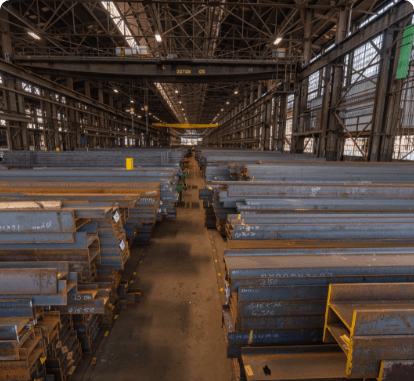
In 2020, amid the Covid-19 pandemic, the global steel market was estimated at 1.7 billion metric tons. By 2026, this is expected to grow to [2.2 billion metric tons](https://www.globenewswire.com/news-release/2021/10/18/2315712/0/en/Global-Steel-Market-to-Reach-2-2-Billion-Metric-Tons-by-2026.html). Steel has become one of the most essential materials across a number of industries in today’s world.
Being such a versatile material, there are a huge number of ways steel can be used. A good understanding of the capabilities and options when it comes to steel is essential. Bushwick Metals is a market leader when it comes to steel supply in NJ. If you want to know about the products and services we offer, keep reading.
## Types of Steel
Steel is an alloy of iron and carbon, but various types can be made. The amount of carbon, and additional [alloying elements](https://www.azom.com/article.aspx?ArticleID=13089), determine the type of steel. The manufacturing processes used can also affect the final product.
### Carbon Steel
The carbon content of [carbon steel](https://www.bushwickmetals.com/high-carbon-steel-vs-low-carbon-steel/) must range from 0.05 to 2.1 percent. It is named as such due to an almost complete lack of other alloying elements. Carbon steel is split into [three categories](https://matmatch.com/learn/material/carbon-steel): low carbon, medium carbon, and high carbon. These contain roughly 0.3%, 0.6% and 1.5% carbon respectively. Carbon steel is widely used for many applications, including buildings, bridges, cars, pipelines, and tools.
### Alloy Steel
[Steel can be alloyed](https://www.bushwickmetals.com/difference-carbon-steel-vs-alloy-steel/) with other metals to produce certain characteristics. Metals such as nickel, aluminum, and copper help to make the steel more corrosion/rust-resistant. They are also relatively cheap elements to include. Common uses of alloy steel include ship hulls, car parts, pipelines, and mechanical projects.
### Tool Steel
As you can probably guess, this type of steel is named as such because it is commonly used to make tools. Some common elements added to this are tungsten, molybdenum, and cobalt. These make the steel very tough as well as heat resistant.
### Stainless Steel
Possibly the most well-known type, stainless steel has a distinct luster, so it is not uncommon for it to be used for aesthetic purposes. The main alloying element is chromium, usually 10 to 20%. This helps make it corrosion/rust-resistant and makes it easy to mold during the fabrication stage. The ease of manipulation makes it a common choice for surgical equipment, silverware, home applications, and cladding on buildings.
## Bushwick Metals Products
Bushwick has everything you need when it comes to NJ steel supply. Over the years, as the company has grown, so too have the products we can produce.
We readily stock a [number of products](https://www.bushwickmetals.com/products/), including:
- Rebar
- Angles
- Beams
- Bars
- Channels
- Expanded metal and grating
- Decking
- Sheets
- Tubing
- Piping
- Plates
- Heavy structural parts.
For more unique applications, we are also able to provide a large number of special-order products from all over the world.
## What Are Value Added Services?
One of the main goals at Bushwick is to be able to handle all of your needs when it comes to steel. As such we offer a wide number of services to provide solutions for all applications.
- **Saw cutting** – the capability to cut beams up to 44″ flange size, 24″ x 44″ bundle sizes, and lengths up to 70′
- **Plate processing** – facilities to perform drilling, tapping, milling, countersinking, carbide scribing, oxy-fuel cutting, and high-definition plasma cutting
- **Shearing and bending** – we can cut sheets from 16 gauge to 5/82 thick, and bend sheets up to 1/2″ thick and 12′ long to almost any shape required
- **Section bending** – able to bend bars, beams, angles, channels, pipes, tubes, and tees to almost any shape
- **Cambering** – multiple cambering lines to camber beams up to 40″ wide
- **Tee splitting and straightening** – rotary-mechanical shear and roll-straightening device to split tees and make them as straight as possible
- **Custom roll formed floor and roof deck** – we can roll type B 1.5″ roof deck and 1.5″ floor deck from 16 gauge to 22 gauge, painted or galvanized
All Bushwick staff are fully trained and dedicated to ensuring all work is carried out to the highest standards. Bushwick warehouses run around the clock, so meeting even the tightest time requirements is no issue.
## More Than Just Steel Supply in NJ
Bushwick has been working with steel for over 100 years. As such, we have an excellent understanding of the steel industry. Our main goal is to support your success. We want to go beyond just delivering high-quality products and offering excellent service.
If you are in need of any assistance with inventory planning or supply-chain support, the team at Bushwick is always happy to do what we can to help. Lead times, international purchasing/shipping processes, and market states are aspects that can be difficult to understand. Through these, we can predict future pricing trends to give ourselves, and you, an edge when it comes to purchasing decisions.
Materials management is another area we can provide expert advice in. Proper planning, purchasing, storage, and distribution are key to achieving success in your business. We offer next day steel delivery across the whole of New Jersey. With such a streamlined chain supply, you won’t need to worry about storing large amounts of steel. This helps in terms of saving on storage space and reducing aged inventory costs. You can also worry less about the financial risks that come with making large inventory investments.
## Whatever You Need
This is just a broad overview of what Bushwick has to offer. Over a century of experience has made Bushwick one of the leading suppliers of steel across the South, Northeast, and Midwest United States.
If you are in need of reliable steel supply in NJ and want to find out more about our products, services, or delivery, [click here](https://www.bushwickmetals.com/contact/) and let us know how we can help!
[Back to News / Blog](https://www.bushwickmetals.com/news)
## Contact Us
- First Name\*
- Last Name\*
- Email\*
- Phone Number\*
- Company Name
- Website URL
- Message
- Upload a Drawing
Drop files here or Select files
Max. file size: 64 MB, Max. files: 5.
- Agreement\*
- [ ] Agree to Terms
- CAPTCHA
16201
[iframe](about:blank)
### Approvals
[](https://www.fmapprovals.com/)[](https://marks.ul.com/about/ul-listing-and-classification-marks/)[](https://www.sdi.org/)[](https://icc-es.org/)[](https://www.ul.com/services/environmental-product-declaration-epds-certification)
Notifications# Structural Steel Grades Explained
May 2, 2022 in
Blog / Structural Steel

On the subject of structural steel grades, many people get confused about which one to use and why it matters. Structural steel is its own category because of three important reasons. The geometry, the composition of the metal, and the size. I-beams are a classic example of what people expect when they see structural steel, but there are many other shapes as well.
The [first standard](https://www.structuremag.org/?p=17127) for structural steel goes back to the formation of the American Society of Testing Materials ( [ASTM](https://www.astm.org/)) and the first standard for structural steel used for buildings, the A9 standard. This standard is over 100 years old, published in 1900.
## Structural Steel Grades: Why So Many Standards?
You may wonder why there are so many structural steel grades, and why bother buying steel of a certain grade when there’s an “equal grade” more accessible.
Common structural steel grades follow a number of standards that govern corrosion, mold growth, fire resistance, strength, constructability, and other characteristics. Steel has fantastic strength to weight ratios, but without standards, you’ll never know what you’re going to get.
You know, for example, an A572-50 is a high-strength low alloy structural that’s made using hot-rolling. Also it can support a [minimum yield strength](https://www.engineersedge.com/material_science/yield_strength.htm) of 50 ksi or 50,000 psi, which is another important point. You know it’s an iron or steel alloy from just looking at the number prefix, and the rating — if you can read your standards correctly.
Knowing that material went through fabrication in a standard way, with standard ingredients, will give you a standard and reliable result. This was one of the biggest problems with steel, iron, and other materials in the late 1800s and early 1900s. It prompted many organizations to form to control manufacturing and materials standards. There are other international standards you can also look to for steel, such as ANSI and SAE.
Different standards are often applied to different industries. For structural building materials, the two major standards you’ll see are ASTM and EN numbers. Two of those standards we’ll cover now.
## ASTM Standards
ASTM stands for the American Society of Testing and Materials. It’s the go-to organization for standardization in the world. Membership is voluntary and open to all interested parties. Less than 50% of a committee setting a standard can be producers of the material to stem antitrust problems.
Formed in 1898, ASTM predates the IEC, DIN, ANSI, ISO, and AFNOR associations and organizations. A group of engineers and scientists started ASTM International to solve material problems for the expanding new railroad industry.
There are five types of ASTM international standards that are specified. It includes:
- A: Iron and Steel
- B: Nonferrous Metals
- C: Ceramic, Masonry, and Concrete
- D: Miscellaneous Materials
- E: Misc. Subjects
- F: Materials for Particular Applications
- G: Deterioration, Corrosion, or Degradation
Various governments reference ASTM standards actively to enforce high product quality, safety, market access, and health. While ASTM doesn’t actively enforce compliance to their standards, many organizations require the standards to be followed when specific materials are used. It can also become compulsory when specified by an external contract by the government, a corporation, or an interested stakeholder. The US government has several regulations requiring ASTM standards to be rigorously followed.
- A36: Covers low-carbon variants of steel. A36 steel has 98% iron, 1.03% manganese, and other minor compounds. The steel can be hardened through various methods, depending on what industry it is being used in. This standard is most commonly applied for structural steel when used for large structures. Apart from the construction industry, the aerospace, automotive, oil, and gas industries also utilize it.
- A500B: For cold-formed welded and seamless carbon steel structuring tubing in square, round, and rectangular shapes. In the US, it is mainly used for hollow structural sections. Grade B for A500 needs to have a minimum yield of 290 MPa.
- A572-50: This standard is only used for HSLA (high strength low-alloy) steel. It is considered a workhorse grade of steel. Less material is required when you compare it to other steel grades in terms of strength. It is generally applicable in construction and structural applications.
- A588: This is also used for HSLA steel. It is primarily applicable in structures like bridges and buildings. However, it’s different from the A572-50 standard as the steel requires atmospheric corrosion resistance too.
- A992: Standard used for structural steel alloy. It is applicable for wide-flange and I-beams. It is the most commonly used in the construction industry.
- A6-19: This is the standard specification for rolled structural steel plates, bars, sheet piling, and shapes.
- A131-19: Specification for structural steel plates generally used in the shipbuilding industry. They need to have minimum yield strength of 34 KSI; however, this depends on the grade.
- A143: The standard for safeguarding against embrittlement of hot-dip galvanized structural steel products. It also outlines the processes that must be utilized to detect embrittlement. While embrittlement isn’t a common occurrence, this standard must be applied to ensure that the steel doesn’t fall when exposed to harsh circumstances.
- A148-20e1: The standard specification for steel castings covers carbon steel, alloy steel, and stainless steel. All castings have to undergo heat treatment through specific methods.
- A242-13: This covers HSLA steel plates, shapes, and bars, specifically for welded, bolted, and riveted construction that are used for construction where weight-saving and better durability are required.
### Standards At Bushwick
[Common I-beam standards](https://www.bushwickmetals.com/product-category/beams/) carried by Bushwick Metals are:
- A36
- A500B
- A572-50
- A588
- A992
Other standards are available though. There are ASTM standards for carbon steel, high strength low alloy steels (HSLA), corrosion-resistant HSLA, quenched and tempered alloy steels, and forged steels. All other standards that include structural steel application between A0 and A500 are:
- A6-19
- A131-19
- A143
- A148-20e1
- A242-13
But there are dozens more, including HSS (hollow structural section) standards in the A1000 standards. The ASTM International standards designated “A” are equal to iron and steel materials, and where almost all structural steel standards are. A36 is probably one of the most common standards required in using structural steel. Whatever your need for structural steel standards and sizes, availability is on request.
## CEN & European Standards
In the European economic area, you’ll also find other standards that steels need to conform to. Since we have a globalized economy, steels can conform to more than one standard at a time for given regions.
You may have wondered, looking at different products, why there’s a “CE” stamped on them, like on some electronic devices as well. The CE is a marking that stands for [Conformité Européenne](https://blog.projectmaterials.com/project-procurement/ce-marking/). French is the official language of Brussels, where the head of the EU is, so this is French for “European Conformity.”
While it isn’t a standard in and of itself, the CE marking is applied to standards that conform to the EU economic zone standards. These are not US standards, but given the international nature of construction sourcing, you may encounter plans giving two different standards that can be utilized.
European Committee for Standardization has a number of “EN” or Euronorm standards for I-beams are:
- EN 10024
- EN 10034
- EN 10162
The main standards that cover a number of other steel hardware, tubes, fabricated steel, and steel sections or plates are:
- EN 1090
- EN 10025
- EN 10210
- EN 10219
- EN 14399
- EN 15048
This is by no means an exhaustive list of standards on iron and steel, however. Because there are so many standards that seem equal, is it okay to mix your standards?
## Mixing Standards Is A Bad Idea
Often there is a mixup when looking at standards for steel, like A36 (that doesn’t specify hardware) and standards for like A325 (specifically for hardware).
You might have thought something along the lines of “the steel looks similar in specification, it should work fine!” It’s true that chemically they’re nearly identical, as well as physical properties like tensile strength. The shape is the biggest difference, as well as purpose. If you find yourself doing this, think again!
For example, the standard for Grade 5 SAE bolts has a different hex head configuration — a finished hex. A325 has a heavy hex head, so while you can probably find a Grade 5 heavy hex, you think you might be in the clear. Wrong again. The thread structure is designed for the structural integrity of a building when it comes to structural steel. Not only that, but they’re designed for heavy hex nuts, with both Grade 5 and A325 conforming to different thread size standards.
Structural bolts under ASTM also have specific requirements in mind. A307A and A307B bolts [in particular](https://matmatch.com/materials/minfm51063-astm-a307-grade-b) are shaped to their purpose. A307A and A307B have the same minimum tensile strength of 60 ksi. A307B bolts have a maximum tensile strength of 100 ksi, designed to break beneath the head should it reach this level of tension. A307B bolts are used in pipefitting flanges and designed to break before the flange.
Grade 5 bolts would destroy the much more expensive flange, and may even cause the pipe to explode if pressure builds too high, risking lives. If you have a specific structural purpose and specification like A36, it’s best to go with the specifications it’s meant to match, such as A307 or A325.
## Explained: Structural Steel Grades
Structural steel grades can be a confusing (and expensive) thing to figure out. We hope this explanation of common structural steel grades helps you understand it a little better. The truth is that without an engineering manual and experience, it’s tough to know what you need even when you understand how the standards work. Leave the engineering work to the engineers, and the sourcing work to us.
Bushwick Metals has been serving the needs of US customers in structural and decorative steels for over 100 years. We have a global sourcing network to bring any metal specification you need to your doorstep, often in only one business day. [Contact Bushwick Metals today](https://www.bushwickmetals.com/contact/) for the advice and materials you need!
[Back to News / Blog](https://www.bushwickmetals.com/news)
## Contact Us
- First Name\*
- Last Name\*
- Email\*
- Phone Number\*
- Company Name
- Website URL
- Message
- Upload a Drawing
Drop files here or Select files
Max. file size: 64 MB, Max. files: 5.
- Agreement\*
- [ ] Agree to Terms
- CAPTCHA
7902
[iframe](about:blank)
### Approvals
[](https://www.fmapprovals.com/)[](https://marks.ul.com/about/ul-listing-and-classification-marks/)[](https://www.sdi.org/)[](https://icc-es.org/)[](https://www.ul.com/services/environmental-product-declaration-epds-certification)
Notifications# 8 Uses For Flat Bars
October 4, 2021 in
Blog / Steel Bars
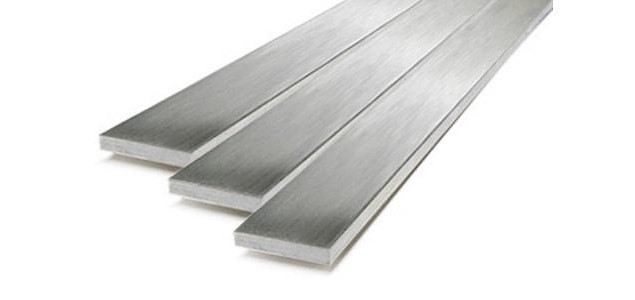
Flat bars are arguably the glue holding various components of our modern industrial world together. They are cost-effective to produce, recyclable, and remarkably versatile. Flat bars are also the cornerstone of the construction industry, owing to their low carbon content and highly functional strength. This blog presents eight primary uses for flat bars today.
## What Is a Flat Bar?
Flat bars are long rectangular-shaped metal bars commonly utilized in several structural and architectural applications. They are basic building support materials used to support ladder hangers, ductwork, overhead doors, gate latches, among other functions. Flat bars are available in various materials, including aluminum, stainless steel or [hot rolled](https://www.bushwickmetals.com/differences-cold-vs-hot-rolled-steel/), and more. Owing to their flat and sleek structure, flat bars can be easily cut and molded into the style and design you want your frame to be.
## Top 8 Uses of Flat Bars
### Frame constructions
Undeniably, flat bars make up massive parts of building frames. Steel flat bars specifically are easy to cut, drilled, and welded, making them the first choice in a range of frame construction and other applications. Flat bars can be prefabricated at the factory stage into the desired shape, meaning a more significant part of work can be done before materials reach the construction site, thereby cutting costs and overall building time.
### Improvements and additions
Flat bars are not only used during building stages. They are also an integral part of the construction process that reinforces the existing structures. Flat bars are essential for ensuring a structure remains safe for domestic, commercial, and industrial use. Flat bars can be easily cut and formed to fit, replace and support the materials already in place. They can also be used to reinforce and replace existing materials that have been damaged or those that have degraded over time due to wear and tear. Mild steel is [quite reworkable](https://fractory.com/what-is-mild-steel/) even once already used, thus allowing for easy reinforcement of parts of the structure in severe need of an overhaul.
### Industrial artwork
Flat bars are the natural choice for industrial artists and artisans working on large-scale industrial projects such as statues. They are malleable and workable, thus ideal for several art forms, décor, and industrial art pieces. High-quality steel flat bars can be utilized in just about anything from sculptures to modern shelving units. Steel sections can go through additional manufacturing processes that add a smoother finish and outer layering. This ensures the pieces of art get a cleaner, sharper appearance and shinier and reflective surfaces.
### Renewable energy
Steel flat bars are undeniably one of the prime materials for the energy industry. It is a recyclable material that boosts sustainability efforts in several renewable energy processes. Flat bars are also used as a foundation in water tower structures and as concrete reinforcing bars for foundations in turbines, generators, and water gates.
### Home appliances
Flat bars form integral parts of myriads of home appliances, from latches, overhead doors, and heaters to refrigerators and chest freezers. They are also used in washing machines, extractor hoods, microwaves, and other everyday items. Mild steel flat bars offer unmatched versatility and strength that guarantee the safety of the appliances and reliability. The flat bars used in home appliances are given robust coatings and surface treatments to boost their functionality and durability.
### Construction industry
The construction industry is arguably one of the most common industries where steel bars are mostly utilized. Flat bars can function in the same manner as hollow steel bars. They may also be fitted into several types of constructional installations in combination with hollow bars. Steel flat bars offer a high level of versatility that allows cutting to preferred dimensions, sizes, and varying lengths.
The following are some of the typical applications of flat bars in the construction industry:
**Steel parking construction works**: Flat steel bars used as constructional frames in steel parking projects provide an additional layer of durability and lightweight support. They also provide a high level of illumination in the parking area that helps drivers navigate safely in the event they find themselves driving in low visibility.
**Drilling and ductwork:** During construction, flat bars are also used in areas like welding or drilling when a frame needs to be given some form of shape. They are also used as a basic building support material to support braces for ductwork areas.
### Mainstream industrial works
Construction projects vary widely in scope. However, any large project requires high-quality materials to guarantee its integrity. The right construction materials should be durable and hard-wearing to survive all levels of abuse and extreme environments. Flat bars are a natural choice that gives your industrial project the strength to protect from damages. In addition to its strength and malleability, this metal is also highly flexible. This means industrialists will take less time to cut, drill and operate. They also ease the process of bolting and riveting.
### Fabrication works
Mild steel flat bars are a versatile product commonly used in the fabrication industry. It boasts a flat surface and square edge, making it an ideal building support material. Notably, the Grade 300 Flat Bar is most commonly used in fabrication works requiring higher structural integrity.
## Contact Bushwick Metals for High-Quality Flat Bars and Other Steel Products
Are you looking for flat bars and other steel products? Well, Bushwick Metals offers an extensive list of steel products for an array of projects. Bushwick Metals is best known for its vast inventory of premium carbon steel structural materials for various applications. As the Northeast’s leading wholesale steel distributor, we have been supplying superior quality steel flat bars and fulfilling orders for businesses working within the construction, automobile, and many other industries for over three decades now.
Whether you specialize in home appliances, construction, renewable energy, industrial artwork, frame construction, or any other project requiring versatile and robust steel materials, you can count on us to offer custom solutions for your specific projects. We have a proven track record providing high-quality products for all our customers and are committed to assisting you with your steel needs now. Our knowledgeable and experienced experts are always ready to help. Contact us today to learn more.
[Back to News / Blog](https://www.bushwickmetals.com/news)
## Contact Us
- First Name\*
- Last Name\*
- Email\*
- Phone Number\*
- Company Name
- Website URL
- Message
- Upload a Drawing
Drop files here or Select files
Max. file size: 64 MB, Max. files: 5.
- Agreement\*
- [ ] Agree to Terms
- CAPTCHA
20124
[iframe](about:blank)
### Approvals
[](https://www.fmapprovals.com/)[](https://marks.ul.com/about/ul-listing-and-classification-marks/)[](https://www.sdi.org/)[](https://icc-es.org/)[](https://www.ul.com/services/environmental-product-declaration-epds-certification)
Notifications# Steel Supply In New Hampshire \| Next Day Delivery
November 21, 2022 in
Blog / Steel Supply
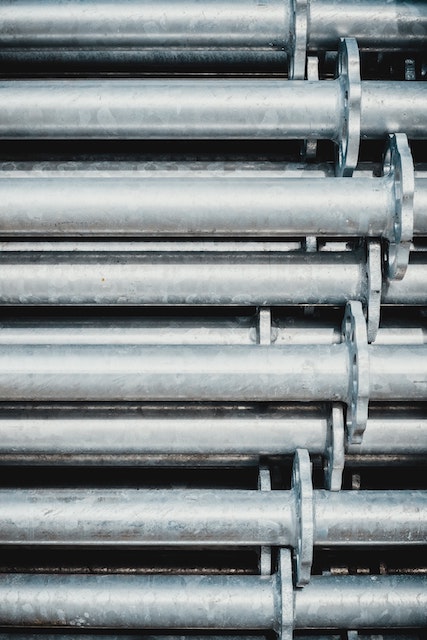
Estimates show that the global metal fabrication market will grow beyond [$473.7 billion by 2031](https://www.transparencymarketresearch.com/us-metal-fabrication-market.html#:~:text=The%20metal%20fabrication%20market%20in%20the%20U.S.%20was%20valued%20at,in%20the%20U.S.%20in%202020.). All over the world, different industries use metals for all kinds of applications. Steel is the most widely used of all metals due to the many useful properties it has. Bushwick Metals offers steel supply in NH, with a range of services to help meet your needs.
To find out more about how we can help you, keep reading.
## Why Bushwick Metals?
Bushwick Metals is a leading New Hampshire steel supplier. We’ve been in business for almost 200 years, and all of that experience lends to our capabilities. We’re constantly aiming to improve our services and meet the needs of our customers wherever possible. Bushwick Metals isn’t just a steel supplier, but also a steel fabricator. On top of the standard parts we keep in stock, we also offer several value-added services.
### Value-Added Services
Our stock range is one of the most comprehensive in the US, but sometimes our clients have projects with very specific requirements. If there’s ever anything you need that we don’t stock as standard, we can [create custom parts](https://www.bushwickmetals.com/our-industrial-metal-processing-services/) to ensure you get the perfect materials to complete your project.
#### Saw Cutting
While we keep the most popular sizes of our products in stock and ready to go, you may want something a bit more specific. We can cut bars, angles, channels, and other products down to any size you need.
#### Shearing and Bending
With our press brakes, we can bend sheets up to 1/2″ thick and 12′ long to a very high degree of accuracy. We can also shear our plates before shipping them out to you. Our shear can handle any sheet as light as 16 gauge, or plate up to 5/8″ thick and 12′ long.
#### Plate Processing
We offer a range of plate processes such as drilling, oxy-fuel cutting, and milling. All of our plate processing is done using a single machine to maximize efficiency. Our built-in nesting software allows us to minimize waste material, which is beneficial for the environment and saves on cost.
#### Tee Splitting & Straightening
We can split tees using a rotary-mechanical shear. This means we don’t use thermal cutting techniques, which can split tees by making them bow and twist.
#### Section Bending and Cambering
If you need any parts bent, we’ll handle this before shipping them out. This can include beams, bars, tees, channels, and more. Our team can bend parts to almost any shape with a high level of accuracy to ensure everything meets your exact specifications. We also have over 50 years of experience in cambering beams, allowing us to do so accurately and efficiently.
#### Custom Roll Formed Floor and Roof Deck
We can roll both roof deck and composite floor deck from 16 gauge up to 22 gauge. This can be painted or galvanized depending on what you need.
## Our Products
Bushwick Metals maintains a wide range of items in stock, so for most applications. We can have this shipped out to you, or you can simply come in and pick up whatever you need.
### Bars
We have a full range of different bars in standard shapes such as round, square, flat, and strip. All of these are available in various [types of steel](https://www.thoughtco.com/steel-grades-2340174) including hot-rolled, low-carbon, and high strength low alloy. With our years of experience, we have established some strong connections so that we can find the highest quality steel available. This ensures all of our products are top quality, regardless of the exact type of steel in question.
### Plates
Our structural steel plate selection covers various steel grades. This includes:
- A36
- A572-50
- A588
- ATSM A516-GR70
- A514
- AR235
- AR400
Having a wide range ensures we always have a suitable option, whatever the needs of our customers are. Whether you need something that has a high yield strength, is corrosion resistant, or is easily machinable, we’ve got it.
### Beams
Our structural steel beams are available in three grades: A36, A588, and A992/A572-50. Beyond these different grades, we also have a selection of profiles and sizes suitable for various projects. All of our beams as suitable for use in general structural applications, and are ready to use.
### Rebar
Like most of our products, we stock rebar in various grades and sizes. This includes A-36, A588, and M1020. We have bar sizes ranging from 1/4″ up to 1 1/4″, and can cut it to length or bend it as needed.
## Next Day Delivery
Many projects are constrained by time, so getting what you need as fast as possible can be crucial. In the construction industry, for example, if you need a part suddenly and can’t continue without it, your entire project could come to a halt. Steel supply in New Hampshire may not be completely reliable with other companies, but at Bushwick Metals, customers are our priority. By shipping steel out as soon as it’s ready, we can ensure it’s with you the day after you place your order. With our extensive experience in supply chain management, we can help ensure the items you need for your project come out to you as and when they’re needed. If we delivered everything at once, you’d need to worry about storage space on site. Instead, we can deliver parts when it’s most suitable, helping you to efficiently manage the progress of your project.
## Steel Supply in NH
For your steel supply in NH, Bushwick metals have everything you need. We maintain a huge stock of parts, can process parts to meet your exact requirements, and offer next-day delivery throughout New Hampshire.
If you’re interested in buying steel, [click here](https://www.bushwickmetals.com/request-a-quote/) to request a quote today.
[Back to News / Blog](https://www.bushwickmetals.com/news)
## Contact Us
- First Name\*
- Last Name\*
- Email\*
- Phone Number\*
- Company Name
- Website URL
- Message
- Upload a Drawing
Drop files here or Select files
Max. file size: 64 MB, Max. files: 5.
- Agreement\*
- [ ] Agree to Terms
- CAPTCHA
93112
[iframe](about:blank)
### Approvals
[](https://www.fmapprovals.com/)[](https://marks.ul.com/about/ul-listing-and-classification-marks/)[](https://www.sdi.org/)[](https://icc-es.org/)[](https://www.ul.com/services/environmental-product-declaration-epds-certification)
Notifications# Steel Rebar Sizes: How to Check the Quality of TMT Bars at Home
July 10, 2023 in
Rebar
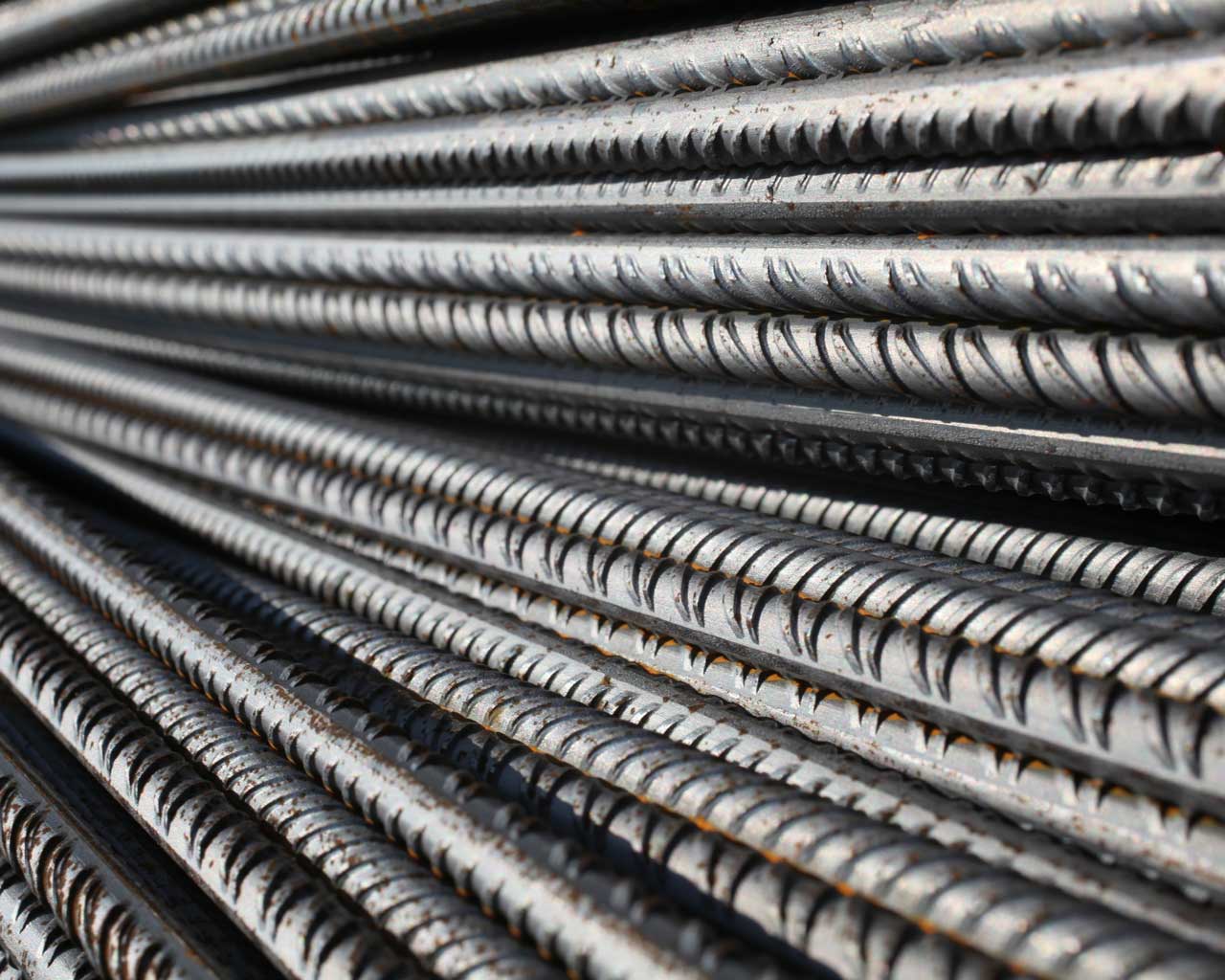
Are you getting ready to build a home? There will be [so many construction materials](https://todayshomeowner.com/foundation/reviews/best-home-building-materials/) you’ll need to secure to do it.
From concrete and brick to wood and glass, it’ll be important that you use only high-quality materials. It’ll result in a sturdier home in the end.
Thermo-Mechanically Treated bars, better known as TMT bars, will serve as the backbone of your home-building project. You’ll need to select the right [steel rebar](https://www.bushwickmetals.com/product-category/rebar/) sizes for a home and see to it that TMT steel bars are of the highest quality.
So, how can you check steel bar quality to ensure you’re using the best TMT bars in the business for your project? Continue reading to find out how to do it.
## **Start by Evaluating Checkpoints**
When you’re first checking the quality of TMT bars, begin by evaluating certain checkpoints. These checkpoints will show you whether or not TMT bars are of high quality right from the start.
Here are several of the most important checkpoints you should look at:
- TMT bars should be ISI certified and carry an ISI mark somewhere on them
- TMT bars should come with a report on chemical and physical test authenticity
- TMT bars should have national certificates like ASTM A706, BS449, or JIS G3109
- TMT bars should include a unique rib pattern that either meets or exceeds the ISI standard that has been established for a concrete bond test
- TMT bars should be free from any rust, paint, and grease
You can also sneak a peek at [steel rebar sizes](https://theconstructor.org/practical-guide/steel-reinforcement-types-grades/24730/) to evaluate the quality of TMT bars. Their standard length is typically 12 feet, and they also have diameters that are consistent.
## **Run Quality Tests**
In addition to evaluating the checkpoints we just touched on while inspecting the quality of TMT bars, there are also quality tests you can perform. It would be worth putting a TMT bar through these quality tests to see how it holds up.
There is, for example, a simple bend test you can perform on a TMT bar to test its quality. You can bend this TMT bar 180 degrees and see how it reacts. It shouldn’t crack or rupture in any way if it’s a high-quality TMT bar.
There is also a rebend test that you can perform on a TMT bar to inspect its quality. This test will call for you to bend a TMT bar 135 degrees, put it into water that is 212 degrees Fahrenheit, and bend it 157.5 degrees to see how it responds. It shouldn’t crack or rupture at all during this test, either, if it’s a high-quality TMT bar.
## **Buy TMT Bars From the Right Company**
The easiest way to guarantee you’re able to get high-quality TMT bars for a home-building project is by purchasing them from a reputable company. A company like Intsel Steel can set you up with the TMT bars you need in the correct steel rebar sizes.
You’ll notice the difference between the TMT bars we sell and the TMT bars sold by other companies. You’ll also find that we carry many other [high-quality building materials](https://www.bushwickmetals.com/products/).
## **We’ll Help You Buy TMT Bars in the Right Steel Rebar Sizes**
Do you want to make sure you’re only using the best TMT bars during your construction jobs? Intsel Steel can provide you with TMT bars you’ll be able to trust.
We can also help you choose the right steel rebar sizes for your specific projects. We’ll be your one-stop shop for many of your steel construction products and services.
[Contact us](https://www.bushwickmetals.com/contact/) now to learn more about the TMT bars you can obtain from our company.
[Back to News / Blog](https://www.bushwickmetals.com/news)
## Contact Us
- First Name\*
- Last Name\*
- Email\*
- Phone Number\*
- Company Name
- Website URL
- Message
- Upload a Drawing
Drop files here or Select files
Max. file size: 64 MB, Max. files: 5.
- Agreement\*
- [ ] Agree to Terms
- CAPTCHA
[iframe](https://www.google.com/recaptcha/api2/anchor?ar=1&k=6LdSY4oUAAAAAGDEi3d2uBuqBCntpVCNaASyqOUc&co=aHR0cHM6Ly93d3cuYnVzaHdpY2ttZXRhbHMuY29tOjQ0Mw..&hl=en&v=rW64dpMGAGrjU7JJQr9xxPl8&theme=light&size=normal&cb=djnn25s7r7u4)
70828
[iframe](about:blank)
### Approvals
[](https://www.fmapprovals.com/)[](https://marks.ul.com/about/ul-listing-and-classification-marks/)[](https://www.sdi.org/)[](https://icc-es.org/)[](https://www.ul.com/services/environmental-product-declaration-epds-certification)
Notifications# Want Next-Day Rebar Delivery? Choose Bushwick Metals
March 14, 2022 in
Blog / Rebar

Projections show that the global steel rebar market will reach a value of [$263.72 billion by 2028](https://www.globenewswire.com/news-release/2021/09/08/2293728/0/en/Steel-Rebar-Market-worth-USD-263-72-billion-by-2028-registering-a-CAGR-of-4-65-Report-by-Market-Research-Future-MRFR.html). Rebar is widely used in construction projects all over the world for several reasons. Implementing it in your project could help massively improve the final results.
To find out how rebar can help your project, and how to organize a next-day rebar delivery, keep reading.
## What Is Rebar?
Rebar is a type of metal bar often used in concrete construction. The purpose of rebar is to make the concrete stronger and more stable, giving what is known as reinforced concrete.
When enough force is applied to concrete, it can be prone to cracking and crumbling. Rebar within the concrete goes a long way towards preventing this, making structures more durable and longer-lasting.
Even when reinforced concrete does crack, the rebar will control the extent of said cracks, and provide more overall structural strength. There are other options to achieve similar results such as steel wires or [reinforcing fiberglass](https://sonainntx.com/2019/12/08/a-look-at-the-pros-and-cons-of-using-fiberglass-to-reinforce-concrete/), but rebar produces far better results, so is usually the better choice.
Rebar can be found in several materials such as:
- Carbon Steel
- Glass fiber reinforced polymer
- Zinc galvanized steel
- Stainless steel
- Epoxy coated steel
Steel is by far the most popular choice for rebar. This isn’t just due to its durability and effectiveness, but it also has a very similar thermal expansion coefficient to concrete, so it will elongate in high temperatures at the same rate as concrete. Almost any concrete construction work can make use of rebar. Concrete structures like buildings and multi-story car parks need to be as structurally stable as possible. Driveways are also often built with rebar. The weight of vehicles on concrete that is not reinforced could easily cause cracks with time.
## The Advantages of Using Rebar
The main advantage of using rebar in concrete is to provide improved strength and resistance to cracking. There are also a number of other advantages that may be relevant depending on your application.
### Thinner Concrete
As rebar makes concrete stronger, the amount of concrete used for a project can be reduced. If you are building a driveway, for example, you would need to use enough concrete to support the weight of any vehicles that would be parked there. With the inclusion of rebar, less concrete is needed to provide the same amount of strength. In some instances, this space-saving can make quite a difference.
### Longevity
The improved structural integrity of reinforced steel naturally means that it will last longer. General wear and tear will have a significantly lower effect. The steel used for rebar is often put through certain chemical processes to change the chemical structure of the steel. Annealing, for example, is typically used to increase the ductility and tensile strength of the rebar. Reinforced concrete made using annealed rebar will be able to support heavier loads for longer periods.
### Cost-Effectiveness
Longevity and durability result in improved cost-effectiveness. This is because much less maintenance is required. Cracks in a concrete structure are not something that can be ignored, so when concrete holds up better, fewer repairs are needed, and you can save on time and costs.
## Different Grades
There are many grades of rebar available. As standard Bushwick stocks rebar with bar sizes ranging from 1/4 Rd. to 1 1/4 Rb. This is equal to 0.25″ to 1.41″ in diameter. We keep the following grades of rebar in stock at all times:
**A-36** – Tensile strength = 58 KSI, yield strength = 36 KSI
**M1020** – Tensile strength = 63 KSI, yield strength = 35 KSI, Brinell hardness = 126
**A588** – more varied than the others: up to 4″ thick gives 70 KSI of tensile strength and 50 KSI of yield strength. Between 4″ and 5″ gives 65 KSI tensile strength and 46 KSI yield strength. Between 5″ and 8″ gives 63 KSI tensile strength and 42 ksi yield strength.
If none of these are ideal, we also offer machining services to fit your exact specifications.
## Benefits of Bushwick
Bushwick always keeps a wide range of materials in stock. Beyond rebar, the other metal products we offer include:
- Angles
- Bars
- Beams
- Tubing & piping
- Steel sheets
- Steel plates
- Channels
- Decking
- Grating
- More
We try to keep the most common items in our regular stock, but standard items won’t always fit your needs.
If you have a specific job that requires any custom parts, we are more than capable of machining anything you need. We have multiple locations, and can provide next-day delivery to the following states:
- New York
- New Jersey
- Connecticut
- Delaware
- Pennsylvania
- Massachusetts
- Rhode Island
- Maryland
- Vermont
- New Hampshire
- Maine
In any construction product efficiency is key. Any downtime is bad for the project, so being able to get the parts you need, when you need them, is invaluable.
Depending on the work you are doing, you might not have the space on-site to store all the materials you need. This is no problem, as you can just let us know what you need, and when you need it. We’ll make sure it gets out to you in time, and your work won’t be brought to a halt.
Bushwick can also offer value-added services, enabling us to meet even the most stringent requirements of our customers. Services like saw cutting, [plate shearing](https://www.bushwickmetals.com/benefits-of-plate-shearing/), and plate processing allow us to produce precise custom parts, exactly as you need them.
## Organizing Your Rebar Delivery
Bushwick Metals is a leading steel distributor, offering next-day service across the entire Northeast, Midwest, and South of the US. With over a hundred years of experience, it is safe to say we know what we’re doing when it comes to manufacturing and supplying steel products.
If you need to organize a rebar delivery or have any other questions about our products and services, [click here to contact us](https://www.bushwickmetals.com/contact/) today. We’re always happy to help.
[Back to News / Blog](https://www.bushwickmetals.com/news)
## Contact Us
- First Name\*
- Last Name\*
- Email\*
- Phone Number\*
- Company Name
- Website URL
- Message
- Upload a Drawing
Drop files here or Select files
Max. file size: 64 MB, Max. files: 5.
- Agreement\*
- [ ] Agree to Terms
- CAPTCHA
6125
[iframe](about:blank)
### Approvals
[](https://www.fmapprovals.com/)[](https://marks.ul.com/about/ul-listing-and-classification-marks/)[](https://www.sdi.org/)[](https://icc-es.org/)[](https://www.ul.com/services/environmental-product-declaration-epds-certification)
Notifications# The Different Types Of Structural Steel
March 1, 2024 in
Structural Steel
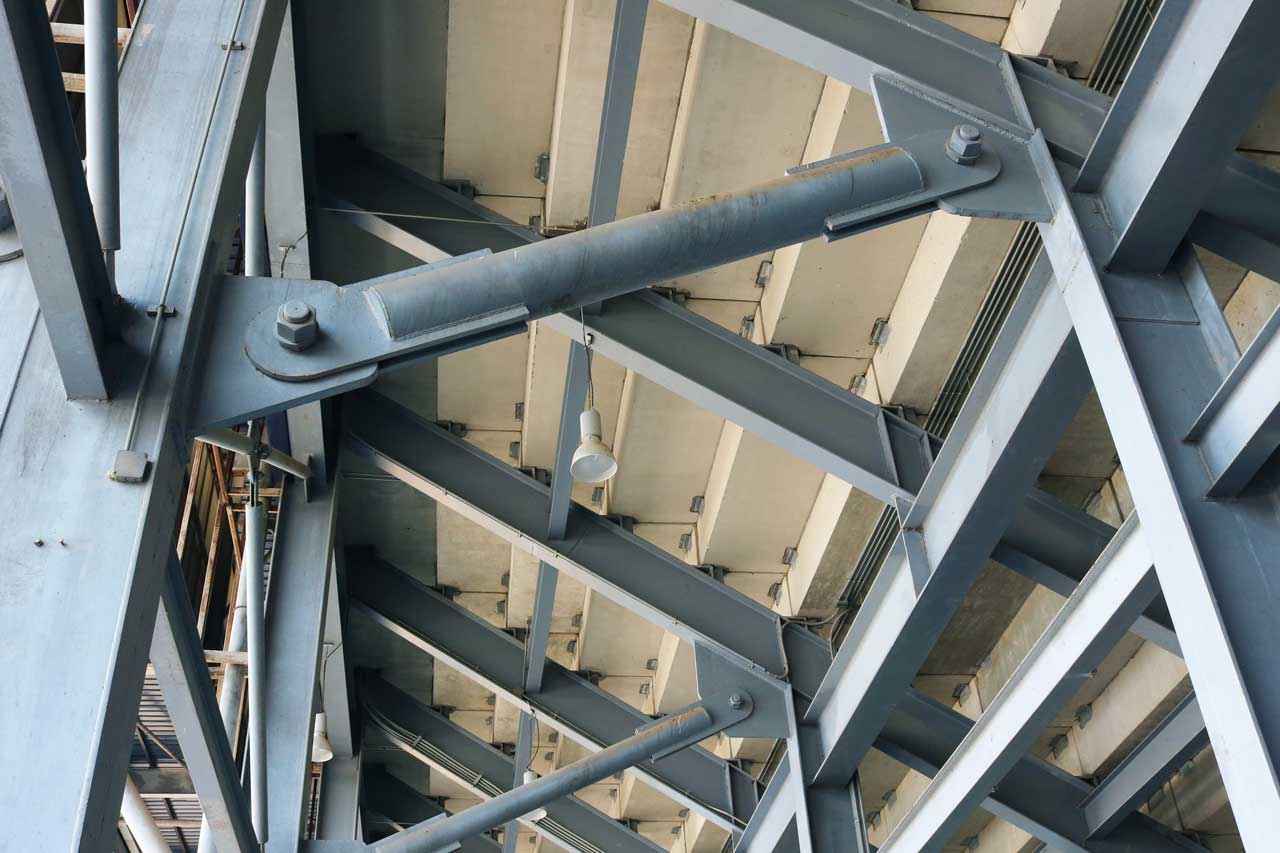
Steel is one of the sturdiest and most reliable metals that we know. With its powerful composure, longevity, and ability to be crafted into various shapes, there’s no end to what you can accomplish with the power of steel on your side.
You may not realize it every time you drive, use, build, or are located anywhere around it, but structural steel has four basic but different types. Each structure of steel type offers different levels of versatility and flexibility. Not only that, but structural steel also has many different structural shapes and best-use criteria.
That’s why it’s essential to know and understand the different structural steel types. That way, you can make a quality difference in your next project.
## **Structural Steel Types**
When you seek premium carbon steel structures or just want to use an ornamental steel plate product as a finishing touch, you need a premium product. More importantly, you need a reputable structural steel supplier that is knowledgeable and provides premium products. One of the best structural steel product suppliers has almost 200 years of service and dedicates itself to providing stellar customer service.
Every structural steel type has a repertoire of various components, structures, uses, and benefits. It’s important to understand that structural steel interplays’ potential abilities and will often depend on the shape, size, and intended use. The four basic and core types of steel are explained below.
## **Structural Steel Types of Materials**
There are various types of structural steel materials that can be used to create structural steel. Some of the more popular materials include:
Carbon Steel: One of the most popular types of steel, carbon steel is made without any additional alloying elements and has a low carbon content.
High Strength Low Alloy Steel: These metals are designed to have better corrosion resistance and contain various alloy properties.
Forged Steel: As the name implies, forged steel is made from shaping the metal while it’s in its solid state, much like how blacksmiths shaped metals in the past.
## **Structural Steel Guide**
Steel has no exact substitute. Steel is a unique material that has no equal, especially when it comes to construction. There’s just no other product or material that can come close to it in potency or durability. That’s why most construction buildings use various structural steel frames to give them versatility, support, and strength.
## **The Types of Steel**
If you have an upcoming project or need steel for a particular need, the below information will help guide you. Each one of the below types of steel has its own chemical structure and use.
### **1\. Alloy Steel**
Alloy steel is made up of various metals and is considered to be one of the most affordable. It does resist corrosion, but its strength is based on the different other metals that are in it. Most of the time, those elements are nickel, copper, and aluminum.
Most of the time, alloy steel is used in compressor colts, fan shafts, gears, pump shafts, and more similar parts.
### **2\. Stainless Steel**
Almost everyone knows about stainless steel, as this is the most used and most common type of steel. Stainless steel usually contains up to 20% chromium, which is the alloy material within it. Stainless steel is almost always resistant to corrosion.
Stainless steel is moldable and used in surgical practice equipment, silverware, and even outside cladding on industrial buildings. The trick with stainless steel is determining which of the 1000 grades of steel you want. That’s because it can almost always be customized to your needs.
### **3\. Carbon Steel**
Carbon steel may lack shine, but it has three different variations you may want to consider. The three variations include a low, medium, and high carbon steel composition substrate. In fact, carbon steel is so popular it makes up about 90 percent of all steel production.
What that means in practical terms is that low-carbon steel has about .30 percent of carbon. Medium carbon steel has about .60 percent of carbon. High carbon steel has about 1.5 percentage of carbon.
Carbon steel is often used in automotive parts and kitchen devices because of its strength.
### **4\. Tool Steel**
Tool steel is strong, hard, and often used for hammers or any other metal tool type. Most of the time, tool steel has components of tungsten, cobalt, and other such composition material. What’s more, the tool steel is very heat resistant and has versatility and durability that’s hard to beat.
### **5\. High-Strength Low-Alloy Steels**
High-strength low-alloy (HSLA) steel is often chosen over [carbon steel](https://www.bushwickmetals.com/high-carbon-steel-vs-low-carbon-steel/) as it has excellent mechanical properties and high corrosion resistance. One thing that makes HSLA steel different from other types of structural steel is its design purpose.
Most steels are made to meet specific chemical compositions. HSLA steel is instead made to meet mechanical properties.
As the name suggests, it has low levels of alloying elements. The elements that it contains often include vanadium, titanium, manganese, boron, and molybdenum. They can be added individually or in combination to achieve different characteristics.
[HSLA steels](https://www.bushwickmetals.com/high-strength-low-alloy-steel/) are particularly resistant to atmospheric corrosion. The most common applications are in structural shapes and plates.
### **6\. Forged Steels**
Forged steel is a type that has been pressed or hammered into a desired shape. This process is known as forging, and it results in steel that’s usually stronger and more durable than other types.
The forging process involves heating the steel to make it more malleable. It’s then possible to shape it by applying pressure.
When thermal and mechanical energy are applied to steel ingots or billets, the steel deforms into the desired shape. This approach is often used to produce gears, shafts, valves, bearings, hinges, and other components.
### **7\. Quenched and Tempered Alloy Steels**
These steels are ones that have gone through a specific heat treatment process. It results in strong, hard, and tough steel.
The quenching process starts by heating the steel to a high temperature, and it’s then cooled rapidly in a liquid such as oil or water. This produces a hard martensitic microstructure.
Tempering involves reheating this steel (though to a lower temperature) and allowing it to cool slowly. This softens the structure so that it becomes more ductile.
[Quenched and tempered](https://www.fidelisfea.com/post/what-is-quenching-and-tempering-in-metals-and-how-does-it-work) alloy steel is a common choice for building construction. They’re also often used for shafts/bolts and within the mining industry.
## **The Types of Structural Steel**
The types of structural steel are drawn down from the category of steel listed above. These different types of structural steel can be used for many different purposes, depending on many variables. However, most structural steel is used for construction purposes. There are various types of structural steel shapes and purposes.
### **The Shapes of Structural Steel**
There are many different shapes of structural steel. Each shape has different uses and benefits. The variety of shapes for structural steel include but aren’t limited to:
- Channel or C-Shape
- [Angle](https://www.bushwickmetals.com/product-category/angles/) or L-Shape
- [Plate](https://www.bushwickmetals.com/product-category/plates/)
- [I-Beam](https://www.bushwickmetals.com/product-category/beams/)
- Tee-Shape
- Bearing Shape or H-Shape
- Hollow Steel Section
There are more, but these are the most common. The following section discusses these shapes in more detail.
### **Channel or C-Shape**
[Channel](https://www.bushwickmetals.com/product-category/channels/) or C-shaped members of steel are some of the most common. These members are useful in many different industries, including solar, construction, transportation, and even agriculture. C-shaped parts are made from hot-rolled steel and offer a lot of strength and integrity for construction.
### **Angle or L-Shape**
These parts are so named because they are shaped like the letter “L.” These members are perfect when used as connection members. Most commonly, these members are used as a connection between “I” pieces and other steel stapes. L-shaped members provide high structural capacity and help with resistance to bolt shear. You can place L-shaped members back-to-back, creating a “T” shape, as well.
### **Plate**
A steel plate is a sheet of steel and is very versatile. It can be cut and shaped in many sizes to accommodate many different projects. These are commonly used for strengthening the foundations of a building. Steel plates help hold a lot of weight and are often used on bridges for this reason. They help make a good base for constructing buildings and are resistant to corrosion and abrasion. These are often used in constructing high rises, stadiums, bridges, and even heavy machinery.
### **I-Beam**
“I” shaped steel members resemble the letter “I.” I-shaped members are used for many types of load combinations. The only one they are not used for is pure rotation. I-shaped members are great for resisting flexure and compressions. They also help conserve structural steel compared with other shapes. These are versatile members and are the best for structural design. They also have good compatibility with other members.
### **Tee-Shape**
These members are shaped like the letter “T.” T-shaped members can be used similarly to the I-shaped members, which means they can be used in many different applications. Most commonly, they are used as connection members between I-shapes and other shapes. T-shaped members are also a perfect substitution for I-shaped members.
### **Bearing Shape or H-Shape**
These members are called so because of their resemblance to the letter “H.” They consist of 3 pieces of steel that come together in the form of an “H.” These members serve a similar function to the I-shaped members, but there are a few differences. They are usually heavier than an I-shape and are thicker in the center web, also. They can also take on more force because of this.
### **Hollow Steel Section**
Hollow steel sections are welded steel tubes that are hollow in the center. These pieces are used in buildings, bridges, and other large steel structures. They can be round, square, or rectangular. These are very common and perfect for many different applications. They are also used in manufacturing. These use less steel than other shapes and are the perfect way to save on costs.
It is the category that the structured steel is used for that makes for its shape. They are almost always very stiff and robust and will withstand some enormous loads without sagging. Ideally, they also can withstand heat treatments.
## **The Shapes of Structural Beams**
There are also a lot of different shapes that your structural steel can take. As this material is often used for steel framing, most differences involve modifying the shape for a unique location or task. Here are a few of the options you have to choose from:
American Standard Beam: This beam is commonplace in North America and comes with a rolled section and two parallel flanges.
Angle-Shaped Beam: The angle-shaped beam is shaped in an L-shape to create a 90-degree angle. They are commonly used for floor systems.
Bearing Pile Beam: These H-shaped beams are perfect for those structures built on a shallow foundation. With bearing pile beams, you can create a deep foundation system and utilize the beam structure to transfer and balance the load.
## **Project-Driven Approach for Steel Shapes and Use**
The best steel supply companies will be above to give you high tensile strength steel if you need it for a significant construction project. They will also be able to provide you with steel shapes that come with joists, beams, bars, angles, and more. You need your steel supplier to be able to be quick, efficient, and versatile.
You also want them to be budget-friendly to your business or project. The various yields of strength grades in the structural steel range from 195 to 960 megapascal (MPa). But the mass and weight density can be 8.0 g/cc.
Every type of structural steel contains various components or alloys. Some structural steel products only have iron and carbon. Some structural steel products have Aluminum, Chromium, Phosphorus & Sulfur, and other types of alloys.
## **The Right Structural Steel**
The type of structural steel that is right for your project is the one that fits your needs best. Structural steel product solutions depend on the type of steel, the structural steel types, the supply chain, and the inventory of where you make the purchase. When it’s time to get the right structural steel type for your project, reach out to Bushwick Metals.
Bushwick Metals has almost two hundred years of experience, which helps give them superb and expert customer service. They will coordinate what you need when you need it to meet your timeline. Bushwick Metals has been in business for so long because they know how to provide the quality you need and the logistics you want at a price you can afford.
That’s why with one phone call or [click](https://www.bushwickmetals.com/contact/), you can speak to a friendly and knowledgeable customer service representative today. By facilitating what structured steel products you need today, your project’s tomorrow is already assured. Make sure to check out our site to see what we have to offer you, or reach out to us to receive a free quote. We can’t wait for the chance to serve you!
[Back to News / Blog](https://www.bushwickmetals.com/news)
## Contact Us
- First Name\*
- Last Name\*
- Email\*
- Phone Number\*
- Company Name
- Website URL
- Message
- Upload a Drawing
Drop files here or Select files
Max. file size: 64 MB, Max. files: 5.
- Agreement\*
- [ ] Agree to Terms
- CAPTCHA
43121
[iframe](about:blank)
### Approvals
[](https://www.fmapprovals.com/)[](https://marks.ul.com/about/ul-listing-and-classification-marks/)[](https://www.sdi.org/)[](https://icc-es.org/)[](https://www.ul.com/services/environmental-product-declaration-epds-certification)
Notifications# Steel Angles
### Intsel Steel
[Angles - Structural Size - Up to 60ft](javascript:;) [Angles – Bar Size - 20ft to 40ft](javascript:;) [Angles – Structural Size - 20ft to 40ft](javascript:;) [Galvanized Angles](javascript:;)
## Structural-Steel Angles
Intsel Steel offers the most extensive variety of structural-steel angles available, including bar angles, structural angles, and galvanized angles in a comprehensive range of sizes and grades. Because we keep a massive structural-steel angle inventory in stock, we’re able to help our customers better manage their supply chains, reduce overhead, and avoid storage fees. When you need structural-steel angles, simply contact us for rapid delivery—often inside of 24 hours!
We source our steel from all over the world to ensure our customers have access to the highest-quality structural materials. What’s more, we offer a host of value-added services as well as next-day delivery to meet all your project needs. From saw-cutting to rolling and bending, we’ll prepare your product so that it’s ready for you to use as soon as it arrives at your facility or project site. We cater to the construction industry. Our goal is to make your job easier by providing the top-quality steel when, where, and how you need it.
For example, if you need structural-steel angle rolled or bent to a specific radius, simply let us know and we’ll ensure your structural angle is ready for use as soon as it’s delivered. Intsel Steel is capable of bending or rolling angle in both “leg in” and leg out” configurations in sizes ranging from 2” x 2” x 1/4” to 8” x 8” x 1”.
We’re ready to offer immediate delivery—often inside of 24 hours because we keep one of the industry’s most extensive ranges of structural-steel angles in stock. Because of this, our customers are able to better manage their inventory requirements, supply chain logistics, and storage costs. Contact us today and we’ll move mountains to get the products you need to you by tomorrow.
## Bar Angle and Structural Angle
Bar angles have leg dimensions of less than 3”, while structural angles have leg dimensions of more than 3”. Both are available in several grades:
- Specification A36 is a carbon steel that’s designed for riveted, bolted, or welded construction of bridges and buildings and is appropriate for general construction. It has a minimum tensile strength of 58 ksi, a minimum yield strength of 36 ksi, and offers excellent weldability, enabling high-quality welded joints.
- Specification A572 structural-steel angle is made of hot-rolled high-strength, low-alloy (HSLA) steel that’s stronger than A36 angle, and is easy to weld, form, and machine. This angle has extensive applications but must be galvanized or lacquered if they will be exposed to atmospheric conditions. A572 grade angle offers 50 ksi minimum yield strength and 65 ksi minimum tensile strength.
- Specification A588 structural-steel angle is made from another type of HSLA steel with a specific alloy composition that gives is a minimum yield strength of 50 ksi and minimum tensile strength of 70 ksi. Because it contains copper, A588 structural-steel angle offers corrosion resistance from atmospheric conditions, making it last longer and giving it an extensive range of applications.
- Grades A709 or AASHTO M270 steel angle is available upon request.
Bar angle is stocked in sizes ranging from 1/2” x 1/2” x 1/8” to 21/2” x 2-1/2” x1/2”
Structural angle is stocked in sizes ranging from 3” x 2” x 3/16” to 8” x 8” x 1-1/8”
## Galvanized Angle
This component is structural-steel angle that has been hot-dip galvanized according to the A123 specification. Our steel products are galvanized through immersion in a zinc bath, which creates a bonded alloy coating on the components. This coating is affordable, durable, maintenance-free, and corrosion-resistant, making it appropriate for applications in which the metal will be exposed to the atmosphere. Any of our hot-rolled steel angle can be galvanized. Our galvanized angle is available in sizes ranging from 1-1/4” x 1-1/4” x 1/8” to 8” x 6-1/2” x 1/2” with 20 ft and 40 ft in-stock lengths.
### Approvals
[](https://www.fmapprovals.com/)[](https://marks.ul.com/about/ul-listing-and-classification-marks/)[](https://www.sdi.org/)[](https://icc-es.org/)[](https://www.ul.com/services/environmental-product-declaration-epds-certification)# Top 11 Rebar Fabrication Companies On The East Coast
December 21, 2020 in
Blog / Rebar
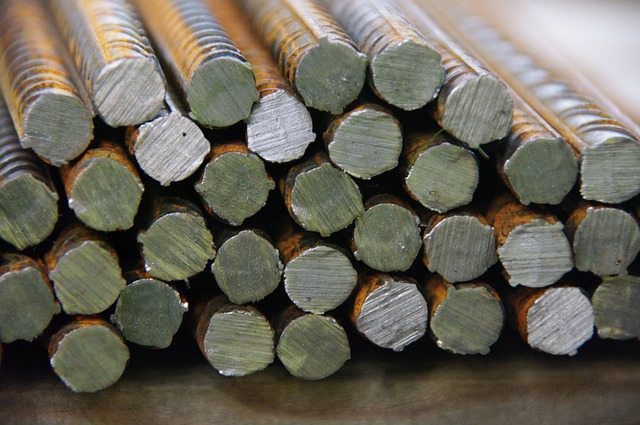
When you need a component fast, it’s helpful to shop locally. Rebar fabrication companies on the east coast ensure eastern clients have the rebar they need, when they want it, without having to worry about shipping delays or added costs.
Here are our picks for the top 11 rebar fabrication companies on the east coast, so you can find a partner that suits your needs.
## 1\. Bushwick Metals
[Bushwick Metals](https://www.bushwickmetals.com/index.html) is an excellent choice for anyone looking for a top-notch fabricator serving the east coast. We pride ourselves on our dedication to our clients, offering more than only top-quality metal. Our company provides complete solutions to help our customers succeed.
You will find rebar of the highest quality in our inventory, fabricated to your specifications. At the same time, we will work with you to promote success and growth in your business. We do so with innovative solutions to supply-chain challenges, our focus on next-day delivery, and less-than-truckload service. We also offer credit extension and our extensive inventory goes beyond rebar.
Consider us your trustworthy, reliable, and responsive one-stop-shop, with deep industry experience and connections. It’s easy to get in touch with us. [Request a quote online](https://www.bushwickmetals.com/rfq.html), give us a call at [855-446-8735](tel:855-446-8735 "Contact Us by Phone 855-446-8735"), or email us at [sales@bushwickmetals.com](mailto:sales@bushwickmetals.com).
## 2\. OSCO Group
The [OSCO Group](https://oscoconstructiongroup.com/) is a major conglomerate serving many areas, including the eastern United States. Their rebar division serves large scale industrial to smaller retail projects, from Canada to the Caribbean. You’ll find this company under the names Ocean Steel Rebar and Allstar Rebar. OSCO also focuses on concrete and construction, through their various companies.
## 3\. Adelphia Metals
[Adelphia Metals](https://adelphiametals.com/) started in Cherry Hill, NJ. Originally, it only sold rebar along the east coast. They now serve the country with six sales offices, supplying rebar and wire mesh in standard grades and lengths. You’ll also find non-typical length material, coated rebar, and other less common materials.
## 4\. SRI
[Southeaster Reinforcing, Inc.](http://srirebar.com/), provides rebar and wire mesh to the construction industry. The company is located in Jackson, Tennessee. SRI services the entire United States, including the east coast, offering services and products to companies of all sizes.
## 5\. Bloomsburg Metal Company
[Bloomsburg Metal Company, LLC](https://www.bloomet.com/) is based out of Wilkes Barre, PA. From there, they custom cut and fabricate metal, including rebar and accessories. Their products include plain rebar and epoxy coated rebar in various sizes and lengths.
## 6\. R.W. Sidley, Inc.
[RW. Sidley](https://www.rwsidley.com/) is mostly focused on concrete for residential and commercial projects, but they do provide related concrete products, including rebar. The company is based out of Ohio, with several locations in that state, as well as a handful of locations within Pennsylvania.
## 7\. Harris Rebar
[Harris Rebar](http://www.harrisrebar.com/) is a fabricator, installer, and distributer within the United States and Canada, with more than 70 locations. Like OSCO, this is a major conglomerate versus a smaller, more familiar business. Along with rebar, they provide post-tensioning, supply solutions, wire mesh, and other concrete reinforcing products.
## 8\. Infra-Metals
[Infra-Metals](https://www.infra-metals.com/)’ locations extend along the east coast, from New England to Florida. Infra-Metals stocks rebar from #3; to #8; in 20-foot lengths as part of their offering. They are a member of the Reliance Steel and Aluminum Company family.
## 9\. Upstate Rebar
[Upstate Rebar](https://upstaterebar.com/) is based out of New York, specifically Lancaster, NY, and Cheektowaga, NY. They fabricate and supply rebar, wire mesh, bar supports, accessories and anchor bolts, through their 30,000 square foot facility in Lancaster.
## 10\. Trinity Rebar
[Trinity Rebar](https://www.trinityconstructionproducts.com/) serves West Virginia, Kentucky, and Ohio, fabricating and distributing reinforcing steel. They stock rebar in the most common grades, sizes, and lengths, as well as offering installation, detailing, and estimating.
## 11\. Salit Speciality Rebar
[Salit Specialty Rebar](https://stainlessrebar.com/), or SSR, is based out of Buffalo, NY. SSR has a special focus on manufacturing stainless steel rebar that withstands chloride attack from man-made sources and natural sources, from road salt to sea spray. Their fabrication plants are in Niagara Falls, NY, and Buffalo.
## Choosing Your Rebar Fabrication Company
Rebar fabrication companies play an important role in many industries and applications, from small scale construction to very large projects. Choosing a fabrication company that can meet your needs quickly and cost-effectively is important to the overall success of your project, and your business. We’re here to help you figure out what you need, and the best way to get it. We hope this list was helpful.
From small orders shipped with no minimum for regular customers to fulfilling major fabrication requests, Bushwick Metals is your partner in all things rebar. Get in touch today for more information about rebar and how you can get what you need. Contact us with [a request for a quote](https://www.bushwickmetals.com/rfq.html), give us a call at [855-446-8735](tel:855-446-8735 "Contact Us by Phone 855-446-8735"), or email us at [sales@bushwickmetals.com](mailto:sales@bushwickmetals.com).
[Back to News / Blog](https://www.bushwickmetals.com/news)
## Contact Us
- First Name\*
- Last Name\*
- Email\*
- Phone Number\*
- Company Name
- Website URL
- Message
- Upload a Drawing
Drop files here or Select files
Max. file size: 64 MB, Max. files: 5.
- Agreement\*
- [ ] Agree to Terms
- CAPTCHA
63229
[iframe](about:blank)
### Approvals
[](https://www.fmapprovals.com/)[](https://marks.ul.com/about/ul-listing-and-classification-marks/)[](https://www.sdi.org/)[](https://icc-es.org/)[](https://www.ul.com/services/environmental-product-declaration-epds-certification)
Notifications# Hot Dipped Galvanized Steel Pipe At Bushwick Metals/Intsel Steel East
February 18, 2022 in
Blog / Galvanized Steel / Steel Tubing
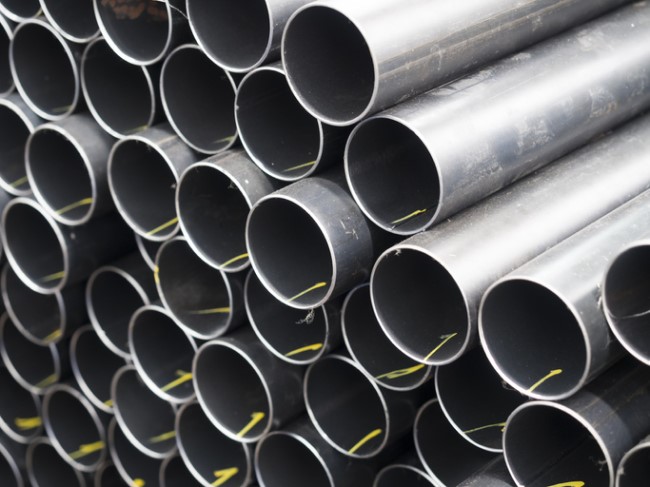
If you work in an industry that installs or utilizes piping, you know how important reliability is. It means [improved safety](https://aopl.org/Stories/pipeline-performance-report-shows-continued-safety-reliability-improvements) as well as increased production. It can be the difference between successful transport of liquids or gases and disaster.
With so many different components on the market, it can be difficult to determine which is the best piping for any given project. Fortunately, there are a few products that stand out above the rest. Hot dip galvanized pipe is one of them.
There are many advantages to zinc-galvanized piping. The information below will go over them as well as the preparation and coating processes. It will help you determine if galvanized pipe is the right product for your business needs.
## What Is Galvanization?
While steel is a very durable metal with a high tensile strength, without protection, it will rust. Galvanization is the process of [adding a protective layer](https://chem.libretexts.org/Bookshelves/Analytical_Chemistry/Supplemental_Modules_(Analytical_Chemistry)/Electrochemistry/Exemplars/Corrosion/Galvanization) of material–usually zinc–to steel or iron. This strengthens the metal and protects it from rust and corrosion.
The most common method for galvanizing metal is hot dipping. As the name suggests, it involves dropping the metal into a molten zinc solution to coat it.
First, the steel surface is cleaned to ensure it is free of any contamination. It is often degreased by dipping it in hydrochloric acid. This also helps remove rust, welding slag, paint, or any other unwanted materials. Next, technicians dip the steel in zinc that is heated to well over 800 degrees Fahrenheit. Zinc alloy layers form on the steel and then cool to form a solid coat. Finally, metal workers inspect the finished product. They look for uniformity of coating and inspect the thickness of the layers. Sometimes they perform basic physical or chemical tests to determine the quality of the coating.
## Advantages of Hot Dip Galvanized Steel Pipe
There are several benefits to zinc galvanization. Here are the main ones to consider.
### Durability
Galvanized steel will last many decades–depending on the conditions in which it is used–much longer than many other piping products. For heavy industrial uses, you can expect it to last 15 or 20 years. You could get more like 30, 40, or even 100 years from the piping for residential uses. Zinc is very strong and has a very low rate of corrosion. It helps Galvanization protect the underlying steel in three distinct ways.
#### Physical Barrier
The most obvious way zinc protects the metal piping is by creating a robust physical barrier. Zinc is a strong metal itself and is resistant to cracking or chipping. Other sealants are not as strong. When damaged, they can expose the steel to water or moisture in the air, which can cause corrosion. Hot dip galvanized pipe is completely coated to create a singular layer and can provide up to seven times the strength of organic coatings.
#### Corrosion
Another way galvanization provides protection is from corrosion. The most prominent and rapid way corrosion happens in metals is when two come into contact with one another in the presence of an electrolyte, like saltwater.
One metal acts as an anode and the other as a cathode. The anode corrodes more rapidly, while the cathode corrodes slower than it otherwise would. When galvanized, the zinc coating, in contact with the base steel, acts as the anode. This slows the corrosion rate of the cathode metal (the steel). It is easy to see how this is preferable to organic or plastic coatings. This “ [sacrificial protection](https://www.sciencedirect.com/topics/engineering/sacrificial-anode)” means that, given the presence of an electrolyte, the zinc will corrode much faster than the underlying steel. Also, it is much easier to repair and replace the damaged zinc coating than the entire pipe itself should outer corrosion occur.
#### Sideways Creep
Finally, zinc protects against a type of corrosion known as “sideways creep.” This involves rust deposits accumulating and spreading underneath the paint coating. This causes it to peel and flake. Zinc is resistant to this dynamic. So, any corrosion remains localized and is easier to address.
### Cost
Longer-lasting piping translates to economic benefits down the road. You save not only on the product itself but offsetting labor costs associated with replacing corroding pipe. It also means you don’t have to shut down operations to do repairs or replacements. Galvanized steel pipe is also much more affordable to produce than other long-lasting metals, like stainless steel. This is in part because these alternatives require a lot of labor and many steps to produce.
### Efficient Preparation and Inspection
Galvanization also requires very little preparation of the steel pipe’s surface. While the metal should be free of dust or debris, no other steps are necessary (other than minor decreasing ones mentioned above) to ensure the zinc coating adheres to the surface.
The galvanization process–including preparation, dipping, and drying–is very quick. Also, it is not harmed by humidity, so that you can do it in almost any climate or weather condition. Galvanized steel pipe is much easier to inspect than other coated pipes. The shiny sheen the process leaves behind makes it simple to identify imperfections or deficits in the evenness of the coating.
## Find Hot Dip Galvanized Pipe Near You
Now that you have an idea of the advantages of hot dip galvanized steel, you can determine if it’s right for your construction needs. Be sure to find a reputable distributor that has a lot of experience in the galvanization process to ensure you’re getting a quality product.
For almost 200 years, Bushwick Metals has been the Northeast’s leading wholesale steel distributor. We carry a vast inventory of premium carbon steel products, including hot dip galvanized pipe. [Reach out to us today](https://www.bushwickmetals.com/request-a-quote/) for a free quote or to speak with someone from our sales team about your piping needs.
[Back to News / Blog](https://www.bushwickmetals.com/news)
## Contact Us
- First Name\*
- Last Name\*
- Email\*
- Phone Number\*
- Company Name
- Website URL
- Message
- Upload a Drawing
Drop files here or Select files
Max. file size: 64 MB, Max. files: 5.
- Agreement\*
- [ ] Agree to Terms
- CAPTCHA
45848
[iframe](about:blank)
### Approvals
[](https://www.fmapprovals.com/)[](https://marks.ul.com/about/ul-listing-and-classification-marks/)[](https://www.sdi.org/)[](https://icc-es.org/)[](https://www.ul.com/services/environmental-product-declaration-epds-certification)
Notifications# Metal Decking for Concrete: Strength, Efficiency, and Versatility
September 12, 2023 in
Blog / Decking
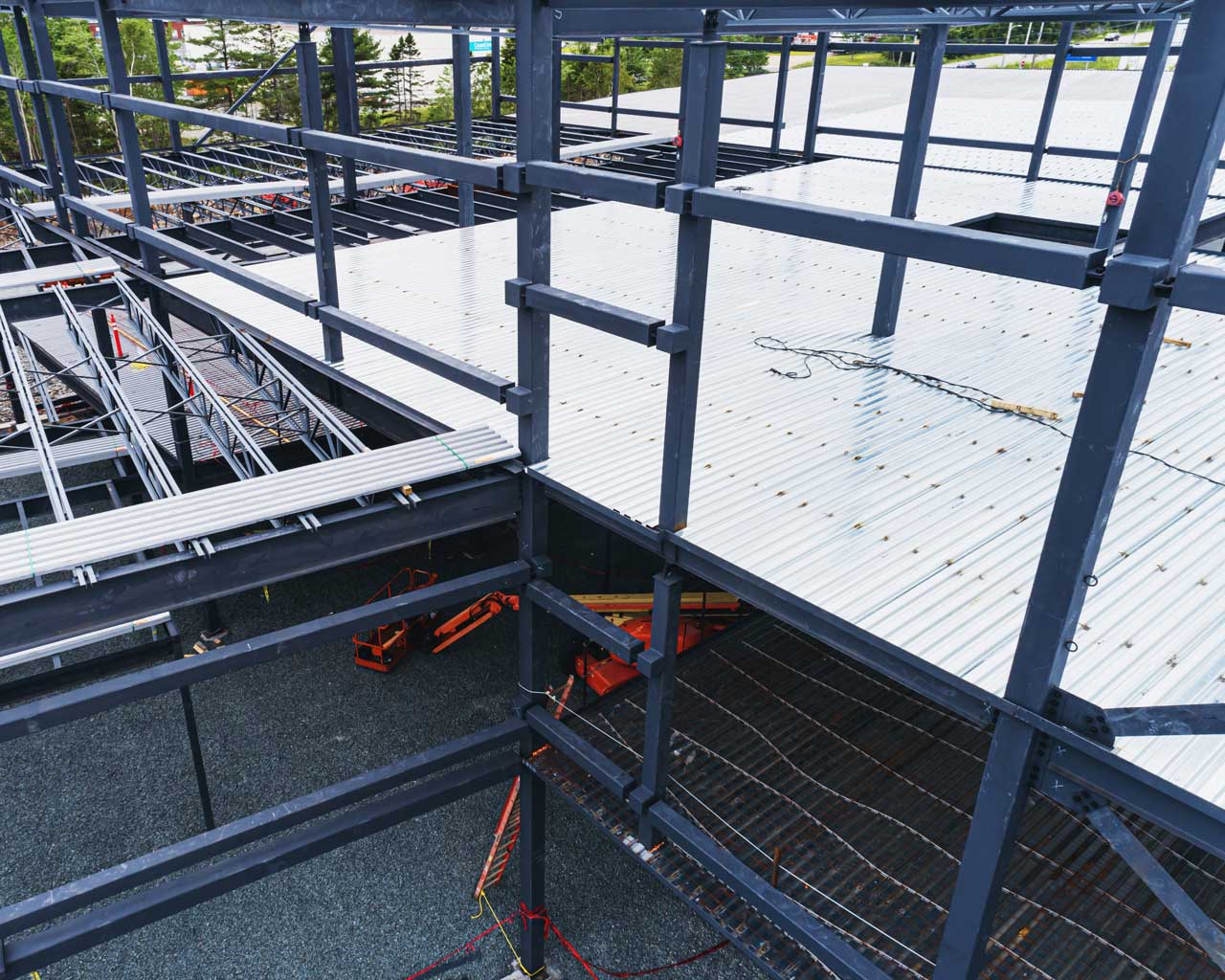
Imagine having a way to make your building project stronger, save money, and easily adjust things if you need to. Sounds like a challenging goal, right? This is where metal decking for concrete can be a real game-changer.
Metal decking is known for its great strength, top-notch efficiency, and ability to be used in different ways. That’s why people who are in the building industry like it a lot.
But it’s not just about the obvious benefits that this strong material provides. It also has a big impact on how successful your project will be in the end.
From high buildings that touch the sky in the city to sturdy bridges that cross wide rivers, metal decking is used a lot in concrete construction. So, why do people like project managers, buying agents, and company owners who do building work choose this strong solution? Let’s find out more about metal decking for concrete.
## **The Strength of Metal Decking For Concrete**
When it comes to selecting materials for [construction projects](https://worldsteel.org/steel-topics/steel-markets/buildings-and-infrastructure/), strength and durability top the list of considerations. Firstly, let’s consider the core material: steel. A metal deck made of steel is designed to withstand extreme conditions.
Whether it’s the weight of heavy machinery or the constant foot traffic in a busy commercial building, [steel decks hold firm](https://www.bushwickmetals.com/advantages-of-steel-in-construction/). The dense composition of steel grants the deck its superior strength, ensuring longevity even in demanding conditions.
Structural integrity is another key aspect of metal decking. The unique design of a metal deck, often incorporating ribs for added support, works in harmony with concrete.
Together, they form a composite deck system that amplifies the overall strength of a structure. This melding of materials creates a durable, long-lasting platform that offers more than the sum of its parts.
But there’s more to the strength of metal decking than just its material composition and design. It’s also about its resilience to environmental factors.
Metal decking can withstand exposure to extreme weather conditions, from searing summer heat to winter chill. These traits make metal decking a preferred choice for both indoor and outdoor construction projects.
## **Efficiency of Metal Decking**
Beyond just strength, metal decking for concrete offers remarkable efficiency, making it a smart choice for construction and fabrication projects. Take installation, for instance. Metal decking has a relatively lightweight nature, which simplifies transportation and placement.
This efficiency extends to the time it takes to install metal decking, which is considerably shorter compared to traditional construction methods. That means projects can move forward quickly, reducing downtime and associated costs.
Maintenance is another area where [types of metal decking](https://www.bushwickmetals.com/metal-decking-types-and-usages/) shines. Thanks to its robust nature, metal decking requires minimal upkeep.
It resists corrosion and other forms of degradation, which can help save substantial amounts on repair or replacement costs over the life of the structure. In an industry where time and cost-efficiency are crucial, these savings can be a game-changer.
The streamlined nature of metal decking also applies to the design and planning stages. It can be manufactured to exact specifications, eliminating guesswork and reducing material waste.
This attribute ensures you get exactly what you need without excess, contributing to the overall efficiency of your project. In construction, where every moment and resource counts, the efficiencies provided by metal decking can make a significant difference to the success of your project.
## **The Many Uses of Metal Decking**
The real power of metal decking for concrete isn’t just found in its strength and efficiency, but also in its versatility. As a material, metal decking can be applied to many different construction scenarios, establishing itself as a highly adaptable solution.
Think about the variety of metal decking options on the market. With different depths, profiles, and gauges to choose from, the chance to select exactly what you need is a huge advantage. This variety allows those in construction to pick the perfect metal deck for any project, be it a [high-rise office building](https://worldsteel.org/steel-topics/steel-markets/buildings-and-infrastructure/) or a single-story warehouse.
But the versatility of metal decking isn’t just about choosing the right kind. It’s also about how these decks can be customized to meet unique project needs. Whether there’s a need for pre-made holes for plumbing and electrical work or cut-outs for stairs and elevators, metal decking can be adjusted accordingly.
And there’s also the visual side of things to consider. Metal decks come in different finishes, so they can be chosen to enhance the look of a building, adding to its overall architectural design.
This ability to adapt makes metal decking a vital tool in construction. It guarantees that, regardless of the project, metal decking for concrete can be a core part of the solution.
## **Environmental Impact of Metal Decking**
Metal decking for concrete has a positive impact on the environment, and it’s more than just about being strong or flexible. One of the most significant benefits is the material’s recyclability.
Steel, the primary component of metal decking, can be recycled without losing its strength. This means old metal decks can be repurposed instead of ending up in landfills.
Besides, metal decking lasts for a very long time. Its durability means we don’t need to replace it often, which reduces waste. Plus, less repair work means less energy spent fixing or replacing damaged parts.
Finally, the process of making metal decking has been getting cleaner and more energy-efficient. It’s part of a drive to lower the carbon footprint of construction. By choosing metal decking, we’re making a choice that’s good for our buildings and our planet.
## **Staying Safe with Metal Decking**
We’ve talked about how metal decking is strong, efficient, and can be used in many ways. But there’s another really important part of metal decking: safety. Metal decks are built to stand up to fire, which means there’s less chance of serious damage if a fire occurs.
What’s more, when we’re putting the decks in place, the risk of accidents is lowered. That’s because the parts fit together accurately.
This focus on safety makes metal decking an even better choice for building projects. It’s all about staying safe and knowing your building is going to be robust.
## **Making Buildings Stronger: Intsel Steel East**
Now we know how metal decking for concrete can really change the game in construction projects. It combines being strong, efficient, and flexible.
At Intsel Steel East, we’re proud to offer many different kinds of metal decking options. With our history of coming up with new ideas, a wide range of products, and top-notch customer service, we’re ready to help with your unique needs.
We do more than just sell steel. We offer solutions that can make your projects successful. Are you ready to make your construction even better? [Get a free quote today](https://www.bushwickmetals.com/request-a-quote/) to see how we can help you.
[Back to News / Blog](https://www.bushwickmetals.com/news)
## Contact Us
- First Name\*
- Last Name\*
- Email\*
- Phone Number\*
- Company Name
- Website URL
- Message
- Upload a Drawing
Drop files here or Select files
Max. file size: 64 MB, Max. files: 5.
- Agreement\*
- [ ] Agree to Terms
- CAPTCHA
36011
[iframe](about:blank)
### Approvals
[](https://www.fmapprovals.com/)[](https://marks.ul.com/about/ul-listing-and-classification-marks/)[](https://www.sdi.org/)[](https://icc-es.org/)[](https://www.ul.com/services/environmental-product-declaration-epds-certification)
Notifications# Rebar Suppliers In PA: Next Day Delivery
July 23, 2021 in
Blog / Rebar
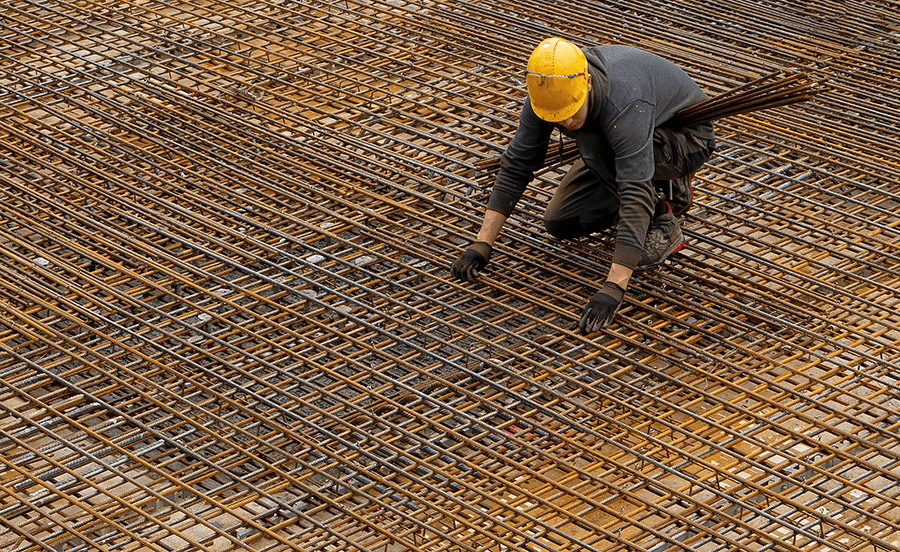
Rebar is one of the most robust and versatile pieces of building material available. They are a crucial component of many building development procedures. Construction development speeds up, and efficiency increases due to the unique properties of rebar, which combine the sheer strength and adaptability of steel and the compression strength and usability of concrete.
[Demand](https://www.grandviewresearch.com/industry-analysis/steel-rebar-market) for reinforcing bars is forecasted to increase over the next decade because of its significant benefits in concrete applications. For all of these needs and more, contact one of the preeminent rebar suppliers in PA. [Contact Bushwick Metals](https://www.bushwickmetals.com/contact/).
## What is Rebar?
A rebar, or reinforcing bar, is a steel bar often used in concrete installation. A rebar mesh goes in the form then concrete is poured over the mesh. This process reinforces the concrete, making it exponentially stronger and decreasing the rate at which it deteriorates.
This rebar mesh is a better choice than similar products, like steel wire or fiberglass, because the reinforcing bar itself adds structural support to concrete. Reinforcing bar comes in a variety of sizes and materials. Carbon steel is most often used in concrete because it is the lowest cost option and provides sufficient strength.
For builders in Pennsylvania looking for reinforcing bar for their next project, Bushwick Metals is the leading reinforcing bar supplier in the state and here is why:
## The Benefits of Bushwick
Bushwick has many locations up and down the east coast to meet any reinforcing bar needs and requirements. **They even offer next-day delivery to the entire state of Pennsylvania**. Bushwick accomplishes this and more by utilizing modern technology and fabrication techniques to efficiently and effectively produce and deliver reinforcing bars at an incredible rate.
Not only does Bushwick produce exceptional reinforcing bar and other steel and metal products on the eastern seaboard, but they also take great pride in their custom metal fabrication skills and their commitment to quality and customer satisfaction.
Bushwick solves all customer queries by its provision of end-to-end supply chain solutions and customer services. Their customer services include order estimates, custom steel processing, warehouse storage and logistical management for convenient deliveries when their customers need them.
Bushwick provides building supplies at almost any quantity, even in smaller shipments. They can supply less than a truckload at a time, and with a distribution office located in Richboro, Bushwick fulfills any orders made within Pennsylvania promptly and efficiently.
Ordering reinforcing bars from Bushwick is a straightforward and painless process. Their sales team works closely with logistics to get orders placed and on track for next-day delivery. They know how imperative it is to get orders out on time, and they take their commitments to order fulfillment very seriously.
### Other Bushwick Services
Bushwick also offers **steel takeoffs**. These takeoffs utilize industry-standard software to calculate material usage and costs based on scale drawings and designs of a project. Using this information, Bushwick calculates the quantity and reinforcing bar type needed for a given project. For ensured accuracy, a takeoff needs measurements of the footings and walls that require reinforcing bars. With this takeoff data, Bushwick also develops **placement drawings** to manifest a final schedule of the reinforcing bar quantity of a project.
Their extensive skills, knowledge and expertise also make them a terrific source of information and guidance for navigating a new project, no matter the size and scope of the project or its stage of development. Bushwick provides advice on the size, type and processing of reinforcing bars to suit any project. Their manufacturing partners provide reinforcing bars in bulk orders to meet any requirements, and they can process and store a rebar supply until a known quantity is needed.
## Rebar Sizes and Materials
Bushwick holds a complete inventory of threaded, slab, and beam bolsters and chairs in a massive range of rebar sizes and tolerances. Their rebar is perfect for concrete construction in foundations, buildings, roadways and bridges.
Their high-strength low-alloy (HSLA) structural steel reinforcing bar is corrosion-resistant for long-lasting life and structural stability. Bushwick’s Billet-Intermediate Grade-Deformed Ultimate Tensile strength rebar rates at 70,000/90,000lbs. These reinforcing bars have a minimum yield of 40,000lbs at grade 40 and grade 60 with only a quarter-inch thickness. This type of bar is round, not deformed, and the threading adds additional surface contact for more cohesion and structural integrity in any application.
No matter what rebar looks good for a project, all of the reinforcing bar from Bushwick exceeds the minimum yield strength of a product grade, meeting regulation requirements. Bushwick offers reinforcing bar [in many bar sizes](https://www.bushwickmetals.com/product-category/rebar/), including:
- ¼”
- ⅜”
- ½”
- ⅝”
- ¾”
- ⅞”
- 1”
- 1¼”
- 1⅞”
Bushwick is more than happy to reach out to their manufacturing partners if a project requires a larger or custom-sized reinforcing bar.
Slab and beam bolsters from Bushwick are the quintessential component when pouring concrete slabs to improve structural integrity and increase the longevity of a structure. Their beam bolsters support the lower area of a steel beam, and their slab bolsters add tensile strength by supporting the beam bolsters and concrete slab itself.
Bushwick, as part of their forward-thinking all-encompassing building solutions, also offers rebar chairs. These chairs fasten to and accurately position rebar, in place of hard to use and slow to install steel wire. Ultimately, chairs save labor and material costs over the total development period of a project.
## Choose Bushwick Metals for Rebar and More
Bushwick Metals is an experienced and knowledgeable supplier of a robust selection of metal construction products. They offer exemplary customer service, unique supply chain solutions, valuable industry insights and prudent project advice.
**They offer next-day delivery in Pennsylvania, provide warehouse storage for your materials and back all this with almost 200 years in the industry.**
[Bushwick](https://www.bushwickmetals.com/contact/) has the materials for any project, and their customer service keeps their clients raving and coming back. Go with a trusted rebar supplier. Contact Bushwick today at [855-446-8735](tel:855-446-8735 "Contact Us by Phone 855-446-8735") or email sales@bushwickmetals.com.
[Back to News / Blog](https://www.bushwickmetals.com/news)
## Contact Us
- First Name\*
- Last Name\*
- Email\*
- Phone Number\*
- Company Name
- Website URL
- Message
- Upload a Drawing
Drop files here or Select files
Max. file size: 64 MB, Max. files: 5.
- Agreement\*
- [ ] Agree to Terms
- CAPTCHA
6432
[iframe](about:blank)
### Approvals
[](https://www.fmapprovals.com/)[](https://marks.ul.com/about/ul-listing-and-classification-marks/)[](https://www.sdi.org/)[](https://icc-es.org/)[](https://www.ul.com/services/environmental-product-declaration-epds-certification)
Notifications# Floor Plate
| Type | Thickness | Stock Sizes (in.) | Wt. Per Sq. Ft. | Wt. Per Sheet |
| --- | --- | --- | --- | --- |
| Floor Plate | 1/8 | 48 x 144 | 6.16 | 295.68 |
### Approvals
[](https://www.fmapprovals.com/)[](https://marks.ul.com/about/ul-listing-and-classification-marks/)[](https://www.sdi.org/)[](https://icc-es.org/)[](https://www.ul.com/services/environmental-product-declaration-epds-certification)# Bulk Steel Pipe Supply At Bushwick Metals
July 29, 2021 in
Blog / Steel Tubing
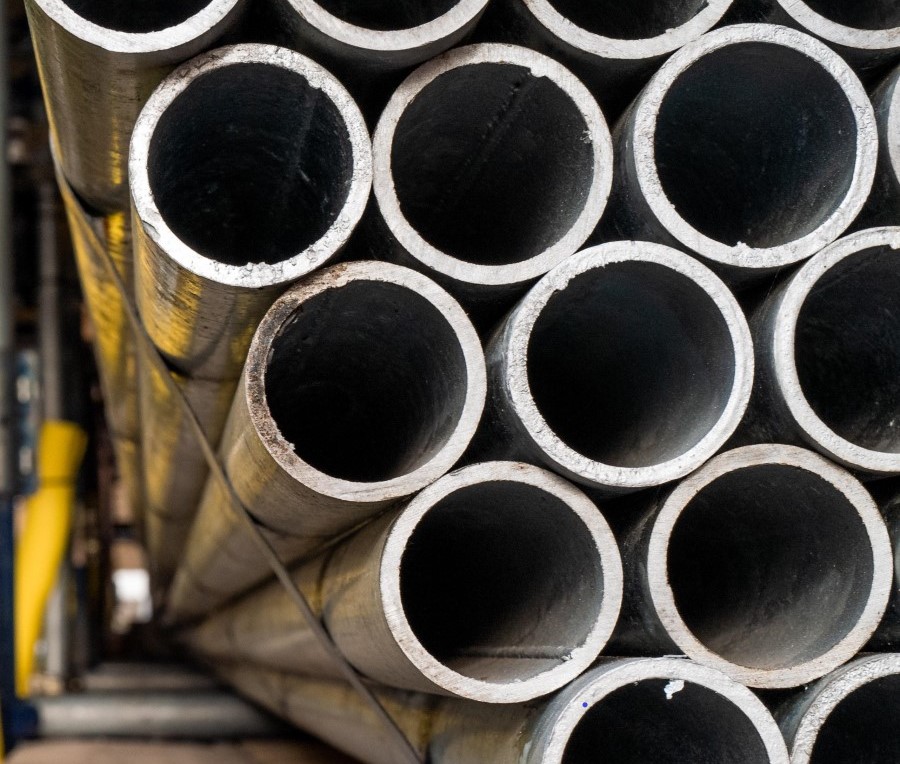
Steel pipe is one of the most widely used materials in manufacturing, infrastructure and construction. A metal pipe is primarily used to transport liquid or gas, usually underground. The demand for these materials is increasing at a faster rate than [the industry overall](https://www.ibisworld.com/industry-statistics/market-size/metal-pipe-tube-manufacturing-united-states/). So, why is demand increasing, and where can you get these materials? Let’s take a look.
## What is Steel Pipe?
Steel pipe is a pipe of varying size and shape. It is used throughout manufacturing and construction to transport liquid or gas, typically oil, gas, and water. In household applications, refrigerators use metal pipes in their cooling systems. In the manufacturing sector, steel pipes of various sizes form handrails, bike racks and bollards.
Raw steel produced in foundries makes steel pipe. Raw steel may need additional elements to achieve the exact desirable composition. This molten metal is then poured into a mold to form an ingot or run through a continuous casting machine to produce blooms, billets and slabs. Slabs and billets, then make piping.
### Pipe from Steel Skelp
Slabs are heated to 2,200 degrees F, and a scale forms on the surface of the slab. The scale is removed with a scale breaker and high-pressure cleaning. After the scale is removed and the slab is cleaned, the slab is rolled into narrow, thin strips of steel called skelp.
Skelp is then unwound from its spools, heated and then put through grooved rollers to bend the edges of the skelp upwards. The edges are inevitably bent to meet each other, forming a cylinder or pipe.
### Seamless Pipe from Billets
Billets, long square pieces of continuous steel, are used to make seamless piping, which is better for some applications than piping that has a weld line. Billets are heated until they are white-hot, then rolled until they form a solid cylinder. A piercer then punctures a hollow center according to manufacturing specifications. The billet is then crafted, through milling operations, to conform to design specifications.
### Steel Pipe Uses
Seamless and non-seamless steel pipe is found in many traditional building and construction applications. Often called steel tubes, steel pipe is used to provide additional structural integrity and strength through a process called **piling**.
Piling happens when tubes are driven into the substrate before a foundation is laid. Piling provides added stability for taller structures or when the substrate is unstable.
Metal piping is also used to make **scaffolding poles** to create access to reach areas for workers. Scaffolding poles are constructed by linking steel pipes in a cage-like pattern that workers can climb on to safely work off elevated platforms.
## The Advantages of Bushwick Metals
Bushwick Metals is the highest quality purveyor of bulk steel pipe and steel supply along the east coast. Bushwick has many convenient locations in Connecticut, New York, New Jersey and Delaware. **They even offer next day shipping to**:
- New York
- New Jersey
- Connecticut
- Delaware
- Pennsylvania
- Massachusetts
- Rhode Island
- Maryland
- Vermont
- New Hampshire
- Maine
Bushwick stands by their promise of next-day delivery 100%. Bushwick uses modern cutting-edge industry technology, software and fabrication methods to effectively produce and deliver your bulk steel when you need it.
Bushwick not only supplies the best bulk steel pipe and other steel and metal products on the east coast, but they also take customer service satisfaction and custom order expediency seriously. You are Bushwick’s priority, and they want you to know it.
Bushwick addresses all customer questions and concerns by employing end-to-end supply chain solutions and expedient customer service turnaround times. Bushwick customer services include material and product estimates, custom steel orders, storage in their state of the art and efficient warehouses and logistical delivery and ordering systems to get materials out when you need them.
Bushwick also provides metal and bulk steel pipe in almost any quantity. They have fifty trucks making deliveries each day, and with those numbers, they can get you what you need when you need it.
Ordering bulk steel pipe is [an effortless process](https://www.bushwickmetals.com/contact/). The Bushwick sales team works in conjunction with the logistics team to expedite orders for next-day delivery. Bushwick knows how important it is to get orders out in a timely process, and they take their dedication to order fulfillment seriously.
### Additional Bushwick Services
Bushwick offers **steel takeoffs** and **placement drawings** as well. Takeoff uses industry software to calculate the amount of material needed for a project and its costs. This data is acquired by formulating scale drawings and project designs. This data is used to calculate the amount and type of steel pipe and other materials needed. Takeoff data is also used for placement drawings that predict and output a final material schedule for the quantity of material a project demands.
The experience, knowledge and skills that Bushwick has at their disposal make them the foremost source of information and advice for any project. They guide the size, type, and optional processing of any steel pipe needed for a project. Bushwick is more than happy to reach out to their manufacturing partners to custom fabricated steel pipe in single and bulk orders, and their warehouses offer material storage until the product is needed.
## Types of Bulk Steel Pipe
Bushwick Metals has a massive supply of bulk metal pipes to meet all of your construction and development needs. They have:
- Square Mechanical Tubing
- Square and Rectangular Mechanical Tubing: available in A500-B, A500-C and A513
- Rectangular Mechanical Tubing
- Structural Steel Square Tubing
- Structural Steel Rectangular Tubing
- Round Mechanic Tubing
- Light Wall Pipe: welded, black, plain end
- Standard Pipe: uncoated, coated, and galvanized
- Double Extra Strong Pipe: Plain end
- Fence Pipe and Tube – Hot Dipped Galvanized
- Fence Pipe and Tube – SS Galvanized
- Galvanized Awning Tube and Pipe
- And more!
## Start Your Bushwick Experience Today
Each of their steel pipes and tubing is available exactly when you need them. Bushwick uses modern manufacturing methodologies, logistical and delivery solutions to quickly and efficiently deliver any of their steel pipes. Go with a company you can trust. Contact Bushwick today at [855-446-8735](tel:855-446-8735 "Contact Us by Phone 855-446-8735") or email sales@bushwickmetals.com.
[Back to News / Blog](https://www.bushwickmetals.com/news)
## Contact Us
- First Name\*
- Last Name\*
- Email\*
- Phone Number\*
- Company Name
- Website URL
- Message
- Upload a Drawing
Drop files here or Select files
Max. file size: 64 MB, Max. files: 5.
- Agreement\*
- [ ] Agree to Terms
- CAPTCHA
[iframe](https://www.google.com/recaptcha/api2/anchor?ar=1&k=6LdSY4oUAAAAAGDEi3d2uBuqBCntpVCNaASyqOUc&co=aHR0cHM6Ly93d3cuYnVzaHdpY2ttZXRhbHMuY29tOjQ0Mw..&hl=en&v=rW64dpMGAGrjU7JJQr9xxPl8&theme=light&size=normal&cb=3pxanpu065it)
68923
[iframe](about:blank)
### Approvals
[](https://www.fmapprovals.com/)[](https://marks.ul.com/about/ul-listing-and-classification-marks/)[](https://www.sdi.org/)[](https://icc-es.org/)[](https://www.ul.com/services/environmental-product-declaration-epds-certification)
Notifications# About
### Intsel Steel

### The Northeast’s Leading Steel Distributor
Intsel Steel East, has a vast structural-steel inventory with and an exceptional commitment to customer service. We are known for having the widest, deepest range of steel products available in the northeast. With round the clock loading at our three strategically located facilities, we excel at rapid, often next day delivery to our loyal customers.
### Over A Century Of Service
While new to the northeast, Intsel Steel East’s acquisition of Bushwick Metals in 2019 has provided invaluable insight enabling us to better serve steel users in this region. Established in 1829, Bushwick Metals has proven to be an outstanding solution for the multitude of steel users for over a century. Bushwick Metals has SIX locations in four states along the East Coast, including three full line carbon service centers and three offices. As the Northeast’s leader in steel distribution and processing of steel products, Bushwick Metals is committed to helping our customers grow, control costs and succeed.
### Value-Added Services
To further extend the value we provide to our customers, we’ve introduced new equipment to our facilities that enables us to offer a wide range of steel-processing services. From high-capacity saw-cutting, oxy-acetylene and plasma cutting to cambering, drilling, milling, slotting and punching, we not only deliver steel products next-day, we can process them first so they’re ready for our customers immediate use.
We focus on supporting our customers’ growth not only by solving their production and cost issues, but also offering strategic industry guidance and creative financing solutions. Our customers love how we enable them to reduce costs, manage their inventory and material costs, and speed up their project timelines with the highest quality steel and processing services available.
Contact Intsel Steel today to find out how we can help your grow your company’s success and profitability.
[The Intsel Steel Difference](https://www.sss-steel.com/about-us/the-triple-s-difference)
### Approvals
[](https://www.fmapprovals.com/)[](https://marks.ul.com/about/ul-listing-and-classification-marks/)[](https://www.sdi.org/)[](https://icc-es.org/)[](https://www.ul.com/services/environmental-product-declaration-epds-certification)# Navigating the Top Steel Suppliers in Connecticut
February 12, 2024 in
Blog / Steel Supply
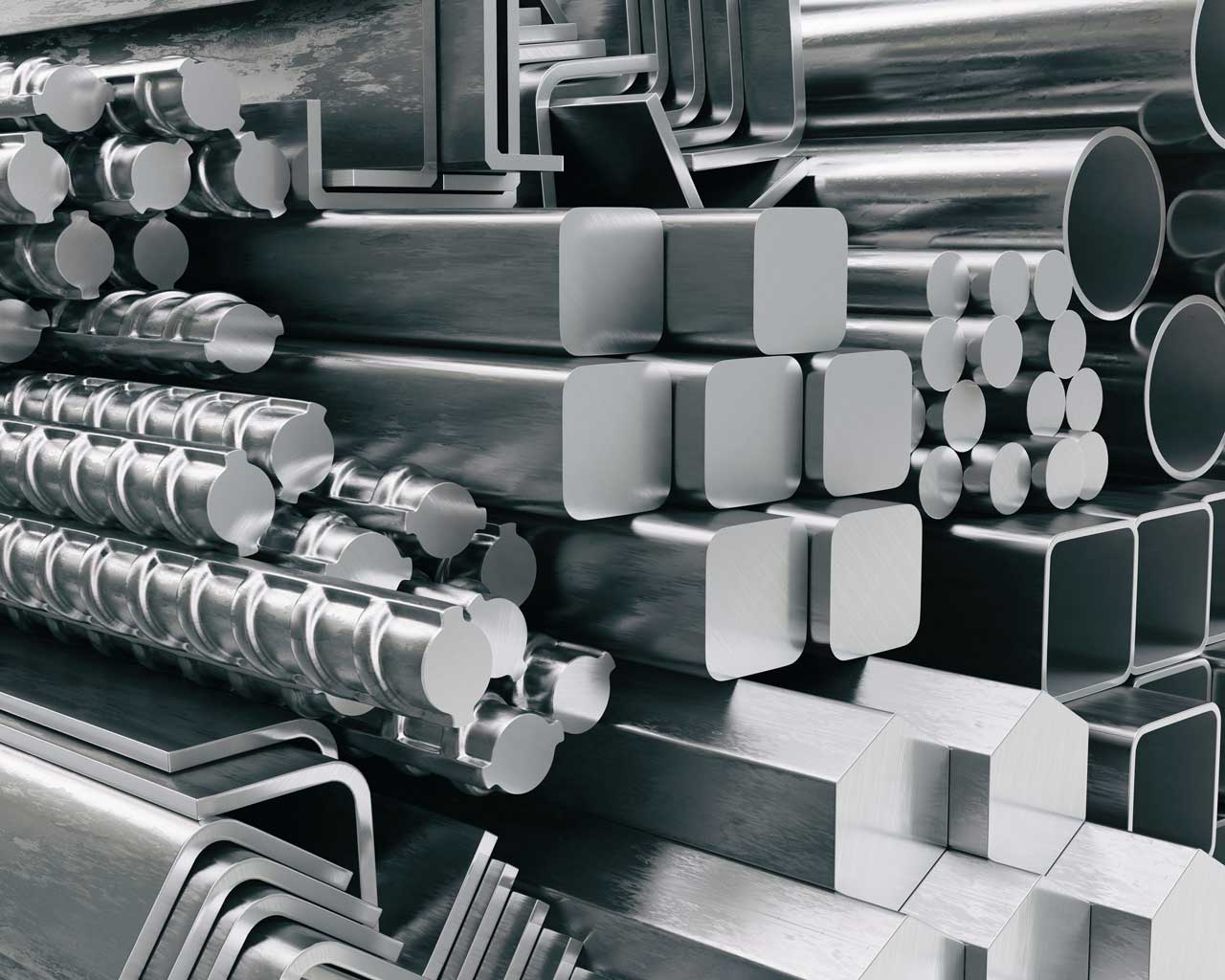
Steel: the backbone of modern construction and manufacturing. Yet the old adage ‘all steel suppliers in CT are the same’ couldn’t be further from the truth.
Enter the world of Connecticut’s steel supply industry. The stakes are high, and the impact of your choice reverberates through every beam, girder, and bolt. This article is a deep dive into the intricate dynamics of selecting a steel supplier in a state known for its manufacturing prowess and architectural feats.
Prepare to challenge your assumptions and elevate your standards. The journey to understanding the true essence of quality steel supply starts here.
## **The Right B2B Steel Supplier: Why It Matters**
Connecticut’s industries rely heavily on steel. The choice of a steel supplier plays a vital role in determining the success of construction and manufacturing projects. This decision affects:
- Project costs
- Timelines
- Overall outcomes
Recent times have seen significant shifts in steel prices. According to [recent studies](https://www.us.jll.com/en/trends-and-insights/investor/steeling-for-near-term-construction-and-supply-chain-challenges), these fluctuations have led to increased costs for construction projects.
Currently, building projects can face a 4% to 7% cost increase due to steel shortages. This highlights the importance of selecting a supplier who can navigate these market changes effectively.
The type of steel used in a project matters, as different steel types have specific properties and uses. This choice influences the project’s cost and success. Suppliers offering a wide range of steel types, like Intsel Steel East, can provide the most suitable options for various project requirements.
Complex construction projects require more than just standard steel solutions. They demand specialized designs and fabrication techniques. A knowledgeable supplier can make a significant difference in [handling these complexities](https://www.bushwickmetals.com/the-benefits-of-ordering-steel-cut-to-length/).
## **Key Points in Selecting a Steel Supplier in CT**
Imagine a partnership where your steel supplier knows exactly what your project needs. That’s the power of strong B2B relationships. These partnerships guarantee consistent quality and a reliable supply of steel.
They’re about more than just transactions; they’re about understanding and collaboration. Any supplier that excels at building these relationships is incredibly valuable. They work closely with clients, ensuring a seamless supply and understanding of project-specific requirements.
The strength and integrity of a project hinge on the [quality of the steel used](https://www.build-review.com/importance-of-using-high-quality-materials-when-renovating-your-home/). The right metal composition and strength level are crucial. They determine how steel performs under various conditions.
High-quality steel means more durability and safety for your projects. Look for a supplier that places a strong emphasis on providing top-tier steel. Their focus on quality will guarantee that your projects will stand the test of time and meet all necessary safety standards.
A supplier with a wide range of steel products brings a world of possibilities to your project. Whether it’s sheet metal or specialized steel types, having more options allows for greater flexibility and innovation in project design.
This diversity is key to finding the perfect fit for each unique application. Intsel Steel East offers an extensive selection of steel products, making them a versatile and resourceful choice for businesses in various sectors.
## **Intsel Steel East: Top Sheet Metal Supplier**
With a rich history and a deep commitment to quality, Intsel Steel East has become a go-to source for businesses across the Northeast.
What sets Intsel Steel East apart is its extensive product range. However, another impressive feat is their dedication to customer satisfaction. They’ve built a reputation for not just meeting but exceeding client expectations.
At the heart of Intsel Steel East’s success is its relentless pursuit of innovation. They consistently roll out new value-added services and improve upon their already impressive delivery services. This forward-thinking approach keeps them ahead of industry trends and aligns perfectly with the evolving needs of their clients.
One of Intsel Steel East’s strongest points is its unsurpassed inventory range. Their extensive collection caters to a wide variety of applications. This variety ensures that whether a project is straightforward or complex, Intsel Steel East has the right steel solution.
Intsel Steel East is more than just a supplier; they are a partner in its clients’ growth. Their approach goes beyond supplying steel.
They focus on helping their clients control expenses and achieve success. This philosophy has cemented their position as a leader in the steel distribution sector in the Northeast.
## **Advantages of Choosing Local Steel Suppliers**
When it comes to steel supply, proximity matters. Local suppliers offer shorter supply chains. This proximity means faster delivery times and more responsive service.
It’s a practical benefit that can significantly speed up project timelines. For businesses in Connecticut, this local advantage means getting what they need, when they need it, without the delays often associated with distant suppliers.
Sourcing steel locally can lead to potential cost savings. Reduced [transportation distances](https://www.bushwickmetals.com/steel-beam-delivery/) and times mean lower shipping costs.
This efficiency is not just about saving money. It also means less time waiting for materials and more time focusing on project execution. In a competitive industry where time is money, these savings can be a game changer.
Choosing a local supplier has a broader impact too. It supports the local economy.
When businesses invest in local suppliers, they contribute to job creation and economic growth in their community. This investment helps build a stronger, more resilient local industry.
It’s about more than just completing a project. It’s about being a part of the community and contributing to its success.
Local suppliers often provide more personalized service. Intsel Steel East, being part of the Connecticut community, understands the local market and its needs. This understanding allows them to offer tailored solutions and services.
## **Trust Intsel Steel East: Your Premier Steel Suppliers in CT**
When it comes to steel suppliers in CT, Intsel Steel East stands out. They blend quality, innovation, and customer-focused services seamlessly. Their expertise and broad product range make them ideal for various projects.
Choosing Intsel Steel East means investing in a supplier committed to your success and the prosperity of the local community.
Ready to elevate your projects with top-quality steel? Connect with Intsel Steel East.
Experience their unique blend of excellence, innovation, and community commitment. They are more than just steel suppliers in CT; they are partners in building your success.
[Request a quote today!](https://www.bushwickmetals.com/request-a-quote/)
[Back to News / Blog](https://www.bushwickmetals.com/news)
## Contact Us
- First Name\*
- Last Name\*
- Email\*
- Phone Number\*
- Company Name
- Website URL
- Message
- Upload a Drawing
Drop files here or Select files
Max. file size: 64 MB, Max. files: 5.
- Agreement\*
- [ ] Agree to Terms
- CAPTCHA
37165
[iframe](about:blank)
### Approvals
[](https://www.fmapprovals.com/)[](https://marks.ul.com/about/ul-listing-and-classification-marks/)[](https://www.sdi.org/)[](https://icc-es.org/)[](https://www.ul.com/services/environmental-product-declaration-epds-certification)
Notifications# From Factory to Facility: The Logistics of Bulk Steel Delivery
February 5, 2024 in
Blog
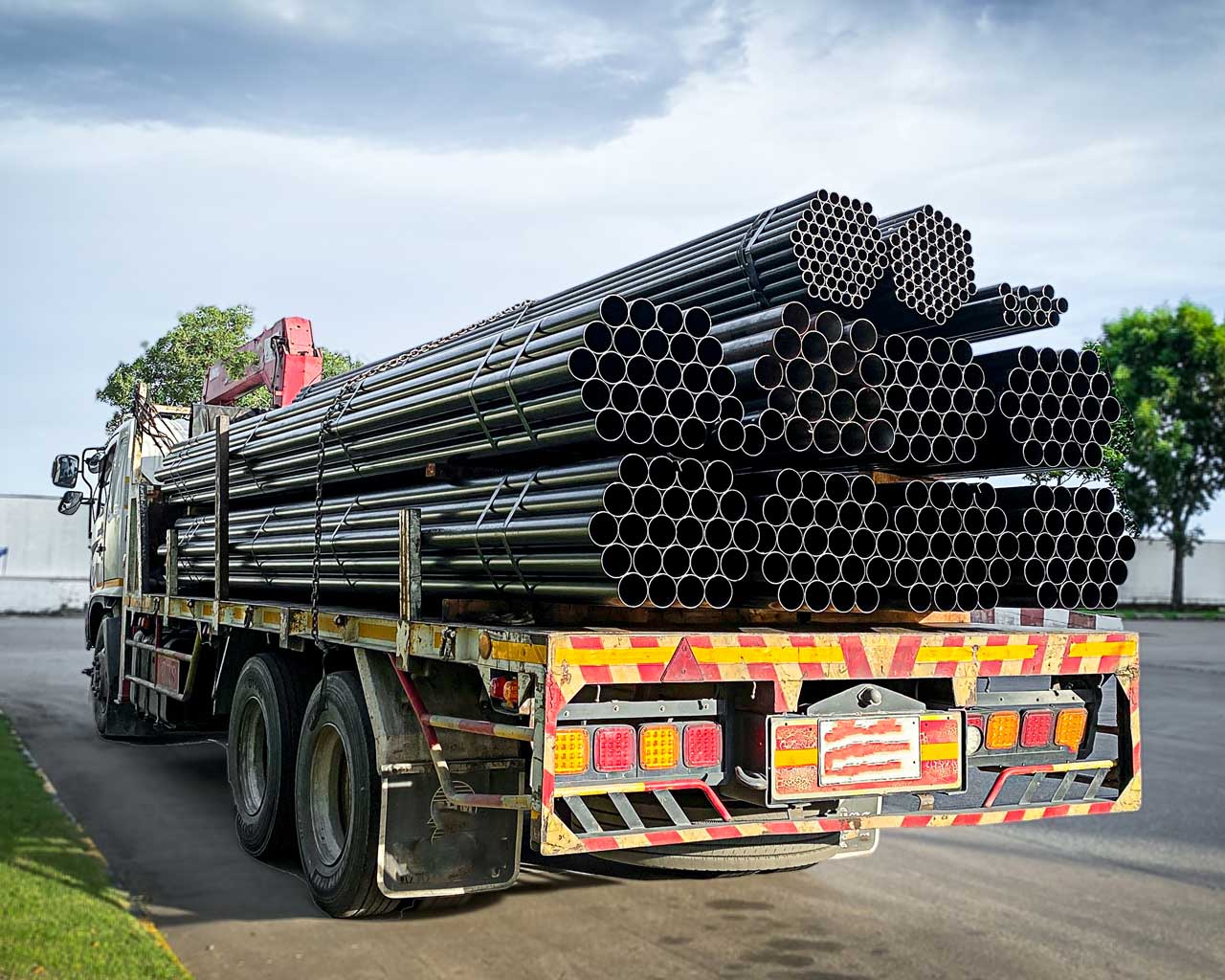
Steel is one of the best inventions when it comes to construction. It’s recyclable and [helps the environment](https://www.bushwickmetals.com/advantages-of-steel-in-construction/), it helps to save on energy costs, and it’s durable. You can use it for a wide variety of projects and applications.
But do you know what goes into bulk steel procurement? It’s important to understand the process if you want to find a steel distributor you can trust to deliver high-quality materials for your next project.
Here’s what you should know about the logistics of bulk steel delivery in your area.
## **Steel Production Process**
Bulk steel procurement begins in the factory where steel is made. [Two main industrial processes](https://www.steel.org/steel-technology/steel-production/) go into producing steel: basic oxygen steelmaking (BOS) and electric arc furnaces (EAF).
BOS starts with raw material preparation. Iron ore, limestone, and coke are crushed and washed before being fed into the blast furnace. The materials are heated to extremely high temperatures to reduce the iron ore to iron.
The molten iron goes into a Basic Oxygen Furnace where pure oxygen reduces the carbon content and removes impurities. The steel may also be further processed with other elements to make varying grades.
With EAF, recycled steel scrap is the primary material. High-powered electric arcs melt the scrap, and it is further refined to remove impurities. The refined steel is then cast into different shapes.
There are three main differences between the two practices.
First, BOS uses iron ore, while EAF uses recycled steel scrap. Second, EAF is more environmentally friendly because it uses recycled materials. Third, BOS is primarily used for much larger-scale production.
## **Bulk Procurement**
When a potential customer wants a bulk steel shipment, they will need to negotiate terms, prices, delivery schedules, and payment terms with a supplier. In most cases, bulk purchases have better terms due to the larger order size.
Your supplier will provide formal quotations detailing what you discussed with them. You’ll sign a purchase order that legally binds the two parties.
The ordering company is responsible for scheduling deliveries in line with their projected timeline. They must also make sure they have the right equipment and personnel to unload and store the bulk steel order.
[A good supplier](https://www.bushwickmetals.com/steel-angle-suppliers/) should have a quality management system in place so they can provide consistently high-quality products. They should also have years of experience in the industry so they can deal with any issues that pop up.
Find a manufacturer that has flexibility and can accommodate your needs. It also helps if you invest in high-quality products rather than purchase inexpensive alternatives that may be of lower quality.
## **Preparing for Steel Delivery**
Once a steel distributor receives an order, they need to review the various specifications and any special requirements. They check their inventory to see if they need to schedule production or if they can process it immediately.
Quality control checks verify that the product meets the required standards and specifications. They may also need to prepare quality certificates and compliance documents if the customer requires them.
Steel material will be packaged to protect it during transit. This often includes waterproofing and protective coverings. The materials should also be labeled appropriately with information such as the order number and customer name.
[Freight shipments](https://www.fedex.com/en-us/shipping/freight/packing-guide.html) may utilize packing materials such as shipping pallets, crates, and freight boxes, depending on the dimensions of the products.
## **Bulk Transport Logistics**
The supplier is responsible for arranging transportation. Depending on where it’s shipping from, this could involve trucks, ships, or even trains.
Your bulk steel order is loaded using cranes, forklifts, and other equipment. It’s secured as appropriate to avoid too much movement or becoming damaged in transit.
All vehicles are kept in good working condition and must comply with transportation regulations. In addition, they will be loaded in the most efficient way to maximize space utilization without going over the load capacity.
Accurate records of inventory levels are kept so future orders can be filled quickly and efficiently. This often involves the use of logistics software and real-time tracking.
The customer will receive a notification about the dispatch, including the delivery schedule. They may also have access to a tracking system that monitors the delivery’s progress. If there are any issues, they can reach out to customer support for answers.
Shipping documents are sent to the customer, including bills and invoices. If this delivery is international, then the supplier handles those details.
## **Bulk Steel Storage Options**
A project manager in charge of receiving a bulk steel order needs to have a designated storage area. This area should be easily accessible for loading and unloading. It should also have a level and clean surface to prevent corrosion of the steel.
You should use cranes or forklifts to unload large shipments of steel. Only trained personnel should operate this equipment.
Organize the steel by type, size, and project phase. Keep high-grade steel covered with tarps and other waterproof covers to prevent rust and corrosion.
Keep accurate records of your steel inventory, such as what has been received and what needs to be re-ordered. Site security measures like fencing and locks will be necessary to prevent theft or vandalism.
Finally, make sure you store your bulk steel in such a way that it complies with building codes and regulations. The last thing you need is to unload a huge shipment only to be forced to move it to another location.
## **Find a Bulk Steel Distributor You Can Rely On**
There’s a lot of work and logistics involved in bulk steel shipments. You can’t afford for any of these steps to go wrong, because that could mean steel goes missing, gets lost in the shuffle, or even ends up at the wrong location. Instead, you should work with a steel supplier and distributor with years of experience working in their industry.
Intsel Steel East, formerly Bushwick Metals, has offered premium steel distribution and processing solutions for over a century. [Reach out](https://www.bushwickmetals.com/contact/) to us today if you need a new supply of steel products across the Northeastern United States.
[Back to News / Blog](https://www.bushwickmetals.com/news)
## Contact Us
- First Name\*
- Last Name\*
- Email\*
- Phone Number\*
- Company Name
- Website URL
- Message
- Upload a Drawing
Drop files here or Select files
Max. file size: 64 MB, Max. files: 5.
- Agreement\*
- [ ] Agree to Terms
- CAPTCHA
8077
[iframe](about:blank)
### Approvals
[](https://www.fmapprovals.com/)[](https://marks.ul.com/about/ul-listing-and-classification-marks/)[](https://www.sdi.org/)[](https://icc-es.org/)[](https://www.ul.com/services/environmental-product-declaration-epds-certification)
Notifications# The Most Popular Types Of Metals And Their Uses
April 15, 2024 in
Blog
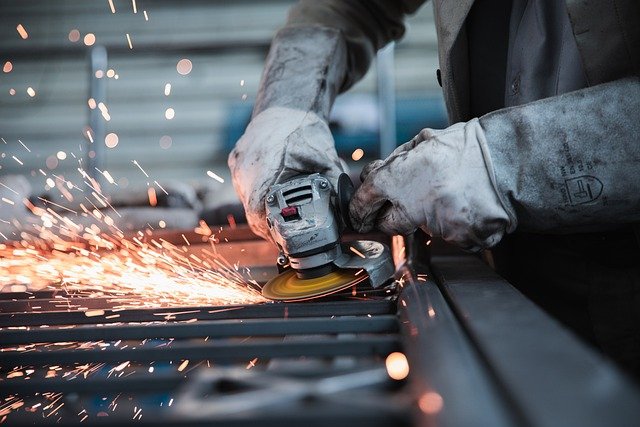
Did you know that in 2019 the United States produced [over 95 million tons](https://www.steel.org/2020/08/2019-statistical-report/) of steel? Steel is one of many popular metals used in today’s society, whether for construction, technology, or even jewelry.
Metal is what quite literally keeps our civilization standing, and has been in use since the Bronze Age. Since then, technology and innovation have helped discover new grades and [types of metal](https://www.bushwickmetals.com/the-different-types-of-structural-steel/) as well as different applications for them. From the first iron-framed buildings to the construction of the Burj Dubai, metal has been a part of the growth and development of modern-day civilization.
Continue reading to learn about the 3 most popular types of metals in today’s society and their uses.
## Types of Metal
### Copper
Copper is one of the first metals humans started using, and it’s known for being malleable and highly conductive. This conductivity is both thermal and electrical, and it’s widely used in the electronics industry. The conductivity makes it perfect for circuitry, cables, electrical components, and more.
It’s also very durable, making it a common choice in the [construction industry](https://www.bushwickmetals.com/the-essential-guide-to-using-steel-piles-in-construction/). Various metals are susceptible to rusting, but copper is corrosion resistant so it stands up well to moisture and can last for a long time. The appearance is quite distinctive, so it’s sometimes used decoratively.
### Zinc
One of the most well-known characteristics is its corrosion resistance. This makes it ideal for applications that involve exposure to moisture.
It’s often used as a [coating for other metals](https://www.bushwickmetals.com/galvanized-vs-stainless-steel-whats-the-difference/), like iron and steel. Zinc makes it possible to take advantage of the characteristics of these metals (such as durability or cost-efficiency) and prevent them from rusting. It’s also commonly used to produce batteries and other electrical devices.
### Brass
Brass is an alloy that’s made by combining copper and zinc, as well as other elements. These sometimes include tin, lead, and aluminum. The result is a versatile material with good corrosion resistance.
It’s ideal for applications where rust could be an issue. It’s easy to shape into different forms, making it ideal for producing musical instruments, locks, hinges, and other intricate items. Like copper, it’s also sometimes used for its attractive appearance
### Bronze
Bronze comes from combining copper and tin, and it is the first known alloy to have been made by humans. Though bronze may be brittle, it is great for resisting fatigue and will not bend or crack. It is also corrosion-resistant and a great conductor of both heat and electricity.
Some of the primary uses for bronze are bells, electrical connectors and fasteners, parts on oceangoing vessels, and reflectors. Bronze can mix with other metals to form alloys.
Some other applications for bronze include sculptures and statues. It is also used to make springs and bearings when manufacturing things with moving parts. Bronze is also the primary material for making guitar strings.
### Titanium
Titanium is a highly valued metal as it has some distinct properties. Perhaps the most important of these is the exceptional [strength-to-weight ratio,](http://dtrinkle.matse.illinois.edu/dokuwiki/doku.php?id=research:ti) and it has a higher strength-to-density ratio than any other metal.
This makes it a popular choice for military equipment such as jet engines and missiles. It also offers excellent corrosion resistance and biocompatibility. Other metals, such as iron and aluminum, are sometimes alloyed with titanium to produce other characteristics.
Titanium is used in a wide range of applications, such as:
- Automotive engines and components
- Aerospace industry
- Military and defense
- Telecommunications devices
- Sports and recreation equipment
- Medical instruments and prosthetics
- Oil and gas equipment for deep-sea drilling
- Chemical processing
- Marine propeller shafts and desalination plant rigging
### Aluminum
Aluminum’s popularity stems from it being lightweight, resistant to corrosion, and surprisingly durable. Aluminum was first made in 1825 and is a key component in some of the biggest technological accomplishments in human history.
Because of how lightweight and strong it is, aluminum a main resource used on the spacecraft that helped get humans to the Moon. It also doesn’t rust, making it a very useful material for dealing with the elements. Its only real drawback is that it does oxidize when exposed to salt, so it isn’t a good fit for use on an ocean-going vessel.
Aluminum’s used in a wide range of products. While most people will associate it with its use as soda cans or aluminum foil for cooking, it is widely used to make household appliances as well as aircraft. Aluminum is the ideal metal for making household appliances because of how light and strong it is. It’s also great for refrigeration because of its heat transferring properties that allow a quicker cooling process.
If you’re reading this article on an Apple laptop then it’s likely that the technology you’re using heavily uses aluminum. Apple uses aluminum for the enclosures of their laptops because they are lightweight and durable.
### Iron
Iron is one of the most common metals on Earth. It has been widely used for centuries because of its strength and abundance.
One of the main uses for iron is for cooking appliances like skillets because the pores in iron allow it to prevent food from sticking to it. It also has a high melting point so it works great for use as a wood stove.
Due to the density and weight of iron, it is also widely used for manufacturing heavy machinery. Being so heavy and rigid prevents vibrations which makes it perfect for producing heavy equipment.
### Steel
Steel stands as the preeminent metal of choice in modern engineering and construction, thanks to its unparalleled blend of strength, durability, and versatility. This marvel of metallurgy is an alloy primarily composed of iron and carbon, with the carbon content serving a critical role. It functions to purge the iron of impurities and residual elements that could otherwise compromise its integrity and performance.
Iron, in its pure state, boasts commendable strength and utility across various applications. However, its high density, coupled with a natural susceptibility to corrosion and rust upon exposure to moisture, significantly limits its efficacy and reliability as a building material. These inherent shortcomings not only present challenges in maintenance but also raise questions regarding its suitability for long-term structural applications. Because of the strength-to-weight ratio of steel, it is coveted for building parts for machinery as well as its use in constructing buildings.
There are over 3,500 [grades of steel](https://www.bushwickmetals.com/steel-plate-grades-explained/), so no matter what you are building there is a good fit for you. This is a big reason why steel is the most used metal in the world.
Here are some of the most popular types of steel on the market, and the best applications for each. For an even deeper dive on steel, check out our article on [the different types of structural steel](https://www.bushwickmetals.com/the-different-types-of-structural-steel/).
#### Stainless Steel
Stainless steel is made by mixing iron, carbon, and chromium. Renowned for its resistance to corrosion and oxidation, stainless steel is a staple in kitchen appliances, medical equipment, and architectural facades. Its aesthetic appeal coupled with low maintenance requirements make it a preferred choice for a wide range of decorative and functional applications.
#### Alloy Steel
Alloy steel comes from mixing iron with a number of other types of metal. By incorporating elements such as chromium, nickel, and molybdenum, alloy steel offers enhanced properties like improved corrosion resistance and greater strength at high temperatures.
Because it is so customizable, it is popular for use in building projects. You can customize it to suit whatever use you require, and is pretty inexpensive to produce. This makes it suitable for use in pipelines, automotive parts, and power generation equipment.
#### Carbon Steel
Carbon steel comes from combining iron with carbon. This is the most basic form of steel, categorized based on carbon content into low, medium, and high. Low carbon steel is ideal for construction due to its excellent weldability and malleability. Medium carbon steel finds its use in automotive components owing to its balance of strength and ductility. High carbon steel, with its superior hardness, is favored for cutting tools and wear-resistant applications. It is customizable based on the amount of carbon that is added. Depending on that, it is sorted by category into high, medium, or low carbon steel.
More carbon that is used makes harder steel. On the flip side, using less carbon will provide less expensive steel that is easier to create. The most common use for carbon steel is as a building material because of its strength.
#### Tool Steel
Tool steel is one of the hardest forms of metal on the planet. Tool steel is made by combining iron with cobalt, tungsten, or vanadium. Because of its hardness, it is great for use in the manufacturing of cutting tools, dies, and molds. Its ability to retain a sharp edge under extreme conditions makes it invaluable in the machining and tooling industries.
The most common use for tool steel is in construction. It is especially useful in the shipbuilding and automotive industries for machining purposes.
## Deciding The Right Types of Metal to Use
It can be difficult to know the right types of metals to use for different applications and projects. It’s often best to discuss your needs with professionals to determine the most suitable solution.
Intsel Steel East is a leading steel supplier and we can offer next-day delivery to a range of states in the Northeast. [Contact us today](https://www.bushwickmetals.com/request-a-quote/) for a free quote or to find out more about our quality steel products.
[Back to News / Blog](https://www.bushwickmetals.com/news)
## Contact Us
- First Name\*
- Last Name\*
- Email\*
- Phone Number\*
- Company Name
- Website URL
- Message
- Upload a Drawing
Drop files here or Select files
Max. file size: 64 MB, Max. files: 5.
- Agreement\*
- [ ] Agree to Terms
- CAPTCHA
4305
[iframe](about:blank)
### Approvals
[](https://www.fmapprovals.com/)[](https://marks.ul.com/about/ul-listing-and-classification-marks/)[](https://www.sdi.org/)[](https://icc-es.org/)[](https://www.ul.com/services/environmental-product-declaration-epds-certification)
Notifications# Type N Roof Deck At Bushwick Metals
August 5, 2024 in
Blog / Decking
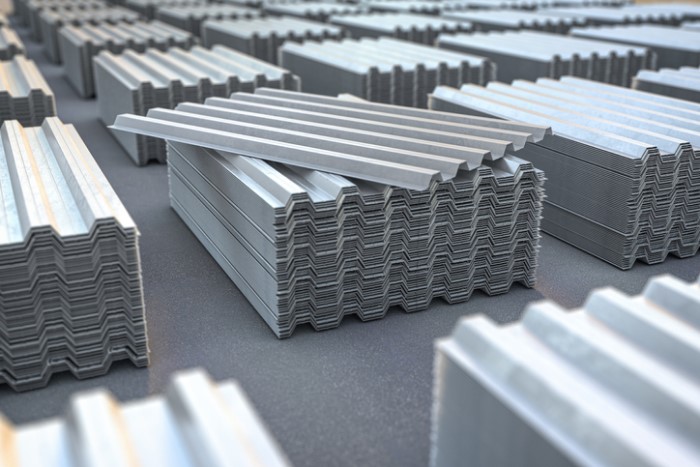
The type N roof deck is a versatile roofing component that’s a popular choice for roofs where a deeper profile than usual is required. If you’re looking for a deck that gives you a greater span without a commensurate increase in [metal thickness](https://www.law.cornell.edu/uscode/text/15/206), the N roof deck could work really well.
Here we take a look at what a type N roof deck is, as well as the benefits it can bring to a range of roofing applications. We also consider the ways in which an N roof deck can be used, as well as describe how Bushwick Metals can create standard and customized N roof decks that are manufactured to your exact requirements.
## What is the N roof deck?
[Steel decking](https://www.bushwickmetals.com/product-category/decking/) is the material that sits between the joists and trusses. It’s used to create the framing for a roof, usually separating the roofing material from the insulation layers. In comparison to other types of deck material, the N roof deck has a deeper, 3″ profile. This provides a greater span than other roof deck options.
## **What are the benefits of a Type N roof deck?**
Due to its deeper profile, the Type N roof deck has several advantages over other roof deck choices. Some of these are detailed below.
01. **Strength and Durability**: Steel roof decks are highly durable and provide excellent structural strength, capable of supporting heavy loads. This durability ensures long-term stability and resistance to environmental factors such as wind, snow, and seismic activity.
02. **Lightweight**: Despite their strength, steel roof decks are relatively lightweight compared to alternative materials such as concrete. This lightweight characteristic simplifies transportation, handling, and installation processes, reducing labor and construction time.
03. **Fire Resistance**: Steel roof decks typically have inherent fire-resistant properties, making them a safe choice for construction projects where fire protection is a concern. They can help contain fires and prevent the spread of flames, enhancing overall building safety.
04. **Versatility**: Steel roof decks are versatile and can accommodate various design requirements, including different spans, shapes, and configurations. They can be customized to fit specific project needs, allowing for creative architectural designs and flexible construction solutions.
05. **Corrosion Resistance**: Steel roof decks are often coated or galvanized to enhance corrosion resistance, protecting them from rust and deterioration over time. This corrosion resistance extends the lifespan of the roof deck and reduces maintenance requirements.
06. **Compatibility with Roofing Systems**: Steel roof decks are compatible with various roofing systems, including built-up roofs, single-ply membranes, and metal roofing. This compatibility ensures seamless integration with the overall roofing assembly, promoting efficient water drainage and weatherproofing.
07. **Increased Span**: The design of an N roof deck allows it to be used where an increased span is required. The N roof deck can work across wider spaces successfully, providing a high level of performance in situations where other roof deck choices would fall short of the mark.
08. **No Need for Purlins**; Purlins (the horizontal beams that are traditionally used to support a roof structure) aren’t required when N roof deck is deployed.
09. **Increased Architectural Freedom**: Using a Type N roof deck enables greater flexibility and innovation in building design. Particularly useful for large-scale or novel projects, this type of roof deck allows ambitious projects to be successfully completed, without compromising on safety or structural integrity.
10. **Sustainability**: Steel is a recyclable material, and using steel roof decks can contribute to sustainability goals by reducing the consumption of natural resources and minimizing construction waste. Additionally, steel roof decks can support the installation of solar panels, further enhancing sustainability efforts.
11. **Cost-Effectiveness**: While steel roof decks may have higher upfront costs compared to some alternative materials, their durability, longevity, and low maintenance requirements can result in cost savings over the life of the building. Additionally, the lightweight nature of steel decks can reduce foundation and support structure costs.
Overall, steel Type N roof decks offer a combination of strength, durability, versatility, and sustainability, making them a practical choice for various construction applications.
## How can Type N Roof Deck be used?
One of the major advantages of the N roof deck is the wide range of applications that it can be used for. Not only is it a good option for commercial and industrial buildings, but it’s also ideal for a range of residential settings. N roof deck can be used as part of new-build development or deployed as part of a refurbishment or reconstruction project.
### Bushwick Metals can provide a custom N roof deck solution that’s geared to the needs of your project.
01. **Commercial Buildings**: Steel Type N roof decks are commonly used in commercial buildings such as office complexes, retail centers, and industrial facilities. They provide structural support for the roof assembly and can accommodate various roofing systems.
02. **Industrial Facilities**: In industrial settings such as manufacturing plants, warehouses, and distribution centers, steel Type N roof decks offer robust structural support for large roof spans and heavy equipment loads.
03. **Institutional Buildings**: Steel Type N roof decks are suitable for institutional buildings such as schools, hospitals, and government facilities. They provide reliable structural integrity and can meet the demanding requirements of these buildings.
04. **Residential Construction**: Steel Type N roof decks can be used in residential construction for applications such as multi-story apartment buildings, condominiums, and townhouses. They offer strength and durability while allowing for flexible design options.
05. **Mixed-Use Developments**: Steel Type N roof decks are well-suited for mixed-use developments that combine residential, commercial, and retail spaces. They can support the diverse needs of these projects and accommodate various architectural designs.
06. **Parking Structures**: Steel Type N roof decks can be used in the construction of parking structures, providing support for rooftop parking decks. Their strength and durability make them ideal for withstanding vehicular loads and environmental conditions.
07. **Roof Gardens and Green Roofs**: Steel Type N roof decks can support the installation of roof gardens and green roofs, providing a platform for vegetation and landscaping. They offer structural stability while contributing to environmental sustainability.
08. **Outdoor Entertainment Spaces**: Steel Type N roof decks can be utilized to create outdoor entertainment spaces such as rooftop bars, restaurants, and event venues. They offer a sturdy foundation for seating areas, dining facilities, and recreational amenities.
09. **Sports Facilities**: Steel Type N roof decks can be used in the construction of sports facilities such as stadiums, arenas, and indoor sports complexes. They provide the necessary structural support for spectator seating, lighting systems, and other infrastructure.
10. **Educational Facilities**: Steel Type N roof decks are suitable for educational facilities such as schools, colleges, and universities. They offer durability and longevity, meeting the demanding requirements of educational buildings.
Overall, steel Type N roof decks are versatile and can be adapted to various construction projects, providing reliable structural support and long-term performance.
## Bushwick Metals Offers a Range of Options
Type N Roof Deck is available in a range of different configurations, depending on client requirements. Our straightforward, four-part process ensures that every client ends up with a Type N Roof Deck that’s tailored to meet the needs of their project.
### 1\. Consideration of Project Drawings
Our team will study the project drawings in-depth. This gives us a good understanding of what you need. We will also take the opportunity to check that your chosen specifications are likely to deliver the outcomes you’re looking for.
### 2\. Design Team Input
Before starting our fabrication, we submit your specifications to our design team. They create a design that’s tailored to your specific requirements, ensuring that every aspect of the proposed fabrication can be completed to our usual high standards.
### 3\. Fabrication
We turn the signed-off designs over to our fabrication team, who creates the N Roof Deck you need. Once the items are completed, we can transport them to your site, ready for use in your roof’s construction.
### 4\. Site Instructions
Each batch of N Roof Deck is accompanied by comprehensive instructions for fitting. This ensures that the construction process is completed both safely and correctly. It also reduces labor time (and therefore cost), as we provide the information needed to make construction as simple as possible.
## Turn to Bushwick Metals for Your Type N Roof Deck
Bushwick Metals offers a selection of options on our N Roof Deck range. For example, we can fabricate a roofing deck in a selection of different gauges (16 through to 22) as well as offer a selection of different finishes. If you need the N Roof Deck to be used outside, we can coat it with G-90 – galvanized zinc. Other coatings include G-60 galvanized zinc and a primer coating, which will then need to be finished elsewhere.
If you have additional requirements for your N Roof Deck, such as the need for integral acoustic or thermal insulation, let the team at Bushwick Metals know and we’ll be happy to present some solutions for your consideration.
[Bushwick Metals](https://www.bushwickmetals.com/) is an established design and fabrication plant that can supply customers across the eastern US with premium Type N Roof Deck.
We put quality and customer satisfaction at the heart of what we do, recognizing the pivotal role that roof deck plays in the final function, structure, and integrity of your project. When you use Bushwick Metals, you’re working with a trusted partner that aims to provide the high-grade roofing solutions you need to make your project a success.
[Get in touch](https://www.bushwickmetals.com/contact/) to find out more about our Type N Roof Deck design and fabrication process.
[Back to News / Blog](https://www.bushwickmetals.com/news)
## Contact Us
- First Name\*
- Last Name\*
- Email\*
- Phone Number\*
- Company Name
- Website URL
- Message
- Upload a Drawing
Drop files here or Select files
Max. file size: 64 MB, Max. files: 5.
- Agreement\*
- [ ] Agree to Terms
- CAPTCHA
49745
[iframe](about:blank)
### Approvals
[](https://www.fmapprovals.com/)[](https://marks.ul.com/about/ul-listing-and-classification-marks/)[](https://www.sdi.org/)[](https://icc-es.org/)[](https://www.ul.com/services/environmental-product-declaration-epds-certification)
Notifications# NJ Rebar Suppliers For North and South Jersey
November 30, 2020 in
Blog / Rebar
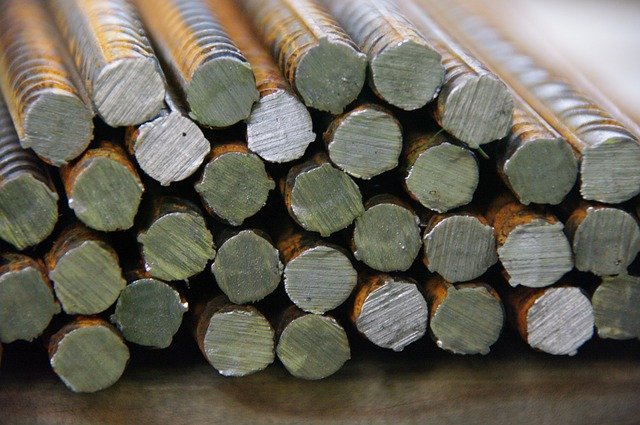
Rebars are almost miraculous, even if we do say so ourselves. By combining the tensile strength and versatility of steel with the compression strength and ease of use of concrete, we can build, bigger, higher, stronger, and faster. Walls, slabs, dams, and building structures are all possible because of rebars.
Rebar, short for reinforcing bar, is used as either a steel bar or mesh around which concrete is poured. The result is an incredibly strong combination that can withstand a huge amount of downward pressure and tension that neither material could on its own. If you’re in New Jersey and want to buy rebars, Bushwick Metals is the best place to go. Here are some reasons why.
## The Bushwick Advantage
With our two locations in New Jersey, we can supply all of your rebar requirements. At Bushwick Metals, we use modern equipment that means we never break a sweat when it comes to rebar fabrication.
We do more than the sell top-quality rebars and other structural steels, though. Our customers know they can count on us to make sure that every bend and shape is fabricated to order. We provide complete solutions to help our customers succeed, providing end-to-end supply chain solutions. Our services include estimating quantities, processing steel to suit your project, warehousing, and managing logistics for timely deliveries.
Bushwick Metals is happy to provide smaller quantities of rebars. We can supply less than a truck. And with about 50 trucks rolling each day from our three New Jersey locations, we can fulfill your rebar order promptly. You’ll find that we are exceptionally responsive. Our sales team works hand-in-hand with our logistics team to provide on-time and often next day deliveries.
Our two New Jersey locations offer robust warehousing. We buy in bulk, so you don’t have to. And we effectively provide an end-to-end supply chain service. You can order the quantity you want and have parts of your order delivered when you want them.
### Bushwick’s Takeoff, Placement Drawing, And Estimate services
We can provide steel ‘takeoffs.’ These will calculate materials estimates using industry-standard software to calibrate and scale drawings and designs. With this information, we calculate the quantities of rebar and type of rebars you’ll need for your project. Remember that the take-off needs to calculate all the footings as well as the walls. We can also produce Placement Drawings from the takeoff to create a final schedule of the rebar quantities you’ll need.
Our extensive experience and knowledge will provide you with advice on the size, type, and processing required, if any, which best suits your project. Our manufacturing partners can provide you with rebars in bulk to meet your requirements. We can then process and warehouse them until you need to call off quantities on the order.
### Bushwick Metals’ Rebar Range
We stock a complete inventory of threaded rebar, Slab and Beam Bolsters, and Chairs in our two New Jersey Warehouses. Our new Billet-Intermediate Grade-Deformed Ultimate Tensile strength Rebars are rated to 70,000/90,000 lbs. They have a minimum yield point of 40,000lbs at grade 40 and grade 60 at only a ¼ of an inch. These bars are plain round, not deformed. The threading adds additional surface contact with the concrete for more cohesion and strength within the structure.
All of our rebars exceed the grade’s minimum yield strength as required by regulations. [We offer rebar](https://www.bushwickmetals.com/product-category/rebar/) in nominal diameters of ¼ inch, thru to 1 inch, and onto 2.26 inch. But we’re happy to talk to our manufacturing partners to supply specialized or larger sizes if required.
Bushwick Metals also supplies a range of rebars for concrete slabs, including slab and beam bolsters. Slab Bolsters are used to provide support for reinforcement when pouring concrete slabs. The slab bolster provides tensile strength to the slab by supporting the beam bolsters. These support the lower beam steel that goes along the slab.
As part of our complete solution, we also supply rebar chairs, used to fasten and accurately position rebars. Get in touch with us for help with estimates.
## Why Choose Bushwick Metals In New Jersey
We can’t think of any reason why you wouldn’t. Sure, there are cheaper suppliers, but all they’ll do is deliver rebar. Only Bushwick Metals offers the end-to-end service, supply chain solutions, industry insights, and strategic guidance to help our customers succeed.
We cover the ‘cost to own’ by holding your inventory for you. You don’t have to worry about making space for tons of stock laying around a busy site. We understand that inventory needs care, so our warehouses are set up to perform to the highest standards.
Bushwick Metals almost 200 years of industry experience enables us to understand customer needs, assist with inventory planning, and offer the sort of advice that keeps our customers coming back. Contact us today at our New Jersey sales office Toll-Free [855-446-8735](tel:855-446-8735 "Contact Us by Phone 855-446-8735") or email [sales@bushwickmetals.com](mailto:sales@bushwickmetals.com).
[Back to News / Blog](https://www.bushwickmetals.com/news)
## Contact Us
- First Name\*
- Last Name\*
- Email\*
- Phone Number\*
- Company Name
- Website URL
- Message
- Upload a Drawing
Drop files here or Select files
Max. file size: 64 MB, Max. files: 5.
- Agreement\*
- [ ] Agree to Terms
- CAPTCHA
98525
[iframe](about:blank)
### Approvals
[](https://www.fmapprovals.com/)[](https://marks.ul.com/about/ul-listing-and-classification-marks/)[](https://www.sdi.org/)[](https://icc-es.org/)[](https://www.ul.com/services/environmental-product-declaration-epds-certification)
Notifications# The Benefits Of Plate Shearing
July 15, 2021 in
Blog / Value-Added Services
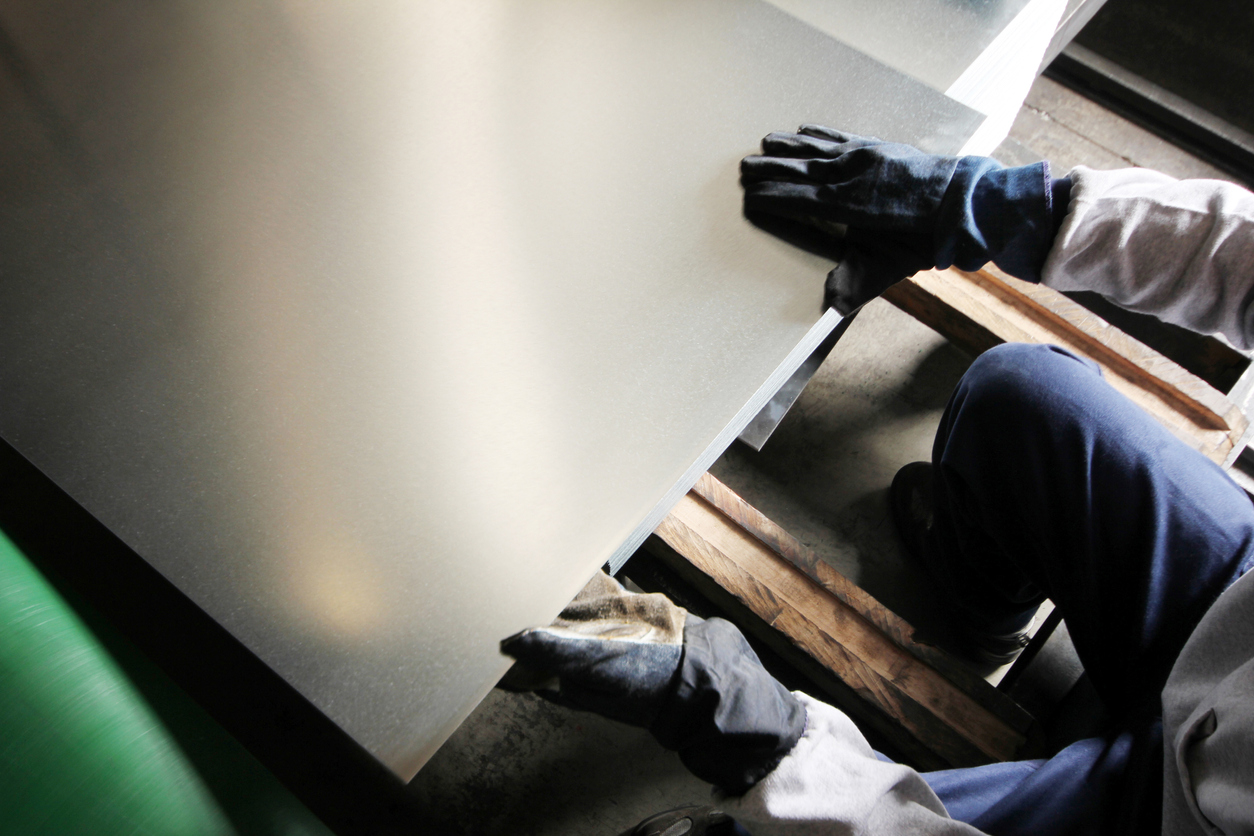
The American steel industry is a critical manufacturing sector of the U.S. economy. Steel is durable, reliable, and versatile. While sustainability is certainly at the forefront of most industries within the U.S. right now, the steel industry can claim superior performance in terms of minimized environmental impact.
Did you know that steel production requires half the energy to produce than it did 40 years ago? That’s a result of a [50% reduction](https://www.steel.org/sustainability/ "50% reduction") in greenhouse gas emissions. One of the key contributors to this reduction could be attributed to one of the ways in which steel is processed: plate shearing.
Curious to know more about the process? Keep reading for a few benefits to plate shearing!
## Benefits of Shearing
What is plate shearing, exactly? Plate shearing, or metal shearing, is the process in which sheet metal or steel plates get cut to size out of a larger roll of product.
For example, materials such as sheet metal, aluminum, or steel are moved through a shear machine, upon which the material then gets cut into smaller pieces. Other processes exist to cut through a material of this strength, such as cutting, folding, or welding. However, there are a few benefits to using the plate shearing process specifically.
Below is a quick list of some of the advantages of shearing.
### 1\. Cost-Effective
As metal shearing can be used with a range of metals, it can also cut through a large amount of product in a short space of time. [Thousands of pieces](https://en.wikipedia.org/wiki/Shearing_(manufacturing)) can be cut per hour. This is not only cost-effective, but efficient as well, which we’ll go over below.
### 2\. Minimal Material Loss
One of the biggest benefits of the process is the minimal loss of material. The process of shearing doesn’t produce stray pieces of metal.
This is important, as full utilization of material is common for manufacturers. In addition to that, the minimal material loss equates to low or zero waste. Along with it being cost-effective, the technique indicates shearing can be more sustainable and environmentally friendly.
### 3\. Efficient
The most blatant advantage to high-speed plate shears is the efficiency they bring to the processing of metals. Shearing can cut through softer metals in mere seconds.
In addition, the blades in a shearing machine can be set at an angle, which allows for less force necessary to cut through the product. A highly efficient processing time means the company can meet high demand in a time-friendly workflow.
### 4\. Clean Product
This goes hand in hand with minimal material loss. The exactitude of the process allows for completely straight edges, as no heat gets used in the process. The product gets held down by pressurized clamps, upon which the metal is then precisely cut by an upper and lower blade. The positioning of the blades allows for less force to cut the product.
### 5\. Variety
There are numerous types of metals that benefit from shearing, such as aluminum, brass, copper, and bronze. There are also a variety of highly durable shearing machines to cut through these products. The alligator shear is a common type primarily used to cut steel and aluminum. The bench sheer and the guillotine are prevalent as well.
Another layer to the variety of these products is the power systems behind them. There are manual shears, air-operated, hydraulic, mechanical, and electric. Each of these has its own respective capabilities, depending on which production demand is in question.
### Notes on Plate Shearing
To make an entirely informed decision when asking the question: what is plate shearing, it would be pertinent to note plate shearing does come with a couple of minor disadvantages. Sheared metals such as aluminum and stainless steel have been mentioned as products that can be quickly and efficiently sheared.
The act of shearing is more difficult for harder metals, such as tungsten. Tungsten is a [brittle metal](https://www.lkabminerals.com/en/products/tungsten/ "brittle metal") and the nature of this product makes it difficult to shear as fracturing or delamination can occur during the process.
As mentioned above, shearing is extremely cost-effective with the ability to output products at a high volume and at any diameter. This isn’t necessarily the case for products of a certain size. Anything under 0.125″ is not an ideal candidate for the shearing process.
A final item of note is that shearing does not easily allow for the production of fine metal tubing. With no mandrel in place on a shearing machine, the tubing meant to be cut is then unsupported, causing a potential scenario in which the tube can be crushed. A mandrel can be floated in order to obtain the cut, however as the mandrel is not necessarily anchored to anything, the process is reliant on the friction that comes from the mandrel and the metal tube.
A key takeaway is that the precision of shearing is a process that requires an in-depth knowledge of the products and the expertise it takes to process them correctly and efficiently. Looking for more detailed information?
### Shear Power
That’s where [Bushwick Metals](https://www.bushwickmetals.com/about-us/target-markets/ "Bushwick Metals") comes in. We’ve been processing and distributing metals since 1829. That’s nearly _200_ _years’_ worth of knowledge and commitment to both customers and industry alike. We’re a company focused on supporting customer growth. Whether that’s through offering industry guidance or financing solutions, you can be sure to receive the best possible service available.
We’re dedicated to providing a full range of support for all your processing needs. [Contact us](https://www.bushwickmetals.com/contact/) today to request a quote or provide clarification on which plate shearing option is best for you.
[Back to News / Blog](https://www.bushwickmetals.com/news)
## Contact Us
- First Name\*
- Last Name\*
- Email\*
- Phone Number\*
- Company Name
- Website URL
- Message
- Upload a Drawing
Drop files here or Select files
Max. file size: 64 MB, Max. files: 5.
- Agreement\*
- [ ] Agree to Terms
- CAPTCHA
64221
[iframe](about:blank)
### Approvals
[](https://www.fmapprovals.com/)[](https://marks.ul.com/about/ul-listing-and-classification-marks/)[](https://www.sdi.org/)[](https://icc-es.org/)[](https://www.ul.com/services/environmental-product-declaration-epds-certification)
Notifications# Galvanized Steel Pipes: Advantages and Applications
December 2, 2024 in
Blog / Galvanized Steel / Steel Tubing
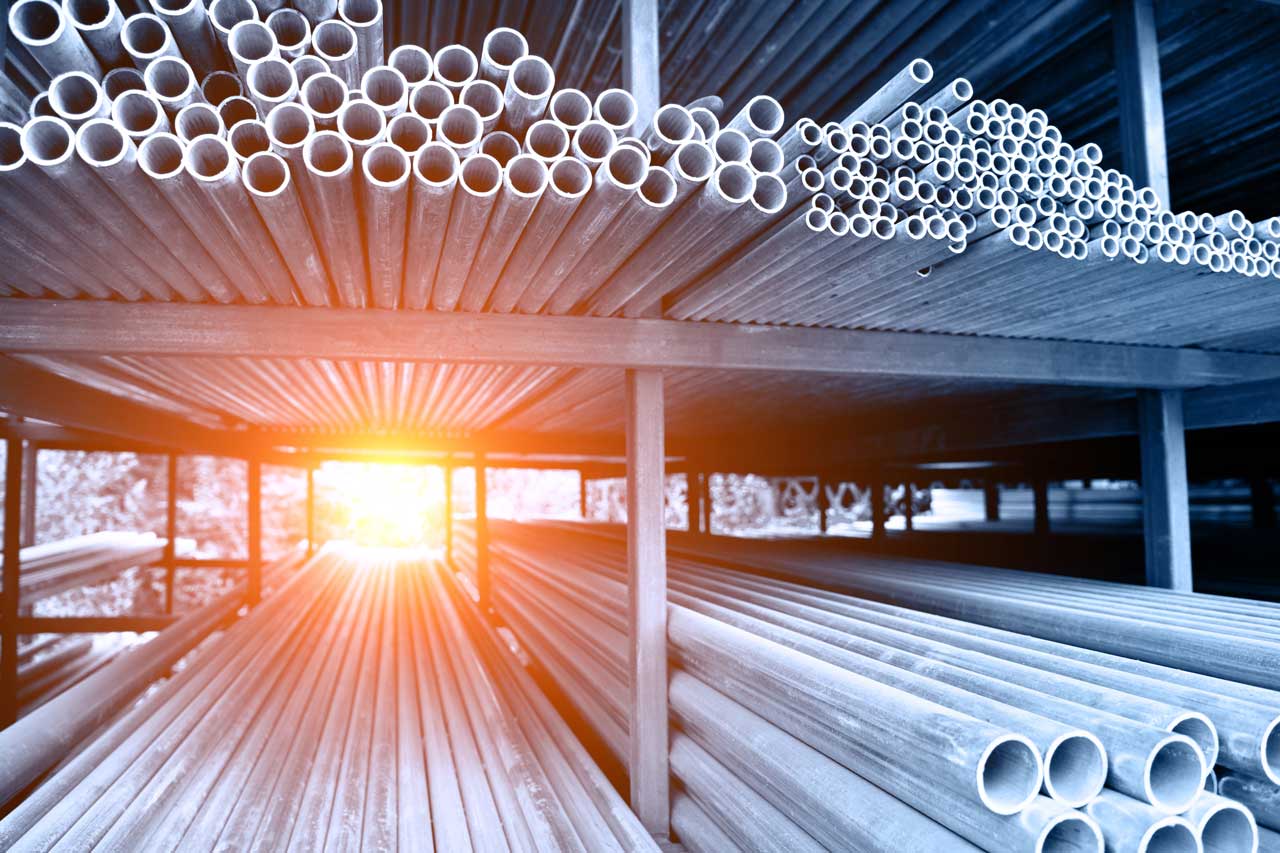
Have you ever wondered what makes the structures around us so resilient? The answer often lies in unassuming yet powerful galvanized steel pipes. These pipes are not just ordinary steel!
They undergo a unique process called galvanization. This involves coating them with a protective layer of zinc. It’s this layer that gives them incredible durability and resistance against elements.
Imagine a material that can withstand corrosion, endure harsh weather, and last for decades. That’s the power of galvanized steel pipes.
They are cost-effective, reliable, and versatile. Their applications range from sturdy construction frameworks to efficient plumbing systems. In this brief guide, we will dive into the many advantages of galvanized steel pipes and explore their diverse applications in various industries.
## The Galvanization Process
The [galvanization](https://galvanizeit.org/hot-dip-galvanizing/what-is-galvanizing) process is a crucial method for protecting steel pipes from corrosion, significantly extending their lifespan and durability. This process involves coating iron or steel with a protective layer of zinc, creating a barrier against environmental factors that cause rust and deterioration.
**Surface Preparation:** Before galvanization, the steel pipes undergo thorough cleaning to ensure proper zinc adhesion:
- **Degreasing**: Removes oils, dirt, and other contaminants from the surface.
- **Pickling**: The pipes are immersed in an acid solution, typically hydrochloric acid, to remove rust and scale.
- **Rinsing**: After each step, the pipes are rinsed with water to remove any residues.
**Fluxing:** The cleaned pipes are dipped in a flux solution, which removes any oxidation that may have formed during the cleaning process and prepares the surface for zinc coating.
**Hot-Dip Galvanization:** The core of the process involves immersing the prepared pipes in a bath of molten zinc:
- The zinc bath is maintained at approximately 450°C.
- Pipes are slowly lowered into the molten zinc and remain submerged for 5 to 15 minutes.
- During immersion, a metallurgical reaction occurs between the iron in the steel and the molten zinc, forming zinc-iron alloy layers [1](https://galvanizeit.org/inspection-course/galvanizing-process).
- As the pipes are lifted out, a layer of pure zinc forms on the surface.
**Cooling and Post-Treatment:** After galvanization, the pipes are:
- Cooled in a quench tank containing water and other chemicals, creating an additional passivation layer.
- Inspected for quality control to ensure uniform coating and absence of defects.
This process results in a durable, corrosion-resistant coating that can protect steel pipes for decades, making galvanized steel pipes an excellent choice for various applications in construction, plumbing, and industrial settings.
## Advantages of Using Galvanized Steel Pipes
Galvanized steel pipes stand as a testament to efficiency in today’s world. Below are some advantages that make these pipes a superior choice.
### **Durability and Longevity**
These are the hallmarks of GI pipes, making them a top choice in many fields. The key to their endurance lies in their resistance to corrosion and rust. Unlike ordinary iron or steel, GI pipes are coated with zinc.
This protective layer shields them from moisture and chemical reactions. As a result, they remain robust and functional for years, outperforming many alternatives. The life expectancy of steel pipe is [80 to 100 years](https://en.lesso.com/blogs/pipe-types-lifespans/).
When we compare them to other metals, the difference is clear. While materials like PVC or copper are common, they don’t match the longevity and resilience of galvanized iron. GI fittings in plumbing systems can withstand constant water exposure without weakening.
In irrigation systems, these pipes endure the elements. This ensures efficient water delivery year after year, making them very reliable.
### **Cost-Effectiveness of Galvanized Steel Pipes**
The cost of galvanized steel pipes strikes the perfect balance between initial investment and long-term savings. These pipes may seem pricier compared to others. But their longevity and durability translate to fewer replacements and repairs.
Moreover, maintenance is another area where GI pipes excel. They need minimal upkeep, thanks to their robust zinc coating. This resistance to corrosion and rust reduces the frequency and cost of maintenance.
### **Safety and Reliability**
These are paramount when it comes to materials used in critical applications. One of their standout features is their fire and heat resistance.
Unlike many other materials, these pipes don’t succumb to the damaging effects of high temperatures. This makes them ideal for use in environments where fire safety is a concern.
Additionally, they are suited for high-pressure applications. Their robustness enables them to withstand the stress of transporting fluids under pressure.
### **Versatility in Applications**
Galvanized steel pipes are incredibly versatile, fitting a wide range of applications. They are not only used in plumbing and irrigation but also in construction for structural support.
Their adaptability to different environments and conditions makes them a go-to option for various industries. They can be used underground, in water, or exposed to the elements.
## Applications of Galvanized Steel Pipes
Due to their versatility, GI pipes are applicable in a wide range of operations. This showcases their adaptability and efficiency in diverse settings. Some of the applications include:
### **Construction Industry**
These pipes are used to reinforce buildings and systems with unmatched strength. They are used in structural components and framing, providing the backbone for sturdy and [long-lasting construction projects](https://www.bushwickmetals.com/the-essential-guide-to-using-steel-piles-in-construction/).
The zinc coating on these pipes shields them from environmental factors. This ensures that the structural integrity of buildings remains intact over time.
Moreover, GI pipes are integral to plumbing and HVAC systems in buildings. Their resistance to corrosion makes them ideal for transporting water and other fluids. You are guaranteed a leak-free and efficient plumbing system.
In HVAC systems, these pipes help ensure the smooth and safe flow of air and heating materials. This contributes to the comfort and safety of the building.
### **Galvanized Steel Pipes in Agriculture and Irrigation**
For water transportation and storage, these pipes are a game-changer. Their corrosion-resistant nature ensures that the water remains uncontaminated. This is vital for irrigation systems. This durability is crucial when pipes are exposed to various weather conditions.
Similarly, GI pipes are fundamental to constructing fencing and greenhouse structures. Their strength provides reliable support for fencing. In greenhouses, these pipes form sturdy frameworks, crucial for sustaining the controlled environment.
### **Home and Industrial Use**
In domestic plumbing systems, GI pipes ensure a long-lasting network for water distribution. Their resistance to corrosion and rust makes them ideal for this role. They are capable of preventing leaks and maintaining water quality.
Additionally, their low maintenance needs make them a preferred choice for homeowners. They are also used in manufacturing settings for transporting liquids and gasses. Their strength is essential in these environments, where pipes must withstand high pressures.
The versatility of GI fittings further enhances their utility in various applications, including [Type B decking](https://www.bushwickmetals.com/the-advantages-of-using-type-b-decking-in-construction-projects/).
### **Transportation and Automotive Industry**
In vehicle manufacturing, these pipes are crucial in crafting robust frames and components. Their ability to withstand high stress makes them ideal for vehicles. This durability ensures the longevity of vehicles, making them more reliable.
Furthermore, they have significant applications in transportation infrastructure. They are used in constructing guardrails and signposts along roads and highways. The strength of these pipes is vital to ensuring these structures can withstand impacts.
### **Environmental Impact and Sustainability**
Galvanized steel stands out for its [environmental sustainability](https://www.construction21.org/articles/h/what-is-sustainable-construction.html#:~:text=Sustainable%20construction%20means%20using%20recyclable,energy%20consumption%20and%20waste%20production.). A key aspect is its recyclability. These materials can be completely recycled without loss of quality. This reduces waste and conserves resources.
Compared to other materials, galvanized iron has a lower environmental impact over its lifecycle. While some materials may be cheaper, they often fall short in recyclability and durability. This makes galvanized steel a more sustainable choice.
## The Enduring Legacy of Galvanized Steel Pipes
Galvanized steel pipes are a cornerstone of infrastructure, offering unmatched durability, and versatility. From construction frameworks to plumbing, their benefits are evident across various industries.
As a leading steel distributor, **Intsel Steel East / Bushwick Metals** is committed to providing top-quality steel products. If you’re looking for reliable and sustainable steel solutions.
[Contact us today](https://www.bushwickmetals.com/contact/) to request a quote or learn more about our services. Let us help you harness the power of galvanized steel pipes for your next project.
[Back to News / Blog](https://www.bushwickmetals.com/news)
## Contact Us
- First Name\*
- Last Name\*
- Email\*
- Phone Number\*
- Company Name
- Website URL
- Message
- Upload a Drawing
Drop files here or Select files
Max. file size: 64 MB, Max. files: 5.
- Agreement\*
- [ ] Agree to Terms
- CAPTCHA
19107
[iframe](about:blank)
### Approvals
[](https://www.fmapprovals.com/)[](https://marks.ul.com/about/ul-listing-and-classification-marks/)[](https://www.sdi.org/)[](https://icc-es.org/)[](https://www.ul.com/services/environmental-product-declaration-epds-certification)
Notifications# Structural Channel Sizes At Bushwick Metals
October 11, 2021 in
Blog / Steel Channels
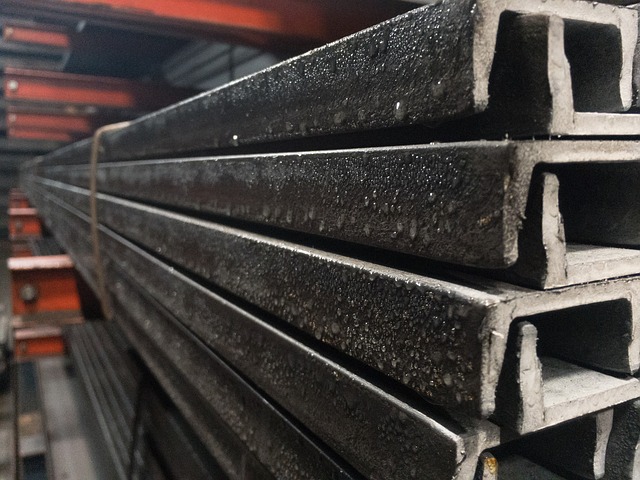
Across Lake Pontchartrain in Louisiana run four lanes of traffic over the world’s longest overwater bridge at [24 miles](https://traveltips.usatoday.com/types-bridge-designs-100764.html) long. It’s a classic example of a beam bridge, a simple style that uses beams across a flat surface.
The largest structural channel sizes are used to support bridge decks like that of the Lake Pontchartrain Causeway. These prove ideal for certain construction projects thanks to being lighter and more flexible than I-beams or H-beams, which are too rigid to absorb much flex from weather or other forces.
Let’s take a look at structural channels, how they’re sized, and how they’re used in modern construction.
## About Structural Channel Beams
Channel beams look like a squared-off “C”, giving it the C-channel name to distinguish it from I, H, or W beams, which have flanges extending from both sides of the beam. C-channels come in a range of sizes and thicknesses, which makes them useful in several ways.
These can be found in construction since the wide, flat side is ideal for attaching to items and providing support. They are made from hot-rolled steel. The channel has sharply angled outer edges and radius corners on the inner surface.
Along with bridges, channels also find their way into the frames and bracing of walls and roofs in construction. In industrial settings, they’re used for truck trailers and conveyor systems, among other uses.
The letter in a beam name indicates the shape of the beam. The description of a specific beam starts with the letter, then a number that tells the height of the beam. The second number tells the weight per foot of the beam.
All the sizes and shapes come from [dimensional standards](https://www.astm.org/Standards/steel-standards.html) adopted by the Association of American Steel Manufacturers.
## Steel Grades for Channel Beams
Structural channels tend to be made of ASTM A36 grade industrial steel and come in stock lengths from 20 to 60 feet.
A36 channel is a low-carbon structural steel used in a variety of applications, like trailers and structural support. This [type of steel](https://www.bushwickmetals.com/the-different-types-of-structural-steel/) is easily machined to create the many different sizes needed to support these applications.
A572-50 is a high-strength, low-alloy steel more commonly used for riveted or welded construction like you see in a girder bridge. A588 is also high-strength and low-alloy steel that’s used in welded applications where corrosion resistance is a key factor in building.
## Structural Channel Sizes
When buying structural channel steel beams, there are several different measurements used in determining [different sizes](https://www.bushwickmetals.com/structural-steel-sizes-and-weight/). The main number runs from 3” to 15” and details the channel depth or height of the channel. Flange width gives the width of the horizontal parts of the beam or legs make the top and bottom sections of the “C”.
Web thickness tells you how thick the metal is in the center section of the channel. Steel channel weights range from 3.5 pounds to as much as 50 pounds, telling you the weight per foot of the particular grade.
Below are the various sizes we offer:
**Size – Weight – Web thickness – Flange width**
3 in – 3.50 lb – 0.132 in – 1.372 in
3 in – 4.10 lb – 0.170 in – 1.410 in
3 in – 5.00 lb – 0.258 in – 1.498 in
4 in – 5.40 lb – 0.184 in – 1.584 in
4 in – 4.50 lb – 0.125 in – 1.584 in
3 in – 6.00 lb – 0.356 in – 1.596 in
4 in – 6.25 lb – 0.247 in – 1.647 in
4 in – 7.25 lb – 0.321 in – 1.721 in
5 in – 6.70 lb – 0.190 in – 1.750 in
5 in – 9.00 lb – 0.325 in – 1.885 in
6 in – 8.20 lb – 0.200 in – 1.920 in
6 in – 10.50 lb – 0.314 in – 2.034 in
7 in – 9.80 lb – 0.210 in – 2.090 in
6 in – 13.00 lb – 0.437 in – 2.157 in
7 in – 12.25 lb – 0.314 in – 2.194 in
8 in – 11.50 lb – 0.220 in – 2.260 in
7 in – 14.75 lb – 0.419 in – 2.299 in
8 in – 13.75 lb – 0.303 in – 2.343 in
9 in – 13.40 lb – 0.233 in – 2.433 in
9 in – 15.00 lb – 0.285 in – 2.485 in
8 in – 18.75 lb – 0.487 in – 2.527 in
10 in – 15.30 lb – 0.240 in – 2.600 in
9 in – 20.00 lb – 0.448 in – 2.648 in
10 in – 20.00 lb – 0.379 in – 2.739 in
10 in – 25.00 lb – 0.526 in – 2.886 in
12 in – 20.70 lb – 0.282 in – 2.942 in
10 in – 30.00 lb – 0.673 in – 3.033 in
12 in – 25.00 lb – 0.387 in – 3.047 in
12 in – 30.00 lb – 0.510 in – 3.170 in
15 in – 33.90 lb – 0.400 in – 3.400 in
15 in – 40.00 lb – 0.520 in – 3.520 in
15 in – 50.00 lb – 0.716 in – 3.716 in
## Uses for Steel Channels
The size and weight of a structural channel determine its use, and additional features can be added for specific use. Some have short edges or lips added to the end of the flanges, making the channel tougher, similar to rectangular tubing. Others might have holes added for use in bolting or a ridge on the back to increase rigidity.
In building, the channels can be used like studs would be in a traditional wood framing. They’re commonly used to build structures like garages, warehouses, and other metal buildings. They bear the vertical load of a building and can hold more weight than wood framing.Used vertically, they function like regular framing, but they can also be used horizontally in pole barn walls, as they don’t warp or twist like wood. Steel channels wrapped around wood beams add extra strength.
Steel channels work well as roof rafters, as they are smaller and lighter while supporting the same amount of weight as heavier wood rafters. However, steel won’t be damaged by rot, fungal decay, or moisture.
For window and door frames, structural channels can make more secure frames than wood. The back of the beam gives a flat surface for mounting the door or window. Steel frames commonly crop up supporting commercial fire doors and sub-grade basement doors.
## Get High-Quality Structural Channels
Various construction projects benefit from using structural channels in their walls or as trusses for a bridge. These beams offer a bit more flex than other types of beams but provide a high amount of strength at a lighter weight.
No matter what structural channel sizes you need for your project, [contact us](https://www.bushwickmetals.com/contact/) to check our inventory of high-quality structural steel. We have convenient locations along the East Coast with next-day shipping available.
[Back to News / Blog](https://www.bushwickmetals.com/news)
## Contact Us
- First Name\*
- Last Name\*
- Email\*
- Phone Number\*
- Company Name
- Website URL
- Message
- Upload a Drawing
Drop files here or Select files
Max. file size: 64 MB, Max. files: 5.
- Agreement\*
- [ ] Agree to Terms
- CAPTCHA
80905
[iframe](about:blank)
### Approvals
[](https://www.fmapprovals.com/)[](https://marks.ul.com/about/ul-listing-and-classification-marks/)[](https://www.sdi.org/)[](https://icc-es.org/)[](https://www.ul.com/services/environmental-product-declaration-epds-certification)
Notifications# HR Strip
| Type | Thickness | Size in Inches | Estimate Weight in Lbs - 1ft | Estimate Weight in Lbs - 20ft |
| --- | --- | --- | --- | --- |
| HR Strip | 1/4 | 1 1/2 | 1.28 | 25.6 |
### Approvals
[](https://www.fmapprovals.com/)[](https://marks.ul.com/about/ul-listing-and-classification-marks/)[](https://www.sdi.org/)[](https://icc-es.org/)[](https://www.ul.com/services/environmental-product-declaration-epds-certification)# American Made Wide Flange Beams At Bushwick Metals
September 5, 2022 in
Beams / Blog
More than [100 years ago](https://www.mcall.com/news/mc-xpm-2007-03-04-3712893-story.html), in the little town of Bethlehem — Bethlehem, PA, that is — a revolutionary advancement arrived that allowed builders to reach for the sky.
Steel beams had opened up opportunities in building taller years before. But the invention of wide-flange beams at Bethlehem Steel allowed buildings to climb higher than 20 stories, creating the iconic skylines of major cities across the country. Today, those same WF beams form the skeleton of most construction projects. Let’s take a look at what makes this type of beam work so well and how to shop for them for your upcoming project.
## What Is a Wide-Flange Beam?
Wide-flange beams revolutionized construction thanks to their ability to hold up large and heavy buildings. They replaced a cobbled-together option that was cost-prohibitive with a single piece that was cheaper to produce.
What Bethlehem Steel did was simple in concept. They took the then-standard I-beam and stretched out the flanges to make a beam that looked more like a sideways H, thus the name wide flange. The change increased the strength of the beam. You’ll typically find them used as horizontal supports because they allow builders to distribute weight evenly. But they can also serve as vertical supports in a combination wall.
Looking at a cross section of a WF beam, the vertical mid-section is the web, and the horizontal end sections are the flanges. The web in the middle withstands shear forces, and the flanges on the end withstand bending. When strengthened by Bethlehem Steel’s seemingly minor change, WF beams made it possible to construct buildings taller than ever before.
Before purchasing WF beams, consider the project you will use them for. Engineers often measure WF beams in [four dimensions: flange width, flange thickness, web thickness, and height](https://assets.website-files.com/5d5749fa1e1398642f1a07ca/5d8e56e445d650508ae211c5_Wide%20Flange%20Beam%20Dimensions%20Chart.pdf). Smaller, thinner beams are great for projects where they will only hold lesser amounts of pressure, while larger and thicker sizes can support massive structures such as skyscrapers. It isn’t economical to purchase sizes larger than you need, but you never want a small WF beam supporting more weight than it can handle and causing a safety concern.
WF beams can be used on their own or combined with another material, often concrete, to create a composite. When pairing WF beams with another material, factors often considered are preventing vibrations, shearing or bending failure, tension, deflection, and other failures with the strength of the WF beam.
## What Is a WF Beam’s Typical Use?
Wide-flange beams began rolling off the line in 1908 and were first used to build the Gimbel Brothers’ department store in New York City. In construction today, it might be easier to list the times you wouldn’t use a wide-flange beam as they have become the standard for any use that requires a high-strength application.
They can function as columns in commercial buildings and floors in homes. They form structural supports for overpasses and highway ramps and are critical for bridge construction. Outside of buildings, these support beams can perform as retaining walls. These are sometimes temporary to hold back dirt while construction is underway or permanent in sound barriers beside highways or basement walls.
## How Wide-Flange Beams Are Made
Wide-flange beams typically use steel thanks to the fact that it is highly customizable, easy to work with, and durable. It’s also the most recycled material in the world by weight. If you’re buying American-made WF beams, they’re likely to contain as much as [95 percent](https://www.buildings.com/articles/35286/scoop-structural-steel) scrap metal.
Once the metal is cleaned up and ready as raw material, the steel is rolled out much like dough by a rolling pin. The rolling creates a rough shape of the beam. It is then fed through a universal mill for fine-tuning, at which time it is rolled horizontally and vertically to refine the “H” shape.
## Not An I-Beam
While you might hear terms like I-beam, H-beam, and W-beam used interchangeably, [they aren’t quite the same](https://www.bushwickmetals.com/difference-between-h-beam-vs-i-beam/). Wide-flange beams are technically H-beams because of their shape, but a “W” is often used when referring to their sizing.
A wide-flange beam looks more like a sideways “H” than an “I” because of the wider flange. An I-beam has narrower flanges, making it a lighter building material. You can also see a difference in where the web connects to the flanges, as an I-beam meets them at an angle.
Beyond the shape, the beam types differ as well in their construction. An H-beam or wide flange has a thicker center web and can be built up to be any size or height. An I-beam has a thinner centerpiece and is restricted in size by the manufacturer’s equipment. H-beams can span up to 330 feet, while an I-beam’s span ranges 33-100 feet.
## Measuring Wide-Flange Beams
In the construction industry, WF beams come in a wide range of sizes, and the [American Society for Testing and Materials International (ASTM International)](https://www.astm.org/) provides standardized guidelines for steel manufacturers globally. Steel manufacturers use the information that ASTM International publishes, including the classification, evaluation, and specification of steel types, to produce standardized WF beams.
- ASTM A36 is mainly for carbon structural steel. It applies to the shapes of structural quality for bolted, riveted, or welded construction of buildings and bridges.
- ASTM A572 Grade 50 is for higher strength, low-alloy Columbium-Vanadium structural steel. It covers riveting, welding, and bolting construction structures at the 50 grade.
- ASTM A588 is applied to higher strength, low-alloy structural steel. It includes specified savings in weight and resistance to atmospheric corrosion.
- ASTM A690 is for the materials and testing standards for high-strength and low alloy of phosphorus steel H-piles and sheet piling of structural quality. It is used in the construction of block walls, excavation, and bulkheads.
- ASTM A709 is applied to carbon and high-strength low-alloy shapes. It is for shapes and bars for bridge projects.
- ASTM A913 Grade 50 is for higher strength, low-alloy steel shapes of structural quality. It covers structural steel shape in grade 50, used for riveting, bolting, and welding construction of buildings, bridges, and other structures, produced by QSI.
- ASTM A913 Grade 65 is the same as ASTM A913 Grade 50, but its grade is grade 65 and not grade 50.
- ASTM A992 is applied to steel structural shapes in building framing. It covers rolled shapes for building bridges, framing, and general structural projects.
## Transporting Wide-Flange Beams
Structural steel like wide-flange beams has a few shipping challenges due to size and weight. It’s not like picking something up at Home Depot that you can just toss in the back of your truck.
A longer haul for materials means a higher cost. Most of the time beams will be coming by truck to your job site, so it makes sense to stick close to home in picking a supplier.
[Local structural steel supply](https://www.bushwickmetals.com/structural-steel-supply/) also can help with the timing of your job. Beams can show up when you need them, which reduces cash outflow for items that then just sit around waiting to be used. There’s also less risk of your beams not showing up when you need them because they don’t have as far to go.
## Get American-Made Wide-Flange Beams
Wide-flange beams revolutionized construction with a design still in use today. While the steel comes from all over the world, it’s easy to source your project with beams made in the US. Understanding the structure of the beam ensures you’re getting the appropriate size and strength for a particular project.
If you’re looking for a solid supplier for an upcoming construction project, contact us today or [request a quote](https://www.bushwickmetals.com/request-a-quote/). We stock three grades of beams in a wide range of sizes and provide next-day delivery to your job site anywhere from Maine to Virginia.
[Back to News / Blog](https://www.bushwickmetals.com/news)
## Contact Us
- First Name\*
- Last Name\*
- Email\*
- Phone Number\*
- Company Name
- Website URL
- Message
- Upload a Drawing
Drop files here or Select files
Max. file size: 64 MB, Max. files: 5.
- Agreement\*
- [ ] Agree to Terms
- CAPTCHA
92778
[iframe](about:blank)
### Approvals
[](https://www.fmapprovals.com/)[](https://marks.ul.com/about/ul-listing-and-classification-marks/)[](https://www.sdi.org/)[](https://icc-es.org/)[](https://www.ul.com/services/environmental-product-declaration-epds-certification)
Notifications# 5 Benefits Of I Beams Construction
July 11, 2022 in
Beams / Blog / Construction
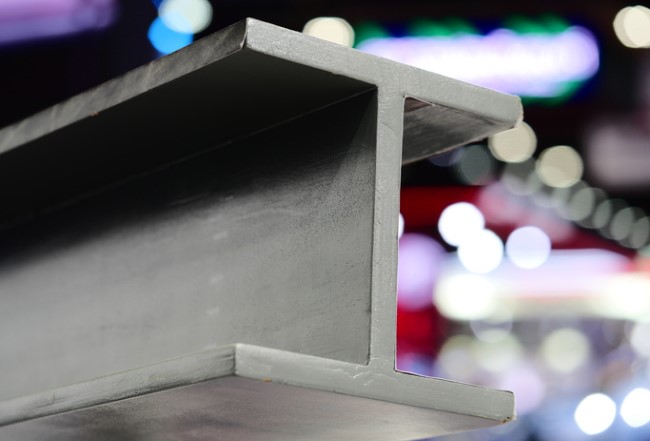
Have you ever wondered how engineers manage to keep such massive buildings standing? There is one useful building structure that if it were not there, the entire building system might collapse. This structure is known as an I beam.
Since they can sustain a large amount of weight from various directions, I beams are important structural steel components used in [civil engineering](https://civiljungle.com/h-beam-vs-i-beam/) and building construction for steel-framed projects like floor joints and truss systems. When compared to concrete, I beam construction increases the interior space by more than 5% while lowering the building’s load by 19% to 31% and minimizing the structural internal stress.
So, why are the I beams preferred more compared to the wooden beam framework? Is it because of their strength? Are they cost-effective? Continue reading to find out the answers.
## 1\. The Strength of the I Beam
I beams are often manufactured from an [iron-steel alloy](https://www.indeed.com/career-advice/career-development/beam-structure), but some are also made of aluminum. The method by which steel is melted has a beneficial impact on its strength.
Steel has a property that enables it to endure large amounts of weight. The I beam’s design is intended to distribute weight evenly to the entire beam. When substantial weight is applied to the beam, the deflection will fall near the center, increasing the stress on the sides. It also bends instead of buckles when subjected to intense pressure, making it stronger than other beams.
Most contractors consider using wooden beams because of the flexibility they provide, as they will allow you to drill holes, hang lights, and attach things without compromising the wood’s structure. Drilling holes in an I beam, on the other hand, reduces its structural strength.
Depending on your requirements, both timber beams and [steel beams](https://www.bushwickmetals.com/product-category/beams/) might be beneficial. However, the I beam is always the strongest.
Other qualities of the I beam are high accuracy, low residual stress, and less expensive welding materials, which save approximately 30% of the cost of steel structure construction.
## 2\. Cost-Effectiveness
Cost is crucial in construction projects, and most individuals are looking for ways to reduce construction expenses. You may simply estimate the cost for your project based on the amount of material needed and the building structure.
Considering using I beams in your building project is an important step toward minimizing construction expenses. There are several benefits of using I-beam construction structures in your building projects.
The structure of the building will be sturdy, with minimal components. Building with fewer components will result in cheaper construction costs due to decreased material and shipping expenses.
Because less material will be used in building, the I-beam cost will be low, project completion time will be shortened and as a result, construction costs will be kept to a minimum.
In that case, using the I beam will assure a cheap construction cost. As a result of fewer building materials used, the inside of the structure will be spacious. Also, because of their strength, I beams can span a big area with little support.
## 3\. Design of the I Beam
The designs of the I beams, as well as the materials used in their manufacturing, are the key reasons why they can sustain a lot of weight. A steel I beam is made up of two long planes called flanges and an intermediate part called a web. The cross-section of the web and fridges has an “I” and an “H” appearance due to the shape of the web and flanges.
Depending on their uses, I beams are available in a variety of flange widths and web thicknesses. The axil fiber, which carries the majority of the weight in an I-beam, contains the majority of the material. The shape of the I-beam is critical in increasing resistance to high stress.
The best I beams have a small cross-section area and use less material while maintaining their intended shape. A contractor must consider various aspects when selecting an I-beam, which include:
• Vibration
Certain mass and rigidity are chosen to prevent floor vibration.
• Bend
An I-beam’s cross-section must be strong enough to withstand yield stress.
• Buckling
The flanges are protected to avoid shear locally, or sideways buckling.
• Tension
The contractor should select an I-beam with a web thickness that can withstand high stress without buckling or rippling.
• Deflection
To withstand distortion, the contractor should use a thick I-beam.
## 4\. Durability
Steel is extremely durable because it can endure severe weather conditions. It is even regarded as the most long-lasting construction material. Steel I-beams, unlike wood, are not prone to rotting, aging, mildew, or termites.
The most significant challenge that a building might have is wearing as it ages, which is exacerbated by corrosion.
The advantage of using I beams is resistance to corrosion, making them appropriate for use in both outdoor and interior constructions. As steel beams age, they will not be subjected to wrapping, splitting, fracturing, or creeping.
The important factor that ensures the I-beam’s durability is that it must adhere to rules and regulations set throughout its manufacturing process before it is marketed.
## 5\. Adaptability
I-beam construction eliminates the need for load-bearing walls. Without the need for these support structures, you can design buildings with large spans, walls of windows, or any other design element you choose. Without the restriction of load-bearing walls, you are limited only to your imagination.
I-beams are not just installed in new buildings; they can be used to strengthen, remodel, or enlarge a structure. An I beam in construction is easier to adapt to a new structure since it is easily modifiable. Because of the lower strength, wooden beams are not adjustable.
I-beams are the most cost-effective replacement for a worn-out wooden beam. As a result of trees of the same species having varying grain density, steel I-beams are better compared to wooden beams.
## The Choice Is Yours
Using I-beams as part of the construction process opens up many options that are not available with traditional construction.
I-beams allow you to avoid the need for load-bearing walls, which add material and construction time, both of which drive up prices. I-beams allows you to control costs without sacrificing strength or durability, which are the two attributes often compromised when attempting to rein in costs.
Regardless of the project you have in mind, I-beam construction provides uncompromising strength. The production method used to create I-beams leaves you with a sturdy beam that allows for the even distribution of weight. Even in situations where it is undersized for the project, an I-beam will bend, rather than collapse.
Of course, initial building costs are only one part of the cost of a project. With I-beam construction, you can be confident that your building is here to stay. Able to withstand extreme weather conditions, termites, mildew, and other elements that attack buildings over time. Suitable for both outdoor and indoor building projects, I-beams give you freedom and the confidence to build the project as you envision it, without being tied to many of the limitations of traditional construction.
With the understanding of what is an I beam and its uses in I beam construction projects, you may confidently purchase them for any building project. But before you begin, you must consult an expert to ensure that you acquire the correct beams. This will guarantee that you construct a structure that can endure all external stresses without buckling.
If you seek to purchase I beams, allow Bushwick Metals to take care of your bulk I-beam needs for your construction project. [Request a quote today](https://www.bushwickmetals.com/request-a-quote/) and we will provide perfect I beams for your construction on schedule and in a professional way.
[Back to News / Blog](https://www.bushwickmetals.com/news)
## Contact Us
- First Name\*
- Last Name\*
- Email\*
- Phone Number\*
- Company Name
- Website URL
- Message
- Upload a Drawing
Drop files here or Select files
Max. file size: 64 MB, Max. files: 5.
- Agreement\*
- [ ] Agree to Terms
- CAPTCHA
46053
[iframe](about:blank)
### Approvals
[](https://www.fmapprovals.com/)[](https://marks.ul.com/about/ul-listing-and-classification-marks/)[](https://www.sdi.org/)[](https://icc-es.org/)[](https://www.ul.com/services/environmental-product-declaration-epds-certification)
Notifications# Steel Sheets
### Intsel Steel
[Cold Rolled Sheets](javascript:;) [Galvanized Steel Sheets](javascript:;) [High Strength Low Allow Hot Rolled Sheets](javascript:;) [Hot Rolled Pickled & Oiled Sheets](javascript:;) [Hot Rolled Steel Sheets](javascript:;)
## Structural-Steel Sheets
Like all our structural-steel products, our structural-steel sheet is made from high-quality steel sourced from all over the world. With an extensive range of sizes, types, and grades in stock, we’re able to help you manage your supply chains, reduce overhead, and minimize the amount of structural-steel product you need to hold in inventory. Whenever you need structural-steel sheet, simply contact us and we’ll ship it out the same day. Because we have storage and production facilities throughout the Northeast, we can usually deliver your structural-steel sheet the very next day!
Need your structural-steel sheet machined before taking delivery? We do that, too. With a host of value-added services available, Intsel Steel enables you to order custom-processed structural steel that arrives at your project site or facility ready for use. From forming to sheering to bending and more, we make your job easier by providing the top-quality steel when, where, and how you need it. When you need structural-steel sheet now, contact Intsel Steel, and we’ll move mountains to get it to you by tomorrow.
## Carbon Sheets
### Hot-Rolled Sheet
A commercial-quality, low-carbon steel, hot-rolled steel sheet is soft enough to bend flat on itself in any direction without cracking. The surface of hot-rolled sheet has a normal mill oxide, so the sheet is used in applications where surface finish is not critical. Conforms to A1011.
### Hot-Rolled, Pickled, and Oiled Sheet
Characteristics are similar to that of hot-rolled commercial-quality sheets, the hot-rolled pickled and oiled sheet has an improved surface finish and texture. We use an acid-pickling process to remove oxides, then oil the surface to protect from rust and oxidation. This process creates a more uniform surface, which once cleaned, provides a surface that more readily allows paints and enamels to adhere. improves the adhesion of paints and enamels. Conforms to A1011.
### Hot Rolled, High-Strength, Low-Alloy Sheet
Also known as Corten sheet, this hot-rolled sheet offers a significantly higher minimum yield strength along with more corrosion resistance than a hot-rolled, commercial-quality sheet. With two to four times more corrosive resistance than low-carbon steel sheets and a minimum yield strength of 50 ksi, the high strength of this sheet makes it ideal for construction applications where reduced weight is desirable. Conforms to A606.
### Cold-rolled Sheet
Cold-rolled sheet is commercial-quality, low-carbon steel sheet that offers tighter thickness tolerances and better surface quality than hot-rolled, pickled, and oiled sheets. These sheets are soft enough to bend flat in any direction without cracking and the deoxidized surface will readily accept painting after the sheet is cleaned. The surfaces of this sheet is slightly oiled to protect from rust. Conforms to A366.
### Galvanized Sheet
A commercial-quality, low-carbon steel sheet that’s coated with a protective layer of zinc. The zinc coating on these sheets offer a substantial increase in corrosion resistance over an uncoated hot-rolled sheet. These sheets can be formed without the zinc surface flaking or peeling. Galvanized sheets can be welded or soldered. Various coating weights, spangle sizes, and ASTM specifications are available.
### Approvals
[](https://www.fmapprovals.com/)[](https://marks.ul.com/about/ul-listing-and-classification-marks/)[](https://www.sdi.org/)[](https://icc-es.org/)[](https://www.ul.com/services/environmental-product-declaration-epds-certification)# Tube Notching 101 \| An Overview & Guide
December 11, 2020 in
Blog / Value-Added Services
Though malleable when heated and capable of tolerating great stresses, bent metal can be subject to warping. This creates an intrinsic weakness in a metal tube that can lead to failure. You can avoid this, however, with tube notching.
## What Is Tube Notching?
A tube or metal sheet is cut on angle sections from the edge of the worked metal. Notching is usually the precursor of joining two pieces of metal together, creating a bent piece out of them.
The different sections of tube remain straight and solid as ever with only a cutting made to one extremity. This facilitates its connection to another notched tube, essentially bending that tube by using two straight tubes and notching them at an angle.
Tube notching has the advantage of retaining all the intrinsic strengths of the metal without creating a weak spot. It can be very versatile. Masters at the art can create any shape.
## What Do You Need To Notch Tubes?
The tube notching operation is not a complicated process. While tube notching is not necessarily challenging, doing it in a way that is aesthetically pleasing, durable, and solid requires skill and patience. Just like any metalworking process, experience, the choice of materials, and the equipment used matter. This is why many businesses outsource their tube notching to third-party professionals that have the expertise and the cutting-edge tools to create outstanding tube notching.
For those who wish to try their hand (and patience) with tube notching, some basic equipment and metalworking know-how will be useful. The main thing to focus on is precision. You can’t rush tube notching and do a good job. Professionals take their time to do the job right. Here are three steps to guide anyone through the tube notching process.
### How To Notch A Tube:
1. **Choose the right tube:** the first step is to decide what the tube should look like and be clear about what it will do when complete. Not all tubes are made equal. Some are destined for tasks that demand higher tolerances than others. Choose the material and thickness with care. Mistakes at this early stage tend to be costly in the long run. It’s much easier to notch a tube well than to replace it a few months later. If the tube you’ve chosen happens to be harder than your cutting tool (which will probably be a basic tube notcher), you’re in for a rude awakening. To avoid having to throw away your tubes or buy a sharper and harder cutting tool, consult with a professional who can help you make the right choice.
2. **Measuring and prepping the cut:** Before you perform tube notching, you’ll need to measure the tubes and decide on the cut you need. Draw on the tubes before you start cutting. The angle of the notching is essential. Don’t take any shortcuts here to save time. You don’t want to cut only to discover that you made a sharper angle than you needed, forcing you to recut and shorten your tube or, worse, having to replace the whole thing.
3. **Cutting:** After prepping, it’s time to get cutting.
- Inspect your tube notcher before you start to ensure that it is in full working order. Check the spindle’s mobility by bringing it up and down several times. Ensure a fluid motion.
- Secure and clamp your tube to the right cutting angle. Any loosening of the tube will ruin the cut’s angle.
- Start your cut slowly to avoid heavy vibration of the tube that may ruin the cut’s angle. We recommend using some discarded tube to practice beforehand. Make sure that you are comfortable with the operation.
- Safety is essential. Tube notchers have sharp cutting edges and flying metal is a hazard. Wear protective eyewear and gloves to keep yourself safe from flying metal shards as well as the sharp edges of your freshly cut tube.
Tube notching is an important and basic metalworking technique. Though simple in theory, you will require skill and some equipment. If the job requires high levels of precision, it’s better to leave this process to the professionals who have the prerequisite equipment and experience. A professional job should provide a better and more durable end product. It should also be more cost-effective.
For any queries or questions about tube notching, don’t hesitate to [contact our friendly team](https://www.bushwickmetals.com/contact/). If you’re determined to do it yourself, we can provide you with the necessary information and advice. But don’t forget that we have the expert skills to take care of your tube notching, giving you peace of mind and the assurance of a job well done.
[Back to News / Blog](https://www.bushwickmetals.com/news)
## Contact Us
- First Name\*
- Last Name\*
- Email\*
- Phone Number\*
- Company Name
- Website URL
- Message
- Upload a Drawing
Drop files here or Select files
Max. file size: 64 MB, Max. files: 5.
- Agreement\*
- [ ] Agree to Terms
- CAPTCHA
61894
[iframe](about:blank)
### Approvals
[](https://www.fmapprovals.com/)[](https://marks.ul.com/about/ul-listing-and-classification-marks/)[](https://www.sdi.org/)[](https://icc-es.org/)[](https://www.ul.com/services/environmental-product-declaration-epds-certification)
Notifications# Instel Steel Mentioned In Modern Steel Construction Special Issue
### Intsel Steel
# Instel Steel Mentioned In Modern Steel Construction Special Issue
Intsel Steel was mentioned in [Modern Steel Construction’s](https://www.aisc.org/modernsteel/) December 2022 special “Need For Speed” issue.
_…Intsel Steel (a Triple-S subsidiary) is adding speed to the job site in the Northeast through a new Gasparini Deck Former. This $5 million investment reduces changeover and setup time between deck profiles from eight hours down to just 30 minutes. This machine allows our team to be more responsive to everfluid customer erection schedules._
Read the whole story and see what else they had to say about us in the [Speeding Up Service section here](https://lsc-pagepro.mydigitalpublication.com/publication/?m=7946&i=767927&p=90&ver=html5)!
# Having Problems Finding Odd Tubing Sizes?
Odds are, Intsel Steel has what you need.
**Now Stocking**
- 5 x 4 x 3/8″ Rectangular Tube
- 6 x 3 x 1/2″ Rectangular Tube
- 7 x 3 x 1/4″ & 3/8″ Rectangular Tube
- 7 x 4 x 1/4″, 3/8″ & 1/2″ Rectangular Tube
- 7 x 5 x 1/2″ Rectangular Tube
- 8 x 3 x 1/2″ Rectangular Tube
- 9 x 3 x 3/8″ & 1/2″ Rectangular Tube
- 9 x 5 x 3/8″ & 1/2″ Rectangular Tube
- 9 x 7 x 1/2″ Rectangular Tube
- 10 x 2 x 3/8″ Rectangular Tube
- 10 x 3 x 1/4″ Rectangular Tube
- 10 x 5 x 3/8″ & 1/2″ Rectangular Tube
- 10 x 6 x 5/8″ Rectangular Tube
- 10 x 8 x 5/8″ Rectangular Tube
- 12 x 3 x 1/4″ Rectangular Tube
- 12 x 4 x 5/8″ Rectangular Tube
- 12 x 6 x 5/8″ Rectangular Tube
- 12 x 8 x 5/8″ Rectangular Tube
- 12 x 10 x 1/2″ Rectangular Tube
- 14 x 10 x 1/2″ & 5/8″ Rectangular Tube
- 4-1/2″ x 4-1/2″ x 1/4″ Square Tube
- 5-1/2″ x 5-1/2″ x 3/8″ Square Tube
- 9 x 9 x 3/8″, 1/2″ & 5/8″ Square Tube
And of course one of the Northeast’s largest inventory of Structural Steel Products with Wide Flange Beams up to 925#/foot
### Approvals
[](https://www.fmapprovals.com/)[](https://marks.ul.com/about/ul-listing-and-classification-marks/)[](https://www.sdi.org/)[](https://icc-es.org/)[](https://www.ul.com/services/environmental-product-declaration-epds-certification)# Steel Roof Decking: What You Must Know
August 19, 2021 in
Blog / Decking
Steel roof decking is a robust construction material that is great for many roofing applications. With overall construction projects on the [rise in the U.S](https://www.census.gov/construction/nrc/pdf/newresconst.pdf), and costs of materials rising with it, steel roof decking could be the perfect solution for your project. So, what is steel roof decking, how is it used, and where can you find it?
## What is Steel Roof Decking?
Steel roof decking is corrugated metal sheets designed for decking a roof or composite floor. [Steel beams](https://www.bushwickmetals.com/types-of-steel-beams-order/), or joists, support the decking to create a pocket and membrane of insulation in roofing applications, and in flooring applications, steel decking supports and reinforces concrete.
Workers attach these steel sheets by screwing, fastening or welding them to steel beams or joists. Many metal decking installation methods leave the surface of the decking unmarred, smooth and not suitable for concrete installation.
For multi-story structures, steel decking is the perfect material to install.
### The History of Steel Roof Decking
There are many different types of steel decking. Many of them range back to the 1940s and 60s.
One of the first instances of steel decking, called pan decking, is from the 1940s and was used as metal forms for concrete pouring and other construction applications.
Q decking was another early iteration of metal decking. Developed in the 1960s by the HH Robertson Company, Q decking was the first incarnation of modern metal decking. Although no longer found, Q deck was used in composite deck flooring in 2- and 3-inch sizes.
### Applications of Metal Roof Decking
Metal roof decking is the ideal material for many roofing applications. Using metal decking for roofing provides a variety of benefits:
- Erecting and strengthening mezzanines
- Supporting and reinforcing entire roof systems
- Constructing steel canopies
## Types of Steel Roof Decking
There are many different types of modern metal roof decking, and at [Bushwick Metals](https://www.bushwickmetals.com/about-us/), we provide easy access to B deck, A deck and N deck. All of our deckings satisfy and exceed [ASTM A653](https://www.astm.org/Standards/A653) standards.
### B Deck
B deck is the most common metal roof decking profile. B deck is the choice material to support a built-up roof system that spans less than ten feet. B deck is available in many different gauges, with the lightest being 22 gauge and the heaviest 16 gauge. B deck is 36” wide and 1.5” deep. B deck is the best choice when you need 1.5” deep roof decking with rigid insulation at least 1” thick.
Our B deck comes in either interlocking side-laps or acoustic decking in a variety of finishes. The standard finish is gray prime, but we also offer galvanized finishes in G40, G69 and G90 coatings. Another finish option is a white primer on the bottom side of the decking with a galvanized top. Our primer finish protects steel during installation and is not considered a permanent finishing solution.
### N Deck
N deck is very similar to B deck, but it is for decking roofs that span more than ten feet. Like B deck, N deck comes in gauges that range from 22 gauge at the lightest to 16 gauge at the heaviest. Unlike B deck, N deck is twice as deep at 3”, providing terrific support for longer spans.
N deck is perfect for structures, like auditoriums and gymnasiums, where long structural components span large open spaces. Using N deck for these projects is more affordable than other structural features, which can be heavy and expensive.
N deck comes in many finishes, including white and gray primer or galvanized coatings in G40, G69 and G90. N decking is also available in acoustic decking called type NA. NA deck is terrific for schools, concert halls and theatres where sound quality is an issue.
NA decking is placed in vertical webs that slightly affect load carrying capacity by less than 5%. Both N and NA decking is not certified under Factory Mutual.
### A Deck
A deck is the decking to use when your insulation is less than 1” thick. A deck provides support for roofing insulation but is not routinely used in new construction because of its poor strength-to-weight ratio. A deck is best suited for remodeling, reroofing or other roofing repairs.
## The Advantages of Bushwick Metals
Bushwick Metals is the most reliable and affordable supplier of steel roof decking along the east coast. With many convenient locations in Connecticut, New York, New Jersey and Delaware, Bushwick provides next day shipping to:
- New York
- New Jersey
- Connecticut
- Delaware
- Pennsylvania
- Massachu
- Rhode Island
- Maryland
- Vermont
- New Hampshire
- Maine
The efficiency of the Bushwick supply chains allows us to fulfill orders faster than our competitors, getting you the materials you need when you need them.
Bushwick has the finest steel roof decking, and we also have the steel joists and any other metal materials and products you need for your project. We offer fully customized metal products in basically any material you can imagine.
Not only do we take the quality of our products extremely seriously, but we also make customer satisfaction and order fulfillment an immediate priority. We take the time to address questions and concerns by employing end-to-end supply chain solutions and cutting-edge customer service procedures.
Bushwick client services include material and product estimates, custom product orders, material storage in our warehouses and logistical delivery and ordering systems to get materials out when you need them.
Placing your steel roof decking order is a painless and straightforward process. Our sales team works with our logistics team to create orders and get them out for next-day delivery.
## Get Your Steel Roof Decking Now
All of our metal decking is available exactly when you need them. We use contemporary supply chain solutions to quickly and efficiently deliver any of our wide variety of metal roof decking. [Contact us](https://www.bushwickmetals.com/contact/) today to place your order.
[Back to News / Blog](https://www.bushwickmetals.com/news)
## Contact Us
- First Name\*
- Last Name\*
- Email\*
- Phone Number\*
- Company Name
- Website URL
- Message
- Upload a Drawing
Drop files here or Select files
Max. file size: 64 MB, Max. files: 5.
- Agreement\*
- [ ] Agree to Terms
- CAPTCHA
15680
[iframe](about:blank)
### Approvals
[](https://www.fmapprovals.com/)[](https://marks.ul.com/about/ul-listing-and-classification-marks/)[](https://www.sdi.org/)[](https://icc-es.org/)[](https://www.ul.com/services/environmental-product-declaration-epds-certification)
Notifications# Maine Steel Supply – Next Day Delivery
September 19, 2022 in
Blog / Steel Supply / Value-Added Services

Projections show that the global metal fabrication market will reach a size of [$29.46 billion by 2029](https://www.databridgemarketresearch.com/reports/global-metal-fabrication-market).
Steel is the most widely used metal on the planet, and suits applications in a wide range of industries. It has several useful characteristics, and different types are available which provide varying properties. If you need a Maine steel supply, Bushwick Metals has got you covered.
## Our Products
At Bushwick Metals, we have a huge steel supply. We offer a range of parts that we keep our warehouse stocked with so you can get what you need, when you need it.
### Bars
We stock bars in a range of shapes – some quite common, and others that aren’t seen so much. We have round, square, flat, and strip bars of various types:
- Hot-rolled
- Merchant-quality
- Special quality
- Low-carbon
- High strength low alloy
With this much choice, and our various [bar steel grades](https://www.bushwickmetals.com/hot-rolled-round-bar-steel-grades/) you should almost always be able to find exactly what you need. If you’re doing a project that has very specific requirements, we can fabricate something to your exact specifications.
### Angles
We have a huge range of angle varieties ready to go. This includes structural angles, galvanized angles, and bar angles. All of these are available in various sizes. Our galvanized angle is made of A123 steel, and our bar and structural angles are available in the following grades:
- A36
- A572
- A588
- A709 and AASHTO M270 upon request
We also offer a range of services that can be ideal if we don’t have exactly what you need in stock. We can cut angles down, or bend them to a specific radius.
### Plates
Steel plate is used in various applications, and as such, we keep a range of types in stock. Our plates are available in various grades to provide different yield strengths, and other properties such as abrasion and [corrosion resistance](https://www.corrosionpedia.com/definition/5/corrosion-resistance). We also have varying thicknesses and can carry out different processes such as bending or cutting. The finishing processes we can use depend on the type and thickness of the plate in question.
### Channels
Steel channel has a range of uses such as in walls, vehicle frames, trailers, and window/door frames. We stock channels that are suitable for any of these applications, as well as others. With various grades, types, and lengths available, we have almost all needs covered. If you need something specific that we don’t have in stock just let us know and we’ll get it sorted for you.
## Why Bushwick Metals?
Bushwick Metals is more than just a Maine steel supplier. We also offer various services that make us the best choice around for all of your Maine metal needs.
### Value-Added Services
At Bushwick Metals we provide various value-added services. With these, you can get any steel parts you need, made to your exact specifications. This ensures you can complete your project without any compromises.
#### Saw Cutting
Whatever you’re after, we can cut it down to the exact size you need. Whether it’s bars, channels, angles, or something else. Just let us know the exact lengths you’re after, and we’ll get your steel cut down ready for collection or delivery.
#### Plate Processing
There are plenty of processes we can perform with plates. This includes things such as:
- Drilling
- Tapping
- Oxy-fuel cutting
- Milling
- High-definition plasma cutting
- Countersinking
- Carbide scribing
We can handle all of these with a single machine, increasing efficiency and getting your parts finished faster. We use specialized software that reduces the amount of waste material, helping to keep costs down.
#### Shearing and Bending
Along with the various plate options we have on offer, we’re also able to share plates anywhere from 16 gauge to 5/8″ thickness. We also have multiple press brakes that are capable of bending plates up to 1/2″ thick.
#### Section Bending and Cambering
It’s common for projects to require bent sections. We want to make sure you have everything you need, so we can bend any parts before sending them out to you. This includes bars, beams, channels, tees, angles, and more. Our technicians can bend these parts to almost any shape, so even if you need something unusual, we can take care of it.
We’re able to camber beams up to 40″ wide as long as they’re at least 25′ long. The max camber depends on the dimensions of the beam in question.
#### Tee Splitting & Straightening
Splitting and straightening can be a difficult process. They often cause beams to bow or twist, which can lead to them splitting. We use a rotary-mechanical shear, which avoids traditional thermal cutting techniques. Because of this, our beams experience less internal stress, helping to keep them much straighter. We also use our roll-straightening service to further ensure our tees are as straight as possible.
#### Custom Roll Formed Floor and Roof Deck
Using our state-of-the-art roll former, we can roll different types of roof deck and composite floor deck. This can be painted or galvanized, and we can provide thicknesses anywhere between 16 gauge and 22 gauge.
### Next Day Delivery in Maine
There may be other steel suppliers around, but you’ll have a hard time finding one with anywhere near our level of stock along with the added value-added services we provide. On top of that, we offer next-day delivery throughout Maine, so we can get your parts out to you as soon as you need them.
## Maine Steel Supply
For the most reliable Maine steel supply available, look no further than Bushwick Metals. We maintain a huge stock at all times, and if there’s anything we don’t have, we’ll be able to get it for you.
If you have any questions for us, [click here](https://www.bushwickmetals.com/contact/) to contact us today.
[Back to News / Blog](https://www.bushwickmetals.com/news)
## Contact Us
- First Name\*
- Last Name\*
- Email\*
- Phone Number\*
- Company Name
- Website URL
- Message
- Upload a Drawing
Drop files here or Select files
Max. file size: 64 MB, Max. files: 5.
- Agreement\*
- [ ] Agree to Terms
- CAPTCHA
11817
[iframe](about:blank)
### Approvals
[](https://www.fmapprovals.com/)[](https://marks.ul.com/about/ul-listing-and-classification-marks/)[](https://www.sdi.org/)[](https://icc-es.org/)[](https://www.ul.com/services/environmental-product-declaration-epds-certification)
Notifications# Roof / B Deck
### Intsel Steel
Composite / Floor DeckForm DeckRoof / B Deck
### Approvals
[](https://www.fmapprovals.com/)[](https://marks.ul.com/about/ul-listing-and-classification-marks/)[](https://www.sdi.org/)[](https://icc-es.org/)[](https://www.ul.com/services/environmental-product-declaration-epds-certification)# Bulk Steel Tubing At Bushwick Metals
October 8, 2021 in
Blog / Steel Tubing
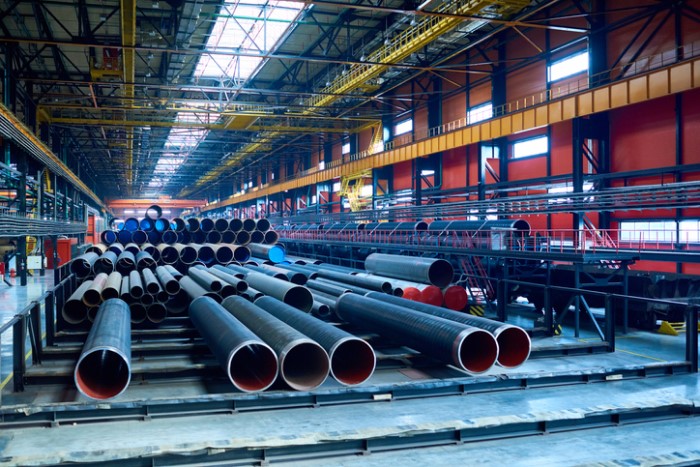
One of the most useful materials in the manufacturing and construction industries is stainless steel. It’s strong, long-lasting, corrosion-resistant, and versatile. Steel tubing is a common use for stainless steel.
But how do you get bulk steel tubing? The demand for stainless steel tubing is growing rapidly, but the industry is lagging. Picking the right supplier is crucial if you want to get your materials on time, and in the amount and style that you need.
Keep reading to find out how to do this right.
## The Many Uses of Steel Tubing
Steel tubes are one of the most common materials in construction and manufacturing. You can find steel tubes in fence posts, plumbing, bike racks, traffic barriers, HVAC systems, refrigerators, medical equipment, airplanes, cars, and so much more.
Just about every industry uses steel tubing one way or another. It’s useful for transporting liquids and gases. The tubes can be tiny, inside of your home, or giant pipes in a factory, or even massive like a municipal water system.
Stainless steel tubing is perfect for these tasks because it resists damage and corrosion. It’s easy to keep sterile, and it lasts for decades. Steel tubing can carry water just as easily as a chemical like freon or a gas like nitrous.
However, steel tubing isn’t just for transportation. The hollow center of the tube also makes it structurally strong without being too heavy. This is why steel tubing works well in fence posts or for bike racks. Larger steel tubes work well in building construction for the same reasons.
Stainless steel tubing is easy to sanitize and isn’t porous, which makes it more useful than other types of tubing, like plastic or concrete. This versatile material is [in high demand](https://www.industryselect.com/blog/key-facts-on-the-us-steel-pipe-and-tube-industry) for a reason—steel tubing solves a lot of industrial and manufacturing problems.
## What Types of Steel Tubing Are Available?
A typical metal company will specialize in just a few types of steel tubes, especially if they sell in bulk. However, there is a wide variety of steel tubes you might need for your projects.
There are three primary shapes: round, rectangular, and square. All three of these shapes can be either welded or seamless. Once you have the shape, there are finishing options to consider as well, such as galvanizing or adding threads on the end.
Bushwick Metals offers a dozen different types of bulk steel tubing, including multiple shapes made with multiple steel grade options. There are hot rolled and cold rolled tubing options, as well as extruded tubing.
The Bushwick Metals product range includes:
- Square Mechanical Tubing
- Rectangular Mechanical Tubing
- Structural Steel Square Tubing
- Structural Steel Rectangular Tubing
- Round Mechanic Tubing
- Standard Pipe
- Light Wall Pipe
- Fence Pipe and Tube
- Galvanized Awning Pipe and Tube
All of these options are available in the size and quantity you need when you need them. We have custom options and on-site treatments, as well as standard sizes and finishes.
### What’s the Difference Between Pipe and Tube?
The primary difference between pipe and tube is that pipes carry something. Both tubes and pipes are hollow in the center, but a pipe can’t leak at all. It has to be entirely sealable.
Pipes are a specific type of tube. They’re usually round rather than square or rectangular, and they’re graded according to what they carry. Gas lines and water lines have different needs.
Tubes on the other hand, often serve as structural support and don’t need to carry anything. They can be rectangular or squared off to fit into a space better, and they don’t need to be as sealable.
Sometimes, a pipe or another kind of tube works well for the same job. Fence posts are a good example of this. The type of fence you’re building impacts the type of tube you’ll need to complete the project. If you are looking for pipes, we supply [bulk steel pipes](https://www.bushwickmetals.com/bulk-steel-pipe-supply/) as well.
## Why Should You Buy Steel Tubes in Bulk?
If you’re working on projects where you need a large quantity of steel tubing, it’s a no-brainer to order in bulk. However, if you tend to run smaller operations or buy your materials a bit at a time, you should consider buying in bulk instead.
Consistency is important for most construction and industrial jobs. If your tubing isn’t all the same size, you can run into expensive problems quickly. Buying all the steel tubes for one project at the same time can cut down on these problems.
## Next-Day Delivery
Picking the right metal company to supply your bulk steel tubing is important. Getting the right materials on time and in the right quantity is important to keep your projects running smoothly.
Next-day delivery on bulk tubing orders might seem too good to be true, but Bushwick Metals guarantees it for:
- New York
- New Jersey
- Connecticut
- Delaware
- Pennsylvania
- Massachusetts
- Rhode Island
- Maryland
- Vermont
- New Hampshire
- Maine
We understand that you have deadlines to meet. With multiple locations and cutting-edge technology, we can get you the steel tubing you need quickly without sacrificing quality.
Before you order your steel tubing, we can help you figure out exactly how much you need. We have placement drawing and takeoff services available to help calculate the perfect amount of bulk steel for your project.
## Get Bulk Steel Tubing From the Experts
Steel tubing may not be the first thing you notice, but it’s an important part of our lives. No matter what your steel needs are, we have the highest quality materials ready and waiting.
The next time you need bulk steel tubing, let Bushwick Metals take care of you. [Request a quote today](https://www.bushwickmetals.com/request-a-quote/) and we’ll get you the perfect steel materials for your project, on time and delivered safely.
[Back to News / Blog](https://www.bushwickmetals.com/news)
## Contact Us
- First Name\*
- Last Name\*
- Email\*
- Phone Number\*
- Company Name
- Website URL
- Message
- Upload a Drawing
Drop files here or Select files
Max. file size: 64 MB, Max. files: 5.
- Agreement\*
- [ ] Agree to Terms
- CAPTCHA
85658
[iframe](about:blank)
### Approvals
[](https://www.fmapprovals.com/)[](https://marks.ul.com/about/ul-listing-and-classification-marks/)[](https://www.sdi.org/)[](https://icc-es.org/)[](https://www.ul.com/services/environmental-product-declaration-epds-certification)
Notifications# Cambering Steel Beams At Bushwick Metals – What Is It And Why Do It?
March 15, 2021 in
Beams / Blog / Value-Added Services
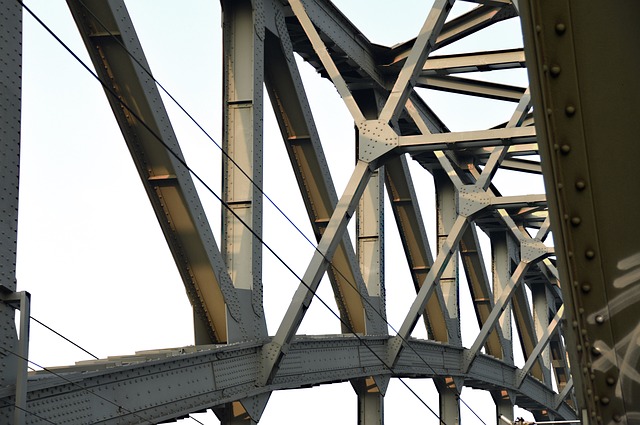
From the sweep of the NASCAR Hall of Fame to the crazy angles of the HL23 building in New York City, steel’s ability to stay strong while bending has allowed many an architect’s vision to come to reality.
These [award-winning buildings](https://www.aisc.org/ideas2/) use steel to great visual effect, but the metal’s ability to bend plays a critical role in places you can’t see as well.
Cambering steel beams put just enough curve into what would ordinarily be a straight line to improve strength and lower building costs. Understanding what’s involved in cambering allows you to better communicate with your fabricating shop when you order your steel beams.
Let’s look at what’s involved in cambering here at Bushwick Metals and how we do it for our clients.
## Defining Cambering
Cambering involves making a curve on the vertical axis in just a part of the steel beam. This is different from a curve in that it only involves a part of the beam.
Natural camber is the slight out-of-straightness left after the work of rolling the steel and making the beam. Induced camber is the intentional distortion added later in a fabricating shop.
The camber approximates a parabola arch rather than a circle segment, which is the subtle difference between a camber and a curve.
Cambers become part of filler beams, girder beams, and composite floor beams. You should avoid having camber on cantilevered beams, crane beams, crane girders, and other types. In some cases, your steel beam dimensions such as length impact whether or not a camber can be added.
The camber allows a beam to handle the heavy loads set on them as the arched form resists sagging under the weight.
For example, it compensates for load deflection caused by a concrete floor poured on top. While a straight beam would sag down, a cambered beam deflects to a straight line under the weight. This allows the concrete slab to be flat while keeping a consistent thickness.
## Camber Process and Methods
Cambering is commonly done at the fabricator’s shop after the beams have been formed. The shop should employ one or more of three methods:
- Roll in a bender
- Ram with a hydraulic cylinder
- Apply heat
Regardless of the chosen method, the process increases the strength of the steel with just a tiny reduction in ductility and toughness. Modern steel production makes the safety of cambering less of a concern.
Once the shop has cambered the beams, they should mark them to ensure proper installation on sight. The cambering should be done in a way that takes advantage of whatever natural camber already exists. If the natural camber of the beam is at least 75 percent of the specified camber, they might not add more.
### Hot vs. Cold Cambering
Cold cambering is the more widely used process as it is more economical and easier to do than hot cambering. The beam is mounted in a frame and forced to bend by a jack pushing against the appropriate point.
The capacity of the machine and the amount of camber needed determine the number of times the process would need to be repeated.
Hot cambering is a more time-intensive process that isn’t used as often these days. It requires torches to apply heat to the flange and web of the beam while the camber is introduced from the opposite side of the beam as it cools. It tends to be used now for light, narrow beams and specific types of geometries.
### Quality Control
The AISC Code of Standard Practice calls for the camber to be measured at the fabricating shop in unstressed condition to ensure it meets standard tolerances. The shop should verify that the camber met the standards when it was measured at the shop.
Time and temperature can impact the camber once applied, so the induced camber can straighten back out during transport to a job site. This is another good reason to have a fabricating shop local to your job so there is the shortest possible shipping distance.
## Why Camber Steel Beams
Modern construction uses a lot of steel; [almost half](https://money.cnn.com/2018/03/02/news/economy/steel-industry-statistics-us-china-canada/index.html) of the global steel production goes into steel beams and pipelines. So it makes sense that if you can reduce the amount of steel you use, you can reduce some construction costs.
Cambering allows you to have smaller beam depths in your construction, which can cut material costs. This also makes it easier to run ductwork, piping, and electrical between floors since the beams take up less space.
That said, there is extra labor involved in cambering your beams, so they do cost more than non-cambered. But your alternatives would involve extra concreted needed due to ponding or columns for shoring up the construction. When you compare that to the cost of cambering, it usually is less than the alternative.
Beyond cost savings, steel buildings benefit from flexibility that makes it possible to create stunning buildings like the NASCAR Hall of Fame. Cambering can improve the aesthetics of a building or project by allowing for fluid lines. The ability to create a curved walkway or arched ceiling adds to the visual appeal of a structure without compromising strength or function.
## Cambering Steel Beams to Your Specs
Understanding cambering steel beams can help you with making estimates and working with your supplier to get the right type of beam for your project. Transporting curved beams can be more costly, so sourcing them from a local fabricator can keep your costs down.
Our shop can camber steel beam sizes up to 40” high for your project at multiple locations for better service. Contact us today or [request a quote](https://www.bushwickmetals.com/request-a-quote/) for your project. We can estimate, camber, and deliver to your job site.
[Back to News / Blog](https://www.bushwickmetals.com/news)
## Contact Us
- First Name\*
- Last Name\*
- Email\*
- Phone Number\*
- Company Name
- Website URL
- Message
- Upload a Drawing
Drop files here or Select files
Max. file size: 64 MB, Max. files: 5.
- Agreement\*
- [ ] Agree to Terms
- CAPTCHA
[iframe](https://www.google.com/recaptcha/api2/anchor?ar=1&k=6LdSY4oUAAAAAGDEi3d2uBuqBCntpVCNaASyqOUc&co=aHR0cHM6Ly93d3cuYnVzaHdpY2ttZXRhbHMuY29tOjQ0Mw..&hl=en&v=rW64dpMGAGrjU7JJQr9xxPl8&theme=light&size=normal&cb=e6rwrmw0gndj)
54168
[iframe](about:blank)
### Approvals
[](https://www.fmapprovals.com/)[](https://marks.ul.com/about/ul-listing-and-classification-marks/)[](https://www.sdi.org/)[](https://icc-es.org/)[](https://www.ul.com/services/environmental-product-declaration-epds-certification)
Notifications